Benzenes
Benzenes are simple aromatic hydrocarbons consisting of a six-membered carbon ring with alternating double bonds. This fundamental structure is a building block for numerous chemical compounds, including pharmaceuticals, polymers, and dyes. Benzenes are used extensively in organic synthesis due to their stability and versatility. At CymitQuimica, we provide a broad range of high-quality benzenes to support your research and industrial applications.
Subcategories of "Benzenes"
- Benzamides(62 products)
- Benzoic Acids(5,434 products)
- Benzyl alcohols(1,453 products)
- Halogenated Benzenes(33,773 products)
- Phenols(2,648 products)
Found 11835 products of "Benzenes"
Sort by
Purity (%)
0
100
|
0
|
50
|
90
|
95
|
100
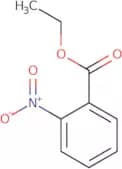
Ethyl 2-nitrobenzoate
CAS:<p>Ethyl 2-nitrobenzoate is a cyclic organic compound that contains a nitro group, which is an organic radical with the formula -NO2. It belongs to the class of amides and has two carbonyl groups. The molecule consists of a bicyclic heterocycle consisting of one ring with five carbon atoms and one ring with six carbon atoms. Ethyl 2-nitrobenzoate can be used in the treatment of muscle diseases, metabolic disorders, growth factor deficiencies, autoimmune diseases, and neural system disorders due to its ability to act as an antihypertensive agent and as an inhibitor of angiotensin converting enzyme (ACE). This molecule's hydroxyl group can also react with epidermal growth factor (EGF) to form N-hydroxyethyl EGF (NHE). This product has been shown to have antiviral properties against HIV-1 protease inhibitors by interfering with viral protein synthesis.</p>Formula:C9H9NO4Purity:Min. 95%Color and Shape:White PowderMolecular weight:195.17 g/mol4-Amino-5-chloro-2-methoxybenzoic acid
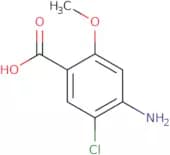
CAS:<p>4-Amino-5-chloro-2-methoxybenzoic acid is a compound that has been shown to be a potent 5-HT4 receptor agonist. It is used in the treatment of obesity and diabetes. The molecular structure of 4-Amino-5-chloro-2-methoxybenzoic acid consists of a carbonyl group and an amine group, which are bound to each other by a covalent bond. This molecule is found to bind to the 5HT4 receptor with high affinity, which leads to its efficacy as an antiobesity agent.</p>Formula:C8H8ClNO3Color and Shape:White PowderMolecular weight:201.61 g/molOctyl gallate
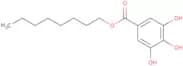
CAS:<p>Octyl gallate is a naturally occurring compound that belongs to the class of gallates. It is a non-toxic, water-soluble antioxidant that has been used as a preservative in foods and pharmaceuticals. Octyl gallate has been shown to inhibit nuclear DNA synthesis by binding to the dinucleotide phosphate (NDP) site on ribonucleotide reductase, thereby preventing the formation of deoxyribonucleotide triphosphates. A rate constant for this reaction has been determined using analytical methods. This compound also inhibits the growth of wild-type strains of Escherichia coli and Staphylococcus aureus, as well as some strains resistant to antibiotics such as erythromycin, chloramphenicol, tetracycline, and clindamycin. Octyl gallate may also have an effect on energy metabolism in bacteria by inhibiting p-hydroxybenzoic acid (PHBA) dehydratase</p>Formula:C15H22O5Purity:Min. 95%Color and Shape:White PowderMolecular weight:282.33 g/molMethyl 4-chlorobenzoate
CAS:<p>Methyl 4-chlorobenzoate is a synthetic chemical that belongs to the group of phenyl compounds. It is a solvent for organic solvents and has been shown to be toxic to humans. Methyl 4-chlorobenzoate is used in various industrial applications, such as in the production of pesticides, herbicides, and pharmaceuticals. Methyl 4-chlorobenzoate can also be used as an intermediate for the synthesis of other chemicals, such as chlorinated hydrocarbons. This chemical has been reported to cause environmental pollution and has been classified as a carcinogen by the International Agency for Research on Cancer (IARC).</p>Formula:C8H7ClO2Purity:Min. 98.5%Color and Shape:White PowderMolecular weight:170.59 g/mol5-Amino-2-nitrobenzoic acid
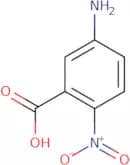
CAS:<p>5-Amino-2-nitrobenzoic acid is a drug that has been shown to inhibit the activity of proteases. It has been used to detect the presence of protease activity in urine samples, as well as to study the inhibition of protease activity by other drugs. 5-Amino-2-nitrobenzoic acid is an inhibitor of chymotrypsin, trypsin, and elastase. This drug has been shown to be effective in inhibiting these enzymes at low concentrations, with a detection sensitivity of approximately 0.1 μM. 5-Amino-2-nitrobenzoic acid inhibits the growth of bacteria by binding to them and preventing protein synthesis. The compound also inhibits the enzyme dihydrolipoamide dehydrogenase in mitochondria, which is required for cellular respiration and energy production.</p>Formula:C7H6N2O4Color and Shape:Brown Yellow PowderMolecular weight:182.13 g/mol3,5-Dibromo-2-anisic acid
CAS:<p>3,5-Dibromo-2-anisic acid is a short chain dodecyl amine with the chemical formula CH2Br2C6H4N. It is an active compound that has been shown to have nematicidal activity and also shows high activity against saprophytes. 3,5-Dibromo-2-anisic acid is synthesized by reacting chlorine with salicylaldehyde in the presence of a base. The compound is used in the synthesis of various other organic compounds such as amides and amines.</p>Formula:C8H6Br2O3Purity:Min. 95%Color and Shape:PowderMolecular weight:309.94 g/mol3-Bromo-4-methoxybenzoic acid
CAS:<p>3-Bromo-4-methoxybenzoic acid is a methyl ester of 3-bromo-4-methoxybenzoic acid. It is used as a reagent in organic synthesis, including the hydrolysis of esters and nitriles to acids and amines respectively. The compound is also used in the synthesis of 3-bromo-4-methoxybenzamide and other bromomethyl benzoates. The trifluoroacetic acid reacts with cuprous cyanide to form ethyl formate and methoxybenzoate, which reacts with thionyl chloride to form the chloride 3-bromo-4-methoxybenzoic acid. This compound can be demethylated by acetaldehyde or alkali metal hydroxides to give methyl formate and methanol. It can also react with acetonitrile to produce 3,3′,3″</p>Formula:C8H7BrO3Purity:Min. 95%Color and Shape:PowderMolecular weight:231.04 g/mol2-Amino-6-methoxybenzonitrile
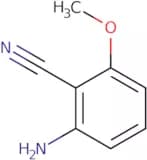
CAS:<p>2-Amino-6-methoxybenzonitrile is an organic compound that belongs to a group of monosubstituted hydroxylamines. It has been used in the synthesis of various analogues, such as caprolactam and methoxyanthranilic acid. Hydrochloric acid reacts with 2-amino-6-methoxybenzonitrile to form 2-amino-6-hydroxybenzonitrile, which can be oxidized to 2-amino-6-(hydroxymethyl)benzonitrile. This reaction is catalyzed by copper or zinc metal.</p>Formula:C8H8N2OPurity:Min. 95%Color and Shape:PowderMolecular weight:148.16 g/mol5-Nitro-2-(trifluoromethyl)benzoic acid
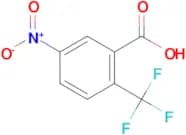
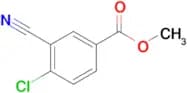
CAS:Formula:C8H4F3NO4Purity:97%Color and Shape:SolidMolecular weight:235.118Methyl 4-chloro-3-cyanobenzoate
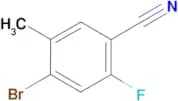
CAS:Formula:C9H6ClNO2Purity:95%Color and Shape:SolidMolecular weight:195.64-Bromo-2-fluoro-5-methylbenzonitrile
CAS:Formula:C8H5BrFNPurity:98%Color and Shape:SolidMolecular weight:214.0372-(4,4,5,5-Tetramethyl-1,3,2-dioxaborolan-2-yl)-5-(trifluoromethyl)benzonitrile
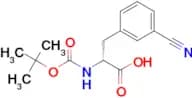
CAS:Formula:C14H15BF3NO2Purity:95%Color and Shape:SolidMolecular weight:297.08(R)-2-((tert-Butoxycarbonyl)amino)-3-(3-cyanophenyl)propanoic acid
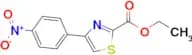
CAS:Formula:C15H18N2O4Purity:97%Color and Shape:SolidMolecular weight:290.319Ethyl 4-(4-nitrophenyl)thiazole-2-carboxylate
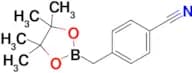
CAS:Formula:C12H10N2O4SPurity:97%Molecular weight:278.284-((4,4,5,5-Tetramethyl-1,3,2-dioxaborolan-2-yl)methyl)benzonitrile
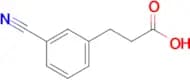
CAS:Formula:C14H18BNO2Purity:97%Color and Shape:White powderMolecular weight:243.113-Cyanobenzenepropanoic acid
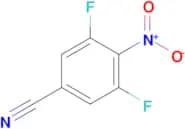
CAS:Formula:C10H9NO2Purity:98%Color and Shape:SolidMolecular weight:175.1873,5-Difluoro-4-nitrobenzonitrile
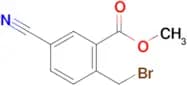
CAS:Formula:C7H2F2N2O2Purity:96%Color and Shape:SolidMolecular weight:184.102Methyl 2-(bromomethyl)-5-cyanobenzoate
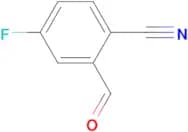
CAS:Formula:C10H8BrNO2Purity:95%Color and Shape:No data available.Molecular weight:254.0834-Fluoro-2-formylbenzonitrile
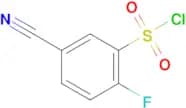
CAS:Formula:C8H4FNOPurity:98%Color and Shape:Solid, No data available.Molecular weight:149.1245-Cyano-2-fluorobenzene-1-sulfonyl chloride
CAS:Formula:C7H3ClFNO2SPurity:98%Color and Shape:Solid, Yellow powderMolecular weight:219.612-Bromo-6-iodobenzonitrile
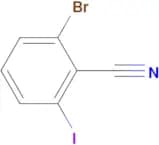
CAS:Formula:C7H3BrINPurity:95%Color and Shape:SolidMolecular weight:307.9163-(6-OXO-1,6-DIHYDRO-PYRIDAZIN-3-YL)-BENZONITRILE
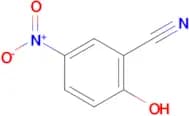
CAS:Formula:C11H7N3OPurity:98%Molecular weight:197.1972-Hydroxy-5-nitrobenzonitrile
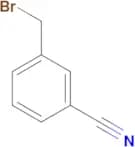
CAS:Formula:C7H4N2O3Purity:98%Color and Shape:SolidMolecular weight:164.123-Cyanobenzyl bromide
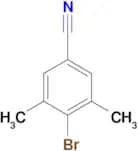
CAS:Formula:C8H6BrNPurity:97%Color and Shape:Beige powderMolecular weight:196.0474-Bromo-3,5-dimethyl-benzonitrile
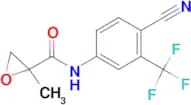
CAS:Formula:C9H8BrNPurity:97%Color and Shape:SolidMolecular weight:210.074N-(4-Cyano-3-(trifluoromethyl)phenyl)-2-methyloxirane-2-carboxamide
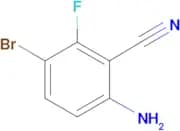
CAS:Formula:C12H9F3N2O2Purity:98%Color and Shape:SolidMolecular weight:270.2112-Amino-5-bromo-6-fluorobenzonitrile
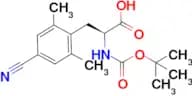
CAS:Formula:C7H4BrFN2Purity:96%Color and Shape:SolidMolecular weight:215.025(S)-2-((tert-Butoxycarbonyl)amino)-3-(4-cyano-2,6-dimethylphenyl)propanoic acid
CAS:Purity:97%Molecular weight:318.3729858N-(4-Cyanophenyl)acetamide
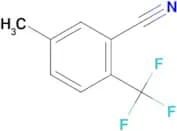
CAS:Formula:C9H8N2OPurity:98%Color and Shape:SolidMolecular weight:160.1765-Methyl-2-(trifluoromethyl)benzonitrile
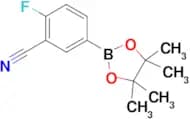
CAS:Formula:C9H6F3NPurity:95%Color and Shape:No data available.Molecular weight:185.1493-Cyano-4-fluorophenylboronic acid pinacol ester
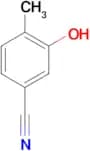
CAS:Formula:C13H15BFNO2Purity:95%Color and Shape:SolidMolecular weight:247.083-Hydroxy-4-methylbenzonitrile
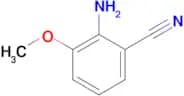
CAS:Formula:C8H7NOPurity:97%Color and Shape:SolidMolecular weight:133.152-Amino-3-methoxybenzonitrile
CAS:Formula:C8H8N2OPurity:96%Color and Shape:SolidMolecular weight:148.165







![2-[(3-CYANOPHENYL)AMINO]ACETIC ACID](/_next/image/?url=https%3A%2Fstatic.cymitquimica.com%2Fproducts%2F10%2Fthumb-webp%2FF849526.webp&w=3840&q=75)