Benzoic Acids
Benzoic acids are aromatic carboxylic acids with the molecular formula C7H6O2, characterized by a benzene ring bonded to a carboxyl group (-COOH). These compounds are widely used as preservatives, intermediates in organic synthesis, and in the production of various chemicals, including dyes and fragrances. Benzoic acids are also important in the food and pharmaceutical industries. At CymitQuimica, we provide a diverse range of high-quality benzoic acids to support your research and industrial needs.
Found 5475 products of "Benzoic Acids"
Sort by
Purity (%)
0
100
|
0
|
50
|
90
|
95
|
100
2,4-Dihydroxybenzoic acid
CAS:2,4-Dihydroxybenzoic acid (2,4-DB) is a metabolite of salicylic acid. It is used as an intermediate in the production of various drugs and dyes. 2,4-DB has been shown to be effective against hepatic steatosis induced by hydrogen fluoride in mice. This drug also inhibits mitochondrial membrane potential and DNA binding activity in human serum. 2,4-DB can bind to the α subunit of mitochondrial ATPase and act as a competitive inhibitor for p-hydroxybenzoic acid which is essential for the activation of this enzyme. The x-ray diffraction data from crystalline 2,4-DB shows that this compound binds to dna with coordination geometry that resembles that of salicylic acid. The kinetic studies have shown that 2,4-DB reacts noncompetitively with nonsteroidal anti-inflammatory drugs (NSAIDs).Formula:C7H6O4Purity:Min 98%Color and Shape:PowderMolecular weight:154.12 g/mol3-Nitro-5-(trifluoromethyl)benzoic acid
CAS:3-Nitro-5-(trifluoromethyl)benzoic acid is a versatile chemical that is an intermediate in the synthesis of a number of pharmaceutical compounds. It can be used to synthesize complex compounds and has been shown to have a high reactivity as well as being useful as a building block for other reactions. 3-Nitro-5-(trifluoromethyl)benzoic acid is also used as a reagent or reaction component in various research projects, such as in the synthesis of many pharmaceuticals and fine chemicals. This chemical has CAS No. 328-80-3, which provides it with high quality and makes it a valuable speciality chemical.Formula:C8H4F3NO4Purity:80%Color and Shape:PowderMolecular weight:235.12 g/mol4-(Carboxymethyl)benzoic Acid
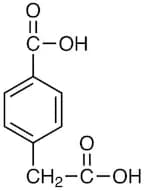
CAS:Formula:C9H8O4Purity:>98.0%(T)Color and Shape:White to Almost white powder to crystalMolecular weight:180.163-Amino-5-bromobenzoic acid
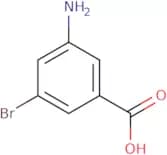
CAS:3-Amino-5-bromobenzoic acid is a synthetic, water soluble anti-inflammatory agent. It is cytotoxic to macrophages in vitro and has significant efficacy in vivo. Its mechanism of action is to inhibit the synthesis of nucleotides in the cell. 3-Amino-5-bromobenzoic acid also inhibits inflammation by inhibiting prostaglandin synthesis and has been shown to be effective against seborrheic dermatitis. This drug has pharmacokinetic properties that are favourable for oral administration and is rapidly absorbed from the gastrointestinal tract with a half life of 2 hours. The drug is eliminated through the kidneys, with an elimination half life of 6 hours.Formula:C7H6BrNO2Purity:Min. 95%Color and Shape:PowderMolecular weight:216.03 g/mol3,5-Dimethoxy-4-hydroxybenzoic acid methyl ester
CAS:3,5-Dimethoxy-4-hydroxybenzoic acid methyl ester (DMHBME) is a natural compound that has been shown to have high redox potential values and chemical stability. This compound is an inhibitor of p-hydroxylases and has been shown to inhibit human serum laccase activity. DMHBME also inhibits polymerase chain reactions in the presence of DNA templates, which may be due to its ability to bind to the enzyme at the active site. DMHBME is a potent antimicrobial agent that can be used as a fungicide or preservative in food products. It is also effective against bacteria such as Staphylococcus aureus, Clostridium perfringens, Escherichia coli, and Mycobacterium tuberculosis.Formula:C10H12O5Purity:Min. 95%Color and Shape:White PowderMolecular weight:212.2 g/mol3,5-Dimethoxybenzoic acid ethyl ester
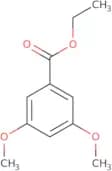
CAS:3,5-Dimethoxybenzoic acid ethyl ester is a carbonic acid ester that can be used as a synthetic intermediate. It is synthesized by reacting 3,5-dimethoxybenzoic acid with the ethyl chloride. The molecular weight of 3,5-dimethoxybenzoic acid ethyl ester is 222.6 g/mol. The homologous series includes dimethylformamide, diethylformamide, and diisopropylformamide. This compound has been shown to inhibit growth factor signaling in vitro and in vivo and may have potential therapeutic applications for cancer treatment. Impurities that may be found in 3,5-dimethoxybenzoic acid ethyl ester include chloride and sulfinyl groups. Synopses of the molecular modeling study are available on request.Formula:C11H14O4Purity:Min. 95%Molecular weight:210.23 g/mol3-Bromo-4-nitrobenzoic acid
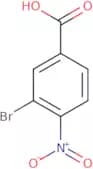
CAS:3-Bromo-4-nitrobenzoic acid is a chemical compound with the molecular formula CHBrNO2. It is a versatile building block that can be used in the synthesis of many different compounds. 3-Bromo-4-nitrobenzoic acid is a white crystalline solid that is soluble in water, ethanol, and ether. It reacts with many substances to produce other useful compounds. It can also be used as a reagent for the detection of proteins or nucleic acids. This product has been shown to be an effective intermediate in organic reactions and has been used as a scaffold in the synthesis of complex molecules such as natural products, pharmaceuticals, and agrochemicals.Formula:C7H4BrNO4Purity:Min. 95%Color and Shape:PowderMolecular weight:246.02 g/mol4-Nitrobenzoic anhydride
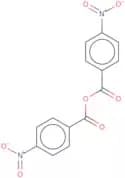
CAS:4-Nitrobenzoic anhydride is a chemical compound that is used as a reagent in organic synthesis. It can be prepared by reacting magnesium with 4-nitrobenzoyl chloride in tetrahydrofuran. This reaction produces the salt of the acid, which can then be reacted with ethyl acetate to form the diethyl ester. The product can also be prepared by reacting propionyl chloride and peroxide in tetrahydrofuran or by reaction of 1-naphthaldehyde and chloride in acetic acid. 4-Nitrobenzoic anhydride is a salt that has been used as a corrosion inhibitor for metals and as a reducing agent for epoxides. It has also been used to produce other substances, such as methylamines, amines, and nitro compounds. 4-Nitrobenzoic anhydride reacts with nucleophiles such as water or alkalis to produce peroxFormula:C14H8N2O7Purity:Min. 95%Color and Shape:Off-White PowderMolecular weight:316.22 g/mol2-Amino-5-(trifluoromethyl)benzoic acid methyl ester
CAS:2-Amino-5-(trifluoromethyl)benzoic acid methyl ester is a fine chemical that can be used in research and development. It is an intermediate for the synthesis of other compounds, such as pharmaceuticals and pesticides. This compound has a wide range of uses in various chemical reactions, including as a building block or reaction component.Formula:C9H8F3NO2Purity:Min. 95%Color and Shape:PowderMolecular weight:219.16 g/mol2-Bromo-4-chlorobenzoic acid
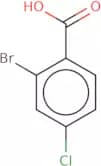
CAS:2-Bromo-4-chlorobenzoic acid (2BCBA) is a potent inhibitor of the hepatitis C virus NS5B polymerase. It has been shown to inhibit the growth of cancer cells in vitro. 2BCBA binds to the active site of the NS5B polymerase, which is essential for viral replication. In addition, it has been found to have synergistic effects with other anti-hepatitis drugs such as interferon. The binding affinity of 2BCBA and its derivatives to NS5B polymerase are determined by their interaction energies and also by their ability to form supramolecular complexes with this enzyme. The inhibition constants for 2BCBA were calculated using high performance liquid chromatography (HPLC). This drug is an isomeric compound that can exist in two different forms: cis and trans.Formula:C7H4BrClO2Purity:Min. 95%Color and Shape:PowderMolecular weight:235.46 g/mol2,6-Dibromobenzoic acid
CAS:2,6-Dibromobenzoic acid is a synthetic molecule that can be used to synthesize pyrrole derivatives in the presence of a base. It has been shown to react with a number of molecules, including halogens and chlorides. The active site of 2,6-dibromobenzoic acid is its bromine atom. The steric interactions between the 2,6-dibromobenzoic acid molecule and the substrate are strong enough to prevent other molecules from accessing the active site. Chlorides and diphenylmethane can also bind to 2,6-dibromobenzoic acid due to their similar properties. This molecule has also been shown to interact with aluminium and solvents such as ethanol or acetone.Formula:C7H4Br2O2Purity:Min. 95%Color and Shape:White PowderMolecular weight:279.91 g/mol3-Bromo-4-ethylbenzoic acid
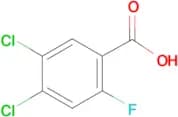
CAS:Formula:C9H9BrO2Purity:95%Color and Shape:SolidMolecular weight:229.0734,5-Dichloro-2-fluorobenzoic acid
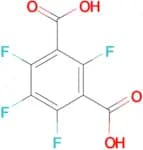
CAS:Formula:C7H3Cl2FO2Purity:98%Color and Shape:SolidMolecular weight:209Tetrafluoroisophthalic acid
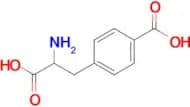
CAS:Formula:C8H2F4O4Purity:98%Color and Shape:Solid, Off-white powderMolecular weight:238.0944-(2-Amino-2-carboxyethyl)benzoic acid
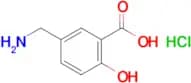
CAS:Formula:C10H11NO4Purity:95.0%Color and Shape:SolidMolecular weight:209.2015-(Aminomethyl)-2-hydroxybenzoic acid hydrochloride
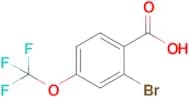
CAS:Formula:C8H10ClNO3Purity:97.0%Color and Shape:SolidMolecular weight:203.622-Bromo-4-(trifluoromethoxy)benzoic acid
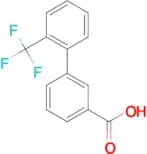
CAS:Purity:96%Color and Shape:SolidMolecular weight:285.01599122′-Trifluoromethylbiphenyl-3-carboxylic acid
CAS:Formula:C14H9F3O2Purity:97%Color and Shape:SolidMolecular weight:266.2194-((3-fluorophenyl)sulfonamido)benzoic acid
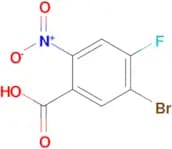
CAS:Formula:C13H10FNO4SPurity:95.0%Molecular weight:295.285-Bromo-4-fluoro-2-nitrobenzoic acid
CAS:Formula:C7H3BrFNO4Purity:95.0%Color and Shape:SolidMolecular weight:264.0064-(4-Nitrophenoxy)benzoic acid
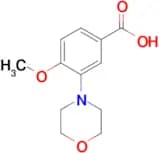
CAS:Formula:C13H9NO5Purity:98%Color and Shape:SolidMolecular weight:259.2174-Methoxy-3-(4-morpholinyl)benzoic acid
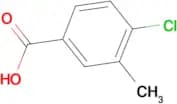
CAS:Formula:C12H15NO4Purity:95.0%Color and Shape:Solid, Beige powderMolecular weight:237.2554-Chloro-3-methylbenzoic acid
CAS:Formula:C8H7ClO2Purity:97%Color and Shape:SolidMolecular weight:170.593-(Chloromethyl)benzoic acid
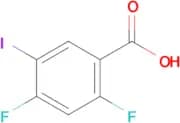
CAS:Formula:C8H7ClO2Purity:98%Color and Shape:Solid, Light grey powderMolecular weight:170.592,4-Difluoro-5-iodobenzoic acid
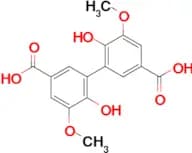
CAS:Formula:C7H3F2IO2Purity:98%Color and Shape:SolidMolecular weight:2846,6′-dihydroxy-5,5′-dimethoxybiphenyl-3,3′-dicarboxylic acid
CAS:Formula:C16H14O8Color and Shape:SolidMolecular weight:334.284-Hexylbenzoic acid
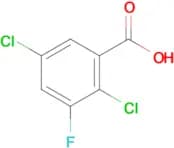
CAS:Formula:C13H18O2Purity:96%Color and Shape:Liquid, No data available.Molecular weight:206.2852,5-Dichloro-3-fluorobenzoic acid
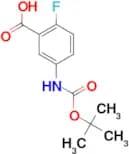
CAS:Formula:C7H3Cl2FO2Purity:95%Color and Shape:SolidMolecular weight:2095-((tert-Butoxycarbonyl)amino)-2-fluorobenzoic acid
CAS:Formula:C12H14FNO4Purity:98%Molecular weight:255.2454-Carboxyphenyl isothiocyanate
CAS:Formula:C8H5NO2SPurity:97.0%Color and Shape:SolidMolecular weight:179.19








![3,3′-Disulfo-[1,1′-biphenyl]-4,4′-dicarboxylic acid](/_next/image/?url=https%3A%2Fstatic.cymitquimica.com%2Fproducts%2F10%2Fthumb-webp%2FF695941.webp&w=3840&q=75)

![2′,3-Dichloro-[1,1′-biphenyl]-4-carboxylic acid](/_next/image/?url=https%3A%2Fstatic.cymitquimica.com%2Fproducts%2F10%2Fthumb-webp%2FF695101.webp&w=3840&q=75)




![2-[(2-oxo-2-phenylethyl)thio]benzoic acid](/_next/image/?url=https%3A%2Fstatic.cymitquimica.com%2Fproducts%2F10%2Fthumb-webp%2FF375300.webp&w=3840&q=75)