Benzyl alcohols
Benzyl alcohols are aromatic alcohols featuring a benzene ring attached to a hydroxymethyl group (-CH2OH). These compounds are used as solvents, preservatives, and intermediates in the synthesis of pharmaceuticals, fragrances, and resins. Benzyl alcohols are known for their antimicrobial properties and versatility in various chemical reactions. At CymitQuimica, we offer a wide selection of high-quality benzyl alcohols to support your research and industrial applications.
Found 1458 products of "Benzyl alcohols"
Sort by
Purity (%)
0
100
|
0
|
50
|
90
|
95
|
100
2,3-Difluoro-6-nitrophenol
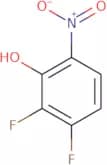
CAS:<p>2,3-Difluoro-6-nitrophenol is a fluorinated phenolic compound that is used in biochemical research as a competitive inhibitor of bacterial growth. It is synthesized by the reaction of 2,3-difluorophenol with nitric acid. The chemical structure can be determined through infrared, NMR, and mass spectrometry techniques. 2,3-Difluoro-6-nitrophenol has been shown to inhibit bacterial growth by binding to the enzyme cytochrome c oxidase. This inhibition prevents electron transport from occurring, resulting in an accumulation of reactive oxygen species and cell death.</p>Formula:C6H3F2NO3Purity:Min. 95%Color and Shape:PowderMolecular weight:175.09 g/mol2,6-Dichloroindophenol sodium salt hydrate
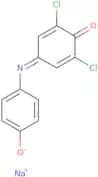
CAS:<p>Blue redox dye; used to quantify vitamin C content</p>Formula:C12H7Cl2NNaO2·xH2OColor and Shape:Green PowderMolecular weight:291.09 g/mol4-Iodophenol
CAS:<p>An enhancer used in chemiluminescent reactions</p>Formula:C6H5IOPurity:Min. 98.5 Area-%Color and Shape:PowderMolecular weight:220.01 g/mol2-Amino-5-fluorophenol
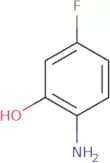
CAS:<p>2-Amino-5-fluorophenol (2AP) is a natural product that has been found to be an effective inhibitor of the enzyme fatty acid synthase. 2AP has been shown to inhibit the growth of Candida albicans, Trichophyton mentagrophytes, and Toxoplasma gondii in a model system. This compound is used as a starting material for the synthesis of other pharmaceutical compounds, such as fluoroquinolones and aminoglycosides. 2AP inhibits the activity of the enzyme fatty acid synthase by binding to the thiolate moiety on cysteine residues near the active site and thus preventing substrate binding. This inhibition results in a decrease in fatty acid synthesis, which leads to cell death.</p>Formula:C6H6FNOPurity:Min. 95%Color and Shape:PowderMolecular weight:127.12 g/mol2,6-Dimethoxyphenol
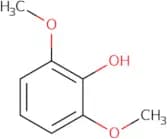
CAS:<p>2,6-Dimethoxyphenol is a chemical compound that is used in the manufacture of industrial chemicals. It is also used as an intermediate in organic synthesis and has been shown to have antibacterial activity against some strains of bacteria. 2,6-Dimethoxyphenol binds to bacterial ribosomes by interfering with the protein synthesis machinery. The reaction mechanism occurs via a nucleophilic attack by the hydroxyl group on the carbonyl carbon atom, leading to a tetrahedral intermediate with the coordination geometry of square planar. This compound has been shown to scavenge anion radicals and has high resistance to oxidation from redox potential.</p>Formula:C8H10O3Purity:Min. 99 Area-%Color and Shape:PowderMolecular weight:154.16 g/mol2-Chloro-3-fluorobenzyl alcohol
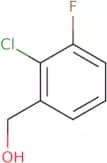
CAS:<p>2-Chloro-3-fluorobenzyl alcohol is a versatile building block for the synthesis of complex compounds. It has been used as a reagent and intermediate in research chemical synthesis. This compound is useful for the preparation of high quality, useful intermediates and reaction components. 2-Chloro-3-fluorobenzyl alcohol can be used as a scaffold to build different organic compounds with different functional groups.</p>Formula:C7H6ClFOPurity:Min. 95%Color and Shape:PowderMolecular weight:160.57 g/mol4-Ethylbenzyl alcohol
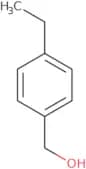
CAS:<p>4-Ethylbenzyl alcohol is a constituent of natural rubber and is produced as a by-product during the manufacture of styrene. It has been shown that 4-ethylbenzyl alcohol can inhibit phosphatidylethanolamine N-methyltransferase, an enzyme that catalyzes the synthesis of phosphatidylethanolamine from phosphatidylcholine, thereby inhibiting lipid biosynthesis in cells. This inhibition may be due to the presence of the hydroxy group on the benzene ring which may bind to the active site of the enzyme and prevent it from binding with its substrate. In addition, 4-ethylbenzyl alcohol may act as an organic solvent and react with other substances in cells to form cytotoxic products. 4-Ethylbenzyl alcohol has been shown to cause narcosis when used in high concentrations or over a long period.</p>Formula:C9H12OPurity:90%Color and Shape:PowderMolecular weight:136.19 g/mol4-Chlorobenzyl alcohol
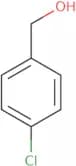
CAS:<p>4-Chlorobenzyl alcohol is a lipase inhibitor that is used in the treatment of pancreatic disorders. It binds to the active site of pancreatic lipase, which prevents the enzyme from hydrolyzing the ester bonds of glycol esters and long chain fatty acids, thereby inhibiting their absorption. This product does not inhibit other enzymes (e.g., amylase) or have an effect on chloride secretion. The reaction with 4-chlorobenzyl alcohol can also be catalyzed by hydrogen bonding between the carboxylic acid group and a hydroxyl group. Miconazole nitrate is a synthetic antifungal agent that inhibits ergosterol synthesis by binding to 14-alpha demethylase, which converts lanosterol into ergosterol. It has been shown to inhibit the growth of fungi such as Candida albicans and Aspergillus niger when combined with 4-chlorobenzyl alcohol. Cleavage products</p>Formula:C7H7ClOPurity:Min. 98 Area-%Color and Shape:White PowderMolecular weight:142.58 g/mol4-Phenoxyphenol
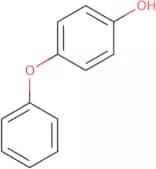
CAS:<p>4-Phenoxyphenol is a phenoxy compound that inhibits bacterial growth by binding to DNA-dependent RNA polymerase, thereby preventing transcription and replication. 4-Phenoxyphenol is synthesized by the reaction of anhydrous sodium with 4-phenoxyphenol in the presence of copper chloride and hydroxyl group. The resulting product has a hydroxyl group attached to the aromatic ring of the phenoxy group. This molecule is then inserted into an expression plasmid with a promoter sequence, which directs it to be expressed in liver cells. The final product can be used as an antibacterial agent against bacteria that are resistant to penicillin, ampicillin, and erythromycin.</p>Formula:C12H10O2Purity:Min. 95%Color and Shape:PowderMolecular weight:186.21 g/mol2-Bromo-4,5-dimethoxybenzyl alcohol
CAS:2-Bromo-4,5-dimethoxybenzyl alcohol is an electrophilic brominating agent. It has been used in the synthesis of aryllithiums, organoiron compounds and chromenes. It is also used in the synthesis of nucleophiles, synthons and amaryllidaceae alkaloids. 2-Bromo-4,5-dimethoxybenzyl alcohol reacts with lithium diisopropylamide (LDA) to produce an aryllithium compound that is used as a nucleophile in organic synthesis reactions. This alcohol can be converted to an arene by reaction with carbon monoxide gas.Formula:C9H11BrO3Purity:Min. 95%Color and Shape:PowderMolecular weight:247.09 g/mol3-Bromo-5-hydroxybenzyl alcohol
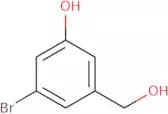
CAS:3-Bromo-5-hydroxybenzyl alcohol is a useful building block that can be used to synthesize more complex compounds. This chemical is a reagent and reaction component for organic synthesis. 3-Bromo-5-hydroxybenzyl alcohol is useful as a high quality research chemical, speciality chemical, or versatile building block. It reacts rapidly with strong oxidants and strong bases to form the corresponding bromohydrins. The CAS number for 3-bromo-5-hydroxybenzyl alcohol is 1020336-51-9.Formula:C7H7BrO2Purity:Min. 95%Color and Shape:PowderMolecular weight:203.03 g/mol2-Methoxybenzyl alcohol
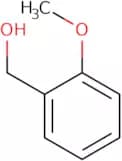
CAS:<p>2-Methoxybenzyl alcohol is a reactive compound that contains two methoxy (CH3O-) groups. It can be used for the synthesis of chiral molecules because it forms an asymmetric hydrogen bond. The reaction of 2-methoxybenzyl alcohol with oxygenated substances, such as formaldehyde and acetaldehyde, leads to oxidation products, including hydroxybenzaldehyde, which can be isolated and converted to benzalacetone. This product has been shown to have photocatalytic activity in the presence of ultraviolet light.</p>Formula:C8H10O2Purity:Min. 95%Color and Shape:Colorless Clear LiquidMolecular weight:138.16 g/mol3-Methoxybenzyl alcohol
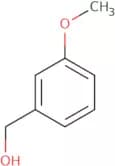
CAS:<p>3-Methoxybenzyl alcohol is a natural product from the root of the orchid Dendrobium officinale. It has been shown to inhibit the growth of bacteria by binding to the enzyme Aldehyde Dehydrogenase, which is required for cellular energy production. The product also inhibits bacterial Vanillyl Alcohol Dehydrogenase, which prevents the formation of vanillin. 3-Methoxybenzyl alcohol has a neutral pH and can be used as an antimicrobial agent in acidic foods and beverages. 3-Methoxybenzyl alcohol also has antioxidant properties, and has been shown to prevent damage from oxidative stress.</p>Formula:C8H10O2Purity:Min. 95%Color and Shape:Colorless Clear LiquidMolecular weight:138.16 g/mol3-Methoxyphenol - 98%
CAS:<p>3-Methoxyphenol is a chemical that is used in the treatment of wastewater. It has been shown to have antibacterial and antiviral properties, as well as the ability to prevent bowel disease. 3-Methoxyphenol can be used to treat metal hydroxides by reacting with them and converting them into metal oxides. The reaction mechanism of 3-methoxyphenol has been best studied using coumarin derivatives, which are structurally similar to 3-methoxyphenol.<br>The ester hydrochloride salt form of 3-methoxyphenol is a prodrug that is metabolized by cytochrome P450 enzymes in the liver via an esterase pathway. This prodrug may be especially useful for patients with bowel disease or low levels of cytochrome P450 enzymes, such as those with chronic kidney failure or AIDS.<br>3-Methoxyphenol has been shown to inhibit Jak</p>Formula:C7H8O2Purity:Min. 98 Area-%Color and Shape:Clear LiquidMolecular weight:124.14 g/mol4-Cyano-3-fluorophenol
CAS:<p>4-Cyano-3-fluorophenol is a chemical compound that has two phenoxy groups and one fluorine atom. 4-Cyano-3-fluorophenol has been shown to be an effective antagonist of GABA A receptors, which may be due to its ability to interact with the chloride ion site on the receptor, or its hydrogen bonding effects with the receptor. 4-Cyano-3-fluorophenol has been shown to have potent effects in a number of other biological systems. These include inhibition of suzuki coupling reactions (a type of nucleophilic substitution reaction), as well as acylation reactions in which an acid reacts with an alcohol to form an ester, and pharmacokinetic properties. 4-Cyano-3-fluorophenol also has been shown to bind selectively to proteins, including those involved in protein–protein interactions.</p>Formula:C7H4FNOPurity:Min. 95%Color and Shape:White PowderMolecular weight:137.11 g/mol4-Aminothiophenol
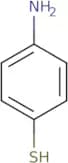
CAS:<p>4-Aminothiophenol is a redox potential probe that is used as an analytical chemistry reagent. It has been shown to react with nitrite ion and form a nitrogen atom, which can be detected by Raman spectroscopy. 4-Aminothiophenol has also been used to measure the amount of fatty acid in human serum samples. 4-Aminothiophenol has been shown to have an enhancement effect on the detection sensitivity of model system reactions and can be used as a model system for these reactions. The reaction mechanism for this compound is not well understood, but it is believed that it may involve electron transfer from the aminothiophenol radical cation to the nitrite ion.</p>Purity:Min. 95%Color and Shape:White PowderMolecular weight:125.19 g/molBisphenol F bis(2,3-dihydroxypropyl) ether
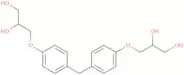
CAS:<p>Standard for determination of toxic monomers from polymer coatings</p>Formula:C19H24O6Purity:Min. 95%Color and Shape:White PowderMolecular weight:348.39 g/mol4-Methylbenzyl alcohol
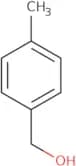
CAS:<p>4-Methylbenzyl alcohol is a reactive molecule that has been shown to form an acid in water. The formation of this acid can be attributed to the loss of a proton from the methyl group. This acid is generated by a reaction mechanism that involves the nucleophilic attack of hydrogen fluoride on the methyl group, leading to its conversion into a carbocation. 4-Methylbenzyl alcohol can also react with β-amino acids and hydrogen fluoride in organic solvents at high pH values, through similar mechanisms.</p>Formula:C8H10OPurity:Min. 95%Color and Shape:PowderMolecular weight:122.16 g/mol3,4-Dimethoxyphenol
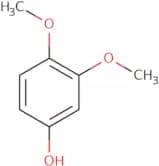
CAS:<p>3,4-Dimethoxyphenol is a compound that is structurally similar to p-hydroxybenzoic acid. It has been shown to inhibit fatty acid synthesis in rat liver microsomes by competitive inhibition of the enzyme β-hydroxylase. This inhibition may be due to its ability to form a stable complex with the enzyme and thereby preventing substrate binding. 3,4-Dimethoxyphenol can also be prepared by sulfonation of 3,4-dihydroxybenzaldehyde followed by chromatographic purification. The compound has been used as an analytical reagent for the determination of sulfonic acids, and it has been shown to have electrochemical methods with good sensitivity and selectivity.</p>Formula:C8H10O3Purity:Min. 95%Color and Shape:White PowderMolecular weight:154.16 g/mol4-Chloro-2-methoxyphenol
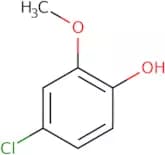
CAS:4-Chloro-2-methoxyphenol (4CMP) is a type of chemical compound that belongs to the aryl halide class. It is used in wastewater treatment as an inhibitor of bacterial growth. 4CMP inhibits bacterial growth by reacting with fatty acids at the surface of the bacteria, forming a coating that prevents bacterial attachment to solid surfaces and mineralization. This process has been shown to be effective in both batch and flow systems, with copper chloride being the best catalyst for this reaction. Kinetic studies have shown that 4CMP has an inhibitory effect on the reaction rate of activated sludge microorganisms, which can be used to optimize process conditions.Formula:C7H7ClO2Purity:Min. 95%Color and Shape:Clear LiquidMolecular weight:158.58 g/mol