Benzyl alcohols
Benzyl alcohols are aromatic alcohols featuring a benzene ring attached to a hydroxymethyl group (-CH2OH). These compounds are used as solvents, preservatives, and intermediates in the synthesis of pharmaceuticals, fragrances, and resins. Benzyl alcohols are known for their antimicrobial properties and versatility in various chemical reactions. At CymitQuimica, we offer a wide selection of high-quality benzyl alcohols to support your research and industrial applications.
Found 1458 products of "Benzyl alcohols"
Sort by
Purity (%)
0
100
|
0
|
50
|
90
|
95
|
100
2,5-Dimethylbenzyl alcohol
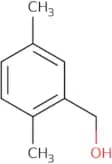
CAS:<p>2,5-Dimethylbenzyl alcohol is a colorless to pale yellow liquid used primarily in the manufacture of perfumes. It is also used as a solvent and an intermediate in organic synthesis. This chemical has been shown to be taken up by adipose tissue and excreted in urine as glucuronide conjugates. 2,5-Dimethylbenzyl alcohol is metabolized into 5-methylbenzaldehyde and then further into 2-methoxy-5-methylbenzaldehyde (2MMB). The final metabolic product of 2,5-dimethylbenzyl alcohol is benzoic acid.</p>Formula:C9H12OPurity:Min. 97%Color and Shape:PowderMolecular weight:136.19 g/molChlorphenesin carbamate
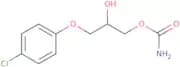
CAS:<p>Chlorphenesin carbamate is a centrally acting muscle relaxant, which is a synthetic compound derived from chlorphenesin.</p>Formula:C10H12ClNO4Purity:Min. 95%Color and Shape:PowderMolecular weight:245.66 g/mol4-Acetamidophenol
CAS:4-Acetamidophenol (4AP) is a natural compound that has been shown to inhibit nuclear DNA damage in vitro. It also has anti-inflammatory activity, which may be due to its ability to inhibit cyclooxygenase-1 and cyclooxygenase-2 enzymes. 4AP is synthesized by the condensation of acetaminophen with formaldehyde and sodium hydroxide. This drug binds to the signal peptide in the Toll-like receptor 2 (TLR2) protein, preventing TLR2 from activating inflammatory pathways. The matrix effect of 4AP is thought to play a role in its mechanism of action, as well as its biocompatibility with tissues. The analytical method used for this product is high performance liquid chromatography with ultraviolet detection at 280 nm.Formula:C8H9NO2Purity:Min. 95%Color and Shape:PowderMolecular weight:151.16 g/mol2-Amino-4-nitrophenol
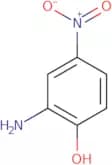
CAS:<p>2-Amino-4-nitrophenol is a chemical compound that has been used in the modeling of hydrogen bonds. It is also used as a reagent for the determination of the concentration of hydrochloric acid and sodium carbonate. 2-Amino-4-nitrophenol is activated with hydrochloric acid and then reacts with sodium carbonate to produce a yellow solution. The solution's colour changes with pH, which can be determined by measuring the absorption at different wavelengths on an nmr spectrometer. Nitro groups are present in 2-amino-4-nitrophenol, which may cause allergic reactions. This chemical also has an acidic nature due to its inorganic acid properties.</p>Formula:C6H6N2O3Purity:Min. 95%Color and Shape:Slightly Yellow PowderMolecular weight:154.12 g/mol2-Bromophenol
CAS:<p>2-Bromophenol is a sodium salt that can be prepared by the reaction of sodium hydroxide with 2-bromoaniline. It is an inhibitor of acetylcholinesterase, which has been shown to be effective in treating Alzheimer's disease and other neurodegenerative disorders. 2-Bromophenol has been shown to inhibit the polymerase chain reaction (PCR) in human serum and mitochondrial membrane potential, as well as electrochemical impedance spectroscopy. It also inhibits the formation of intramolecular hydrogen bonds during the catalytic cycle of acetylcholinesterase.</p>Formula:C6H5BrOPurity:Min. 95%Color and Shape:Colorless Clear LiquidMolecular weight:173.01 g/molDichlorophen BP
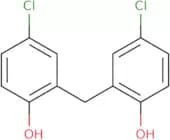
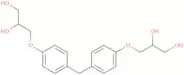
CAS:Anti-cestodal agent; tapeworm infection treatmentFormula:C13H10Cl2O2Purity:(Titration) 97 - 101%Color and Shape:PowderMolecular weight:269.12 g/molBisphenol F bis(2,3-dihydroxypropyl) ether
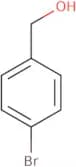
CAS:<p>Standard for determination of toxic monomers from polymer coatings</p>Formula:C19H24O6Purity:Min. 95%Color and Shape:White PowderMolecular weight:348.39 g/mol4-Bromobenzyl alcohol
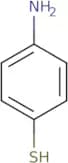
CAS:<p>4-Bromobenzyl alcohol is a reactive chemical that reacts with water to form the hydroxyl group and hydrogen bond. It has been shown to inhibit the reaction of ethyl formate with biphenyl by cleaving the molecule and forming a new site specific. Magnetic resonance spectroscopy has been used to study the reactivity of 4-bromobenzyl alcohol in model systems. The reaction mechanism is thought to be similar to that of 2-bromoethanol, which is an inhibitor molecule for this process. 4-Bromobenzyl alcohol's magnetic resonance spectrum shows proton peaks at 3.02 ppm, 2.19 ppm, and 1.77 ppm, as well as a signal at 8.03 ppm corresponding to the hydroxyl group.</p>Formula:C7H7BrOPurity:Min. 95%Color and Shape:PowderMolecular weight:187.03 g/mol4-Aminothiophenol
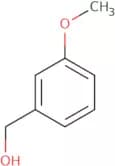
CAS:<p>4-Aminothiophenol is a redox potential probe that is used as an analytical chemistry reagent. It has been shown to react with nitrite ion and form a nitrogen atom, which can be detected by Raman spectroscopy. 4-Aminothiophenol has also been used to measure the amount of fatty acid in human serum samples. 4-Aminothiophenol has been shown to have an enhancement effect on the detection sensitivity of model system reactions and can be used as a model system for these reactions. The reaction mechanism for this compound is not well understood, but it is believed that it may involve electron transfer from the aminothiophenol radical cation to the nitrite ion.</p>Purity:Min. 95%Color and Shape:White PowderMolecular weight:125.19 g/mol3-Methoxybenzyl alcohol
CAS:<p>3-Methoxybenzyl alcohol is a natural product from the root of the orchid Dendrobium officinale. It has been shown to inhibit the growth of bacteria by binding to the enzyme Aldehyde Dehydrogenase, which is required for cellular energy production. The product also inhibits bacterial Vanillyl Alcohol Dehydrogenase, which prevents the formation of vanillin. 3-Methoxybenzyl alcohol has a neutral pH and can be used as an antimicrobial agent in acidic foods and beverages. 3-Methoxybenzyl alcohol also has antioxidant properties, and has been shown to prevent damage from oxidative stress.</p>Formula:C8H10O2Purity:Min. 95%Color and Shape:Colorless Clear LiquidMolecular weight:138.16 g/mol4-Bromo-2,6-di-tert-butylphenol
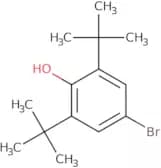
CAS:<p>4-Bromo-2,6-di-tert-butylphenol is a chemical compound. It is a yellow solid with an optical rotation of +42.8° (c=0.5, methanol). The molecular weight is 270.4 g/mol and the density is 1.06 g/cm3. The chemical formula is C11H14Br2O4. This compound can be prepared from 2,6-di-tert-butylbenzaldehyde by reaction with bromine in the presence of alkali or from 4,4′-biphenol by reaction with bromine in the presence of sodium hydroxide in ethanol. The compound exists as two enantiomers: R-(+)-4-Bromo-2,6-di-tert-butylphenol and S-(-)4-Bromo-2,6,-di tert butylphenol. Optical activity</p>Formula:C14H21BrOPurity:Min. 95%Color and Shape:PowderMolecular weight:285.22 g/mol2,3-Dimethoxybenzyl alcohol
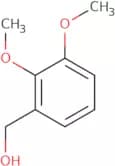
CAS:<p>2,3-Dimethoxybenzyl alcohol is a fine chemical that is used as an intermediate in the synthesis of other chemicals. It has been shown to be a useful scaffold for the development of new compounds and is also a versatile building block for the synthesis of complex molecules. This compound exhibits many special properties that make it useful in research and industrial processes. It is a high quality reagent that can be used in organic syntheses and as a reaction component.<br> 2,3-Dimethoxybenzyl alcohol has been shown to have antiviral activity against HIV-1, HIV-2, SIV mac1, and VSV.</p>Formula:C9H12O3Purity:Min. 95%Color and Shape:PowderMolecular weight:168.19 g/molN1,N2-Bis(2,4,6-trimethoxyphenyl)ethanediamide
CAS:<p>Adriamycin is a cytotoxic drug that inhibits the growth of cells by causing cross-linking in DNA. It is an analogue of the naturally occurring molecule bis(2,4,6-trimethoxyphenyl)ethanediamide. Adriamycin has been shown to inhibit cell proliferation in vitro and in vivo by interfering with DNA synthesis. This agent also inhibits the production of proteins and lipids needed for cellular division by binding to the purine base adenine. Adriamycin binds to the enzyme ribonucleotide reductase, which catalyzes the conversion of ribonucleosides into deoxyribonucleosides. Adriamycin has a relatively low activation energy and can be activated thermally or photolytically.</p>Formula:C20H24N2O8Purity:Min. 95%Color and Shape:PowderMolecular weight:420.41 g/mol4-Chloro-2-methoxyphenol
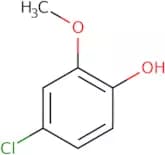
CAS:4-Chloro-2-methoxyphenol (4CMP) is a type of chemical compound that belongs to the aryl halide class. It is used in wastewater treatment as an inhibitor of bacterial growth. 4CMP inhibits bacterial growth by reacting with fatty acids at the surface of the bacteria, forming a coating that prevents bacterial attachment to solid surfaces and mineralization. This process has been shown to be effective in both batch and flow systems, with copper chloride being the best catalyst for this reaction. Kinetic studies have shown that 4CMP has an inhibitory effect on the reaction rate of activated sludge microorganisms, which can be used to optimize process conditions.Formula:C7H7ClO2Purity:Min. 95%Color and Shape:Clear LiquidMolecular weight:158.58 g/mol2,4,6-Trimethylbenzyl alcohol
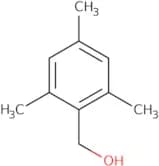
CAS:<p>2,4,6-Trimethylbenzyl alcohol is an efficient method for the production of 2,4-dimethoxybenzaldehyde and 2,6-dimethoxybenzaldehyde. It can be used with ferrite as a dehydrogenative catalyst to produce hydroxymethyl groups in the presence of acid catalysts. The oxidation products of 2,4,6-trimethylbenzyl alcohol are polymers that have been shown to stabilize aldehydes and primary alcohols. This compound also has been shown to desymmetrize aromatic hydrocarbons and is capable of catalysis.</p>Formula:C10H14OPurity:Min. 95%Color and Shape:PowderMolecular weight:150.22 g/mol2-Chloro-4-nitrophenol
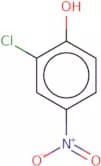
CAS:<p>2-Chloro-4-nitrophenol (2CP) is a chemical that has been found to be an optical sensor for nitrite ion. It reacts with nitrite ion at a pH of 5 and changes its color from yellow or orange to red. 2CP is also an antimicrobial agent and has shown biological properties against bacteria, including the ability to inhibit bacterial growth and reduce the number of bacteria in human serum. The optimum concentration for the inhibition of bacterial growth was found to be 0.5 mg/mL, which is much lower than the concentration used in other studies. The genus, bacterial strain, and pH were all found to influence the activity of 2CP against bacteria. Process optimization trials have shown that 4-hydroxycinnamic acid can be used as an alternative substrate for 2CP's reaction with nitrite ion. Monoclonal antibodies were also developed that are specific for transfer reactions with nitrate ion and can be used as a detection system for nit</p>Formula:C6H4ClNO3Purity:Min. 95%Color and Shape:PowderMolecular weight:173.55 g/mol2,6-Dimethoxyphenol
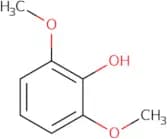
CAS:<p>2,6-Dimethoxyphenol is a chemical compound that is used in the manufacture of industrial chemicals. It is also used as an intermediate in organic synthesis and has been shown to have antibacterial activity against some strains of bacteria. 2,6-Dimethoxyphenol binds to bacterial ribosomes by interfering with the protein synthesis machinery. The reaction mechanism occurs via a nucleophilic attack by the hydroxyl group on the carbonyl carbon atom, leading to a tetrahedral intermediate with the coordination geometry of square planar. This compound has been shown to scavenge anion radicals and has high resistance to oxidation from redox potential.</p>Formula:C8H10O3Purity:Min. 99 Area-%Color and Shape:PowderMolecular weight:154.16 g/mol4-Ethoxybenzyl alcohol
CAS:<p>4-Ethoxybenzyl alcohol is a reactive compound that can be photoexcited. It has been shown to have a cavity and is able to absorb light of wavelengths between 250 nm and 500 nm. 4-Ethoxybenzyl alcohol reacts with various compounds, such as aldehydes, to form new compounds. It has been shown that the reaction system can be used for high-throughput analysis, which may lead to the discovery of new drugs. It also has been found that 4-ethoxybenzyl alcohol can react with sulfates in an organic solvent to produce sulfonates. This reaction system has potential for use in the production of new drugs or other chemical products.</p>Formula:C9H12O2Purity:Min. 95%Color and Shape:Colorless PowderMolecular weight:152.19 g/mol2-Cyanophenol
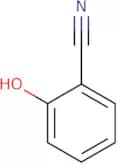
CAS:<p>2-Cyanophenol is a phenolic compound that is used as an intermediate in the synthesis of pharmaceuticals and agrochemicals. It is also a disinfectant used for wastewater treatment and to remove salicylaldoxime from contaminated water. 2-Cyanophenol can be synthesized by reacting phenol with hydrogen peroxide in the presence of sephadex g-100, which provides a high yield of product. It has been shown to have antimicrobial properties against Gram-positive bacteria, such as Staphylococcus aureus, and Gram-negative bacteria, such as Escherichia coli and Pseudomonas aeruginosa. 2-Cyanophenol has been shown to react with metal hydroxides such as ferric chloride or zinc chloride to form precipitates. This reaction can be detected using a UV/VIS spectrophotometer at wavelengths between 200–350 nm.</p>Formula:C7H5NOPurity:Min. 95%Color and Shape:Off-White PowderMolecular weight:119.12 g/mol2,6-Dimethyl-4-cyanophenol
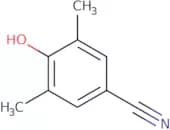
CAS:<p>2,6-Dimethyl-4-cyanophenol is a pyrimidine compound that has been used as a pharmaceutical drug to inhibit the replication of human immunodeficiency virus (HIV). It has also been shown to be effective against the strains of HIV that are resistant to other drugs. 2,6-Dimethyl-4-cyanophenol is an inhibitor of reverse transcriptase, which is an enzyme necessary for the production of viral DNA from viral RNA. This drug also inhibits bacterial growth by binding to bacterial DNA gyrase and topoisomerase IV. 2,6-Dimethyl-4-cyanophenol has a number of functionalities: it can act as an acid or base depending on its environment and it can form hydrogen bonding interactions with other molecules. This drug also has acidic properties that make it useful in the treatment of ph problems caused by trifluoroacetic acid.</p>Formula:C9H9NOPurity:Min. 95%Color and Shape:Yellow PowderMolecular weight:147.17 g/mol