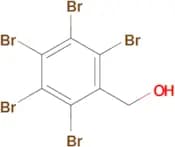
Benzyl alcohols
Benzyl alcohols are aromatic alcohols featuring a benzene ring attached to a hydroxymethyl group (-CH2OH). These compounds are used as solvents, preservatives, and intermediates in the synthesis of pharmaceuticals, fragrances, and resins. Benzyl alcohols are known for their antimicrobial properties and versatility in various chemical reactions. At CymitQuimica, we offer a wide selection of high-quality benzyl alcohols to support your research and industrial applications.
Found 1458 products of "Benzyl alcohols"
Sort by
Purity (%)
0
100
|
0
|
50
|
90
|
95
|
100
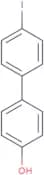
4-(4'-Iodophenyl)phenol
CAS:<p>4-(4'-Iodophenyl)phenol is an analog of the natural substrate thymidine. It is a liquid crystalline compound that has been shown to inhibit the activity of virus thymidine kinase in vitro and in vivo. 4-(4'-Iodophenyl)phenol was also shown to have affinity for the active site of viral thymidine kinase, which may account for its effect on viral replication.</p>Formula:C12H9IOPurity:Min. 98 Area-%Color and Shape:PowderMolecular weight:296.1 g/mol2-Aminobenzyl alcohol
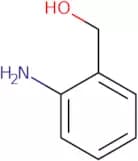
CAS:<p>2-Aminobenzyl alcohol is a chaperone that binds to the polypeptide chain of proteins and prevents them from denaturation. It also has been shown to form hydrogen bonds with other molecules, such as chaperones, and to bind to copper ions. 2-Aminobenzyl alcohol can react with sodium carbonate in an alkaline solution to form 2-aminobenzaldehyde and sodium bicarbonate. The reaction mechanism is thought to involve the formation of a copper complex with x-ray diffraction data showing a new set of peaks at d = 1.81 Å corresponding to the Cu(II) ion coordinated by two amine groups on the benzyl alcohol ring. This compound also reacts with quinoline derivatives in the presence of hydrochloric acid or hydroxyl group in an aprotic solvent such as dimethylformamide (DMF) or acetonitrile (ACN) to produce mianserin hydro</p>Formula:C7H9NOPurity:Min. 97.5%Color and Shape:Off-White PowderMolecular weight:123.15 g/mol5-Fluoro-2-nitrophenol
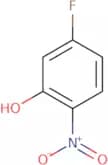
CAS:<p>5-Fluoro-2-nitrophenol is a synthetic compound that has been shown to inhibit the production of nitric oxide in cells. It is most active in inhibiting the release of nitric oxide from cells, but also inhibits its synthesis. 5-Fluoro-2-nitrophenol has been shown to inhibit the production of thromboxane A2, prostacyclin, and endothelin 1. This drug also binds to bacteria and prevents their growth by inhibiting protein synthesis. The binding of 5-fluoro-2-nitrophenol to bacterial DNA leads to inhibition of transcription and translation, preventing protein synthesis.<br>5-Fluoro-2-nitrophenol has been shown to be effective against Trichophyton mentagrophytes (a fungus) and may be useful for the treatment of onychomycosis (fungal infection).</p>Formula:C6H4FNO3Purity:Min. 95%Color and Shape:Yellow PowderMolecular weight:157.1 g/mol4-Ethylbenzyl alcohol
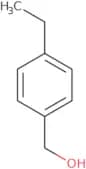
CAS:<p>4-Ethylbenzyl alcohol is a constituent of natural rubber and is produced as a by-product during the manufacture of styrene. It has been shown that 4-ethylbenzyl alcohol can inhibit phosphatidylethanolamine N-methyltransferase, an enzyme that catalyzes the synthesis of phosphatidylethanolamine from phosphatidylcholine, thereby inhibiting lipid biosynthesis in cells. This inhibition may be due to the presence of the hydroxy group on the benzene ring which may bind to the active site of the enzyme and prevent it from binding with its substrate. In addition, 4-ethylbenzyl alcohol may act as an organic solvent and react with other substances in cells to form cytotoxic products. 4-Ethylbenzyl alcohol has been shown to cause narcosis when used in high concentrations or over a long period.</p>Formula:C9H12OPurity:90%Color and Shape:PowderMolecular weight:136.19 g/mol2,3-Dichlorobenzyl alcohol
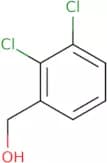
CAS:<p>2,3-Dichlorobenzyl alcohol (2,3-DCBA) is a chlorinated aromatic compound that is used as an industrial solvent. It has significant effects on aerobic bacteria and fungi. 2,3-DCBA inhibits the enzyme lactaldehyde dehydrogenase by covalent binding to its zinc atom. This inhibition leads to the accumulation of lactaldehyde in cells, which can be toxic. 2,3-DCBA also inhibits the enzyme catalase and the synthesis of DNA in eukaryotic cells. In addition, it can catalyze the dioxygenation of naphthalene to form a number of polychlorinated derivatives. The rate of naphthalene formation is dependent on temperature and pressure conditions.</p>Formula:C7H6Cl2OPurity:Min. 95%Color and Shape:PowderMolecular weight:177.03 g/molN1,N2-Bis(2,4,6-trimethoxyphenyl)ethanediamide
CAS:<p>Adriamycin is a cytotoxic drug that inhibits the growth of cells by causing cross-linking in DNA. It is an analogue of the naturally occurring molecule bis(2,4,6-trimethoxyphenyl)ethanediamide. Adriamycin has been shown to inhibit cell proliferation in vitro and in vivo by interfering with DNA synthesis. This agent also inhibits the production of proteins and lipids needed for cellular division by binding to the purine base adenine. Adriamycin binds to the enzyme ribonucleotide reductase, which catalyzes the conversion of ribonucleosides into deoxyribonucleosides. Adriamycin has a relatively low activation energy and can be activated thermally or photolytically.</p>Formula:C20H24N2O8Purity:Min. 95%Color and Shape:PowderMolecular weight:420.41 g/mol3,5-Dimethoxy-4-formyl-phenol
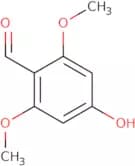
CAS:<p>3,5-Dimethoxy-4-formylphenol is a synthetic compound that has been used as an intermediate for the synthesis of various types of amide and oligosaccharide. It also has a mycological effect on fungi and is used in the production of organic solvents. 3,5-Dimethoxy-4-formylphenol can be produced by demethylation of anilines with sodium hypochlorite or potassium carbonate in methanol. It is soluble in organic solvents and exhibits good organoleptic properties. This compound can be synthesized from fungal biomass, which is obtained by solid phase synthesis or preparative chromatography. The linker between the phenolic group and the methyl group is labile to hydrolysis and must be protected during storage.</p>Formula:C9H10O4Purity:Min. 95%Color and Shape:PowderMolecular weight:182.17 g/mol4-Hydroxybenzyl alcohol
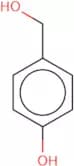
CAS:<p>4-Hydroxybenzyl alcohol is a chemical compound that is found in the rhizoma gastrodiae. It has been shown to have angiogenic properties and may be used as an anti-angiogenic agent. 4-Hydroxybenzyl alcohol is also an inhibitor of matrix metalloproteinases, which are enzymes that degrade the extracellular matrix. This inhibition leads to apoptosis and neuronal death.</p>Formula:C7H8O2Purity:Min. 80%Color and Shape:PowderMolecular weight:124.14 g/mol(3-Bromo-2,5-difluorophenyl)methanol
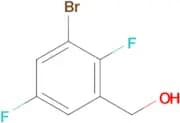
CAS:Formula:C7H5BrF2OPurity:98%Color and Shape:No data available.Molecular weight:223.017[2-FLUORO-5-(4,4,5,5-TETRAMETHYL-[1,3,2]DIOXABOROLAN-2-YL)-PHENYL]-METHANOL
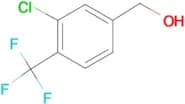
CAS:Purity:97%Molecular weight:252.08999633-Chloro-4-(trifluoromethyl)benzyl alcohol
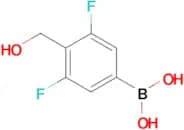
CAS:Formula:C8H6ClF3OPurity:98%Color and Shape:SolidMolecular weight:210.58(3,5-Difluoro-4-(hydroxymethyl)phenyl)boronic acid
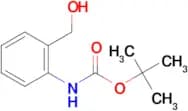
CAS:Formula:C7H7BF2O3Purity:96%Molecular weight:187.94TERT-BUTYL (2-(HYDROXYMETHYL)PHENYL)CARBAMATE
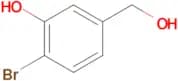
CAS:Formula:C12H17NO3Purity:97%Color and Shape:Liquid, ViscousMolecular weight:223.2722-Bromo-5-(hydroxymethyl)phenol
CAS:Formula:C7H7BrO2Purity:95%Color and Shape:SolidMolecular weight:203.035


![[2-FLUORO-5-(4,4,5,5-TETRAMETHYL-[1,3,2]DIOXABOROLAN-2-YL)-PHENYL]-METHANOL](/_next/image/?url=https%3A%2Fstatic.cymitquimica.com%2Fproducts%2F10%2Fthumb-webp%2FF796209.webp&w=3840&q=75)