Pharmaceutical Standards
Pharmaceutical standards are a comprehensive set of reference materials essential for ensuring the safety, efficacy, and quality of pharmaceutical products. This category includes standards for active pharmaceutical ingredients (APIs), which are the core components responsible for therapeutic effects. Additionally, it covers compounds and metabolites relevant to both the pharmaceutical and veterinary industries, providing benchmarks for the accurate measurement and analysis of these substances. Nitrosamine control standards are crucial for detecting and mitigating potentially harmful nitrosamines in drug formulations. Toxicology standards help assess the safety and potential adverse effects of pharmaceutical compounds. Furthermore, enzyme activators and inhibitors standards are vital for research and development, enabling precise studies of biochemical pathways and drug mechanisms. These pharmaceutical standards are indispensable tools for regulatory compliance, quality control, and research, ensuring that pharmaceutical products meet stringent safety and effectiveness criteria.
Subcategories of "Pharmaceutical Standards"
- APIs for research and impurities(273,753 products)
- Enzyme Activators and Inhibitors(2,827 products)
- Nitrosamines(2,606 products)
- Pharmaceutical and Veterinary Compounds and Metabolites(2,603 products)
- Toxicology(13,652 products)
Found 7836 products of "Pharmaceutical Standards"
Sort by
Purity (%)
0
100
|
0
|
50
|
90
|
95
|
100
3,3'-Dimethyl-2,2'-bithiophenyl
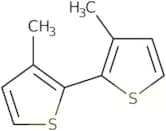
CAS:<p>3,3'-Dimethyl-2,2'-bithiophenyl is a thermochromic polymeric compound that has been used as a colorant in polymers. The compound has a linear structure consisting of two thiophene rings with methyl groups at the 3 and 2 positions. The 3,3'-dimethyl group is attached to the second carbon atom of the thiophene ring and the 2,2'-bithiophenyl group is attached to the first carbon atom of the thiophene ring. The color changes from yellow to orange when heated to above 200 °C. This color change is due to conformational changes in the molecule that occur with thermal energy input.</p>Formula:C10H10S2Purity:Min. 95%Color and Shape:Yellow PowderMolecular weight:194.32 g/molNepetin-7-glucoside
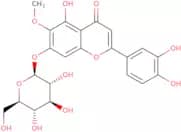
CAS:<p>Nepetin-7-glucoside is a compound found in plants that has been shown to have anti-inflammatory and antiviral properties. Nepetin-7-glucoside inhibits the activity of enzymes such as phospholipase A2, cyclooxygenase, and lipoxygenase. It also reduces the production of inflammatory mediators such as prostaglandins and leukotrienes. Nepetin-7-glucoside may be helpful in the treatment of autoimmune diseases and other inflammatory disorders. This compound also has antiviral effects by inhibiting the replication of herpes simplex virus type 1 (HSV1) in a cell culture system. Nepetin-7-glucoside also has been shown to inhibit the expression of genes related to inflammation and other inflammatory diseases, such as rheumatoid arthritis, colitis ulcerosa, psoriasis, and Crohn's disease.</p>Formula:C22H22O12Purity:Min. 95%Color and Shape:PowderMolecular weight:478.4 g/molFmoc-O-benzyl-L-tyrosine
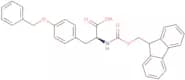
CAS:<p>Fmoc-O-benzyl-L-tyrosine is a chalcone that is used as a monomer in the synthesis of polymers. It is also used to synthesize ciprofloxacin, which is an antibiotic with both bactericidal and bacteriostatic activity. Fmoc-O-benzyl-L-tyrosine has been shown to have pharmacokinetic properties that are similar to those of ciprofloxacin. This drug has been shown to reduce renal injury in rats with chronic kidney disease by preventing the accumulation of proteinaceous materials. Fmoc-O-benzyl-L-tyrosine has also been shown to be antibacterial, and can inhibit the growth of subtilis, a bacterial strain that causes chronic kidney disease.</p>Formula:C31H27NO5Purity:Min. 95%Color and Shape:White PowderMolecular weight:493.55 g/mol(S)-3-Amino-4-(1-naphthyl)butanoic acid hydrochloride
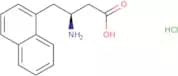
CAS:<p>(S)-3-Amino-4-(1-naphthyl)butanoic acid hydrochloride is a high quality chemical that is used as a reaction component for the synthesis of complex organic compounds. It may also be used to produce fine chemicals, pharmaceuticals, and other useful compounds. This product has a wide variety of uses including as an intermediate in the production of speciality chemicals, as a building block for synthesizing more complex compounds, or as a precursor to producing other useful chemicals.</p>Formula:C14H16ClNO2Purity:Min. 95%Color and Shape:White PowderMolecular weight:265.74 g/mol2,2'-Dihydroxybenzophenone
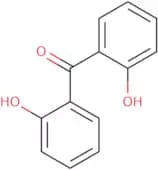
CAS:<p>2,2'-Dihydroxybenzophenone is a light-absorbing compound that belongs to the class of dibenzophenones. It has been shown to have cancer-cell inhibitory effects and its anti-tumor effects are due to its ability to inhibit DNA synthesis in tumor cells. 2,2'-Dihydroxybenzophenone has been shown to bind with proteins through hydrogen bonding interactions at the carbonyl group and the hydroxy group. It also has a strong absorption band in the UV region, which makes it useful for UV curing of polymers. This compound can be used as an antioxidant in food products because it does not react with other molecules.</p>Formula:C13H10O3Purity:Min. 95%Color and Shape:SolidMolecular weight:214.22 g/molCinnamyl butyrate
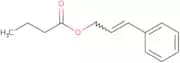
CAS:<p>Cinnamyl butyrate is a chemical compound that belongs to the class of diphenyl ethers. It has been shown to reduce plasma glucose levels in mice by inhibiting fatty acid synthesis and stimulating glucose uptake into cells. Cinnamyl butyrate also acts as a cross-linking agent, which enhances the stability of polymers by forming covalent bonds between reactive groups. The surface methodology used for this study was a surface science technique called atomic force microscopy (AFM). This method can be used to measure the thickness of the film, or the diameter of the particles. The AFM images showed that cinnamyl butyrate formed a thin film that was uniform over large areas.</p>Formula:C13H16O2Purity:Min. 95%Color and Shape:Clear LiquidMolecular weight:204.26 g/mol3,3'-Dihydroxybenzidine
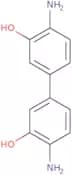
CAS:<p>3,3'-Dihydroxybenzidine (DHB) is a proton-containing heterocyclic compound that is structurally related to benzidine. It is an aromatic compound with two methoxy groups and one hydroxy group. DHB is used as a reagent in the determination of phenols by measuring the formation of a yellow-colored product. The thermal stability of DHB has been shown to be greater than 80°C, which makes it useful for high temperature applications such as thermally induced DNA cleavage. When exposed to chlorine gas, DHB reacts to form chloride and hydroxy groups, which are also present in other aromatic compounds. The chemical structures of DHB can be determined using magnetic resonance spectroscopy.</p>Formula:C12H12N2O2Purity:Min. 98 Area-%Color and Shape:Off-White To Brown SolidMolecular weight:216.24 g/mol2,7-Dibromonaphthalene
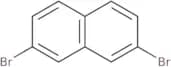
CAS:<p>2,7-Dibromonaphthalene is a chemosensor that is used to sense the presence of halides in water. It reacts with anion radicals in the atmosphere to produce a fluorescent compound with a long wavelength emission. This reaction can be observed using ultraviolet spectroscopy and amination reactions. 2,7-Dibromonaphthalene has been shown to react with copper oxide to form a blue-green compound. This property has been used as an indicator of copper contamination in water and soil samples. 2,7-Dibromonaphthalene also reacts with metal ions to form metal cations, which can be detected using cyclen or other organic compounds.</p>Formula:C10H6Br2Purity:Min. 95%Color and Shape:PowderMolecular weight:285.96 g/mol1-(2-Methylphenyl)-2-nitropropene
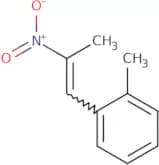
CAS:<p>1-(2-Methylphenyl)-2-nitropropene is a high quality reagent that is used as a complex compound, useful intermediate, and fine chemical. It has been shown to be a versatile building block for the synthesis of various organic compounds. 1-(2-Methylphenyl)-2-nitropropene is a speciality chemical with CAS No. 103205-27-2. This compound can be used in research chemicals or as a reaction component for the synthesis of other substances.</p>Formula:C10H11NO2Purity:Min. 95%Molecular weight:177.2 g/mol3'-Chlorophenylacetylene
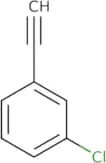
CAS:<p>3'-Chlorophenylacetylene is an organic compound that is used in the production of styrene via a macroinitiator. 3'-Chlorophenylacetylene reacts with azides to form diazo compounds, which are then hydrolyzed to produce terminal alkynes. These terminal alkynes can be dehydrogenated to produce acrylonitrile and vinyl acetate. The compound can also react with silicon to produce organometallic complexes. 3'-Chlorophenylacetylene is commonly analyzed using nuclear magnetic resonance spectroscopy (NMR). This molecule has been used as a conjugate for drug delivery systems and as a supramolecular catalyst for organic reactions.</p>Formula:C8H5ClPurity:Min. 95%Molecular weight:136.58 g/mol6-Methyl-4-hydroxycoumarin
CAS:<p>6-Methyl-4-hydroxycoumarin is a coumarin derivative that has been shown to have potent inhibitory activity against both Gram-positive and Gram-negative bacteria. It also inhibits the growth of leukemia cells and shows anti-inflammatory properties. The photophysical studies of this molecule show that it has absorption bands in the visible region, which may be attributed to its hydroxyl group. 6-Methyl-4-hydroxycoumarin has also been shown to be an effective inhibitor of LPS (lipopolysaccharide)-stimulated RAW 264.7 cells, as well as benzofuran derivatives that have been shown to have inflammatory propertys.</p>Formula:C10H8O3Purity:Min. 95%Color and Shape:PowderMolecular weight:176.17 g/molNaphthalene-1-carbonitrile
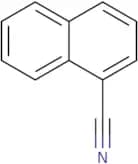
CAS:<p>Naphthalene-1-carbonitrile is a synthetic compound that can bind to the glucocorticoid receptor and activate it. It has been shown to inhibit the growth of human breast cancer cells in cell culture by inhibiting the production of estrogen, which is known to promote the proliferation of these cells. Naphthalene-1-carbonitrile also binds to a number of other sites on the glucocorticoid receptor, such as hydroxyl groups and carbonyl groups. The structural analysis of naphthalene-1-carbonitrile reveals that this chemical is capable of forming hydrogen bonds between molecules. This property may be responsible for its ability to inhibit the growth of bacteria by binding to their DNA and preventing transcription and replication.</p>Formula:C11H7NPurity:Min. 95%Molecular weight:153.18 g/mol1-(3-Fluoro-4-methoxyphenyl)-2-nitropropene
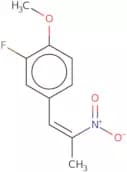
CAS:<p>1-(3-Fluoro-4-methoxyphenyl)-2-nitropropene is a chemical compound with the molecular formula CHNO. It is a high quality reagent that is useful for preparing complex compounds, scaffolds and building blocks for use in research and development. 1-(3-Fluoro-4-methoxyphenyl)-2-nitropropene is a fine chemical that can be used as a versatile building block in reactions.</p>Formula:C10H10FNO3Purity:Min. 95%Molecular weight:211.19 g/mol3-Cyanomethylbenzoic acid methyl ester
CAS:<p>3-Cyanomethylbenzoic acid methyl ester is a synthetic chemical compound that is used as an intermediate in the production of other chemicals. It is a chlorination agent that reacts with toluene and methanol in the presence of chlorine to produce 3-chloromethylbenzoic acid methyl ester. This reaction also produces a byproduct called sulphone, which can be converted into acylation reagents for use in organic synthesis. The chloride ion can be used for cyanation reactions, which are useful for producing dyes or pharmaceuticals.</p>Formula:C10H9NO2Purity:Min. 95%Color and Shape:SolidMolecular weight:175.18 g/molN-Acetyl-DL-phenylalanine 2-naphthyl ester
CAS:<p>N-Acetyl-DL-phenylalanine 2-naphthyl ester (NAFEN) is a molecule that belongs to the class of chemokines. It is a potent chemoattractant for neutrophils, monocytes, and lymphocytes. NAFEN has been shown to induce calcium binding and chemotactic activity in cells that have been treated with this drug. NAFEN may be effective against infectious diseases such as cancer and inflammatory diseases, such as autoimmune diseases. This drug also has an effect on postprandial plasma fatty acid levels in humans.</p>Formula:C21H19NO3Purity:Min. 95%Color and Shape:SolidMolecular weight:333.38 g/mol6-Hydroxy-2-naphthaldehyde
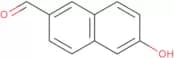
CAS:<p>6-Hydroxy-2-naphthaldehyde is a reactive compound that is used to measure the fluorescence resonance of mitochondria. It is a fluorophore that has been used as a probe for the measurement of membrane permeability, and as a hydroxyl group it can be converted into 6-hydroxy-2-naphthalenecarboxylic acid which is used in the production of dyes. 6-Hydroxy-2-naphthaldehyde has been shown to have congestive heart effects in mice, but this effect may be due to its ability to induce naphthalene and formamide.</p>Formula:C11H8O2Purity:Min. 95%Molecular weight:172.18 g/mol2,2'-Bipyridine-6-carboxylic acid
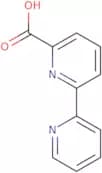
CAS:<p>2,2'-Bipyridine-6-carboxylic acid is a reagent that is used in organic synthesis as a reaction component and building block for the synthesis of heterocyclic compounds. 2,2'-Bipyridine-6-carboxylic acid is also used as a precursor to produce other compounds. 2,2'-Bipyridine-6-carboxylic acid has been shown to be useful in the synthesis of complex compounds with diverse structures, making it a versatile building block. It can also be used as an intermediate in the synthesis of various drugs and speciality chemicals.</p>Formula:C11H8N2O2Purity:Min. 95%Color and Shape:Off-White PowderMolecular weight:200.19 g/mol3-Fluoro-4-methylbenzoic acid methyl ester
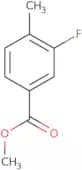
CAS:<p>3-Fluoro-4-methylbenzoic acid methyl ester is a benzoate that can be converted to 3-fluoro-4-methylbenzoic acid (3FMB) by decarboxylation. 3FMB can be used in the synthesis of phenylacetic acid and other aromatic compounds. It also has been shown to function as a radical scavenger, which may have applications in medical research and treatment of neurodegenerative diseases. 3FMB has been shown to inhibit the growth of bacteria when it is applied topically or orally, due to its ability to inhibit DNA synthesis.</p>Formula:C9H9FO2Purity:Min. 95%Molecular weight:168.16 g/mol2',4-Dihydroxy-3-methoxychalcone
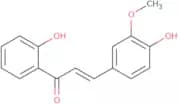
CAS:<p>2',4-Dihydroxy-3-methoxychalcone is a chalcone that has been shown to have reactive properties. The compound was found to be cytotoxic to cancer cells in the presence of neutrophils, and it has been shown to inhibit the growth of t47d cells in culture. There is also evidence that 2',4-Dihydroxy-3-methoxychalcone may help regulate the microflora in the gut, which may help prevent obesity and diabetes. In epidemiological studies, 2',4-Dihydroxy-3-methoxychalcone was found to be protective against cancer, but more research is required.</p>Formula:C16H14O4Purity:Min. 95%Color and Shape:PowderMolecular weight:270.28 g/mol(S)-(-)-1-(1-Naphthyl)ethyl amine
CAS:<p>(S)-(-)-1-(1-Naphthyl)ethyl amine is a chromatographic stationary phase that is used in the separation of fatty acids. It consists of an amine group bound to a naphthalene ring, which is tethered to a long alkyl chain. The stationary phase can be immobilized on silica gel or other solid support matrixes and is useful for analyzing fatty acids. This stationary phase can also be used as a model system to study the interactions between fatty acid molecules and other compounds. The enantiomers (R)-(+)-1-(1-naphthyl)ethyl amine and (S)-(-)-1-(1-naphthyl)ethyl amine are available. Although these two compounds are homologues, they have different physical properties, such as boiling points and melting points. Using an analytical method called high performance liquid chromatography (HPLC), it is possible to separate these two enantiomer</p>Formula:C12H13NPurity:Min. 95%Color and Shape:Slightly Yellow Clear LiquidMolecular weight:171.24 g/mol