Pharmaceutical Standards
Pharmaceutical standards are a comprehensive set of reference materials essential for ensuring the safety, efficacy, and quality of pharmaceutical products. This category includes standards for active pharmaceutical ingredients (APIs), which are the core components responsible for therapeutic effects. Additionally, it covers compounds and metabolites relevant to both the pharmaceutical and veterinary industries, providing benchmarks for the accurate measurement and analysis of these substances. Nitrosamine control standards are crucial for detecting and mitigating potentially harmful nitrosamines in drug formulations. Toxicology standards help assess the safety and potential adverse effects of pharmaceutical compounds. Furthermore, enzyme activators and inhibitors standards are vital for research and development, enabling precise studies of biochemical pathways and drug mechanisms. These pharmaceutical standards are indispensable tools for regulatory compliance, quality control, and research, ensuring that pharmaceutical products meet stringent safety and effectiveness criteria.
Subcategories of "Pharmaceutical Standards"
- APIs for research and impurities(273,474 products)
- Enzyme Activators and Inhibitors(2,827 products)
- Nitrosamines(2,603 products)
- Pharmaceutical and Veterinary Compounds and Metabolites(2,602 products)
- Toxicology(13,653 products)
Found 7836 products of "Pharmaceutical Standards"
Sort by
Purity (%)
0
100
|
0
|
50
|
90
|
95
|
100
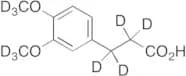
3-(3,4-Dimethoxy-d6-phenyl)propanoic-d4 Acid
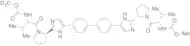
CAS:Controlled Product<p>Applications Labelled 3-(3,4-Dimethoxyphenyl)propanoic Acid (D460730), one of the novel circulating coffee metabolites in human plasma.<br>References Clifford, M., et al.: J. Sci. Food Agric., 80, 1033 (2000), Mateos, R., et al.: J. Agric. Food Chem., 54, 8724 (2006), Wong, C., et al.: J. Nutr. Biochem., 21, 1060 (2010),<br></p>Formula:C11H4D10O4Color and Shape:NeatMolecular weight:220.29Daclatasvir RRSS Isomer-d3
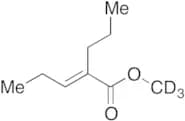
CAS:Controlled ProductFormula:C40H47D3N8O6Color and Shape:NeatMolecular weight:741.91(E/Z)-2-Propyl-2-pentenoic Acid Methyl Ester-d3
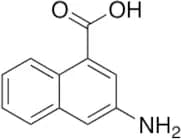
CAS:Controlled ProductFormula:C9H13D3O2Color and Shape:NeatMolecular weight:519.4793-Aminonaphthalene-1-carboxylic Acid
CAS:Controlled ProductFormula:C11H9NO2Color and Shape:NeatMolecular weight:187.1951-(1H-Benzo[d]imidazol-2-yl)-3-methyl-4-oxo-1,4-dihydropyridine-2-carboxylic acid Sodium Salt
CAS:<p>Applications 1-(1H-Benzo[d]imidazol-2-yl)-3-methyl-4-oxo-1,4-dihydropyridine-2-carboxylic acid is an impurity of Rabeprazole. It is also a degradation product formed in stressed tablets of Rabeprazole sodium.<br>References Kommanaboyina, B., et al.: Drug Dev. Ind. Pharm., 25, 857 (1999); Carswel, C., et al.: Drugs, 61, 2327 (2001); Garcia, C., et al.: J. Pharm. Biomed. Anal., 46, 88 (2008)<br></p>Formula:C14H10N3NaO3Color and Shape:NeatMolecular weight:291.241-Formylcyclohexanecarboxylic Acid Methyl Ester
CAS:Controlled Product<p>Applications 1-Formylcyclohexanecarboxylic Acid Methyl Ester (cas# 84393-05-5) is a useful research chemical.<br></p>Formula:C9H14O3Color and Shape:NeatMolecular weight:170.21(Z)-Cinnamyl Cilnidipine
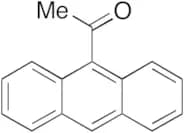
CAS:Controlled ProductFormula:C27H28N2O7Color and Shape:NeatMolecular weight:492.529-Acetylanthracene
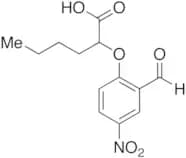
CAS:Controlled Product<p>Applications 9-Acetylanthracene is a polycyclic aromatic hydrocarbon (PAH) with photo-induced toxicity. Biological studies have shown that 9-Acetylanthracene has plasmid curing activity.<br>References Sinks, G.D., et al.: B. Environ. Contam. Tox., 59, 1 (1997); Molnar, J., Biochem. Pharmacol., 28, 261 (1979)<br></p>Formula:C16H12OColor and Shape:NeatMolecular weight:220.272-(2'-Formyl-4'-nitrophenoxy)caproic Acid
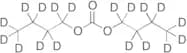
CAS:Controlled ProductFormula:C13H15NO6Color and Shape:NeatMolecular weight:281.261Dibutyl Carbonate-d18
CAS:Controlled Product<p>Applications Dibutyl Carbonate-d18 is the deuterated form of Dibutyl Carbonate (D427995), which is a potential fuel substitute due to the observed decrease in CO2 emissions. Also used in CO2 catalytic activation.<br>References Hellier, P. et al.: Energy Fuel, 27, 5222 (2013); Shang, J. et al.: Green Che,., 14, 2899 (2012);<br></p>Formula:C9D18O3Color and Shape:NeatMolecular weight:192.348(2R,3S)-rel-3-Hexyl-2-oxiranenonanoic acid methyl ester-d3
CAS:Controlled ProductFormula:C18H31D3O3Color and Shape:NeatMolecular weight:449.928(8Z,11Z,14Z,17Z)-Eicosatetraenoic Acid Methyl Ester
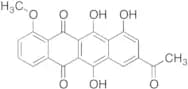
CAS:Controlled ProductFormula:C21H34O2Color and Shape:ColourlessMolecular weight:318.49358-Acetyl-6,10,11-trihydroxy-1-methoxy-5,12-naphthacenedione
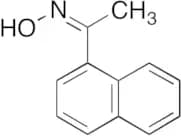
CAS:Controlled Product<p>Applications 8-Acetyl-6,10,11-trihydroxy-1-methoxy-5,12-naphthacenedione is an intermediate in the synthesis of 7,8,9,10-Dehydro Doxorubicinone (D229580).<br></p>Formula:C21H14O7Color and Shape:NeatMolecular weight:378.332(Z)-1-(1-Naphthalenyl)ethanone Oxime
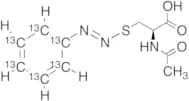
CAS:Controlled ProductFormula:C12H11NOColor and Shape:NeatMolecular weight:185.222(R,E)-2-Acetamido-3-((phenyldiazenyl)thio)propanoic-13C6 Acid
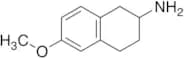
Controlled Product<p>Applications (R,E)-2-Acetamido-3-((phenyldiazenyl)thio)propanoic-13C6 Acid is labelled N-Acetyl-S-phenyl-L-cysteine (P335600), which is an important metabolite of Benzene.<br>References Muller, G., et al.: Anal. Hazard. Subst. Biol. Mater., 5, 143 (1997)<br></p>Formula:C6C5H13N3O3SColor and Shape:NeatMolecular weight:273.266-Methoxy-1,2,3,4-tetrahydro-naphthalen-2-ylamine Hydrochloride
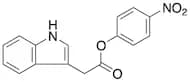
CAS:Controlled ProductFormula:C11H15NO·HClColor and Shape:NeatMolecular weight:213.74-Nitrophenyl 1H-Indole-3-acetic Acid Ester
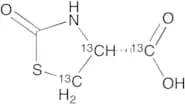
CAS:Controlled Product<p>Applications 4-Nitrophenyl 1H-Indole-3-acetic Acid Ester is an intermediate used in the synthesis of Indole-3-acetyl-L-aspartic Acid (I577370), which is an indole-3-acetyl-amino acid conjugate involved in regulatory mechanisms for the control of auxin activity during physiological and pathophysiological responses.<br>References Ostrowski, M., et al.: J Plant Physiol, 191, 63-72 (2016)<br></p>Formula:C16H12N2O4Color and Shape:NeatMolecular weight:296.277(R)-(-)-2-Oxothiazolidine-4-carboxylic-13C3 Acid
CAS:Controlled Product<p>Applications Isotope labelled (R)-(-)-2-Oxothiazolidine-4-carboxylic Acid (O870505), a precursor to glutathione (GSH) which is an important antioxidant in plants, animals and fungi.<br>References Meister, A., et al,: J. Am. Coll. Nutr., 5, 137 (1986);<br></p>Formula:C3CH5NO3SColor and Shape:NeatMolecular weight:150.13

![1-(1H-Benzo[d]imidazol-2-yl)-3-methyl-4-oxo-1,4-dihydropyridine-2-carboxylic acid Sodium Salt](/_next/image/?url=https%3A%2Fstatic.cymitquimica.com%2Fproducts%2FTR%2Fthumb-webp%2FB203965.webp&w=3840&q=75)