Pharmaceutical Standards
Pharmaceutical standards are a comprehensive set of reference materials essential for ensuring the safety, efficacy, and quality of pharmaceutical products. This category includes standards for active pharmaceutical ingredients (APIs), which are the core components responsible for therapeutic effects. Additionally, it covers compounds and metabolites relevant to both the pharmaceutical and veterinary industries, providing benchmarks for the accurate measurement and analysis of these substances. Nitrosamine control standards are crucial for detecting and mitigating potentially harmful nitrosamines in drug formulations. Toxicology standards help assess the safety and potential adverse effects of pharmaceutical compounds. Furthermore, enzyme activators and inhibitors standards are vital for research and development, enabling precise studies of biochemical pathways and drug mechanisms. These pharmaceutical standards are indispensable tools for regulatory compliance, quality control, and research, ensuring that pharmaceutical products meet stringent safety and effectiveness criteria.
Subcategories of "Pharmaceutical Standards"
- APIs for research and impurities(273,774 products)
- Enzyme Activators and Inhibitors(2,827 products)
- Nitrosamines(2,606 products)
- Pharmaceutical and Veterinary Compounds and Metabolites(2,613 products)
- Toxicology(13,652 products)
Found 7836 products of "Pharmaceutical Standards"
Sort by
Purity (%)
0
100
|
0
|
50
|
90
|
95
|
100
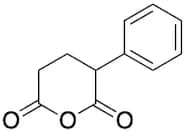
2-Phenylglutaric Anhydride(>80%)
CAS:Controlled Product<p>Applications 2-Phenylglutaric Anhydride (cas# 2959-96-8) is a useful research chemical.<br></p>Formula:C11H10O3Purity:>80%Color and Shape:NeatMolecular weight:190.1913-cis-β-Carotene-d5
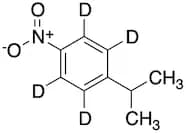
CAS:Controlled Product<p>Applications 13-cis-β-Carotene-d5 is labelled 13-cis-β-Carotene (C184225) which is an isomer of β-Caroten (C184250). Carrots are one of the highest dietary sources of β-carotene and are naturally high in the (all-E)-β-carotene isomer, which has higher bioavailability, provitamin A activity, and antioxidant capacity compared to Z (cis) isomers.<br>References Chen, B., et al.: J. Agric. Food Chem., 43, 1912 (1995), During, A., et al.: J. Lipid Res., 43, 1086 (2002), Marx, M., et al.: Food Chem. 83, 609 (2003)<br></p>Formula:C38H47D5Color and Shape:NeatMolecular weight:513.862-(4-Nitrophenyl-d4)propane
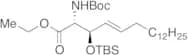
CAS:Controlled Product<p>Applications 2-(4-Nitrophenyl-d4)propane (CAS# 1219803-36-7) is a useful isotopically labeled research compound.<br></p>Formula:C9H7D4NO2Color and Shape:NeatMolecular weight:169.22O’Ethly-N-boc-1-oxo-3-tertbutyldimethylsilyl-D-erythro-sphingosine
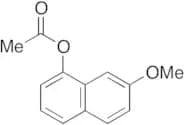
Controlled ProductFormula:C31H61NO5SiColor and Shape:NeatMolecular weight:454.9597-Methoxy-1-naphthalenol Acetate
CAS:Controlled ProductFormula:C13H12O3Color and Shape:NeatMolecular weight:216.233α-Thio-4-[2-(5-ethyl-2-pyridinyl)ethoxy]benzenepropanoic Acid Disulfide
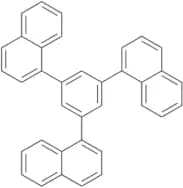
CAS:Controlled ProductFormula:C36H40N2O6S2Color and Shape:NeatMolecular weight:660.8431,3,5-Tri(1-naphthyl)benzene
CAS:Controlled Product<p>Applications 1,3,5-Tri(1-naphthyl)benzene (cas# 7059-70-3) is a useful research chemical.<br></p>Formula:C36H24Color and Shape:NeatMolecular weight:456.584,4,5,5-Tetramethyl-2-[3,3'',5,5''-tetrakis(1,1-dimethylethyl)[1,1':3',1''-terphenyl]-5'-yl]-1,3,2-dioxaborolane
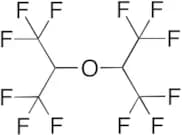
CAS:Controlled Product<p>Applications 4,4,5,5-Tetramethyl-2-[3,3'',5,5''-tetrakis(1,1-dimethylethyl)[1,1':3',1''-terphenyl]-5'-yl]-1,3,2-dioxaborolane is a useful synthesis intermediate.<br>References Finke, A. D., et al.: Org. Lett., 10, 4851 (2008), Zheng, Y., et al.: ACS Appl. Mater. Interfaces, 8, 34089 (2016)<br></p>Formula:C40H57BO2Color and Shape:NeatMolecular weight:580.692,2'-oxybis-1,1,1,3,3,3-hexafluoro-propane
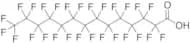
CAS:Controlled ProductFormula:C6H2F12OColor and Shape:NeatMolecular weight:318.06Perfluorotetradecanoic Acid (50 ug/mL in Methanol)
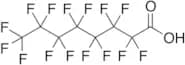
CAS:Controlled ProductFormula:C14HF27O2Color and Shape:Single SolutionMolecular weight:714.11Perfluorooctanoic Acid (50 μg/mL in Methanol)
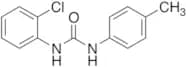
CAS:Controlled ProductFormula:C8HF15O2Color and Shape:Single SolutionMolecular weight:414.071-(2-Chlorophenyl)-3-(P-tolyl)urea
CAS:Controlled ProductFormula:C14H13ClN2OColor and Shape:NeatMolecular weight:260.719N-Cyclohexyl-N’-[2-(tert-butyl)amino-3-hydroxypropoxy]phenylurea
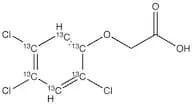
CAS:Controlled Product<p>Applications Byproduct of Talinolol synthesis.<br></p>Formula:C20H33N3O3Color and Shape:NeatMolecular weight:363.4942,4,5-Trichlorophenoxyacetic Acid-13C6
CAS:Controlled Product<p>Applications Labelled 2,4,5-trichlorophenoxyacetic acid is suitable for plant cell culture testing. Post-emergence herbicide.<br>References Smith, J., et al.: Science, 203, 1090 (1979), Salunkhe, C., et al.: Plant Cell Reports, 18, 670 (1999), Jheng, F., et al.: Plant Sci., 170, 1133 (2006),<br></p>Formula:C2C6H5Cl3O3Color and Shape:NeatMolecular weight:261.441,2-Naphthalic Anhydride
CAS:Controlled Product<p>Stability Moisture Sensitive<br>Applications 1,2-NaphthalicAnhydride (cas# 5343-99-7) is a useful research chemical.<br></p>Formula:C12H6O3Color and Shape:NeatMolecular weight:198.17rac-Naproxen-13C3
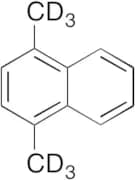
CAS:Controlled ProductFormula:C3C11H14O3Color and Shape:NeatMolecular weight:233.2371,4-Di(methyl-d3)-naphthalene
CAS:Controlled Product<p>Applications 1,4-Di(methyl-d3)-naphthalene has been used in the preparation of di(trideuteriomethyl)naphthalene derivatives. 1,4-Di(methyl-d3)-naphthalene is a labeled analogue of 1,4-Dimethylnaphthalene (D476380), a polycyclic aromatic hydrocarbon (PAH) that has been found to retard the development of epidermoid carcinomas in hamster buccal pouch and alter the genes associated with the maintenance of a G1/S phase block possibly through the induction of the cell cycle inhibitors KRP1 and KRP2 in potatoes.<br>References Dizabo, P., et. al.: J. Labelled Compd., 2, 272 (1966); Malament, D.S., Shklar, G.: Carcinogenesis, 2, 723 (1981); Campbell, M.A., et. al.: Fuct. Interg. Genomics, 12, 533 (2012); Andrysik, Z., et. al.: Mutat. Res-Fund. Mol. M., 714, 53 (2011)<br></p>Formula:C12H6D6Color and Shape:NeatMolecular weight:162.263-[[[[[[[(Acetylamino)carbonyl]amino]carbonyl]amino]carbonyl]amino]sulfonyl]-2-thiophenecarboxylic Acid Methyl Ester (Technical Grade)
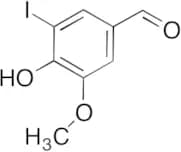
CAS:Controlled ProductFormula:C11H12N4O8S2Color and Shape:NeatMolecular weight:392.365-Iodovanillin
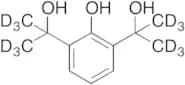
CAS:Controlled Product<p>Applications 5-Iodovanillin is used in laccase catalyzed synthesis of iodinated phenolic compounds with antifungal activity. Molecular modeling studies of interaction between plasmid DNA (pBR322) and dendritic antioxidants.<br>References Ihssen, J., et al.: PLoS One, 9, e89924 (2014); Chhetri, P., et al.: J. Cancer Sci.Ther., 3, 220 (2011)<br></p>Formula:C8H7IO3Color and Shape:NeatMolecular weight:278.042,2'-(2-Hydroxy-1,3-phenylene)bis(propan-2-ol-d12)
CAS:Controlled ProductFormula:C12D12H6O3Color and Shape:NeatMolecular weight:222.344


![α-Thio-4-[2-(5-ethyl-2-pyridinyl)ethoxy]benzenepropanoic Acid Disulfide](/_next/image/?url=https%3A%2Fstatic.cymitquimica.com%2Fproducts%2FTR%2Fthumb-webp%2FT344440.webp&w=3840&q=75)
![4,4,5,5-Tetramethyl-2-[3,3'',5,5''-tetrakis(1,1-dimethylethyl)[1,1':3',1''-terphenyl]-5'-yl]-1,3,2…](/_next/image/?url=https%3A%2Fstatic.cymitquimica.com%2Fproducts%2FTR%2Fthumb-webp%2FT303650.webp&w=3840&q=75)
![N-Cyclohexyl-N’-[2-(tert-butyl)amino-3-hydroxypropoxy]phenylurea](/_next/image/?url=https%3A%2Fstatic.cymitquimica.com%2Fproducts%2FTR%2Fthumb-webp%2FC987995.webp&w=3840&q=75)


![3-[[[[[[[(Acetylamino)carbonyl]amino]carbonyl]amino]carbonyl]amino]sulfonyl]-2-thiophenecarboxylic…](/_next/image/?url=https%3A%2Fstatic.cymitquimica.com%2Fproducts%2FTR%2Fthumb-webp%2FA168208.webp&w=3840&q=75)