Pharmaceutical Standards
Pharmaceutical standards are a comprehensive set of reference materials essential for ensuring the safety, efficacy, and quality of pharmaceutical products. This category includes standards for active pharmaceutical ingredients (APIs), which are the core components responsible for therapeutic effects. Additionally, it covers compounds and metabolites relevant to both the pharmaceutical and veterinary industries, providing benchmarks for the accurate measurement and analysis of these substances. Nitrosamine control standards are crucial for detecting and mitigating potentially harmful nitrosamines in drug formulations. Toxicology standards help assess the safety and potential adverse effects of pharmaceutical compounds. Furthermore, enzyme activators and inhibitors standards are vital for research and development, enabling precise studies of biochemical pathways and drug mechanisms. These pharmaceutical standards are indispensable tools for regulatory compliance, quality control, and research, ensuring that pharmaceutical products meet stringent safety and effectiveness criteria.
Subcategories of "Pharmaceutical Standards"
- APIs for research and impurities(273,774 products)
- Enzyme Activators and Inhibitors(2,827 products)
- Nitrosamines(2,606 products)
- Pharmaceutical and Veterinary Compounds and Metabolites(2,613 products)
- Toxicology(13,652 products)
Found 7836 products of "Pharmaceutical Standards"
Sort by
Purity (%)
0
100
|
0
|
50
|
90
|
95
|
100
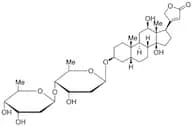
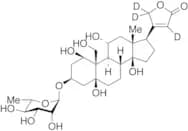
Ouabain-d3 (Major)
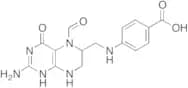
CAS:Controlled Product<p>Applications Labelled Ouabain (O714500). A cardiac glycoside that inhibits Na(+)/K(+) ATPase. It regulates transcription of MDR (increase, Pgp) and MRP (increase MRP1 and decrease CFTR, cyctic fibrosis transport receptor or cAMP-activated Cl- channel) genes, also alters localization of MRP1.<br> Not a dangerous good if item is equal to or less than 1g/ml and there is less than 100g/ml in the package<br>References Padilha, A.S. et al.: Clin. Exp. Pharmacol. Physiol., 35, 801 (2008); Blaustein, M.P. et al.: Clin. Exp. Hypertens. 20, 691 (1998); van Huysse, J.W. et al.: Clin. Exp. Hypertens. 20, 657 (1998);<br></p>Formula:C29H41D3O12Color and Shape:White To Off-WhiteMolecular weight:587.675-Formyltetrahydropteroic Acid
CAS:Controlled Product<p>Impurity Calcium Folinate Hydrate EP Impurity E<br>Stability Unstable in Basic Solution<br>Applications 5-Formyltetrahydropteroic Acid is an impurity of Folic Acid (F680300); a vitamin needed to synthesize DNA, conduct DNA repair and methylate DNA. It also acts as a cofactor in biological reactions involving folate.<br>References Xu, L., et al.: Mol. Pharm., 7, 1311 (2010); Everette, J., et al.: J. Agric. Food Chem., 58, 8139 (2010); Alshatwi, A., et al.: Food, Chem., Toxicol., 48, 1881 (2010); McKay, D., et al.: Nut. J., 9 (2010)<br></p>Formula:C15H16N6O4Color and Shape:NeatMolecular weight:344.33Des[5-(2-dimethylamino)ethyl] Diltiazem
CAS:Controlled Product<p>Applications Diltiazem (D460620) intermediate (impurity B).<br>References Chaffman, M., et al.: Drugs, 29, 387 (1985), Kamath, B., et al.: J. Pharm. Biomed. Anal., 11, 407 (1993), Chankvetadze, B., et al.: J. Pharm. Biomed. Anal., 27, 161 (2002),<br></p>Formula:C18H17NO4SColor and Shape:NeatMolecular weight:343.40Anastrozole Acid Amide
<p>Applications Anastrozole Acid Amide is a derivative of Anastrozole (A637425), an aromatase inhibitor. Used as an antineoplastic.<br>References Plourde, P.V., et al.: Breast Cancer Res. Treat., 30, 103 (1994), Buzdar, A.U., et al.: Cancer, 79, 730 (1997)<br></p>Formula:C17H22N4O3Color and Shape:NeatMolecular weight:330.38Ambrisentan
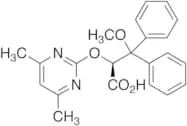
CAS:Controlled Product<p>Applications Nonpeptide endothelin ETA receptor antagonist. Antihypertensive.<br>References Riechers, H., et al.: J. Med. Chem., 39, 2123 (1996), Billman, G.E., et al.: Curr. Opin. Invest. Drugs, 3, 1483 (2002), Vatter, H., et al.: Clin. Neuropharmacol., 26, 73 (2003),<br></p>Formula:C22H22N2O4Color and Shape:Off-WhiteMolecular weight:378.42N-Acetylthiourea
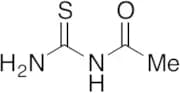
CAS:Controlled Product<p>Applications N-Acetylthiourea is a derivative of Thiourea (T375450); a compound used in biochemistry to increase the solubility (and resolution) of membrane proteins in two-dimensional electrophoresis. N-Acetylthiourea can be used as a reducing agent in a two-part self curing endodontic sealing system.<br> Not a dangerous good if item is equal to or less than 1g/ml and there is less than 100g/ml in the package<br>References Jabbour, S.: Am. J. Clin. Dermatol., 4, 315 (2003); Himsworth, H.: Lancet, 242, 465 (1943); Rabilloud, T., et al.: Electrophoresis, 19, 758 (1998); Jin, S. et al. Self-curing system for endodontic sealant applications. PCT Int. Appl. WO 2009018464 A2 20090205. Feb 5, 2009<br></p>Formula:C3H6N2OSColor and Shape:NeatMolecular weight:118.16Ethyl Cinnamate
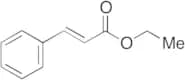
CAS:<p>Applications Ethyl Cinnamate, is used in the preparation of polymer-encapsulated osmonium used as a catalyst for the dihydroxylation of alkenes and preparation of a camptothecin intermediate, anticancer drug. Also used in the synthesis of substrate specific ERK1/2 inhibitors used to induce apoptosis and inhibit cell proliferation.<br>References Akiyama, R. et al.: RSC Adv., 2, 7456 (2012); Li, Q. et al.: Bioorg. Med. Chem. Lett., 19, 6042 (2009);<br></p>Formula:C11H12O2Color and Shape:Colourless To YellowMolecular weight:176.212-(1-Hydroxyethyl) Promazine
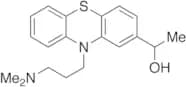
CAS:<p>Applications A metabolite of Acepromazine (A130900).<br>References Cossum, P., et al.: Drug Dispos., 9, 321 (1988), Stowell, L., et al.: J. Anal. Toxicol., 22, 166 (1998),<br></p>Formula:C19H24N2OSColor and Shape:NeatMolecular weight:328.47Diazoxide-d3
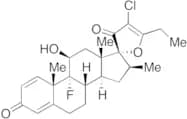
CAS:Controlled Product<p>Applications Diazoxide-d3 is the labeled analogue of Diazoxide (D417305), which reduces status epilepticus neuron damage in diabetes.<br>References Baba, A., et al.: J. Neurosci., 23, 7737 (2003); Bancila, V., et al.: J. Neurochem., 90, 1243 (2004); Bancila, V., et al.: J. Biol. Chem., 280, 8793 (2005)<br></p>Formula:C8H4D3ClN2O2SColor and Shape:NeatMolecular weight:233.699α-Fluoro-11β-hydroxy-16-β-methyl-3-oxoandrosta-1,4-diene-17(R)-spiro-2’-[4’-chloro-5’-ethylfuran-3’(2’H)-one
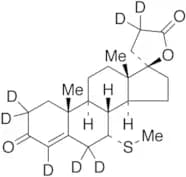
CAS:<p>Impurity Clobetasol Propionate EP Impurity J<br>Applications 9α-Fluoro-11β-hydroxy-16-β-methyl-3-oxoandrosta-1,4-diene-17(R)-spiro-2’-[4’-chloro-5’-ethylfuran-3’(2’H)-one (Clobetasol Propionate EP Impurity J) is an impurity in the synthesis of Clobetasol 17-Propionate (C583500), a topical corticosteroid. Glucocorticoid; anti-inflammatory.<br>References Olsen, E.A., et al.: J. Am. Acad. Dermatol., 15, 246 (1986),<br></p>Formula:C25H30ClFO4Color and Shape:NeatMolecular weight:448.957α-Thiomethyl Spironolactone-d7 (Major)
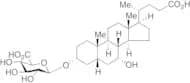
CAS:Controlled Product<p>Applications A labelled metabolite of Spironolactone.<br>References Gochman, N., et al.: J. Pharmacol. Exp. Ther., 135, 312 (1962), Tori, K., et al.: Steroids, 4, 713 (1964), Solymoss, B., et al.: Toxicol. Appli. Pharmacol., 18, 586 (1971),<br></p>Formula:C23H25D7O3SColor and Shape:NeatMolecular weight:395.61Chenodeoxycholic acid-3-β-D-glucuronide
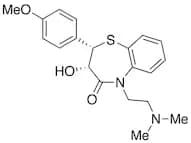
CAS:Controlled ProductFormula:C30H48O10Color and Shape:White To Off-WhiteMolecular weight:568.7Desacetyl Diltiazem
CAS:<p>Impurity Diltiazem EP Impurity F<br>Applications Desacetyl Diltiazem (Diltiazem EP Impurity F) is a metabolite of Diltiazem (D460620).<br>References Shallcross, H., et al.: Br. Med. J., 295, 1236 (1987), Yeung, P.K.F., et al.: Drug Metab. Dispos., 18, 1055 (1990), Cashman, J.R., et al.: J. Med. Chem., 34,2049 (1991),<br></p>Formula:C20H24N2O3SColor and Shape:White To BrownMolecular weight:372.48Petromyzonol 24-Sulfate Sodium Salt
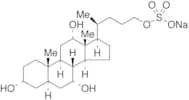
CAS:Controlled ProductFormula:C24H41O7S·NaColor and Shape:NeatMolecular weight:496.63Melagatran
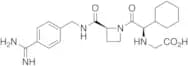
CAS:Controlled Product<p>Stability Hygroscopic<br>Applications Synthetic thrombin inhibitor. Thrombin mutant anticoagulant antagonist. Antithrombotic.<br>References Dewanjee, M., et al.: J. Nucl. Med., 22, 981 (1981), Goodman, S., et al.: J. Biomed. Mater. Res., 45, 240 (1999), Carlsson, S., et al.: Thromb. Res., 115, 9 (2005),<br></p>Formula:C22H31N5O4Color and Shape:NeatMolecular weight:429.517-Bromobenz[a]anthracene
CAS:Controlled Product<p>Applications 7-Bromobenz[a]anthracene (cas# 32795-84-9) is a useful research chemical.<br></p>Formula:C18H11BrColor and Shape:NeatMolecular weight:307.18Telocinobufogenin
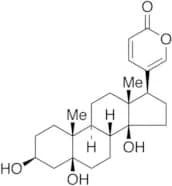
CAS:Controlled Product<p>Applications Telocinobufagin is isolated as a major component from skin secretion of the toad Bufo rubescens. Telocinobufogenin is a novel antibiotic cardiotonic.<br>References Akizawa, T., et al.: Chem. Pharm. Bull., 42, 754 (1994); Hancock, R., et al.: Antimicrob. Agents Chemother., 43, 1317 (1999); Jing, Y., et al.: J. Cancer Res., 85, 645 (1994); Kamano, Y., et al.: J. Med. Chem., 45, 5440 (2002); Schoner, W., et al.: Eur. J. Biochem., 269, 2440 (2002); Cunha Filho, G., et al.: Toxicon, 45, 777 (2005)<br></p>Formula:C24H34O5Color and Shape:NeatMolecular weight:402.52O-Desmethyl Quinidine
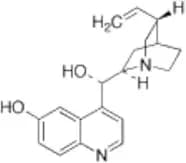
CAS:Controlled Product<p>Applications A metabolite of Quinidine.<br>References Small, D.L., et al.: J. Chem. Med., 22, 1014 (1979), Guentert, T.W., et al.: Eur. J. Drug Metab. Pharmacokinet., 7, 31 (1982), Rakhir, A., et al.: J. Pharmacokinet. Biopharm., 12, 1 (1984), Christie, D.J., et al.: J. Lab. Clin. Med., 112, 92 (1988),<br></p>Formula:C19H22N2O2Color and Shape:NeatMolecular weight:310.3917-Desacetyl Rocuronium Bromide
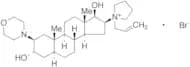
CAS:<p>Impurity Rocuronium EP Impurity C<br>Applications 17-Desacetyl Rocuronium Bromide (Rocuronium EP Impurity C) is a metabolite of Rocuronium (R639500), in human plasma.<br>References Kleef, U., et al.: J. Chromatogr., 621, 65 (1993), Proost, J., et al.: Br. J. Anaesth., 85, 717 (2000),<br></p>Formula:C30H51N2O3·BrColor and Shape:NeatMolecular weight:567.64N-Desmethyl Ulipristal Acetate
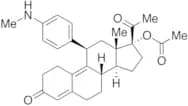
CAS:Controlled Product<p>Applications N-Desmethyl Ulipristal Acetate is the N-monodemethylated analogue and metabolite of the selective progesterone receptor modulator Ulipristal Acetate (U700810). N-Desmethyl Ulipristal Acetate contributes significantly to the antiprogestational activity of its parent compound.<br>References Attardi, B.J. et al.: J. Steroid Biochem. Mol. Biol., 88, 277 (2004);<br></p>Formula:C29H35NO4Color and Shape:NeatMolecular weight:461.59b-Cembrenediol
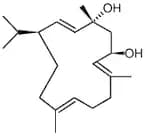
CAS:Controlled Product<p>Stability Light Sensitive<br>Applications β-Cembrenediol is an inhibitor of tumor promotion. Novel c-Met inhibitors which are used in anticancer treatments.<br>References Le-Huu, P. et al.: ChemCatChem., 8, 3755 (2016); Ebrahim, H. et al.: Bioorg. Med. Chem., 24, 5748 (2016);<br></p>Formula:C20H34O2Color and Shape:Off-WhiteMolecular weight:306.48Fluorescein-Cadaverine Dihydrochloride
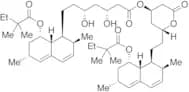
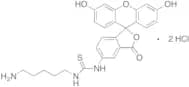
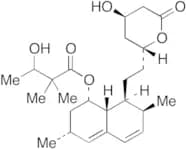
CAS:<p>Stability Hygroscopic<br>Applications Fluorescein-Cadaverine is a fluorescein derivative used in the preparation of biologically active fluorescent-labeled vitamin K analogues and monitoring of their subcellular distribution.<br>References Suhara, Y. et al.: Tetrahedron, 64, 8789 (2008);<br></p>Formula:C26H25N3O5S·2ClHColor and Shape:Orange SolidMolecular weight:564.483”-Hydroxy Simvastatin
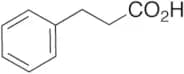
CAS:Controlled ProductFormula:C25H38O6Color and Shape:NeatMolecular weight:434.57Hydrocinnamic Acid
CAS:<p>Applications Used in the compositions for the treatment of blood disorders using α-methylhydrocinnamic acid.<br>References Migliaccio, A., et al.: Blood, 76, 1150 (1990), McDonagh, K., et al.: J. Biol. Chem., 266, 11965 (1991),<br></p>Formula:C9H10O2Color and Shape:WhiteMolecular weight:150.17Diphenhydramine N-Oxide
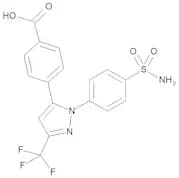
CAS:<p>Stability Hygroscopic<br>Applications A metabolite of Diphenhydramine (D486900) in humans.<br>References Breyer-Pfaff, U., et al.: Drug Metab. Dispos., 25, 340 (1997),<br></p>Formula:C17H21NO2Color and Shape:NeatMolecular weight:271.35Celecoxib Carboxylic Acid
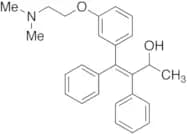
CAS:Controlled ProductFormula:C17H12F3N3O4SColor and Shape:Off WhiteMolecular weight:411.36(Z)-α-Hydroxy Tamoxifen
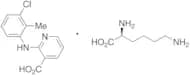
CAS:Controlled ProductFormula:C26H29NO2Color and Shape:NeatMolecular weight:387.51L-Lysine Clonixinate
CAS:<p>Applications L-Lysine Clonixinate is a non-morphinic andalgesic.<br>References Krymchantowski, A., et al.: Curr. Ther. Res., 64, 505 (2003), Di Girolamo, G., et al.: Brit. J. Pharmacol., 141, 1234 (2004),<br></p>Formula:C13H11ClN2O2·C6H14N2O2Color and Shape:Off WhiteMolecular weight:408.88Pipamazine
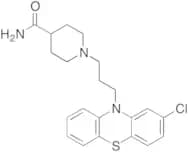
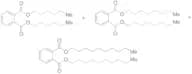
CAS:<p>Applications Pipamazine is a drug od the phenothiazine class which used to be used as an antiemetic.<br>References Bhargava, K. et al.: Br. J. Pharmacol. Chemother., 22, 154 (1964); Bhargava, K. et al.: Br. J. Pharmacol. Chemother., 21, 436 (1963);<br></p>Formula:C21H24ClN3OSColor and Shape:NeatMolecular weight:401.951,2-Benzenedicarboxylic Acid Di-C6,8,10-alkyl Esters (1:1:1 Mixture of D446490 and D481750 and D4393
CAS:Controlled Product<p>Applications 1,2-Benzenedicarboxylic Acid Di-C6,8,10-alkyl Esters_x000D_(1:1:1 Mixture of D446490 and D481750 and D439395, by weight) (cas# 68515-51-5) is a compound useful in organic synthesis.<br></p>Formula:C11H9D3O4Color and Shape:ColourlessMolecular weight:304.38Propoxyphenyl-thiohydroxyhomosildenafil
CAS:Controlled Product<p>Applications Propoxyphenyl-thiohydroxyhomosildenafil is an analogue of Hydroxythiohomo Sildenafil (H963150).<br>References Balayssac, S., et. al.: J. Pharmaceut. Biomed., 63, 135 (2012)<br></p>Formula:C24H34N6O4S2Color and Shape:NeatMolecular weight:534.69N-[1-(1-Naphthalenyl)ethyl]-4-nitrobenzenesulfonamide
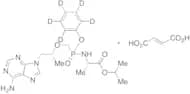
CAS:Controlled ProductFormula:C18H16N2O4SColor and Shape:NeatMolecular weight:356.396Tenofovir Alafenamide-d5 Fumarate(diastereomers)
CAS:Controlled Product<p>Stability Moisture Sensitive<br>Applications Tenofovir Alafenamide-d5 Fumarate (diastereomers), is labeled GS 7171. Tenofovir Alafenamide (T018555) is an isomer of GS 7171.<br></p>Formula:C21H24D5N6O5P·C4H4O4Color and Shape:NeatMolecular weight:481.50116073-(4-Chlorophenyl)glutaric Acid
CAS:<p>Applications 3-(4-Chlorophenyl)glutaric Acid (cas# 35271-74-0) is a compound useful in organic synthesis. Baclofen Impurity 1<br></p>Formula:C11H11ClO4Color and Shape:NeatMolecular weight:242.66Digoxigenin Bisdigitoxoside
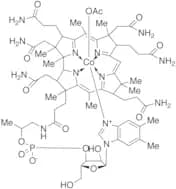
CAS:Controlled Product<p>Stability Hygroscopic<br>Applications A metabolite of Digoxin (Dx) (D446575).<br> Not a dangerous good if item is equal to or less than 1g/ml and there is less than 100g/ml in the package<br>References Fujii, Y., et al.: Clin. Chem., 37, 476 (1991), Salphati, L., et al.: Xenobiotica, 29, 171 (1999), Song, S., et al.: Drug Metab. Dispos., 27, 689 (1999),<br></p>Formula:C35H54O11Color and Shape:NeatMolecular weight:650.80Hydroxocobalamin Acetate
CAS:Controlled Product<p>Applications Physiological analog of vitamin B12 where the CN group is replaced with OH. Exists in aqueous solution as an equilibrium mixture of the hydroxy isomer and the ionic aqua isomer (aquacobalamin). Precursor of the coenzymes methylcobalamin and cobamamide. Coordination Compound. Vitamin (hematopoietic).<br>References Kaczka, E.A., et al.: Science, 112, 354 (1950), Friedrich, W., et al.: Vitamins, 837 (1988), Forsyth, J.C., et al.: Clin. Toxicol., 31, 277 (1993),<br></p>Formula:C64H91CoN13O16PColor and Shape:Dark RedMolecular weight:1388.393-Ethyl Adenine-d5 (2% d0)
CAS:Controlled Product<p>Applications 3-Ethyl Adenine-d5 (2% d0) (cas# 147028-85-1) is a compound useful in organic synthesis.<br></p>Formula:C72H5H4N5Color and Shape:White To Off-WhiteMolecular weight:168.21Hederagenin
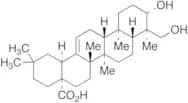
CAS:<p>Applications Triterpenoid which can inhibit the proliferation of leukemia HL-60 cells.<br>References Cho, J., et al.: Pulmon. Pharmacol. Ther., 23, 190 (2010), Gohil, V., et al.: Nat. Biotechnol., 28, 249 (2010), Saha, S., et al.: J. Agric. Food Chem., 58, 434 (2010),<br></p>Formula:C30H48O4Color and Shape:NeatMolecular weight:472.70Pirenoxine
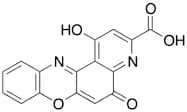
CAS:Controlled Product<p>Applications Pirenoxine, is a medication used in the possible treatment and prevention of cataracts.<br>References Liao, J. H. et al.: Inorganic Chemistry. 50 (1): 365–377.<br></p>Formula:C16H8N2O5Color and Shape:NeatMolecular weight:308.25Diclofenac Carboxylic Acid (Diclofenac Metabolite)
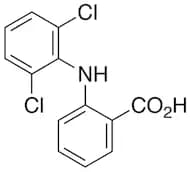
CAS:Controlled Product<p>Applications Metabolite of Diclofenac.<br>References Duffy, J.C., et al.: J. Pharm. Pharmacol., 48, 883 (1996), Oza, V., et al.: J. Med. Chem., 45, 321 (2002), Bajaj, S., et al.: Bioorg. Med. Chem., 12, 3695 (2004), Teffera, Y., et al.: Drug Metabolism Lett., 2, 35 (2008),<br></p>Formula:C13H9Cl2NO2Color and Shape:Off-WhiteMolecular weight:282.12Mianserin N-Oxide
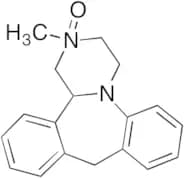
CAS:Controlled Product<p>Applications A metabolite of Mianserin.<br>References Begg, E., et al.: Br. J. Clin. Pharmacol., 27, 445 (1989), Tybring, G., et al.: Ther. Drug Monit., 17, 516 (1995), Namera, A., et al.: J. Anal. Toxicol. 22, 396 (1998), van Nederkassel, A., et al.: J. Pharm. Biomed. Anal., 32, 233 (2003),<br></p>Formula:C18H20N2OColor and Shape:NeatMolecular weight:280.36Bis(4-cyanophenyl)methanol
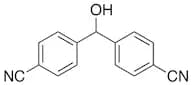
CAS:Controlled Product<p>Stability Light Sensitive<br>Applications A metabolite of Letrozole.<br>References Koyama, E., et al.: Ther. Drug Monit., 15, 224 (1993), Pfister, C., et al.: J. Pharm. Sci., 83, 520 (1994), Vander H.Y., et al.: J. Pharm. Biomed. Anal., 24, 723 (2001), Cohen, M., et al.: Clin. Cancer Res., 8, 665 (2002),<br></p>Formula:C15H10N2OColor and Shape:NeatMolecular weight:234.25Simvastatin Dimer Impurity
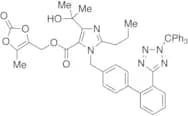
CAS:Formula:C50H76O10Color and Shape:White To Light YellowMolecular weight:837.13N-2 Trityl Olmesartan Medoxomil
CAS:<p>Impurity Olmesartan Medoxomil EP Impurity D<br>Applications Olmesartan medoxomil intermediate.<br>References Birkenhager, W., et al.: J. Hypertens, 17, 873 (1999), Whittaker, A., et al.: Br. J. Cardiol., 12, 125 (2005),<br></p>Formula:C48H44N6O6Color and Shape:White To Light YellowMolecular weight:800.90trans-β-Farnesene
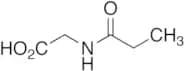
CAS:Controlled Product<p>Applications trans-β-Farnesene is a sesquiterpene natural product made my different plants to repel pest aphid species.<br>References Bruce, T., et al.: Pest Manag. Sci., 61, 1115 (2005);<br></p>Formula:C15H24Color and Shape:NeatMolecular weight:204.35Propionyl Glycine
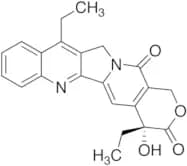
CAS:Controlled Product<p>Applications A metabolite of methylmalonic acid and propionic acid in children with methylmalonic acid and propionic acid metabolic disorders.<br>References Duran, M., et al.: Clin. Chimica Acta, 82, 93 (1978), Thompson, G.N., et al.: Pediatric Res., 27, 413 (1990),<br></p>Formula:C5H9NO3Color and Shape:NeatMolecular weight:131.137-Ethyl Camptothecin
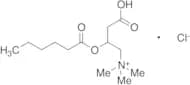
CAS:<p>Impurity Irinotecan USP Related Compound E<br>Applications An anticancer drug, showed strong activity against various murine tumors. A Camptothecin (CPT) derivative as antineoplastic agent against drug-resistant tumors. Irinotecan USP Related Compound E.<br>References Brangi, M., et al.: Cancer Res., 59 5938 (1999), Miyake, K., et al.: Cancer Res., 59, 8 (1999) , Bom, D., et al.: J. Med. Chem., 43, 3970 (2000) , Gamcsik, M., et al.: Mol. Cancer Ther., 1, 11 (2001).<br></p>Formula:C22H20N2O4Color and Shape:Light YellowMolecular weight:376.41(±)-Hexanoylcarnitine Chloride
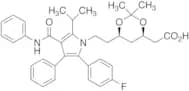
CAS:Controlled ProductFormula:C13H26NO4•ClColor and Shape:NeatMolecular weight:260.353545Atorvastatin Acetonide
CAS:<p>Applications Protected Atorvastatin.<br></p>Formula:C36H39FN2O5Color and Shape:Off-White To Light YellowMolecular weight:598.70

![Des[5-(2-dimethylamino)ethyl] Diltiazem](/_next/image/?url=https%3A%2Fstatic.cymitquimica.com%2Fproducts%2FTR%2Fthumb-webp%2FD288950.webp&w=3840&q=75)


![7-Bromobenz[a]anthracene](/_next/image/?url=https%3A%2Fstatic.cymitquimica.com%2Fproducts%2FTR%2Fthumb-webp%2FB680378.webp&w=3840&q=75)


![N-[1-(1-Naphthalenyl)ethyl]-4-nitrobenzenesulfonamide](/_next/image/?url=https%3A%2Fstatic.cymitquimica.com%2Fproducts%2FTR%2Fthumb-webp%2FN359255.webp&w=3840&q=75)