Pharmaceutical Standards
Subcategories of "Pharmaceutical Standards"
- APIs for research and impurities(276,502 products)
- Enzyme Activators and Inhibitors(2,829 products)
- Nitrosamines(2,629 products)
- Pharmaceutical and Veterinary Compounds and Metabolites(2,899 products)
- Toxicology(13,489 products)
Found 7991 products of "Pharmaceutical Standards"
(R)-(-)-1,1'-Binaphthyl-2,2'-diyl hydrogen phosphate
CAS:Intermediate in the synthesis of bedaquilineFormula:C20H13O4PPurity:Min. 95%Color and Shape:PowderMolecular weight:348.29 g/mol3',5'-Dibromo-4'-hydroxyacetophenone
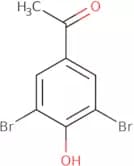
CAS:3',5'-Dibromo-4'-hydroxyacetophenone is a chemical compound that belongs to the group of methides. It has been shown to have anticancer activity and can inhibit the growth of cancer cells in culture. 3',5'-Dibromo-4'-hydroxyacetophenone is synthesized by an aerobic oxidation reaction with a biomimetic oxidant, such as hydrogen peroxide, potassium permanganate, or sodium perborate. The yields from this reaction are relatively low, with only about 10% of the starting material being converted to product. The use of a catalyst such as iron(III) chloride may increase the yield. 3',5'-Dibromo-4'-hydroxyacetophenone also inhibits cancer cell lines but not normal cells.Formula:C8H6Br2O2Purity:Min. 95%Molecular weight:293.94 g/mol3,3'-Diiodoazoxybenzene
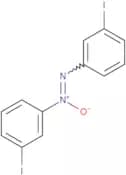
CAS:Please enquire for more information about 3,3'-Diiodoazoxybenzene including the price, delivery time and more detailed product information at the technical inquiry form on this pageFormula:C12H8I2N2OPurity:Min. 95%Molecular weight:450.01 g/mol4,4'-Bis(ethoxycarbonyl)-2,2'-bipyridine
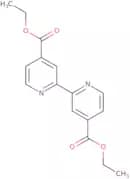
CAS:4,4'-Bis(ethoxycarbonyl)-2,2'-bipyridine (BEBCP) is a dithiolate chromophore. BEBCP has a redox potential of 1.3 volts and the electronic interaction of the carbonyl groups with the electron cloud of the bipyridine nucleus is responsible for this property. The photochemical properties of BEBCP can be systematically studied by using electrochemical data such as voltammetry and cyclic voltammetry. These methods are useful in determining the nature and constant of BEBCP as well as its interaction with ligands.Formula:C16H16N2O4Purity:Min. 95%Color and Shape:PowderMolecular weight:300.31 g/mol2,7-Dihydroxynaphthalene
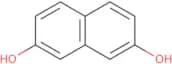
CAS:2,7-Dihydroxynaphthalene is a chemical compound that contains a naphthalene ring with two hydroxyl groups. It is an aromatic compound and its molecular formula is C 10 H 8 O 2 . The chemical structure of 2,7-dihydroxynaphthalene consists of a benzene ring with two hydroxyl groups and a double bond. The reactivity of the hydroxyl group in 2,7-dihydroxynaphthalene makes it useful in analytical chemistry as an indicator for detecting time. The hydrogen bond between the hydroxyl groups can be broken by adding potassium dichromate to form p-hydroxybenzoic acid (pHBA). This reaction mechanism is used for other reactions such as those catalyzed by enzymes. 2,7-Dihydroxynaphthalene has been synthesized by using trifluoroacetic acid and hydrogen gas in the presence of catalystsFormula:C10H8O2Purity:Min. 95%Color and Shape:Grey White To Grey SolidMolecular weight:160.17 g/mol(5-Nitro-1-naphthyl)amine
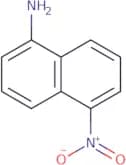
CAS:(5-Nitro-1-naphthyl)amine is an aromatic amine that has been used as a dye and as a reagent in organic synthesis. (5-Nitro-1-naphthyl)amine has an electron withdrawing effect on the aromatic ring, which creates an electron rich environment. This allows it to undergo reductive elimination reactions with hydrochloric acid or hydrazine. It can also be converted into nitro groups by reduction with hydrogen and hydrochloric acid, or by oxidation with potassium permanganate. The intramolecular hydrogen bond of (5-nitro-1-naphthyl)amine is stronger than the intermolecular hydrogen bonding of the molecule with water molecules. This means that the solubility of (5-nitro-1-naphthyl)amine in water is low because it cannot easily form hydrogen bonds with other water molecules. The chromatographic separation of (5-nitFormula:C10H8N2O2Purity:Min. 95%Color and Shape:Red PowderMolecular weight:188.18 g/molPhenylazosalicylic acid
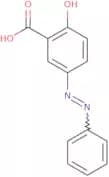
CAS:Phenylazosalicylic acid is a crystalline solid that belongs to the group of phenylacetic acids. It is synthesized by the reaction of nitric acid with salicylic acid, which is produced from the distillation of wood. Phenylazosalicylic acid has a molecular weight of 150.09 g/mol and a melting point of 123°C. The molecule is unionized in water and can be found in wastewater effluent at concentrations as high as 3 ppm. This compound has acidic properties and reacts with picric acid to form phenylazosalicylic picrate, which is used for the treatment of anthrax. Phenylazosalicylic acid also shows proton-pumping activity, which may be due to its ability to bind to anionic sites on proteins such as carbonic anhydrase II and H+/K+ ATPase.
Formula:C13H10N2O3Purity:Min. 95%Color and Shape:Orange PowderMolecular weight:242.23 g/molα-Methyl 2,4-dichlorochalcone
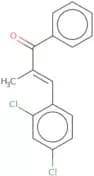
CAS:α-Methyl 2,4-dichlorochalcone is a useful scaffold for the synthesis of complex compounds. It can be used as a reaction component in research chemicals, speciality chemicals, and fine chemicals. This compound has a CAS No. 199788-52-8 and can be used as an intermediate in the synthesis of many other compounds with varying structures. It is also a versatile building block that can be used to synthesize various useful building blocks. α-Methyl 2,4-dichlorochalcone also has high quality and purity and can be used as a reagent for chemical reactions.Formula:C16H12Cl2OPurity:Min. 95%Color and Shape:PowderMolecular weight:291.17 g/mol4-(4-Formyl-3-methoxyphenoxy)butanoic acid
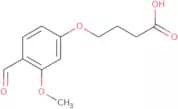
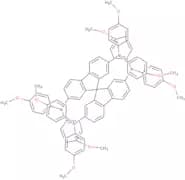
CAS:Controlled Product4-(4'-Formyl-3'-methoxyphenoxy)butanoic acid is a carboxylate that can be used as a preloaded reagent for the synthesis of peptides, proteins, and other organic molecules. 4-(4'-Formyl-3'-methoxyphenoxy)butanoic acid has been shown to be an efficient linker for solid-phase peptide synthesis. 4-(4'-Formyl-3'-methoxyphenoxy)butanoic acid is labile to hydrolysis and so should be stored in an organic solvent such as dimethylsulfoxide. The carboxylate group is readily available in the form of its sodium salt, which can be synthesized by reacting sodium acetate with formaldehyde.Formula:C12H14O5Purity:Min. 95%Color and Shape:PowderMolecular weight:238.24 g/mol2,2',7,7'-Tetrakis-(N,N-di-4-methoxyphenylamino)-9,9'-spirobifluorene - Sublimed grade
CAS:2,2',7,7'-Tetrakis-(N,N-di-4-methoxyphenylamino)-9,9'-spirobifluorene (TPB) is a model system for investigating the transport of light signal in polymers. TPB can be used as a component in solar cells to increase their efficiency and improve their resistance to heat. TPB has shown high resistance to hydrochloric acid and other aggressive chemicals. TPB has been shown to be an effective photoelectron donor with a redox potential that is close to the one of copper; this property can be used for electrochemical impedance spectroscopy.Formula:C81H68N4O8Purity:Min. 95%Color and Shape:Off-white to yellow solid.Molecular weight:1,225.43 g/molSerotonin hydrogen acetate
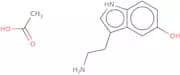
CAS:Controlled ProductSerotonin hydrogen acetate is a fine chemical with CAS No. 103360-13-0. It is a useful building block for research chemicals, such as serotonin hydrochloride, and speciality chemicals, such as serotonin phosphate. Serotonin hydrogen acetate has been used in the synthesis of a number of important compounds, including fluoxetine hydrochloride (Prozac), alpha-methylserotonin hydrochloride (PMS), and 5-hydroxytryptophan (5HTP). This compound is also an important reaction component for complex organic syntheses that require a versatile building block or scaffold.Formula:C10H12N2O·C2H4O2Purity:Min. 95%Molecular weight:236.27 g/mol3,3'-Iminodipropionitrile
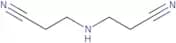
CAS:3,3'-Iminodipropionitrile (IDPN) is a chiral molecule that has been studied as an experimental model for copper chloride toxicity. IDPN has been shown to inhibit the production of stem cell factor and atp levels in a mouse model. IDPN also reduces locomotor activity and alters histological analysis of the mouse hippocampus. 3,3'-Iminodipropionitrile is a toxic compound that can be used in tissue culture studies to study the effects of amines on cells.Formula:C6H9N3Purity:Min. 95%Molecular weight:123.16 g/molBiotin-PEG2-NHS
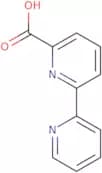
CAS:Biotin-PEG2-NHS is a PEG compound with two different functional groups (also known as heterobifunctional). Unlike homobifunctional PEG compounds (same functional group on both ends), this type of compounds are more versatile as have two different anchor points. Biotin-PEG2-NHS is used as a linker and spacer to add a PEG moiety, via pegylation (a bioconjugation technique) to proteins, peptides, oligonucleotides, small molecules and nanoparticles.Formula:C21H32N4O8SPurity:Min. 95%Color and Shape:PowderMolecular weight:500.57 g/mol2,2'-Bipyridine-6-carboxylic acid
CAS:2,2'-Bipyridine-6-carboxylic acid is a reagent that is used in organic synthesis as a reaction component and building block for the synthesis of heterocyclic compounds. 2,2'-Bipyridine-6-carboxylic acid is also used as a precursor to produce other compounds. 2,2'-Bipyridine-6-carboxylic acid has been shown to be useful in the synthesis of complex compounds with diverse structures, making it a versatile building block. It can also be used as an intermediate in the synthesis of various drugs and speciality chemicals.
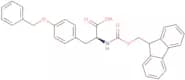
Formula:C11H8N2O2Purity:Min. 95%Color and Shape:Off-White PowderMolecular weight:200.19 g/molFmoc-O-benzyl-L-tyrosine
CAS:Fmoc-O-benzyl-L-tyrosine is a chalcone that is used as a monomer in the synthesis of polymers. It is also used to synthesize ciprofloxacin, which is an antibiotic with both bactericidal and bacteriostatic activity. Fmoc-O-benzyl-L-tyrosine has been shown to have pharmacokinetic properties that are similar to those of ciprofloxacin. This drug has been shown to reduce renal injury in rats with chronic kidney disease by preventing the accumulation of proteinaceous materials. Fmoc-O-benzyl-L-tyrosine has also been shown to be antibacterial, and can inhibit the growth of subtilis, a bacterial strain that causes chronic kidney disease.Formula:C31H27NO5Purity:Min. 95%Color and Shape:White PowderMolecular weight:493.55 g/mol5-Bromo-2-nitrophenol
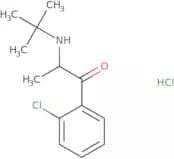
CAS:5-Bromo-2-nitrophenol is an organic compound that is used in the industrial production of drugs and dyes. It is soluble in ethanol, but insoluble in water. 5-Bromo-2-nitrophenol can be obtained by extracting it from the filtrate of a solution of potassium tert-butyl ether with aqueous ethanol. The extraction process involves adding morpholine to the solution, which is then heated and refluxed. This process yields high yields of 5-bromo-2-nitrophenol.Formula:C6H4BrNO3Purity:Min. 95%Color and Shape:Yellow solid.Molecular weight:218 g/mol2-(tert-Butylamino)-2'-chloropropiophenone hydrochloride
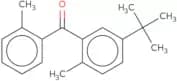
CAS:Controlled Product2-(tert-Butylamino)-2'-chloropropiophenone hydrochloride (BAPCH) is a fine chemical that is used as a building block in the synthesis of other compounds. It can be used as a reagent or speciality chemical in research, and is also an intermediate for the synthesis of other chemicals. BAPCH has a CAS number of 1049718-57-1, and is a versatile building block with many reactions. BAPCH has been shown to be useful in complex syntheses that require reactive groups and scaffolds.Formula:C13H19Cl2NOPurity:Min. 95%Color and Shape:White To Off-White SolidMolecular weight:276.2 g/mol2,2'-Dimethyl-5-tert-butylbenzophenone
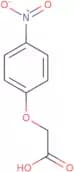
CAS:2,2'-Dimethyl-5-tert-butylbenzophenone is a versatile building block that can be used for the synthesis of complex compounds. It is also a reagent and speciality chemical that has many applications in research. 2,2'-Dimethyl-5-tert-butylbenzophenone is a high quality compound with many uses as a reaction component or scaffold for organic synthesis. It is available from Sigma Aldrich in both powder and liquid form. The CAS number of this compound is 50460-53-2.Formula:C19H22OPurity:Min. 95%Molecular weight:266.38 g/mol2-(4-Nitrophenoxy)acetic acid
CAS:2-(4-Nitrophenoxy)acetic acid is a chemical compound with the molecular formula CHNO. It has been shown to inhibit the polymerase chain reaction, which is an important technique in molecular biology. The intramolecular hydrogen bond between HN and OO stabilizes the molecule and inhibits its rotation. This allows 2-(4-Nitrophenoxy)acetic acid to function as a competitive inhibitor of DNA polymerase. 2-(4-Nitrophenoxy)acetic acid inhibits bacterial growth by binding to the beta subunit of DNA gyrase, an enzyme that maintains the integrity of bacterial DNA. This inhibition prevents topoisomerase IV from relaxing supercoiled DNA, leading to cell death by inhibiting protein synthesis and cell division.Formula:C8H7NO5Purity:Min. 95%Color and Shape:PowderMolecular weight:197.14 g/molIsodesmosine chloride
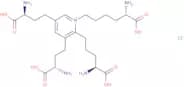
CAS:Isodesmosine chloride is an amino acid derivative, which is a naturally occurring component found in the elastin protein. This organic compound is originally sourced from the structural protein elastin, prevalent in connective tissues such as skin, lungs, and blood vessels. It plays a critical role in the cross-linking and stabilization of elastin fibers, contributing to the elastic properties of these tissues.Formula:C24H40ClN5O8Purity:Min. 95%Molecular weight:562.06 g/mol