Pharmaceutical Standards
Subcategories of "Pharmaceutical Standards"
- APIs for research and impurities(276,452 products)
- Enzyme Activators and Inhibitors(2,829 products)
- Nitrosamines(2,627 products)
- Pharmaceutical and Veterinary Compounds and Metabolites(2,900 products)
- Toxicology(13,513 products)
Found 7977 products of "Pharmaceutical Standards"
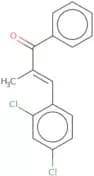
α-Methyl 2,4-dichlorochalcone
CAS:α-Methyl 2,4-dichlorochalcone is a useful scaffold for the synthesis of complex compounds. It can be used as a reaction component in research chemicals, speciality chemicals, and fine chemicals. This compound has a CAS No. 199788-52-8 and can be used as an intermediate in the synthesis of many other compounds with varying structures. It is also a versatile building block that can be used to synthesize various useful building blocks. α-Methyl 2,4-dichlorochalcone also has high quality and purity and can be used as a reagent for chemical reactions.Formula:C16H12Cl2OPurity:Min. 95%Color and Shape:PowderMolecular weight:291.17 g/molVanillyl alcohol
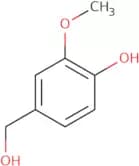
CAS:Vanillyl alcohol is a vanillin derivative that exhibits strong antibacterial activity. It can be used in the food industry as a natural preservative, and it has synergic effects with eugenol. Vanillyl alcohol shows antimicrobial properties against Gram-positive and Gram-negative bacteria, including Staphylococcus aureus, Pseudomonas aeruginosa, Escherichia coli, and Enterococcus faecalis. Vanillyl alcohol exhibits synergic effects with eugenol. In vivo models show that vanillyl alcohol is not toxic to humans, but it may be toxic to wild-type strains of bacteria.Formula:C8H10O3Purity:Min. 98 Area-%Color and Shape:White PowderMolecular weight:154.16 g/molMethacetin
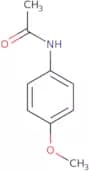
CAS:Methacetin is a chemical compound that is used in the diagnosis of liver impairment. It is a fatty acid and an inhibitor of certain enzymes. Methacetin inhibits the activity of the enzyme acetyl-CoA carboxylase, which catalyzes the conversion of acetyl-CoA to malonyl-CoA, thereby reducing fatty acid synthesis. Methacetin has been shown to be effective in inhibiting the activity of rat liver microsomes at concentrations of 0.01 mM and above. In addition, methacetin has been found to increase the body mass index (BMI) in rats with hepatic impairment and can be used as a biomarker for this condition. Methacetin has been shown to have a molecular docking score of -4.2 kcal/mol when it was docked against human hepatitis B virus (HBV). This indicates that there are strong hydrogen bonding interactions between methacetin and HBV proteins.
Formula:C9H11NO2Purity:Min. 95%Color and Shape:PowderMolecular weight:165.19 g/mol3-Cyanomethylbenzoic acid methyl ester
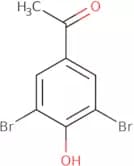
CAS:3-Cyanomethylbenzoic acid methyl ester is a synthetic chemical compound that is used as an intermediate in the production of other chemicals. It is a chlorination agent that reacts with toluene and methanol in the presence of chlorine to produce 3-chloromethylbenzoic acid methyl ester. This reaction also produces a byproduct called sulphone, which can be converted into acylation reagents for use in organic synthesis. The chloride ion can be used for cyanation reactions, which are useful for producing dyes or pharmaceuticals.Formula:C10H9NO2Purity:Min. 95%Color and Shape:SolidMolecular weight:175.18 g/mol3',5'-Dibromo-4'-hydroxyacetophenone
CAS:3',5'-Dibromo-4'-hydroxyacetophenone is a chemical compound that belongs to the group of methides. It has been shown to have anticancer activity and can inhibit the growth of cancer cells in culture. 3',5'-Dibromo-4'-hydroxyacetophenone is synthesized by an aerobic oxidation reaction with a biomimetic oxidant, such as hydrogen peroxide, potassium permanganate, or sodium perborate. The yields from this reaction are relatively low, with only about 10% of the starting material being converted to product. The use of a catalyst such as iron(III) chloride may increase the yield. 3',5'-Dibromo-4'-hydroxyacetophenone also inhibits cancer cell lines but not normal cells.Formula:C8H6Br2O2Purity:Min. 95%Molecular weight:293.94 g/mol3-Fluoro-4-methylbenzoic acid methyl ester
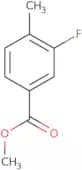
CAS:3-Fluoro-4-methylbenzoic acid methyl ester is a benzoate that can be converted to 3-fluoro-4-methylbenzoic acid (3FMB) by decarboxylation. 3FMB can be used in the synthesis of phenylacetic acid and other aromatic compounds. It also has been shown to function as a radical scavenger, which may have applications in medical research and treatment of neurodegenerative diseases. 3FMB has been shown to inhibit the growth of bacteria when it is applied topically or orally, due to its ability to inhibit DNA synthesis.Formula:C9H9FO2Purity:Min. 95%Molecular weight:168.16 g/mol(S)-3-Amino-4-(1-naphthyl)butanoic acid hydrochloride
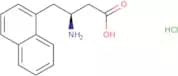
CAS:(S)-3-Amino-4-(1-naphthyl)butanoic acid hydrochloride is a high quality chemical that is used as a reaction component for the synthesis of complex organic compounds. It may also be used to produce fine chemicals, pharmaceuticals, and other useful compounds. This product has a wide variety of uses including as an intermediate in the production of speciality chemicals, as a building block for synthesizing more complex compounds, or as a precursor to producing other useful chemicals.Formula:C14H16ClNO2Purity:Min. 95%Color and Shape:White PowderMolecular weight:265.74 g/molN-Methyl-N-(1-naphthyl)-2-bromobenzamide
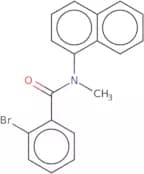
CAS:N-Methyl-N-(1-naphthyl)-2-bromobenzamide is a high quality reagent that is used as a complex compound. It has CAS No. 74881-58-6 and it can be used as a useful intermediate, fine chemical or speciality chemical. N-Methyl-N-(1-naphthyl)-2-bromobenzamide is also a versatile building block that is used in reactions to synthesize other compounds.Formula:C18H14BrNOPurity:Min. 95%Molecular weight:340.21 g/mol3,5-Diamino-6-chloropyrazine-2-carboxylic acid methyl ester
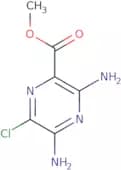
CAS:3,5-Diamino-6-chloropyrazine-2-carboxylic acid methyl ester is a low binding, mitochondrial labeling agent. It is photolabile and can be used in the study of respiratory complex activity. 3,5-Diamino-6-chloropyrazine-2-carboxylic acid methyl ester has been shown to inhibit the enzyme mitochondrial complex I and II. The azido group on the molecule is homologous to a phosphate group in ATP and can be used as a substrate analogue for ATP synthase. This allows 3,5-Diamino-6-chloropyrazine-2-carboxylic acid methyl ester to be used as an experimental tool for studying ATP synthesis.
Formula:C6H7ClN4O2Purity:Min. 95%Color and Shape:PowderMolecular weight:202.6 g/mol(1S)-(+)-10-Camphorsulfonic acid
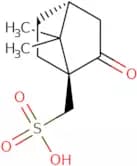
CAS:(1S)-(+)-10-Camphorsulfonic acid is an organolithium compound that is used as a reagent in organic synthesis. It has been shown to have antimicrobial activity against Gram-positive and Gram-negative bacteria, including methicillin-resistant Staphylococcus aureus (MRSA). The bathochromic shift observed in the infrared spectrum of camphorsulfonic acid at 860 nm is due to the hydrogen bonding between sulfonic acid groups. Camphorsulfonic acid has also been shown to inhibit dipeptidyl peptidase-IV, which results in increased levels of butyric acid, a short chain fatty acid. This inhibition may be responsible for its use as an adjuvant for vaccines.Formula:C10H16O4SPurity:Min. 95%Color and Shape:PowderMolecular weight:232.3 g/mol1,2,3,4-Tetrahydro-2-naphthalenecarboxylic acid
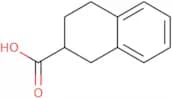
CAS:1,2,3,4-Tetrahydro-2-naphthalenecarboxylic acid (1,2,3,4-THN) is an organic acid that can be metabolized by debromination or trifluoroacetic acid. It is a precursor for the synthesis of 5-caffeoylquinic acid and other biologically active compounds. 1,2,3,4-THN has been shown to have inhibitory effects on cancer cells. It also has chemical compositions including hydroxy groups and borohydride reduction sites that are important in its efficient method of synthesis.Formula:C11H12O2Purity:Min. 95%Color and Shape:White PowderMolecular weight:176.21 g/mol5alpha-Pregnane-3,20-dione
CAS:Controlled Product5alpha-Pregnane-3,20-dione is a naturally occurring sex steroid hormone. It is produced by the ovaries and testes in humans and other mammals, as well as by the adrenal glands in small amounts. 5alpha-Pregnane-3,20-dione has been shown to inhibit the enzyme activity of hepatic microsomes that are responsible for the conversion of progesterone to 17beta-hydroxyprogesterone (17betaOHP). This inhibition is due to its ability to bind to glucocorticoid receptors. 5alpha-Pregnane-3,20-dione also inhibits fatty acid synthesis in liver cells. The drug's antiproliferative effects on ovarian cells are mediated through a number of mechanisms including transcriptional repression of progesterone receptors and estradiol benzoate binding sites on DNA. 5alpha-Pregnane-3,20-dione has been shown to have an optimalFormula:C21H32O2Purity:Min. 95%Color and Shape:PowderMolecular weight:316.48 g/mol1-Phenyl-1H-5-(2'-hydroxy-5'-methylphenyl)pyrazole
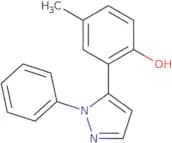
CAS:1-Phenyl-1H-5-(2'-hydroxy-5'-methylphenyl)pyrazole is a chemical compound with the molecular formula C14H10N2O. It is a white crystalline solid that can be used as a building block, intermediate, or reagent in organic synthesis. It is soluble in most solvents, but insoluble in water. 1-Phenyl-1H-5-(2'-hydroxy-5'-methylphenyl)pyrazole has been used as a useful scaffold for high quality compounds and research chemicals. The CAS number for this chemical compound is 90617-39-3.Formula:C16H14N2OPurity:Min. 95%Molecular weight:250.3 g/mol2,2'-Bipyridine-6-carboxylic acid
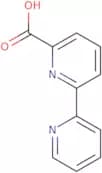
CAS:2,2'-Bipyridine-6-carboxylic acid is a reagent that is used in organic synthesis as a reaction component and building block for the synthesis of heterocyclic compounds. 2,2'-Bipyridine-6-carboxylic acid is also used as a precursor to produce other compounds. 2,2'-Bipyridine-6-carboxylic acid has been shown to be useful in the synthesis of complex compounds with diverse structures, making it a versatile building block. It can also be used as an intermediate in the synthesis of various drugs and speciality chemicals.
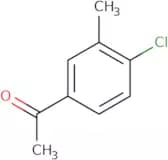
Formula:C11H8N2O2Purity:Min. 95%Color and Shape:Off-White PowderMolecular weight:200.19 g/mol4'-Chloro-3'-methylacetophenone, 95%
CAS:4'-Chloro-3'-methylacetophenone, 95% is a white crystalline solid that is soluble in alcohols and ethers. It has been used as a reagent for the synthesis of acetophenones. The compound exhibits moderate solubility in water and reacts with aqueous alkalis to form salts. 4'-Chloro-3'-methylacetophenone, 95% also reacts with strong oxidizing agents to form peroxides and with acid chlorides to form esters.
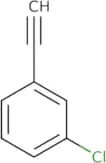
Formula:C9H9ClOPurity:Min. 95%Molecular weight:168.62 g/mol3'-Chlorophenylacetylene
CAS:3'-Chlorophenylacetylene is an organic compound that is used in the production of styrene via a macroinitiator. 3'-Chlorophenylacetylene reacts with azides to form diazo compounds, which are then hydrolyzed to produce terminal alkynes. These terminal alkynes can be dehydrogenated to produce acrylonitrile and vinyl acetate. The compound can also react with silicon to produce organometallic complexes. 3'-Chlorophenylacetylene is commonly analyzed using nuclear magnetic resonance spectroscopy (NMR). This molecule has been used as a conjugate for drug delivery systems and as a supramolecular catalyst for organic reactions.Formula:C8H5ClPurity:Min. 95%Molecular weight:136.58 g/mol(S)-(-)-1-(1-Naphthyl)ethyl amine
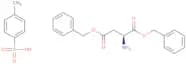
CAS:(S)-(-)-1-(1-Naphthyl)ethyl amine is a chromatographic stationary phase that is used in the separation of fatty acids. It consists of an amine group bound to a naphthalene ring, which is tethered to a long alkyl chain. The stationary phase can be immobilized on silica gel or other solid support matrixes and is useful for analyzing fatty acids. This stationary phase can also be used as a model system to study the interactions between fatty acid molecules and other compounds. The enantiomers (R)-(+)-1-(1-naphthyl)ethyl amine and (S)-(-)-1-(1-naphthyl)ethyl amine are available. Although these two compounds are homologues, they have different physical properties, such as boiling points and melting points. Using an analytical method called high performance liquid chromatography (HPLC), it is possible to separate these two enantiomerFormula:C12H13NPurity:Min. 95%Color and Shape:Slightly Yellow Clear LiquidMolecular weight:171.24 g/molL-Aspartic acid dibenzyl ester p-toluenesulfonate salt
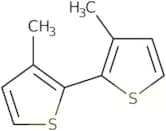
CAS:Aspartic acid derivativeFormula:C18H19NO4·C7H8O3SPurity:Min. 95%Color and Shape:White PowderMolecular weight:485.55 g/mol3,3'-Dimethyl-2,2'-bithiophenyl
CAS:3,3'-Dimethyl-2,2'-bithiophenyl is a thermochromic polymeric compound that has been used as a colorant in polymers. The compound has a linear structure consisting of two thiophene rings with methyl groups at the 3 and 2 positions. The 3,3'-dimethyl group is attached to the second carbon atom of the thiophene ring and the 2,2'-bithiophenyl group is attached to the first carbon atom of the thiophene ring. The color changes from yellow to orange when heated to above 200 °C. This color change is due to conformational changes in the molecule that occur with thermal energy input.Formula:C10H10S2Purity:Min. 95%Color and Shape:Yellow PowderMolecular weight:194.32 g/mol3-Nitrophenylacetic acid
CAS:3-Nitrophenylaceticacid (3NPAA) is a nitro compound that is used as an intermediate in the synthesis of other organic compounds. It can be synthesized by reacting phenylacetic acid with nitric acid, which is then oxidized to 3-nitrophenol with potassium permanganate. The product is then reacted with acetic anhydride to produce 3-nitrophenylacetic acid. This chemical has been shown to inhibit plant physiology and chlorophyll production by binding reversibly to the protein photosystem II in plants. 3-Nitrophenylaceticacid reacts with chloride ions to form a reversible covalent bond, which may be hydrolyzed by water or alkali.Formula:C8H7NO4Purity:Min. 95%Color and Shape:PowderMolecular weight:181.15 g/mol