Pharmaceutical Standards
Pharmaceutical standards are a comprehensive set of reference materials essential for ensuring the safety, efficacy, and quality of pharmaceutical products. This category includes standards for active pharmaceutical ingredients (APIs), which are the core components responsible for therapeutic effects. Additionally, it covers compounds and metabolites relevant to both the pharmaceutical and veterinary industries, providing benchmarks for the accurate measurement and analysis of these substances. Nitrosamine control standards are crucial for detecting and mitigating potentially harmful nitrosamines in drug formulations. Toxicology standards help assess the safety and potential adverse effects of pharmaceutical compounds. Furthermore, enzyme activators and inhibitors standards are vital for research and development, enabling precise studies of biochemical pathways and drug mechanisms. These pharmaceutical standards are indispensable tools for regulatory compliance, quality control, and research, ensuring that pharmaceutical products meet stringent safety and effectiveness criteria.
Subcategories of "Pharmaceutical Standards"
- APIs for research and impurities(273,482 products)
- Enzyme Activators and Inhibitors(2,827 products)
- Nitrosamines(2,606 products)
- Pharmaceutical and Veterinary Compounds and Metabolites(2,602 products)
- Toxicology(13,652 products)
Found 7836 products of "Pharmaceutical Standards"
Sort by
Purity (%)
0
100
|
0
|
50
|
90
|
95
|
100
[3-(1-Naphthyl)propyl]amine
CAS:<p>3-(1-Naphthyl)propyl]amine is an organic compound that is a colorless solid with a melting point of -118°C. It is soluble in water, methanol, and acetone. 3-(1-Naphthyl)propyl]amine forms acid when heated with concentrated hydrochloric acid. The reaction produces hydrogen chloride gas and benzoic acid as a byproduct. 3-(1-Naphthyl)propyl]amine also reacts with pyridine to produce carbamic acid and ammonia gas as a byproduct. This can be rationalized systematically by the loss of the amine group from the nitrogen atom of the amine molecule. Carbamic acid has two acidic protons on it which are stabilized by the carbonyl group on the other side of the molecule. 3-(1-Naphthyl)propyl]amine can also react with anions such as carbonate ions to form carbamate salts,</p>Formula:C13H15NPurity:Min. 95%Color and Shape:Clear LiquidMolecular weight:185.26 g/mol4-Hydroxy atorvastatin disodium salt
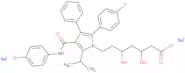
CAS:<p>Please enquire for more information about 4-Hydroxy atorvastatin disodium salt including the price, delivery time and more detailed product information at the technical inquiry form on this page</p>Formula:C33H33FN2Na2O6Purity:Min. 95%Molecular weight:618.6 g/mol3-O-Methyl norbuprenorphine
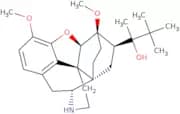
CAS:Controlled Product<p>Please enquire for more information about 3-O-Methyl norbuprenorphine including the price, delivery time and more detailed product information at the technical inquiry form on this page</p>Formula:C26H37NO4Purity:Min. 95%Molecular weight:427.58 g/mol(3b,9b,10a)-3-Hydroxy-pregna-5,7-dien-20-one
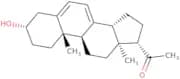
CAS:Controlled Product<p>Please enquire for more information about (3b,9b,10a)-3-Hydroxy-pregna-5,7-dien-20-one including the price, delivery time and more detailed product information at the technical inquiry form on this page</p>Formula:C21H30O2Purity:Min. 95%Molecular weight:314.46 g/mol5-Octanoylsalicylic acid
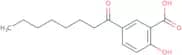
CAS:<p>5-Octanoylsalicylic acid is an anti-inflammatory and antioxidant agent that has been shown to have skin-conditioning properties. It has been found to be effective in the treatment of skin diseases, such as erythema, scaling, and itching, due to its ability to inhibit tyrosinase activity. 5-Octanoylsalicylic acid has also been shown to increase cellular proliferation and lymphocyte transformation in vitro. This compound is a precursor of all-trans-retinoic acid (a form of vitamin A), which is used for the treatment of acne. 5-Octanoylsalicylic acid can be synthesized from methyl ethyl ketone and potassium dichromate by a Friedel-Crafts reaction. It is also found in fruits such as apples, bananas, peaches, and oranges. Animal studies have shown that chronic oral administration may lead to a decrease in dehydroascorbic acid levels and an increased risk</p>Formula:C15H20O4Purity:Min. 95%Molecular weight:264.32 g/molHistatin 5
CAS:<p>Histatin 5 is a peptide that has been shown to have antimicrobial activity against Candida albicans, Candida glabrata, and Cryptococcus albicans. It is believed to exert its effect by binding to copper ions and inhibiting the mitochondrial functions of the pathogen. Histatin 5 also has pro-apoptotic properties and may be used as an experimental treatment for infectious diseases caused by opportunistic fungal strains.</p>Formula:C133H195N51O33Purity:Min. 95%Molecular weight:3,036.3 g/molTetramethylurea
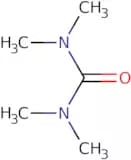
CAS:<p>Tetramethylurea is a versatile compound that has various applications in different fields. It is commonly used as a monophosphate donor in biochemical reactions and as a reagent for the synthesis of L-sorbose and histidine. In addition, tetramethylurea is employed in the production of herbicides, as well as in the synthesis of zirconium oxide nanoparticles.</p>Formula:C5H12N2OPurity:Min. 95%Molecular weight:116.16 g/molDorzolamide hydrochloride related compound A
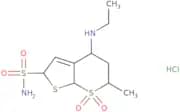
CAS:<p>Please enquire for more information about Dorzolamide hydrochloride related compound A including the price, delivery time and more detailed product information at the technical inquiry form on this page</p>Formula:C10H16N2O4S3·HClPurity:Min. 95%Molecular weight:360.9 g/mol17-Hydroxy-19-nor-17alpha-pregna-4,6-dien-20-yn-3-one acetate
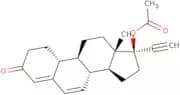
CAS:<p>Please enquire for more information about 17-Hydroxy-19-nor-17alpha-pregna-4,6-dien-20-yn-3-one acetate including the price, delivery time and more detailed product information at the technical inquiry form on this page</p>Formula:C22H26O3Purity:Min. 95%Color and Shape:Off-white to pale yellowsolid.Molecular weight:338.44 g/mol5α-Pregnan-20β-Ol-3-one
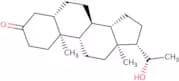
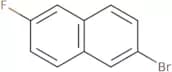
CAS:Controlled Product<p>Please enquire for more information about 5alpha-Pregnan-20beta-Ol-3-one including the price, delivery time and more detailed product information at the technical inquiry form on this page</p>Purity:Min. 95%2-bromo-6-fluoronaphthalene
CAS:<p>2-bromo-6-fluoronaphthalene is a molecule that has been shown to be a good electron donor in organic solar cells. It is also an analgesic and antinociceptive agent. 2-Bromo-6-fluoronaphthalene has shown to have antiinflammatory effects and inhibit the production of prostaglandins, which are chemical messengers that induce inflammation. The molecular structure of 2-bromo-6-fluoronaphthalene consists of two bromine atoms attached to two naphthalene rings. The bromine atoms provide strong electron donating properties and the naphthalene rings provide stability for the molecule.</p>Formula:C10H6BrFPurity:Min. 95%Molecular weight:225.06 g/molEstrone 3-valerate
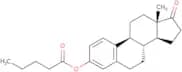
CAS:Controlled Product<p>Please enquire for more information about Estrone 3-valerate including the price, delivery time and more detailed product information at the technical inquiry form on this page</p>Formula:C23H30O3Purity:Min. 95%Molecular weight:354.48 g/mol9,10-Diphenylanthracene - 95%
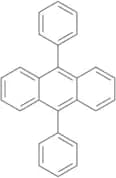
CAS:<p>9,10-Diphenylanthracene is a fluorescent aromatic hydrocarbon that belongs to the class of carbonyl compounds. It has high values and maximal response with analytical methods such as fluorescence techniques and gel pores. 9,10-Diphenylanthracene can be used as a probe for the transfer mechanism of nucleic acids and proteins. 9,10-Diphenylanthracene is also used in analytical chemistry to determine the structure of dihydro derivatives of unsaturated alkyl chains. This compound's chemical properties make it an excellent fluorescent marker for use in gamma-aminobutyric acid (GABA) research.</p>Formula:C26H18Purity:Min. 95%Color and Shape:PowderMolecular weight:330.42 g/mol2-Bromo-4'-nitroacetophenone
CAS:<p>2-Bromo-4'-nitroacetophenone is a chemical compound that has been shown to be active in enzyme inhibition experiments. It has been found to inhibit the activity of histidine decarboxylase, which catalyzes the conversion of histidine to histamine, and uv absorption. 2-Bromo-4'-nitroacetophenone binds to the active site of P450 enzymes, inhibiting their catalytic activity. This compound also inhibits fatty acid oxidation by binding to fatty acid hydroxylase and hydrogen bonds with tyrosine residues in proteins. 2-Bromo-4'-nitroacetophenone is structurally similar to 2-bromoacetophenone, which has been shown to have antihistaminic properties.</p>Formula:C8H6BrNO3Purity:Min. 95%Color and Shape:PowderMolecular weight:244.04 g/mol1-(2-Amino-5-nitrophenyl)ethanone
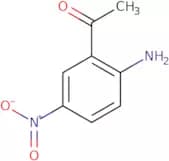
CAS:<p>Please enquire for more information about 1-(2-Amino-5-nitrophenyl)ethanone including the price, delivery time and more detailed product information at the technical inquiry form on this page</p>Formula:C8H8N2O3Purity:Min. 95%Molecular weight:180.16 g/mol3-Bromo-2-methylbenzoic acid methyl ester
CAS:<p>3-Bromo-2-methylbenzoic acid methyl ester is a serotonin transporter and reuptake inhibitor. It has selectivities for serotonin, dopamine and norepinephrine transporters. 3-Bromo-2-methylbenzoic acid methyl ester acts as a linker molecule in the synthesis of complex molecules like neurotransmitters. It is also a bifunctional molecule that can act as an antidepressant or anti-anxiety drug by increasing serotonin levels in the brain. 3-Bromo-2-methylbenzoic acid methyl ester’s function as a ligand is to bind to receptors on cells, which may be linked with its effects on depression and anxiety.</p>Formula:C9H9BrO2Purity:Min. 95%Molecular weight:229.07 g/mol4-Bromo-2-fluorobenzoic acid methyl ester
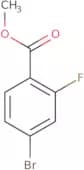
CAS:<p>4-Bromo-2-fluorobenzoic acid methyl ester is a synthetic chemical that is used as a drug substance in the synthesis of pharmaceuticals. It is also a reagent for organic synthesis, specifically cross coupling reactions. 4-Bromo-2-fluorobenzoic acid methyl ester can be used to introduce an alkyl group into a molecule, which can then be used in other synthetic reactions. This chemical has been shown to inhibit prolyl hydroxylase (PHD), which is an enzyme that catalyzes the conversion of proline to hydroxyproline. 4-Bromo-2-fluorobenzoic acid methyl ester also inhibits the Bcl-2 family proteins, including bcl2, bclxl and bax, which are known to play a role in apoptosis. 4-Bromo-2-fluorobenzoic acid methyl ester</p>Formula:C8H6BrFO2Purity:Min. 95%Molecular weight:233.03 g/mol4-Nitrophenol
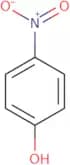
CAS:<p>4-Nitrophenol is a chemical compound that is used in wastewater treatment to remove iron and copper ions. 4-Nitrophenol has been shown to catalyze the oxidation of picolinic acid by copper chloride, forming oxalic acid. The redox potential of 4-nitrophenol is -0.53 V, which makes it a suitable electron acceptor for the reaction. The reaction mechanism of this process involves the formation of a nitroso radical intermediate, which reacts with copper ions to form copper nitroso complexes and then reacts with oxygen to form hydroxylamine radicals. This reaction can also be followed using fluorescence probe measurements or electrochemical impedance spectroscopy (EIS).</p>Formula:C6H5NO3Purity:Min. 95%Color and Shape:PowderMolecular weight:139.11 g/molCholesterol Hexyl Carbonate
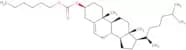
CAS:Controlled Product<p>Cholesterol Hexyl Carbonate (C6HC) is a chiral organic compound with a unique conformation that enhances its adsorbing properties. C6HC is synthesized by reacting cholesterol with hexanoyl chloride in the presence of strong base and an inert solvent. The structural formula of this compound is shown in Figure 1.</p>Purity:Min. 95%Bromocresol purple sodium salt
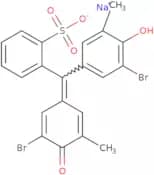
CAS:<p>Bromocresol purple sodium salt is a dye that emits light when it is irradiated with light of a particular wavelength. It has been used to detect amniotic fluid contamination in the laboratory and as an absorber in polymer films. Bromocresol purple sodium salt absorbs ultraviolet and visible light, which causes it to emit red light. The molecules of bromocresol purple sodium salt are long-chain triazoles, which absorb water vapor and emit infrared radiation. This property can be used to detect the presence of alkali metals. The luminescent property of bromocresol purple sodium salt can be enhanced by adding an alkali metal, such as potassium or lithium chloride, to the solution where it is dissolved.</p>Formula:C21H15Br2O5S·NaPurity:Min. 95%Molecular weight:562.2 g/mol
![[3-(1-Naphthyl)propyl]amine](/_next/image/?url=https%3A%2Fstatic.cymitquimica.com%2Fproducts%2F3D%2Fthumb-webp%2FFN134365.webp&w=3840&q=75)