Pharmaceutical Standards
Pharmaceutical standards are a comprehensive set of reference materials essential for ensuring the safety, efficacy, and quality of pharmaceutical products. This category includes standards for active pharmaceutical ingredients (APIs), which are the core components responsible for therapeutic effects. Additionally, it covers compounds and metabolites relevant to both the pharmaceutical and veterinary industries, providing benchmarks for the accurate measurement and analysis of these substances. Nitrosamine control standards are crucial for detecting and mitigating potentially harmful nitrosamines in drug formulations. Toxicology standards help assess the safety and potential adverse effects of pharmaceutical compounds. Furthermore, enzyme activators and inhibitors standards are vital for research and development, enabling precise studies of biochemical pathways and drug mechanisms. These pharmaceutical standards are indispensable tools for regulatory compliance, quality control, and research, ensuring that pharmaceutical products meet stringent safety and effectiveness criteria.
Subcategories of "Pharmaceutical Standards"
- APIs for research and impurities(273,766 products)
- Enzyme Activators and Inhibitors(2,827 products)
- Nitrosamines(2,605 products)
- Pharmaceutical and Veterinary Compounds and Metabolites(2,608 products)
- Toxicology(13,652 products)
Found 7836 products of "Pharmaceutical Standards"
Sort by
Purity (%)
0
100
|
0
|
50
|
90
|
95
|
100
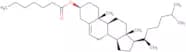
Cholesterol Heptanoate
CAS:Controlled Product<p>Cholesterol Heptanoate is a liquid crystal composition that is used to coat tablets. It is also used for the diagnosis of fatty acid metabolism and atherosclerotic lesion formation by measuring the fatty acid composition of body tissues. Cholesterol Heptanoate can be used to form polymeric matrices for use in drug delivery systems. These matrices are composed of ionizable, film-forming polymers with excipients that have phase transition temperatures near 37°C.</p>Purity:Min. 95%Color and Shape:PowderMolecular weight:498.82 g/mol(+)-B-Chlorodiisopinocampheylborane - 60-65% in Hexane
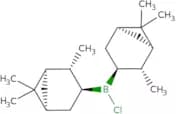
CAS:<p>(+)-B-Chlorodiisopinocampheylborane is a chiral organoboron reagent that can be used for the enantioselective synthesis of amines. It is prepared from the reaction of chlorodiphenyl borane with (+)-diaminobenzene in hexane. The product can be purified by column chromatography or recrystallization. (+)-B-Chlorodiisopinocampheylborane can also be used in the synthesis of other compounds, such as pyrroles and pantolactones. It is an excellent catalyst for the dehydration of primary amines to give unsymmetrical ketones. This reagent has been shown to be effective in asymmetric hydrogenation reactions, such as the reduction of chiral secondary alcohols, and is also capable of catalyzing aldol reactions.</p>Formula:C20H34BClPurity:Min. 95%Color and Shape:Clear LiquidMolecular weight:320.75 g/mol(-)-cis-Pentazocine
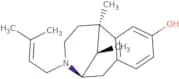
CAS:Controlled Product<p>(-)-cis-Pentazocine is a kappa-opioid receptor agonist that has been used for the treatment of pain, cough, and diarrhea. It is also used to treat withdrawal symptoms in those who are addicted to other narcotic drugs. The drug binds to the κ-opioid receptors and activates G protein coupled receptors. When this occurs, it inhibits the release of neurotransmitters from nerve cells in the brain, which reduces pain and causes sedation. Pentazocine can cause side effects such as dizziness, constipation, nausea, vomiting, headache, blurred vision, anxiety and depression. These side effects are more common with high doses or when pentazocine is taken with other drugs that have similar effects.</p>Formula:C19H27NOPurity:Min. 95%Molecular weight:285.42 g/mol17a-Methyl-4-[(phenylthio)methyl]testosterone
CAS:Controlled Product<p>Please enquire for more information about 17a-Methyl-4-[(phenylthio)methyl]testosterone including the price, delivery time and more detailed product information at the technical inquiry form on this page</p>Formula:C27H36O2SPurity:Min. 95%Molecular weight:424.64 g/mol(-)-B-Chlorodiisopinocampheylborane, 60% in Hexane, ca. 1.7mol/L
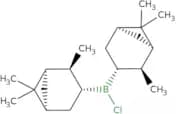
CAS:<p>(-)-B-Chlorodiisopinocampheylborane is a carbonyl group that can be used for asymmetric synthesis. It was synthesized from the reaction of chlorodiisopinocampheylborane with butyllithium and allyl bromide, followed by aqueous workup. The enantiomers were separated through thin layer chromatography on silica gel plates with hexane as the eluent. The resolution of racemic latanoprost lactol was achieved in the same manner. (-)-B-Chlorodiisopinocampheylborane is also a diketone that can be prepared from para-chloroacetophenone and sodium hydroxide in ethanol. This diketone undergoes an intramolecular cyclization to produce noradrenaline (norepinephrine) and hydrochloric acid, which can then be converted into dioxolanes or other products.</p>Formula:C20H34BClPurity:Min. 95%Color and Shape:Clear LiquidMolecular weight:320.75 g/molrec Human Growth Hormone (expressed in E.coli)
<p>Please enquire for more information about rec Human Growth Hormone (expressed in E.coli) including the price, delivery time and more detailed product information at the technical inquiry form on this page</p>Purity:Min. 95%[3-(1-Naphthyl)propyl]amine
CAS:<p>3-(1-Naphthyl)propyl]amine is an organic compound that is a colorless solid with a melting point of -118°C. It is soluble in water, methanol, and acetone. 3-(1-Naphthyl)propyl]amine forms acid when heated with concentrated hydrochloric acid. The reaction produces hydrogen chloride gas and benzoic acid as a byproduct. 3-(1-Naphthyl)propyl]amine also reacts with pyridine to produce carbamic acid and ammonia gas as a byproduct. This can be rationalized systematically by the loss of the amine group from the nitrogen atom of the amine molecule. Carbamic acid has two acidic protons on it which are stabilized by the carbonyl group on the other side of the molecule. 3-(1-Naphthyl)propyl]amine can also react with anions such as carbonate ions to form carbamate salts,</p>Formula:C13H15NPurity:Min. 95%Color and Shape:Clear LiquidMolecular weight:185.26 g/mol4-Aminobicyclo[2.2.2]octane-1-carboxylic acid methyl ester
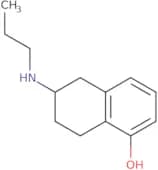
CAS:<p>Please enquire for more information about 4-Aminobicyclo[2.2.2]octane-1-carboxylic acid methyl ester including the price, delivery time and more detailed product information at the technical inquiry form on this page</p>Formula:C10H17NO2Purity:Min. 95%Molecular weight:183.25 g/molrac-5,6,7,8-tetrahydro-6-(propylamino)-1-naphthalenol
CAS:Controlled Product<p>Rotigotine is a substance that belongs to the class of active compounds. It has been shown to have optical activity, but this property is not well understood. Rotigotine is a racemic mixture with two enantiomers, which are mirror images of each other. The optical rotation of rac-5,6,7,8-tetrahydro-6-(propylamino)-1-naphthalenol is given as +28°. This property can be determined by measuring the angle of rotation when light passes through the substance in solution in contact with a polarizer and analyzer.</p>Formula:C13H19NOPurity:Min. 95%Molecular weight:205.3 g/mol4-Fluorotropacocaine
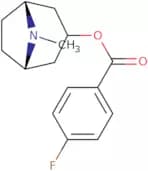
CAS:Controlled Product<p>4-Fluorotropacocaine is a synthetic, serotonergic compound that has been shown to have similar effects in the brain as diazepam. 4-Fluorotropacocaine has been postulated to be a supplement and is thought to have neuroprotective properties. It binds to serotonin receptors and inhibits the reuptake of serotonin by neurons. This inhibition causes an increase in the level of serotonin in the synaptic cleft, which can lead to symptoms such as nausea, vomiting, and headache. 4-Fluorotropacocaine may also inhibit dopamine reuptake leading to symptoms such as hallucinations, delusions, and confusion. Structural analogs of 4-fluorotropacocaine are often used in research studies because they can be synthesized with various substitutions on the benzene ring.</p>Formula:C15H18FNO2Purity:Min. 95%Molecular weight:263.31 g/molVitamin B12 e-Monocarboxylic Acid
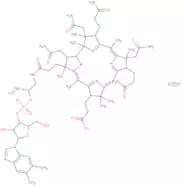
CAS:Controlled Product<p>Please enquire for more information about Vitamin B12 e-Monocarboxylic Acid including the price, delivery time and more detailed product information at the technical inquiry form on this page</p>Formula:C63H87CoN13O15PPurity:Area-% Min. 95 Area-%Color and Shape:PowderMolecular weight:1,356.35 g/molBetamethasone valerate related compound A
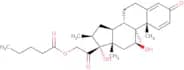
CAS:Controlled Product<p>Betamethasone valerate related compound A is a corticosteroid compound that is used in the treatment of inflammation. It has anti-inflammatory and immunosuppressive properties, which are thought to be due to its inhibition of farnesyltransferase. Betamethasone valerate related compound A can be given as an intranasal solution or by injection. The drug substance is a mixture of betamethasone 17-valerate and betamethasone 17,21-dipropionate, which have different kinetic properties. The chemical stability of the drug substance is maintained by using a reaction mechanism involving chromatography.</p>Formula:C27H37FO6Purity:Min. 95%Molecular weight:476.58 g/molzeta-Carotene
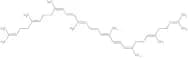
CAS:<p>Zeta-carotene is a carotenoid pigment found in plants. It is a precursor to vitamin A and can be converted by the body into retinol, which can then be used in the eye. Zeta-carotene has been shown to inhibit the growth of cancer cells through transcriptional regulation of genes involved in lipid metabolism and cell proliferation. This carotenoid also has antioxidant properties that may help protect against cardiovascular diseases. In addition, zeta-carotene has been shown to have a positive effect on plant physiology because it is an important intermediate for photosynthesis.</p>Formula:C40H60Purity:Min. 95%Color and Shape:Yellow PowderMolecular weight:540.9 g/mol19-Carboxy cholesterol
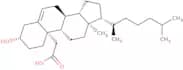
CAS:Controlled Product<p>Please enquire for more information about 19-Carboxy cholesterol including the price, delivery time and more detailed product information at the technical inquiry form on this page</p>Formula:C27H44O3Purity:Min. 95%Molecular weight:416.64 g/molN-(Aminocarbonyl)aspartic acid
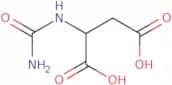
CAS:<p>N-Aminocarbonyl-L-aspartic acid (NACD) is a molecule that is found in urine samples. It can be used as a biomarker to detect cancer, HIV infection, and many other diseases. The presence of NACD has been correlated with the development of acidosis, which is characterized by an increase in the pH of body fluids. The following are a few examples of how this product might be described on an eCommerce site: Rifapentine is an anti-tuberculosis drug that belongs to the class of rifamycins. It is the most active of the rifamycins for the treatment of tuberculosis. Rifapentine inhibits bacterial growth by binding to DNA-dependent RNA polymerase, thereby preventing transcription and replication. The high frequency of human activity has been shown using a patch-clamp technique on human erythrocytes. This active form is metabolized through</p>Formula:C5H8N2O5Purity:Min. 95%Color and Shape:PowderMolecular weight:176.13 g/mol7α-Hydroxystigmasterol
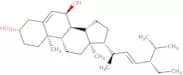
CAS:Controlled Product<p>Please enquire for more information about 7alpha-Hydroxystigmasterol including the price, delivery time and more detailed product information at the technical inquiry form on this page</p>Purity:Min. 95%N-Nitrososarcosine
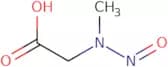
CAS:<p>N-Nitrososarcosine is a nonsteroidal anti-inflammatory drug (NSAID) that belongs to the group of ester hydrochloride. It inhibits the synthesis of prostaglandins, which are chemical mediators of inflammation and pain. N-Nitrososarcosine has been shown to be effective for the treatment of arthritis in animal models. In vitro studies have shown that this drug inhibits polymerase chain reaction and can be used for genotyping bacterial DNA. N-Nitrososarcosine has been found in urine samples from patients with autoimmune diseases, as well as in pharmaceutical preparations. The use of this drug as a model system for studying enzyme hydrolysis has also been studied.</p>Formula:C3H6N2O3Purity:Min. 95%Color and Shape:Off-White PowderMolecular weight:118.09 g/mol(Asp371)-Tyrosinase (369-377) (human) acetate salt
CAS:<p>Tyrosinase protein:<br>Peptide Tyrosinase (Asp371) – HLA-A*0201 (YMDGTMSQV) is a human tyrosinase-derived (369-377) peptide by posttranslational conversion of the sequence YMNGTMSQV. Tyrosinase is an oxidase membrane-bound protein. Tyrosinase play a key role in the melanin synthesis pathway. Tyrosinase is presented on the surface of HLA-A*02:01 melanomas and also expressed in melanocytes. Tyrosinase has been still suggested to be a tumor antigen and might be implicated in improvement of immunotherapeutic strategies such as for efficient anticancer vaccine development.<br>Applications of Peptide Tyrosinase (Asp371) – HLA-A*0201 (YMDGTMSQV):<br>Peptide Tyrosinase (Asp371) – HLA-A*0201 (YMDGTMSQV) is used to stimulate specific cytotoxic T lymphocytes (CTL) in PBMCs and then to analyze CTL response especially the cytokine production by ELISPOT assay. Peptide Tyrosinase (Asp371) – HLA-A*0201 (YMDGTMSQV) is also involved in experimental therapies of metastatic melanoma by allogeneic hematopoietic stem cell transplantation. In fact, cytotoxic T cells were generated from peripherical blood mononuclear cells (PBMCs) of HLA-A*02:01 healthy donors after being stimulated by injection of Asp371 antigen (2). This strategy raises issues which concern the graft versus tumor (GvT) effect and graft versus host disease (GvHD).</p>Formula:C42H66N10O16S2Purity:Min. 95%Molecular weight:1,031.16 g/mol2-Bromo-3-methylbutenoic acid methyl ester
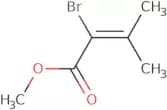
CAS:<p>Please enquire for more information about 2-Bromo-3-methylbutenoic acid methyl ester including the price, delivery time and more detailed product information at the technical inquiry form on this page</p>Formula:C6H9BrO2Purity:Min. 95%Molecular weight:193.04 g/mol(17a)-3-Ethynyl-19-norpregna-3,5-dien-20-yn-17-ol
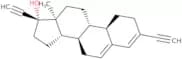
CAS:Controlled Product<p>Please enquire for more information about (17a)-3-Ethynyl-19-norpregna-3,5-dien-20-yn-17-ol including the price, delivery time and more detailed product information at the technical inquiry form on this page</p>Formula:C22H26OPurity:Min. 95%Molecular weight:306.44 g/mol

![17a-Methyl-4-[(phenylthio)methyl]testosterone](/_next/image/?url=https%3A%2Fstatic.cymitquimica.com%2Fproducts%2F3D%2Fthumb-webp%2FFM25693.webp&w=3840&q=75)

![[3-(1-Naphthyl)propyl]amine](/_next/image/?url=https%3A%2Fstatic.cymitquimica.com%2Fproducts%2F3D%2Fthumb-webp%2FFN134365.webp&w=3840&q=75)
![4-Aminobicyclo[2.2.2]octane-1-carboxylic acid methyl ester](/_next/image/?url=https%3A%2Fstatic.cymitquimica.com%2Fproducts%2F3D%2Fthumb-webp%2FFA44258.webp&w=3840&q=75)