Pharmaceutical Standards
Pharmaceutical standards are a comprehensive set of reference materials essential for ensuring the safety, efficacy, and quality of pharmaceutical products. This category includes standards for active pharmaceutical ingredients (APIs), which are the core components responsible for therapeutic effects. Additionally, it covers compounds and metabolites relevant to both the pharmaceutical and veterinary industries, providing benchmarks for the accurate measurement and analysis of these substances. Nitrosamine control standards are crucial for detecting and mitigating potentially harmful nitrosamines in drug formulations. Toxicology standards help assess the safety and potential adverse effects of pharmaceutical compounds. Furthermore, enzyme activators and inhibitors standards are vital for research and development, enabling precise studies of biochemical pathways and drug mechanisms. These pharmaceutical standards are indispensable tools for regulatory compliance, quality control, and research, ensuring that pharmaceutical products meet stringent safety and effectiveness criteria.
Subcategories of "Pharmaceutical Standards"
- APIs for research and impurities(273,300 products)
- Enzyme Activators and Inhibitors(2,827 products)
- Nitrosamines(2,606 products)
- Pharmaceutical and Veterinary Compounds and Metabolites(2,577 products)
- Toxicology(13,652 products)
Found 7836 products of "Pharmaceutical Standards"
Sort by
Purity (%)
0
100
|
0
|
50
|
90
|
95
|
100
Type B Allatostatin
CAS:<p>Allatostatin is a type of allatotropin. Allatotropins are a family of neuropeptides that inhibit the release of other hormones, such as vitellogenin, which is a hormone that stimulates vitellogenesis in insect ovaries. Allatostatin inhibits the release of vitellogenin by binding to the receptor on the egg follicle cells and blocking its action. This drug has been shown to be effective at inhibiting mevalonate production in rat ganglia and is also found in high concentrations in holometabolous insects. It is synthesized from an amide precursor by a series of enzymatic reactions and can be desorbed from its storage site with mild acidification.</p>Formula:C104H150N24O27Purity:Min. 95%Molecular weight:2,168.45 g/molCinchonine Hydrochloride Hydrate
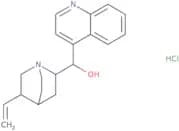
CAS:<p>Cinchonine hydrochloride hydrate is a compound that belongs to the class of amines. It is used as an anti-malarial drug, an anti-arrhythmic agent, and a vasodilator. Cinchonine hydrochloride hydrate has been shown to be heat resistant and can be used in pharmaceutical preparations such as gel permeation chromatography. This compound also has a catalytic effect on reactions with glycerin and piperidone, which are used in the production of various dyes. Cinchonine hydrochloride hydrate can also be used as a solid catalyst for viscosity measurements in wastewater treatment plants.</p>Formula:C19H22N2O·HCl·xH2OPurity:Min. 95%Molecular weight:330.85 g/mol2,2'-Biphenyldicarboxylic acid anhydride - 70%
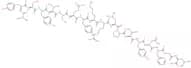
CAS:<p>2,2'-Biphenyldicarboxylic acid anhydride is a diphenic anhydride that has a carboxylate group on one end and a phenyl group on the other. The nitrogen atoms in this molecule are part of the intramolecular hydrogen bonds that stabilize the molecule. 2,2'-Biphenyldicarboxylic acid anhydride is used in wastewater treatment as it reacts with amines to form ammonium salts. This process also releases hydrogen, which can be used for fuel cells or light emission. It is also used to produce other compounds such as malonic acid and phenylacetic acid.</p>Formula:C14H8O3Purity:(%) Min. 70%Color and Shape:Brown Beige PowderMolecular weight:224.21 g/molPancreastatin (dephosphorylated) (porcine) trifluoroacetate salt
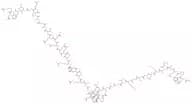
CAS:<p>Pancreastatin is a cytosolic protein that inhibits the production of peptide hormones such as glucagon, insulin, and gastrin. It is used to treat bowel disease, including carcinoid syndrome and inflammatory bowel disease. Pancreastatin has been shown to inhibit the activity of cyclase enzymes that are responsible for the production of these hormones. Pancreatic beta-cells produce pancreatic polypeptide (PP), which is converted by pancreastatin into inactive PP2. Pancreatic alpha-cells produce somatostatin (SS), which is converted by pancreastatin into inactive SS2. Pancreatic delta cells produce pancreatic polypeptide (PP), which is not affected by pancreastatin. Pancreatic somatostatinomas secrete SS, which is not affected by pancreastatin.</p>Formula:C214H330N68O76SPurity:Min. 95%Molecular weight:5,103.39 g/molN-Acetyl-L-norleucyl-L-a-aspartyl-L-histidyl-3-(2-naphthalenyl)-D-alanyl-L-arginyl-L-tryptophyl-L-lysinamide-(2,7) -lactam
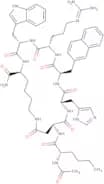
CAS:<p>Please enquire for more information about N-Acetyl-L-norleucyl-L-a-aspartyl-L-histidyl-3-(2-naphthalenyl)-D-alanyl-L-arginyl-L-tryptophyl-L-lysinamide-(2,7) -lactam including the price, delivery time and more detailed product information at the technical inquiry form on this page</p>Formula:C54H71N15O9Purity:Min. 95%Molecular weight:1,074.24 g/molFmoc-L-aspartic acid β-methylpentyl ester
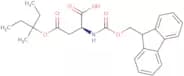
CAS:<p>Fmoc-L-aspartic acid b-methylpentyl ester is a solid phase synthesis of Asp(OtBu)-OH that has been synthesized by reacting aspartic acid with piperidine and methylbenzene. This synthesis has been shown to be effective at temperatures below 25°C, to minimize the formation of water, and to be resistant to treatments with strong acids or bases. The synthesis has also been optimized for the peptidyl bond formation and peptide synthesis, resulting in enhanced yields.</p>Formula:C25H29NO6Purity:Min. 95%Color and Shape:White PowderMolecular weight:439.5 g/mol2,7-Naphthalenedisulfonic acid disodium salt
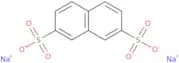
CAS:<p>2,7-Naphthalenedisulfonic acid disodium salt is a heteronuclear molecule that is synthesized by the reaction of 2,7-naphthalenedisulfonyl chloride with sodium sulfite in water. It has been used in the manufacture of dyes and pigments, as a corrosion inhibitor for steel and aluminum, and as an intermediate in the synthesis of pharmaceuticals. The compound has been detected in groundwater samples at concentrations up to 10 mg/L. The compound is also found in geothermal waters at concentrations up to 0.6 mg/L.</p>Formula:C10H6Na2O6S2Purity:Min. 95%Molecular weight:332.26 g/molZolmitriptan Related Compound F
CAS:<p>Please enquire for more information about Zolmitriptan Related Compound F including the price, delivery time and more detailed product information at the technical inquiry form on this page</p>Purity:Min. 95%3,3'-Dichlorodiphenylacetylene
CAS:<p>3,3'-Dichlorodiphenylacetylene is a versatile building block that is used in the synthesis of complex compounds. It has been used as a reagent and as a speciality chemical for research purposes. This chemical can be used as a useful building block for the synthesis of other compounds, or it can be reacted with other compounds to form new compounds. 3,3'-Dichlorodiphenylacetylene is also an intermediate in organic syntheses and has been shown to react with many different types of molecules.</p>Formula:C14H8Cl2Purity:Min. 95%Color and Shape:PowderMolecular weight:247.12 g/molNeuropeptide Y-Lys(biotinyl) (free acid) (human, rat) trifluoroacetate salt
<p>Please enquire for more information about Neuropeptide Y-Lys(biotinyl) (free acid) (human, rat) trifluoroacetate salt including the price, delivery time and more detailed product information at the technical inquiry form on this page</p>Formula:C205H310N58O61S2Purity:Min. 95%Molecular weight:4,627.14 g/mol5-Nitropseudocumene
CAS:<p>5-Nitropseudocumene (5NPC) is a molecule that belongs to the group of methylbenzenes. It is a precursor to dyes such as nitrobenzene, which are used in the production of nylon. 5NPC is also an intermediate in the synthesis of trifluoroacetic acid, which is used as an industrial solvent and chemical reagent. The acetoxylation of 5NPC with acetic acid yields methylbenzoate. This reaction requires two molecules of acetic acid for each molecule of 5NPC. Desorption from the catalyst can be achieved by treatment with methyl groups or nitrous acid. Naphthalene reacts with 5NPC to form biphenyl and nitric oxide gas, which are released into the atmosphere. The inorganic residue can be removed by filtration.</p>Formula:C9H11NO2Purity:Min. 95%Color and Shape:PowderMolecular weight:165.19 g/mol1-Naphthyl acetate
CAS:<p>1-Naphthyl acetate is a cell-permeable esterase substrate that can be used for the treatment of lymphocytic leukemia, lung cancer, and Alzheimer's disease. It has been shown to inhibit tumor growth in mice by inhibiting cytochrome P450 enzymes. In addition, 1-naphthyl acetate has been found to be effective at inhibiting protein kinase activity in human cells. As a result, it may have potential as a therapeutic agent for leukemia and Alzheimer's disease.</p>Formula:C12H10O2Purity:Min. 95%Color and Shape:PowderMolecular weight:186.21 g/mol2'-Bromoacetophenone
CAS:<p>2'-Bromoacetophenone is a chemical compound that is used in the synthesis of unsaturated ketones. It reacts with terminal alkynes to form 2-bromo-2-methylpropene, which can subsequently be converted into unsaturated ketones such as methyl vinyl ketone. The reaction time for this process is less than five minutes and no catalyst is required. This chemical has been shown to have anticancer activity and may act as a biomimetic. 2'-Bromoacetophenone also has been shown to react with hydroxyl groups in the presence of copper salts and hydrochloric acid to form an unsaturated ketone with a terminal alkene.</p>Formula:C8H7BrOPurity:Min. 90%Color and Shape:Clear LiquidMolecular weight:199.04 g/mol2,6-Bis(hydroxymethyl)naphthalene
CAS:<p>2,6-Bis(hydroxymethyl)naphthalene is a chromophore that can be used in the production of biodiesel. It is an organic compound with two hydroxyl groups and two methyl substituents. The molecule has a planar structure, which results in optical properties that make it suitable for use as a fluorescent dye. 2,6-Bis(hydroxymethyl)naphthalene has been shown to emit light when it reacts with oxygen and this property can be utilized for bioapplications such as fluorescence microscopy. 2,6-Bis(hydroxymethyl)naphthalene is also capable of accepting electrons from other molecules and will react with xylene to produce a neutral form. This property makes it useful for oxidation reactions and the functional group can be used in the production of dyes or other compounds.</p>Formula:C12H12O2Purity:Min. 95%Molecular weight:188.22 g/molSomatostatin
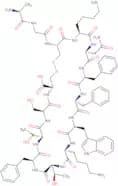
CAS:<p>Somatostatin is a polypeptide hormone that is produced by the body to inhibit the release of other hormones in the body. It has also been used to treat diseases such as carcinoid syndrome, intestinal disorders, and diabetes mellitus type I. Somatostatin binds to somatostatin receptors on cells, which leads to inhibition of cell growth and secretion of hormones. Somatostatin has been shown to block basic protein synthesis and energy metabolism in rat liver cells. Its receptor activity is mediated by binding with signal peptide sequences and response elements.</p>Formula:C76H104N18O19S2Purity:Min. 95%Color and Shape:PowderMolecular weight:1,637.88 g/molOsteostatin (human) trifluoroacetate salt
CAS:<p>Osteostatin is a recombinant human protein that inhibits bone growth by binding to and neutralizing the effect of forskolin. Osteostatin also has an inhibitory effect on cancer cells, as it inhibits mitochondrial pathways and prevents the activation of factor receptors. Osteostatin blocks the synthesis of cAMP, which is necessary for cell proliferation in cancer cells. The inhibition of cAMP levels leads to a decrease in the production of proteins that stimulate bone growth, such as runx2.</p>Formula:C142H228N42O58Purity:Min. 95%Molecular weight:3,451.58 g/molAzilsartan medoxomil
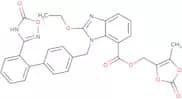
CAS:<p>Azilsartan medoxomil is an antihypertensive drug, which is a prodrug of the angiotensin II receptor blocker azilsartan. It is synthesized through a chemical process involving the modification of the medoxomil ester, converting it into its active form upon absorption in the gastrointestinal tract. The primary mode of action of azilsartan medoxomil involves selective antagonism of the angiotensin II type 1 (AT1) receptor. By blocking the effects of angiotensin II—a potent vasoconstrictor—azilsartan medoxomil effectively reduces vascular resistance, leading to decreased blood pressure.</p>Formula:C30H24N4O8Purity:Min. 95%Color and Shape:White PowderMolecular weight:568.53 g/mol(Asp371)-Tyrosinase (369-377) (human) trifluoroacetate salt
CAS:<p>Trifluoroacetate salt</p>Formula:C42H66N10O16S2Purity:Min. 95%Molecular weight:1,031.16 g/molBenzoylmesaconine
CAS:<p>Benzoylmesaconine is an alkaloid that is extracted from the roots of aconite plants. It has been shown to have a broad spectrum of antimicrobial activity against Gram-positive and Gram-negative bacteria, fungi, and viruses. Benzoylmesaconine has also been shown to be effective against infectious diseases in mice when used at low doses. The mechanism of action for benzoylmesaconine is not well understood but may involve inhibition of DNA synthesis or cell division.</p>Formula:C31H43NO10Purity:Min. 98 Area-%Color and Shape:PowderMolecular weight:589.67 g/mol4-Aminoacetophenone
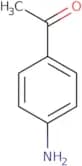
CAS:<p>4-Aminoacetophenone is an inhibitor of the enzyme acetylcholinesterase and it is used as an insecticide. It inhibits the enzyme by forming hydrogen bonding interactions with the active site. The inhibition of this enzyme leads to paralysis and death in insects. 4-Aminoacetophenone has been shown to have anti-cancer effects in vitro, which may be due to its ability to inhibit glycoside hydrolases and amine oxidases that are involved in cancer development. The compound also has a thermal expansion coefficient that is comparable to other polymers used in drug delivery systems.</p>Formula:C8H9NOColor and Shape:Slightly Yellow PowderMolecular weight:135.16 g/mol