Pharmaceutical Standards
Subcategories of "Pharmaceutical Standards"
- APIs for research and impurities(276,199 products)
- Enzyme Activators and Inhibitors(2,829 products)
- Nitrosamines(2,611 products)
- Pharmaceutical and Veterinary Compounds and Metabolites(2,920 products)
- Toxicology(13,580 products)
Found 7909 products of "Pharmaceutical Standards"
Polycaprolactone
CAS:Polycaprolactone is a biodegradable synthetic polymer that has been shown to have antimicrobial properties. Polycaprolactone has been used in wastewater treatment and has shown to inhibit the growth of histological analysis, vivo model, vitro assays, polyvinyl, collagen, carcinoma cell lines, tissue culture, ethylene diamine, water vapor, cell culture and hydrogen bond. In studies with wild-type strains of bacteria such as Escherichia coli and Staphylococcus aureus, it showed activity against both Gram-positive and Gram-negative bacteria. It also showed activity against the bacterium that causes tuberculosis (M. tuberculosis).
Formula:(C6H10O2)nPurity:Min. 95%Ref: 3D-FP158055
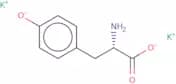
Discontinued productL-Tyrosine dipotassium
CAS:L-Tyrosine dipotassium salt is a high quality, reagent, complex compound, useful intermediate and fine chemical. It is a useful scaffold that can be used in the synthesis of various important natural products. L-Tyrosine dipotassium salt is a versatile building block that has been widely applied in research on the development of new drugs, such as antiviral agents and antibiotics. L-Tyrosine dipotassium salt can act as a reaction component for many organic reactions. It also has applications in many areas such as medicine, food production, and environmental protection.
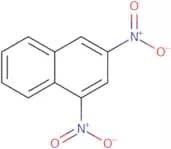
Formula:C9H11NO3•K2Purity:Min. 95%Molecular weight:259.39 g/mol1,3-Dinitronaphthalene
CAS:1,3-Dinitronaphthalene is a nitrite ion and an aromatic hydrocarbon. It can be prepared by reacting 1,3-dinitrobenzene with sodium nitrite in the presence of concentrated sulfuric acid. It is used as a reagent in chromatographic analysis for the separation of amines and its derivatives. 1,3-Dinitronaphthalene has been shown to react with amines to form covalent adducts which are more polar than the parent compounds. The linear regression analysis of population growth data can be used to estimate parameters such as the rate constant or initial concentration of reactants that might not be directly measurable.
Formula:C10H6N2O4Purity:Min. 95%Molecular weight:218.17 g/molRef: 3D-FD33581
Discontinued productBiotinyl-Obestatin (human) trifluoroacetate salt
CAS:Please enquire for more information about Biotinyl-Obestatin (human) trifluoroacetate salt including the price, delivery time and more detailed product information at the technical inquiry form on this page
Formula:C126H190N34O35SPurity:Min. 95%Molecular weight:2,773.13 g/molRef: 3D-FB109810
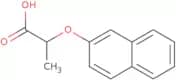
Discontinued product2-(2-Naphthyloxy)propanoic acid
CAS:2-(2-Naphthyloxy)propanoic acid is a naphthalene derivative that is found in the plant species Carthamus tinctorius. It has been shown to have potent antagonist activity against the NMDA receptor, as well as antinociceptive and analgesic properties in vivo. 2-(2-Naphthyloxy)propanoic acid also shows potent anti-inflammatory and cardioprotective effects in vitro and in vivo. 2-(2-Naphthyloxy)propanoic acid can be used for the treatment of bone cancer, congestive heart failure, diabetic neuropathy, or other disorders of the peripheral nervous system.
Formula:C13H12O3Purity:Min. 95%Molecular weight:216.23 g/molRef: 3D-FN112710
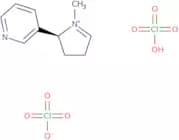
Discontinued productS-(-)-Nicotine-delta1’-(5’)-iminium diperchlorate salt
CAS:Please enquire for more information about S-(-)-Nicotine-delta1’-(5’)-iminium diperchlorate salt including the price, delivery time and more detailed product information at the technical inquiry form on this page
Formula:C10H14Cl2N2O8Purity:Min. 95%Molecular weight:361.13 g/mol(+/-)-Perillaldehyde
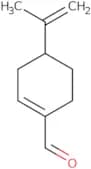
CAS:Perillaldehyde is a natural compound that has been used in food and medicine for centuries. It is an antimicrobial agent with dextran sulfate, which is a sugar polymer that inhibits the growth of fungi and bacteria. Perillaldehyde also has been shown to inhibit the energy metabolism of microorganisms by decreasing ATP production. Perillaldehyde has also been shown to have genotoxic activity, as it can cause DNA strand breaks. This compound also causes oxidative stress in cells by reducing mitochondrial membrane potential and inducing reactive oxygen species (ROS). Perillaldehyde has acute toxicities, as it causes electrochemical impedance spectroscopy changes that indicate cell death.
Formula:C10H14OPurity:Min. 95%Color and Shape:PowderMolecular weight:150.22 g/mol4-(2,4-Dinitrophenyl)butanoicacid
CAS:Please enquire for more information about 4-(2,4-Dinitrophenyl)butanoicacid including the price, delivery time and more detailed product information at the technical inquiry form on this page
Formula:C10H10N2O6Purity:Min. 95%Molecular weight:254.2 g/molRef: 3D-FD149753
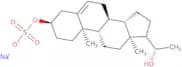
Discontinued product20a-Dihydro pregnenolone 3-sulfate sodium salt
CAS:Please enquire for more information about 20a-Dihydro pregnenolone 3-sulfate sodium salt including the price, delivery time and more detailed product information at the technical inquiry form on this page
Formula:C21H33NaO5SPurity:Min. 95%Molecular weight:420.54 g/molRef: 3D-FD21937
Discontinued product