Pharmaceutical Standards
Pharmaceutical standards are a comprehensive set of reference materials essential for ensuring the safety, efficacy, and quality of pharmaceutical products. This category includes standards for active pharmaceutical ingredients (APIs), which are the core components responsible for therapeutic effects. Additionally, it covers compounds and metabolites relevant to both the pharmaceutical and veterinary industries, providing benchmarks for the accurate measurement and analysis of these substances. Nitrosamine control standards are crucial for detecting and mitigating potentially harmful nitrosamines in drug formulations. Toxicology standards help assess the safety and potential adverse effects of pharmaceutical compounds. Furthermore, enzyme activators and inhibitors standards are vital for research and development, enabling precise studies of biochemical pathways and drug mechanisms. These pharmaceutical standards are indispensable tools for regulatory compliance, quality control, and research, ensuring that pharmaceutical products meet stringent safety and effectiveness criteria.
Subcategories of "Pharmaceutical Standards"
- APIs for research and impurities(274,785 products)
- Enzyme Activators and Inhibitors(2,827 products)
- Nitrosamines(2,606 products)
- Pharmaceutical and Veterinary Compounds and Metabolites(2,862 products)
- Toxicology(13,652 products)
Found 7836 products of "Pharmaceutical Standards"
Sort by
Purity (%)
0
100
|
0
|
50
|
90
|
95
|
100
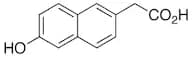
6-Hydroxy-2-naphthaleneacetic Acid
CAS:<p>Applications A metabolite of Nabumetone.<br>References Nobilis, M., et al.: J., Pharm., Biomed., Anal., 32, 641 (2003),<br></p>Formula:C12H10O3Color and Shape:NeatMolecular weight:202.21γ-Butyrobetaine-d9 Hydrochloride
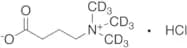
CAS:Controlled Product<p>Stability Hygroscopic<br>Applications Labelled analogue of γ-Butyrobetaine, a synthetic carnitine related compound used as a transporter substrate in the cloning and sequencing of human carnitine transporter 2 (CT2).<br>References Enomoto, A. et al.: J. Biol. Chem., 277, 36262 (2002);<br></p>Formula:C72H9H7NO2·ClColor and Shape:NeatMolecular weight:190.721,3-Diphenylurea
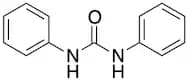
CAS:<p>Applications 1,3-Diphenylurea (cas# 102-07-8) is a useful research chemical.<br></p>Formula:C13H12N2OColor and Shape:NeatMolecular weight:212.25Guanyl Urea Sulfate
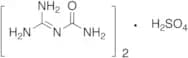
CAS:<p>Applications It is used for detecting and determining Ni and its separation from Co and other metals.<br>References Jacob, K.D., et al.: J. Agric. Res., 28, 37 (1924),<br></p>Formula:C2H6N4O·H2O4SColor and Shape:NeatMolecular weight:302.272'-Aminoacetophenone
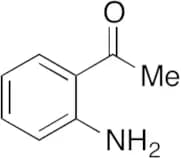
CAS:<p>Applications 2'-Aminoacetophenone, is detected in the breath of Pseudomonas aeruginosa colonized cystic fibrosis patients. It is also present in various food products causing different off-flavors.<br>References Christoph, N. N., et al.: Advances Exp. Med. Bio., 467, 659 (1999); Scott, A. A., et al.: J. Breath Rese., 5(4), 046002 (2011);<br></p>Formula:C8H9NOColor and Shape:NeatMolecular weight:135.16Isovaleryl L-Carnitine-d3 Chloride
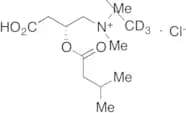
CAS:Controlled Product<p>Applications Isovaleryl L-Carnitine-d3 Chloride is labelled Isovaleryl L-Carnitine Chloride (I917580) which is used to prepare carnitine benzyl esters as neuroprotectant prodrugs.<br>References Gong, X., et al.: J. Chem. Res., 6, 327 (2008)<br></p>Formula:C12D3H21NO4·ClColor and Shape:NeatMolecular weight:284.795Indole-3-butyric Acid
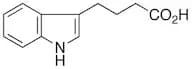
CAS:<p>Applications Used to stimulate root formation of plant clippings. Suitable for plant cell culture tested.<br> Not a dangerous good if item is equal to or less than 1g/ml and there is less than 100g/ml in the package<br>References Handa, A., et al.: Plant Physiol., 69, 514 (1982), Polanco, C., et al.: Plant Sci., 162, 817 (2002), Rzepka-Plevnes, D., et al.: J. Food Agric. Environ., 5, 194 (2007),<br></p>Formula:C12H13NO2Color and Shape:BeigeMolecular weight:203.241,5-Dibromoanthracene
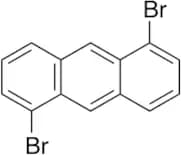
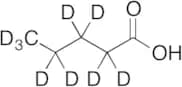
CAS:Controlled Product<p>Applications 1,5-dibromoanthracene (cas# 3278-82-8) is a useful research chemical.<br></p>Formula:C14H8Br2Color and Shape:NeatMolecular weight:336.02Valeric Acid-d9
CAS:Controlled Product<p>Applications Valeric Acid-d9 is the isotope labelled analog of Valeric Acid which is used in biological studies of (D)-β-hydroxybutyrate which inhibits adipocyte lipolysis via the nicotinic acid receptor PUMA-G.<br> Not a dangerous good if item is equal to or less than 1g/ml and there is less than 100g/ml in the package<br>References Taggart, A.K.P., et al.: J. Bio. Chem., 280, 26649 (2005);<br></p>Formula:C5D9HO2Color and Shape:NeatMolecular weight:111.19Acetophenone-13C6
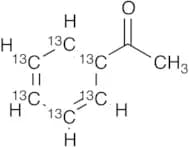
CAS:Controlled Product<p>Applications Acetophenone-13C6 is an intermediate in synthesizing Ibuprofen-13C6 (I140003), a labelled Ibuprofen. It is a selective cyclooxygenase inhibitor (IC50=14.9uM). Inhibits PGH synthase-1 and PGH synthase-2 with comparable potency.<br>References Busson, M., et al.: J. Int. Med Res., 14, 53 (1986); Meade, E.A., et al.: J. Biol. Chem., 268, 6610 (1993); Davies, N.M., et al.: Clin. Pharmacokinet., 34, 101 (1998)<br></p>Formula:C213C6H8OColor and Shape:NeatMolecular weight:126.1Triacetin-d9
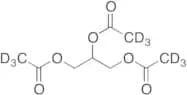
CAS:Controlled Product<p>Applications Triacetin-d5 is the isotope labelled analog of Triacetin (T720850); a compound used as a food additive and flavoring. Triacetin can be used as an excipient in pharmaceutical products where it is used as a humectant, a plasticizer, and as a solvent. Triacetin can also be used as a fuel additive as an antiknock agent.<br>References Mouret, A., et al.: Green Chem., 16 (1), 269 (2014); Snejdrova, E., et al.: Inter. J. Pharma., 458, 282 (2013)<br></p>Formula:C9D9H5O6Color and Shape:NeatMolecular weight:227.26N-Methyl-N-nitroso Urea (Wetted with water >20%)
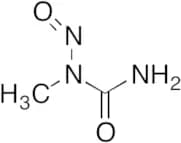
CAS:Controlled Product<p>Stability Temperature Sensitive<br>Applications Precursor of Diazomethane. It has a cytotoxicity effect.This product contains an undetermined amount of water.<br> Not a dangerous good if item is equal to or less than 1g/ml and there is less than 100g/ml in the package<br>References Huggins, C., et al.: J. Exp. Med., 131, 321 (1970), Gullino, P.M., et al.: J. Natl. Cancer Inst., 54, 401 (1975),<br></p>Formula:C2H5N3O2Color and Shape:Off-White To Light BeigeMolecular weight:103.08Isovaleryl L-Carnitine Chloride
CAS:Controlled Product<p>Applications Isovaleryl L-Carnitine Chloride is used to prepare carnitine benzyl esters as neuroprotectant prodrugs.<br>References Gong, X., et al.: J. Chem. Res., 6, 327 (2008)<br></p>Formula:C12H24ClNO4Color and Shape:NeatMolecular weight:281.78dl Homocysteine Thiolactone Hydrochloride
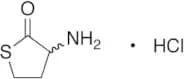
CAS:<p>Applications dl Homocysteine Thiolactone Hydrochloride (cas# 6038-19-3) is a compound useful in organic synthesis.<br>Chemical Name: dl Homocysteine Thiolactone Hydrochloride (cas# 6038-19-3) is a compound useful in organic synthesis.<br></p>Formula:C4H7NOS·ClHColor and Shape:NeatMolecular weight:153.63α-Naphthyl Glycidyl Ether, 90%
CAS:Controlled Product<p>Applications Used in the preparation of Naftopidil (N213500) and propranolol (P831800).<br>References Erhard, P., et al.: J. Med. Chem., 25, 1402 (1982), Campbell, L., et al.: BioMed. Chem. Lett., 4, 2627 (1994),<br></p>Formula:C13H12O2Purity:90%Color and Shape:NeatMolecular weight:200.235-Amino-1-naphthalenesulfonamide Hydrochloride
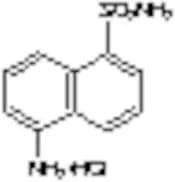
CAS:Controlled Product<p>Applications 5-Amino-1-naphthalenesulfonamide Hydrochloride (cas# 1215328-08-7) is a compound useful in organic synthesis.<br></p>Formula:C10H11ClN2O2SColor and Shape:Off-White To GreyMolecular weight:258.722'-Hydroxyflavone
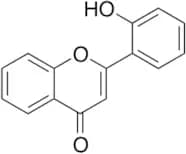
CAS:Controlled Product<p>Applications 2'-Hydroxyflavone (cas# 35244-11-2) is a useful research chemical.<br></p>Formula:C15H10O3Color and Shape:NeatMolecular weight:238.2385-Chloro Hydrochlorothiazide
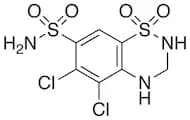
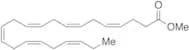
CAS:Controlled Product<p>Impurity Hydrochlorothiazide 5-Chloro Impurity<br>Applications Hydrochlorothiazide derivative. Diuretic agent.<br>References Mayer, S.E., et al.: J. Pharmacol. Exp. Therap., 134, 18 (1961),<br></p>Formula:C7H7Cl2N3O4S2Color and Shape:Off White SolidMolecular weight:332.18cis-4,7,10,13,16,19-Docosahexaenoic Acid Methyl Ester
CAS:<p>Stability Hygroscopic<br>Applications A type of biodiesel with industrial applications. Used as a reagent in cholesterol photooxidation.<br>References Hu, P.C. et al.: J. Agri. Food Chem., 50, 3572 (2002); Yu, M.J. et al.: Kor. J. Chem. Eng., 28, 2287 (2011);<br></p>Formula:C23H34O2Color and Shape:NeatMolecular weight:342.51N-(2-Hydroxyethyl)adenosine
CAS:Controlled Product<p>Applications N-(2-Hydroxyethyl)adenosine has been studied as an anticonvulsant through the activation of adenosine A1 receptor (AA1R).<br>References Zhu, B-C., et al.: Junwu Xuebao, 35, 619-627 (2016);<br></p>Formula:C12H17N5O5Color and Shape:NeatMolecular weight:311.29