Pharmaceutical Standards
Pharmaceutical standards are a comprehensive set of reference materials essential for ensuring the safety, efficacy, and quality of pharmaceutical products. This category includes standards for active pharmaceutical ingredients (APIs), which are the core components responsible for therapeutic effects. Additionally, it covers compounds and metabolites relevant to both the pharmaceutical and veterinary industries, providing benchmarks for the accurate measurement and analysis of these substances. Nitrosamine control standards are crucial for detecting and mitigating potentially harmful nitrosamines in drug formulations. Toxicology standards help assess the safety and potential adverse effects of pharmaceutical compounds. Furthermore, enzyme activators and inhibitors standards are vital for research and development, enabling precise studies of biochemical pathways and drug mechanisms. These pharmaceutical standards are indispensable tools for regulatory compliance, quality control, and research, ensuring that pharmaceutical products meet stringent safety and effectiveness criteria.
Subcategories of "Pharmaceutical Standards"
- APIs for research and impurities(274,823 products)
- Enzyme Activators and Inhibitors(2,827 products)
- Nitrosamines(2,605 products)
- Pharmaceutical and Veterinary Compounds and Metabolites(2,869 products)
- Toxicology(13,652 products)
Found 7836 products of "Pharmaceutical Standards"
Sort by
Purity (%)
0
100
|
0
|
50
|
90
|
95
|
100
2,6-Dimethyl-4-nitrophenol
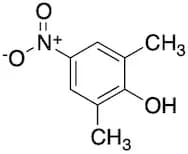
CAS:Controlled Product<p>Applications 2,6-Dimethyl-4-nitrophenol is a useful compound for the production and characterization of bio-oil from hardwood and softwood lignin.<br>References Zadeh, Z. E., et al.: Energies (Basel, Switzerland), 13, 887 (2020)<br></p>Formula:C8H9NO3Color and Shape:NeatMolecular weight:167.162Thiourea-13C
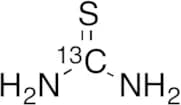
CAS:Controlled Product<p>Applications Thiourea-13C is an isotope labelled version of Thiourea (T375450). Hyperpolarized Thiourea-13C is used as an analyte in the real-time in vivo detection of hydrogen peroxide.<br> Not a dangerous good if item is equal to or less than 1g/ml and there is less than 100g/ml in the package<br>References Wibowo, Arif, et al.: ACS Chem. Bio., 12(7), 1737-1742 (2017)<br></p>Formula:CH4N2SColor and Shape:NeatMolecular weight:77.11Bisphenol A Bissulfate Disodium Salt-13C12
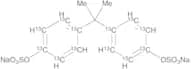
CAS:Controlled Product<p>Stability Hygroscopic<br>Applications Labelled a Bisphenol (B519515) derivative having antihemolytic activity.<br>References Morgan, B., et al.: Eur. J. Clin. Invest., 24, 219 (1994), Liszewski, M., et al.: Adv. Immunol., 61, 201 (1996), Assefa, H., et al.: Bioorg. Med. Chem. Lett., 9, 1889 (1999), Burdelev, O., et al.: Bioorg. Khim., 29, 159 (2003),<br></p>Formula:C3C12H14Na2O8S2Color and Shape:NeatMolecular weight:444.29(3E,8Z,11Z)-Tetradeca-3,8,11-trienyl Acetate (Technical Grade)
CAS:Controlled Product<p>Applications (3E,8Z,11Z)-Tetradeca-3,8,11-trienyl Acetate is a compound found in the pheromones. It is a major sex pheromone component of the tomato pest.<br>References Attygalle, A., et al.: Bioorg. Med. Chem., 4, 305 (1996); Hungerford, N., Kitching, W.: J. Chem. Soc., Perkin Trans. 1, 1839 (1998);<br></p>Formula:C16H26O2Purity:>75%Color and Shape:NeatMolecular weight:250.38ASM-DNT
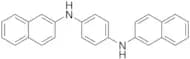
CAS:<p>Applications N,N'-Di-2-naphthyl-1,4-phenylenediamine (cas# 93-46-9) is a useful research chemical.<br></p>Formula:C26H20N2Color and Shape:NeatMolecular weight:360.45045-Chlorovaleronitrile
CAS:Controlled Product<p>Applications 5-Chlorovaleronitrile is used as a reagent in the synthesis of cyanoguanidine derivatives which exhibit dual histamine H1 and H2 receptor antagonist activity. Also used in the synthesis of purine derivatives which exhibit antimicrobial activity.<br> Not a dangerous good if item is equal to or less than 1g/ml and there is less than 100g/ml in the package<br>References Kinali-Demirci, S., et al.: Med. Chem. Res., no vol., no pp. (2014); Sadek, B., et al.: Molecules, 18, 14186 (2013)<br></p>Formula:C5H8ClNColor and Shape:NeatMolecular weight:117.58trans-Caffeic Acid
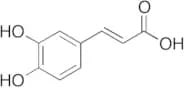
CAS:<p>Applications trans-Caffeic Acid is a useful synthetic intermediate. It was used as a reactant to synthesize N-caffeoylphenalkylamide derivatives as bacterial efflux pump inhibitors. It is also used to prepare caffeic acid phenethyl ester analogs with antitumor structures.<br>References Michalet, S., et al.: Bioorg. Med. Chem. Lett., 17, 1755 (2007); Nagaoka, T., et al.: Bioorg. Med. Chem., 10, 3351 (2002)<br></p>Formula:C9H8O4Color and Shape:NeatMolecular weight:180.162,2',3,4,4',5'-Hexabromodiphenyl Ether
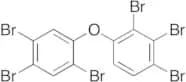
CAS:Controlled Product<p>Applications 2,2',3,4,4',5'-Hexabromodiphenyl Ether is a polybrominated diphenyl ether (PBDE) used as a flame retardant.<br>References Rayne, S., et al.: Environ. Int., 32, 575 (2006); Jakobsson, K., et al.: Chemosphere, 46, 709 (2002)<br></p>Formula:C12H4Br6OColor and Shape:White To Off-WhiteMolecular weight:643.58Trimethylurea
CAS:Controlled Product<p>Applications Trimethylurea (cas# 632-14-4) is a useful research chemical.<br></p>Formula:C4H10N2OColor and Shape:NeatMolecular weight:102.14Pyochelin I and Pyochelin II
CAS:Controlled Product<p>Impurity 2.5<br>Applications Pyochelin I and Pyochelin II are the two major siderophores produced and secreted by Pseudomonas aeruginosa PAO1 to assimilate iron. It also has trphenyltin (T809350) decomposition capacity.<br>References Braud, A., et al.: J. Bacteriol., 191, 3517 (2009); Sun, G., et al.: Appl. Environ. Microb., 72, 7264 (2006)<br></p>Formula:C14H16N2O3S2Color and Shape:NeatMolecular weight:324.421,3-Propylene-d6 Thiourea
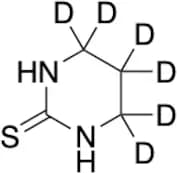
CAS:Controlled Product<p>Applications 1,3-Propylene-d6 Thiourea (CAS# 1219802-05-7) is a useful isotopically labeled research compound.<br></p>Formula:C4H2D6N2SColor and Shape:NeatMolecular weight:122.222Urea-13C
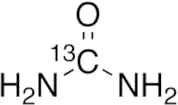
CAS:<p>Applications Labelled Urea. Physiological regulator of nitrogen excretion in mammals; synthesized in the liver as an end-product of protein catabolism and excreted in urine. Also occurs normally in skin. Emollient; diuretic.<br>References Demetriou, A., et al.: Science, 233, 1190 (1986); Aebischer, P., et al.: Nat. Med., 2, 696(1996); Prakash, S., et al.: Biotechnol. Bioeng., 46, 621(1995);<br></p>Formula:CH4N2OColor and Shape:NeatMolecular weight:61.056-Methyl-1,4-naphthoquinone
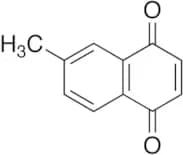
CAS:Controlled Product<p>Applications 6-Methyl-1,4-naphthoquinone (cas# 605-93-6) is a compound useful in organic synthesis.<br></p>Formula:C11H8O2Color and Shape:NeatMolecular weight:172.183-Hydroxy-2,7-naphthalenedisulfonic Acid Sodium Salt > 90%
CAS:<p>Applications 3-Hydroxy-2,7-naphthalenedisulfonic Acid is a coupling component used in preparation of disazo urea dyes and dyes derived from 4-4'-diaminodiphenylurea.<br>References Szadowski, J., et al.: Dyes and Pgiments, 50, 87 (2001); Amjad, R., et al.: J. Chem. Soc. Pakistan, 33, 107 (2011)<br></p>Formula:C10H8O7S2Purity:>90%Color and Shape:NeatMolecular weight:304.30Propionic Acid
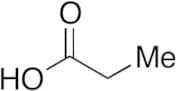
CAS:Controlled Product<p>Applications Propionic Acid, used in the synthesis of novel inhibitors of signal transducer and activator of transcription 3 signaling pathway in the potential treatment of human cancers. In addition it is used in the synthesis of morphans.<br> Not a dangerous good if item is equal to or less than 1g/ml and there is less than 100g/ml in the package<br>References Zhang, M. et al.: Eur. J. Med. Chem., 62, 301 (2013); Bradshaw, B. et al.: Org. Lett., 15, 2458 (2013);<br></p>Formula:C3H6O2Color and Shape:ColourlessMolecular weight:74.08Isoguanosine Hydrate
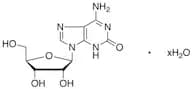
CAS:Controlled Product<p>Applications A useful synthetic intermedate. A naturally occuring, biologically active isomer of guanosine. Reported to stimulate the accumulation of cyclic-AMP in the brain. It is an inhibitor of IMP pyrophosphorylase, and its 5’-di and -tri-phosphates inhibit glutamic acid dehydrogenase. May contain approximately 0.6 moles of water.<br>References Divakar, K.J., et al.: J. Chem. Soc. Perkin Trans., 1, 771 (1991), Montsch, H.H., et al: Biochemistry, 14, 5593 (1975), Hagen, C.: Biochim. Biophys. Acta., 293, 105 (1973), Huang, M., et al.: J. Med. Chem., 15, 462 (1972)<br></p>Formula:C10H13N5O5·H2OColor and Shape:NeatMolecular weight:301.26[1-(2,4-Dihydroxyphenyl)-2-(3’,4’-dihydroxyphenyl)ethanone
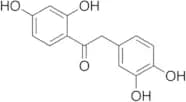
CAS:Controlled Product<p>Stability Store in Freezer<br>Applications [1-(2,4-Dihydroxyphenyl)-2-(3’,4’-dihydroxyphenyl)ethanone (cas# 887354-66-7) is a compound useful in organic synthesis.<br>References Biosci. Biotechnol. Biochem., 57(1), 107 (1993)<br></p>Formula:C14H12O5Color and Shape:NeatMolecular weight:260.24(+)-Lycopsamine N-Oxide (>85%)
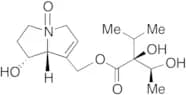
CAS:<p>Applications (+)-Lycopsamine N-Oxide, is occurs in pyrrolizidine alkaloid-containing plants, which are the most common poisonous plants affecting livestock, wildlife, and humans. Thye are being known as hepatotoxins and tumorigens.<br>References Qingsu, X., et al.: Chem. Res. Toxic., 26, 1384 (2013); Bosi,, C. F., et al.: Revista Brasileira de Farmacognosia, 23, 425 (2013);<br></p>Formula:C15H25NO6Purity:>85%Color and Shape:NeatMolecular weight:315.36N-Acetyl Desethyl Chloroquine-d4
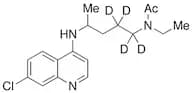
CAS:Controlled Product<p>Applications A labelled Chloroquine metabolite, also an intermediate in the preparation of labelled Chloroquine It is a COVID19-related research product.<br>References Brown, N., et al.: J. Chromatogr., Biomed. App., 309, 426 (1984), Nord, K., et al.: Int. J. Pharm., 72, 11 (1991),<br></p>Formula:C18D4H20ClN3OColor and Shape:NeatMolecular weight:337.88Methyl 3-Phenylpropionate(3-Phenylpropionic Acid Methyl Ester)
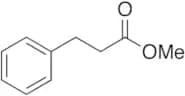
CAS:Controlled Product<p>Applications 3-Phenylpropionic Acid Methyl Ester is an ester derivative of 3-phenylpropionic acid that is sometimes present in fragrance ingredients.<br>References Belsito, D. et al.: Food Chem. Toxicol., 49, S256 (2011):<br></p>Formula:C10H12O2Color and Shape:NeatMolecular weight:164.2