Pharmaceutical Standards
Pharmaceutical standards are a comprehensive set of reference materials essential for ensuring the safety, efficacy, and quality of pharmaceutical products. This category includes standards for active pharmaceutical ingredients (APIs), which are the core components responsible for therapeutic effects. Additionally, it covers compounds and metabolites relevant to both the pharmaceutical and veterinary industries, providing benchmarks for the accurate measurement and analysis of these substances. Nitrosamine control standards are crucial for detecting and mitigating potentially harmful nitrosamines in drug formulations. Toxicology standards help assess the safety and potential adverse effects of pharmaceutical compounds. Furthermore, enzyme activators and inhibitors standards are vital for research and development, enabling precise studies of biochemical pathways and drug mechanisms. These pharmaceutical standards are indispensable tools for regulatory compliance, quality control, and research, ensuring that pharmaceutical products meet stringent safety and effectiveness criteria.
Subcategories of "Pharmaceutical Standards"
- APIs for research and impurities(274,920 products)
- Enzyme Activators and Inhibitors(2,827 products)
- Nitrosamines(2,606 products)
- Pharmaceutical and Veterinary Compounds and Metabolites(2,871 products)
- Toxicology(13,652 products)
Found 7836 products of "Pharmaceutical Standards"
Sort by
Purity (%)
0
100
|
0
|
50
|
90
|
95
|
100
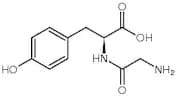
Glycyl-L-tyrosine
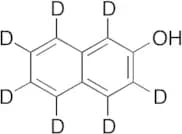
CAS:Controlled Product<p>Applications Glycyl-L-tyrosine<br></p>Formula:C11H14N2O4Color and Shape:NeatMolecular weight:238.242-Naphthol-d7
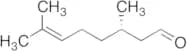
CAS:Controlled Product<p>Applications 2-Naphthol-d7 has been used as a reactant for the preparation of stable isotope-labeled internal standards of PAH metabolites from urine of smokers and nonsmokers.<br> Not a dangerous good if item is equal to or less than 1g/ml and there is less than 100g/ml in the package<br>References Jacob, P. III, et. al.: Anal. Chem., 79, 587 (2007)<br></p>Formula:C102H7HOColor and Shape:NeatMolecular weight:151.21(-)-Citronellal
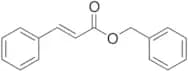
CAS:Controlled Product<p>Applications (-)-Citronellal is the s-isomer of (R)-Citronellal (C525025), a natural insect repellant. (-)-Citronellal (a monoterpene) was found to activate human olfactory receptor OR1A2 at the mRNA and protein levels resulting in reduced cell proliferation and reduced hepatocellular carcinoma progression.<br>References Massberg, D., et al.: Arch. Biochem. Biophys., 566, 100 (2015);<br></p>Formula:C10H18OColor and Shape:NeatMolecular weight:154.25Benzyl Cinnamate
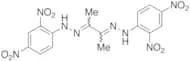
CAS:<p>Applications BENZYL CINNAMATE (cas# 103-41-3) is a useful research chemical.<br></p>Formula:C16H14O2Color and Shape:WhiteMolecular weight:238.28Diacetyl Bis(2,4-dinitrophenylhydrazone)
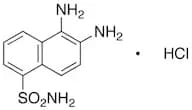
CAS:Controlled Product<p>Applications 2,4-Dinitrophenylhydrazone (DNPH) derivative.<br>References Lindsay, R.C., et al.: J. Food Sci., 29, 266 (1964),<br></p>Formula:C16H14N8O8Color and Shape:NeatMolecular weight:446.331,2-Diamino-naphthalene-5-sulfonamide, Hydrochloride
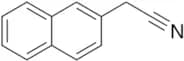
CAS:Controlled ProductFormula:C10H11N3O2S·ClHColor and Shape:NeatMolecular weight:273.742-Naphthylacetonitrile
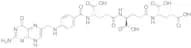
CAS:Controlled Product<p>Applications 2-Naphthylacetonitrile (cas# 7498-57-9) is a useful research chemical.<br></p>Formula:C12H9NColor and Shape:NeatMolecular weight:167.21Pteroyltri-γ-L-glutamic acid (>85%)
CAS:<p>Applications Pteroyltri-γ-L-glutamic acid is a folate derivative found in various foods such as yeast, spinach, beef liver, beef fillet and peas.<br>References Tamura, T., et al.: Br. J. Haematol., 25, 513 (1973); Ndaw, S., et al.: J. Chromatogr. A, 928, 77 (2001)<br></p>Formula:C29H33N9O12Purity:>85%Color and Shape:Off WhiteMolecular weight:699.6253-(4-Hydroxyphenyl)propionic Acid Methyl Ester
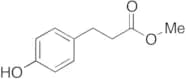
CAS:Controlled Product<p>Applications 3-(4-Hydroxyphenyl)propionic Acid Methyl Ester is a useful synthetic intermediate. It can be used to prepare potent and orally available G protein-coupled receptor 40 agonists as potential antidiabetic agents.<br>References Sasaki, S., et al.: J. Med. Chem., 54, 1365 (2011); Christiansen, E., et al.: ACS Med. Chem. Lett., 1, 345 (2010)<br></p>Formula:C10H12O3Color and Shape:NeatMolecular weight:180.2o-tert-Butyl-p-cresol
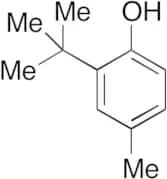
CAS:Controlled Product<p>Applications o-tert-Butyl-p-cresol, is a versatile buidling bloch used in the various chemical synthesis. It is used in the synthesis of 2-t-butyl-p-cresol amide derivatives, having the antibacterial and antifouling properties.<br> Not a dangerous good if item is equal to or less than 1g/ml and there is less than 100g/ml in the package<br>References Zhang, Z. et al.: Tuliao Gongye, 42, 20 (2012);<br></p>Formula:C11H16OColor and Shape:NeatMolecular weight:164.243,3'-di-tert-Butyl-5,5'-dimethoxybiphenyl-2,2'-diol
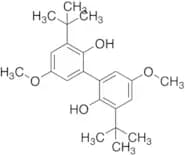
CAS:Controlled Product<p>Applications 3,3'-di-tert-butyl-5,5'-dimethoxybiphenyl-2,2'-diol (cas# 14078-41-2) is a useful research chemical.<br></p>Formula:C22H30O4Color and Shape:Light OrangeMolecular weight:358.471Thiourea-13C
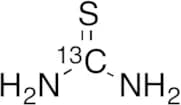
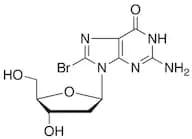
CAS:Controlled Product<p>Applications Thiourea-13C is an isotope labelled version of Thiourea (T375450). Hyperpolarized Thiourea-13C is used as an analyte in the real-time in vivo detection of hydrogen peroxide.<br> Not a dangerous good if item is equal to or less than 1g/ml and there is less than 100g/ml in the package<br>References Wibowo, Arif, et al.: ACS Chem. Bio., 12(7), 1737-1742 (2017)<br></p>Formula:CH4N2SColor and Shape:NeatMolecular weight:77.118-Bromo-2’-deoxyguanosine
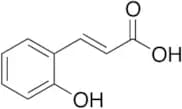
CAS:Controlled Product<p>Applications 8-Bromo-2’-deoxyguanosine (cas# 13389-03-2) is a compound useful in organic synthesis.<br>References Chatgilialoglu, C., et al.: Chem. Res. Toxicol., 20, 1820 (2007),<br></p>Formula:C10H12BrN5O4Color and Shape:NeatMolecular weight:346.142-Hydroxycinnamic Acid
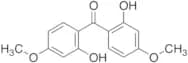
CAS:Controlled Product<p>Applications 2-Hydroxycinnamic Acid (cas# 614-60-8) is a useful research chemical.<br></p>Formula:C9H8O3Color and Shape:NeatMolecular weight:164.162,2'-Dihydroxy-4,4'-dimethoxybenzophenone
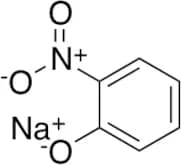
CAS:Controlled Product<p>Applications 2,2'-Dihydroxy-4,4'-dimethoxybenzophenone (cas# 131-54-4) is a useful research chemical.<br></p>Formula:C15H14O5Color and Shape:NeatMolecular weight:274.27Sodium 2-Nitrophenolate
CAS:<p>Applications Sodium 2-nitrophenolate (cas# 824-39-5) is a useful research chemical.<br></p>Formula:C6H4NO3·NaColor and Shape:NeatMolecular weight:161.092-Carboxybenzoyl Amlodipine
CAS:Controlled Product<p>Impurity Amlodipine EP Impurity H<br>Applications Amlodipine Besilate (A633500) impurity. Used in the process for preparing Amlodipine benzenesulfonate. Amlodipine EP Impurity H<br></p>Formula:C28H29ClN2O8Color and Shape:NeatMolecular weight:556.99Elaidic Acid Methyl Ester
CAS:<p>Applications Elaidic Acid Methyl Ester is an intermediate used to prepare ±)-trans-9,10-Epoxystearic Acid Methyl Ester.<br>References Tavasli, M., et al.: Chem. Commun., 1226 (2002)<br></p>Formula:C19H36O2Color and Shape:NeatMolecular weight:296.49Bisphenol A Bissulfate Disodium Salt-13C12
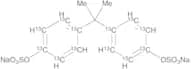
CAS:Controlled Product<p>Stability Hygroscopic<br>Applications Labelled a Bisphenol (B519515) derivative having antihemolytic activity.<br>References Morgan, B., et al.: Eur. J. Clin. Invest., 24, 219 (1994), Liszewski, M., et al.: Adv. Immunol., 61, 201 (1996), Assefa, H., et al.: Bioorg. Med. Chem. Lett., 9, 1889 (1999), Burdelev, O., et al.: Bioorg. Khim., 29, 159 (2003),<br></p>Formula:C3C12H14Na2O8S2Color and Shape:NeatMolecular weight:444.29Urea-13C
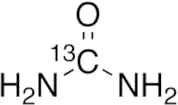
CAS:<p>Applications Labelled Urea. Physiological regulator of nitrogen excretion in mammals; synthesized in the liver as an end-product of protein catabolism and excreted in urine. Also occurs normally in skin. Emollient; diuretic.<br>References Demetriou, A., et al.: Science, 233, 1190 (1986); Aebischer, P., et al.: Nat. Med., 2, 696(1996); Prakash, S., et al.: Biotechnol. Bioeng., 46, 621(1995);<br></p>Formula:CH4N2OColor and Shape:NeatMolecular weight:61.05