Pharmaceutical Standards
Pharmaceutical standards are a comprehensive set of reference materials essential for ensuring the safety, efficacy, and quality of pharmaceutical products. This category includes standards for active pharmaceutical ingredients (APIs), which are the core components responsible for therapeutic effects. Additionally, it covers compounds and metabolites relevant to both the pharmaceutical and veterinary industries, providing benchmarks for the accurate measurement and analysis of these substances. Nitrosamine control standards are crucial for detecting and mitigating potentially harmful nitrosamines in drug formulations. Toxicology standards help assess the safety and potential adverse effects of pharmaceutical compounds. Furthermore, enzyme activators and inhibitors standards are vital for research and development, enabling precise studies of biochemical pathways and drug mechanisms. These pharmaceutical standards are indispensable tools for regulatory compliance, quality control, and research, ensuring that pharmaceutical products meet stringent safety and effectiveness criteria.
Subcategories of "Pharmaceutical Standards"
- APIs for research and impurities(274,923 products)
- Enzyme Activators and Inhibitors(2,827 products)
- Nitrosamines(2,606 products)
- Pharmaceutical and Veterinary Compounds and Metabolites(2,873 products)
- Toxicology(13,652 products)
Found 7836 products of "Pharmaceutical Standards"
Sort by
Purity (%)
0
100
|
0
|
50
|
90
|
95
|
100
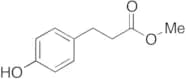
3-(4-Hydroxyphenyl)propionic Acid Methyl Ester
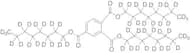
CAS:Controlled Product<p>Applications 3-(4-Hydroxyphenyl)propionic Acid Methyl Ester is a useful synthetic intermediate. It can be used to prepare potent and orally available G protein-coupled receptor 40 agonists as potential antidiabetic agents.<br>References Sasaki, S., et al.: J. Med. Chem., 54, 1365 (2011); Christiansen, E., et al.: ACS Med. Chem. Lett., 1, 345 (2010)<br></p>Formula:C10H12O3Color and Shape:NeatMolecular weight:180.21,2,4-Trioctyl Ester 1,2,4-Benzenetricarboxylic Acid-d51
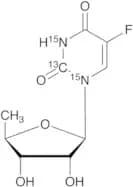
CAS:Controlled Product<p>Applications Isotope labelled 1,2,4-Trioctyl Ester 1,2,4-Benzenetricarboxylic Acid is a widely used and often incorporated in plasticizer for PVC for a higher molecular weight.<br>References Jones, C., et al.: Int. J. Artificial. Organs., 12, 466 (1989); Khang, G., et al.: Bio-Med. Mater. Engineer., 12, 135 (2002);<br></p>Formula:C33D51H3O6Color and Shape:NeatMolecular weight:598.0925’-Deoxyfluorouridine-13C,15N2
CAS:Controlled Product<p>Applications 5’-Deoxyfluorouridine-13C,15N2 is a compound useful in organic synthesis.<br></p>Formula:C8CH11FN2O5Color and Shape:NeatMolecular weight:249.17N-Acetyl-L-tyrosine
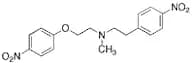
CAS:Controlled Product<p>Applications N-Acetyl-L-tyrosine is an analogue of L-tyrosine which stimulate the transport of L-Tyr, mainly by the ASC system.<br>References Jara, J. et al.: Melanoma Res., 1, 15 (1991),<br></p>Formula:C11H13NO4Color and Shape:Off-WhiteMolecular weight:223.23Methyl-(4-nitrophenylethyl)-(4-nitrophenoxyethyl)amine
CAS:Controlled Product<p>Applications Methyl-(4-nitrophenylethyl)-(4-nitrophenoxyethyl)amine (cas# 115287-37-1) is a compound useful in organic synthesis.<br></p>Formula:C17H19N3O5Color and Shape:NeatMolecular weight:345.354’-Hydroxy Nimesulide
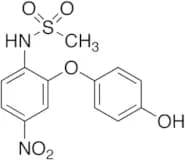
CAS:Controlled Product<p>Applications The main metabolite of Nimesulide (N477500).<br> Not a dangerous good if item is equal to or less than 1g/ml and there is less than 100g/ml in the package<br>References Facino, R.M., et al.: Drugs, 46 (Suppl1),15 (1993), Westphal, J., et al.: J. Antimicrob. Chemother., 33, 387 (1994), Castell, J., et al.: Cell Biol. Toxicol., 13, 331 (1997), Georges, H., et al.: Life Sci., 65, 151 (1999), Singla, A.K., et al.: J. Pharm. Pharmacol., 52, 467 (2000),<br></p>Formula:C13H12N2O6SColor and Shape:White To Light BrownMolecular weight:324.312-[3-(Aminosulfonyl)-4-chlorobenzoyl]-benzonic Acid
CAS:Controlled Product<p>Applications 2-[3-(Aminosulfonyl)-4-chlorobenzoyl]-benzonic Acid is a potential metabolite of Chlorthalidone.<br>References Salado C., et al.: J. Chromatography. Biomed. App., 690, 195 (1997);<br></p>Formula:C14H10ClNO5SColor and Shape:NeatMolecular weight:339.75Allo-3α-tetrahydro Cortisol
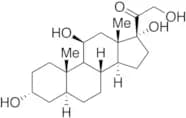
CAS:Controlled Product<p>Stability Hygroscopic<br>Applications A metabolite of Cortisol (H714615).<br>References Quinkler, M., et al.: J. Clin. Endocrinol. Metab., 88, 2384 (2003), Draper, N., et al.: J. Endocrinol., 186, 251 (2005), Kotlowska, A., et al.: Clin. Biochem., 42, 448 (2009),<br></p>Formula:C21H34O5Color and Shape:Off White SolidMolecular weight:366.492,5-Dinitrophenol (Wetted with water >15%)
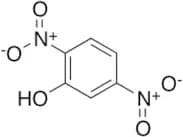
CAS:Controlled Product<p>Applications 2,5-Dinitrophenol (wetted with ca. 20% Water) (unit weight on dry weight basis) is a useful reagent for the preparation of yttrium nitrophenolate aminebis(benzotriazolylphenolate) complexes.<br> E0<br>References Su, Y. C., et al.: J. Polym. Sci. A Polym. Chem., 57, 2038 (2019)<br></p>Formula:C6H4N2O5Color and Shape:NeatMolecular weight:184.11Betamethasone 6α-Bromo 17-Valerate
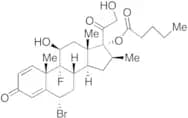
Controlled Product<p>Applications Betamethasone 6α-Bromo 17-Valerate is an impurity of Betamethasone (B327000), which is a glucocorticoid used as an anti-inflammatory agent.<br>References Ferrante, M.G., et al.: Anal. Profiles Drug Subs., 6, 43 (1977), Li, A., et al.: Chem. Biol. Interact., 142, 7 (2002), Cruz-Monteagudo, M., et al.: Eur. J. Med. Chem., 40, 1030 (2005), Rothfuss, A., et al.: Chem. Res. Toxicol., 19, 1313 (2006),<br></p>Formula:C27H36BrFO6Color and Shape:NeatMolecular weight:555.47Tetramethyluric Acid
CAS:Controlled Product<p>Applications Tetramethyluric acid is an impurity of caffeine. Caffeine is a bitter, white crystalline xanthine alkaloid that acts as a stimulant drug and a reversible acetylcholinesterase inhibitor. Caffeine is found in varying quantities in the seeds, leaves, and fruit of some plants, where it acts as a natural pesticide that paralyzes and kills certain insects feeding on the plants. In humans, caffeine acts as a central nervous system stimulant, temporarily warding off drowsiness and restoring alertness. Caffeine is a cardiac and respiratory stimulant; diuretic. Caffeine is toxic at sufficiently high doses.<br>References Zubair, U.M., et al.: Anal. Profiles Drug Subs., 15, 71 (1986); Cherrah, Y., et al.: Biochem. Pharmacol., 37, 1311 (1988);<br></p>Formula:C9H12N4O3Color and Shape:NeatMolecular weight:224.22(1S)-(+)-10-Camphorsulfonic Acid
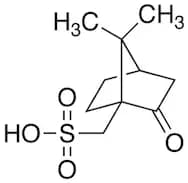
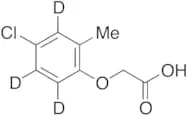
CAS:Controlled Product<p>Stability Hygroscopic<br>Applications Used as a resolving agent, and as a catalyst for coupling dipeptides.<br> Not a dangerous good if item is equal to or less than 1g/ml and there is less than 100g/ml in the package<br></p>Formula:C10H16O4SColor and Shape:NeatMolecular weight:232.30(4-Chloro-2-methylphenoxy-2,3,5-d3)acetic Acid
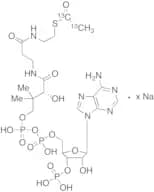
CAS:Controlled Product<p>Applications Labelled derivative of (4-Chloro-2-methylphenoxy)acetic Acid (C369470).(4-Chloro-2-methylphenoxy)acetic Acid is a herbicide.Environmental toxin on US EPA Toxic Release Inventory list (TRI) list.<br>References Elliott, B., et al.: Mutagenesis, 20, 3 (2005); Pfleeger, T., et al.; Environmental Toxicology and Chemistry 30, 455 (2010);<br></p>Formula:C92H3H6ClO3Color and Shape:White To Off-WhiteMolecular weight:203.64Acetyl-1,2-13C2 Coenzyme A Sodium Salt (~2% Unlabelled)
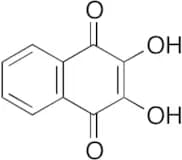
CAS:Controlled Product<p>Applications Acetyl-1,2-13C2 Coenzyme A Sodium Salt is a useful synthetic intermediate.<br></p>Formula:C2113C2H38N7O17P3S•x(Na)Color and Shape:NeatMolecular weight:811.5622992,3-Dihydroxy-1,4-naphthoquinone
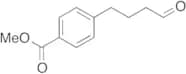
CAS:Controlled Product<p>Applications 2,3-dihydroxynaphthoquinone (cas# 605-37-8) is a useful research chemical.<br></p>Formula:C10H6O4Color and Shape:NeatMolecular weight:190.154-(4-Oxobutyl)benzoic Acid Methyl Ester
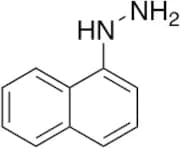
CAS:Controlled Product<p>Stability Hygroscopic<br>Applications 4-(4-Oxobutyl)benzoic Acid Methyl Ester is used as a reagent in the preparation of Pemetrexed (P219500) and furoxanoxyalkyl esters of Pemetrexed as antifolates and nitric oxide donors for use as anticancer agents.<br>References Zhao, D., et al.: Zhongguo Yaowu Huaxue Zazhi, 18, 445 (2008); Yi, B., et al.: Zhongguo Yiyao Gongye Zazhi, 37, 798 (2006); Min, T., et al.: Med. Chem. Res., 18, 495 (2009)<br></p>Formula:C12H14O3Color and Shape:NeatMolecular weight:206.241-Naphthylhydrazine
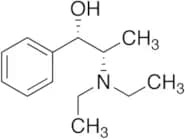
CAS:Controlled Product<p>Applications 1-Naphthylhydrazine (cas# 2243-55-2) is a useful research chemical.<br></p>Formula:C10H10N2Color and Shape:NeatMolecular weight:158.2rac-syn N,N-Diethyl Norephedrine
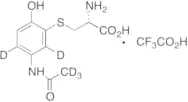
CAS:Controlled Product<p>Applications The main basic metabolite of Diethylpropione.<br>References Banci, F., et al.: Arzneim.-Forsch., 21, 1616 (1971), Mikhailova, D., et al.: Eur. J. Med. Chem., 13, 49 (1978),<br></p>Formula:C13H21NOColor and Shape:NeatMolecular weight:207.313-Cysteinylacetaminophen-D5 (major), Trifluoroacetic Acid Salt
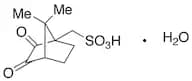
CAS:Controlled Product<p>Applications 3-Cysteinylacetaminophen-D5 (major), Trifluoroacetic Acid Salt is deuterium labeled 3-Cysteinylacetaminophen Trifluoroacetic Acid Salt (C994750), which is a metabolite of Acetaminophen (A161220), an analgesic and antipyretic agent used as a pain reliever to treat headache, muscle aches, and arthritis (1,2,3).Minimum isotopic incorporation d-3, no d-0 present. A representative lot has 64% isotopic incorporation at the 6-position, 89% at the 4-position.<br>References (1) McGill, M. R. and Jaeschke, H. Pharm Res. 30, 2174 (2013)(2) Fairbrother, J.E., et al.: Anal. Profiles Drug Subs., 3, 1 (1974) (3) Hinson, J.A., et al.: Rev. Biochem. Toxicol., 2, 103 (1980)<br></p>Formula:C11H9D5N2O4S•C2HF3O2Color and Shape:NeatMolecular weight:389.36Camphorquinone-10-sulfonic Acid Hydrate
CAS:Controlled Product<p>Applications A crystalline water-soluble reagent that is useful for specific, reversible modification of the guanidino groups of arginine residues. Suitable for use with small arginine-containing molecules.<br> Not a dangerous good if item is equal to or less than 1g/ml and there is less than 100g/ml in the package<br>References Wallace, C.J.A., et al.: Biochem. J., 215, 651 (1983), Dailey, H.A., et al.: J. Biol. Chem., 261, 7902 (1986),<br></p>Formula:C10H14O5S·H2OColor and Shape:NeatMolecular weight:264.30


![2-[3-(Aminosulfonyl)-4-chlorobenzoyl]-benzonic Acid](/_next/image/?url=https%3A%2Fstatic.cymitquimica.com%2Fproducts%2FTR%2Fthumb-webp%2FA633000.webp&w=3840&q=75)