Pharmaceutical Standards
Subcategories of "Pharmaceutical Standards"
- APIs for research and impurities(277,142 products)
- Enzyme Activators and Inhibitors(2,829 products)
- Nitrosamines(2,646 products)
- Pharmaceutical and Veterinary Compounds and Metabolites(2,894 products)
- Toxicology(13,388 products)
Found 8093 products of "Pharmaceutical Standards"
(4-Hydroxymethylphenyl)acetic acid methyl ester
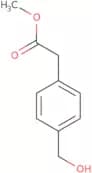
CAS:(4-Hydroxymethylphenyl)acetic acid methyl ester is a fine chemical, useful building block, research chemicals and reagent. It is also a speciality chemical with CAS No. 155380-11-3. This compound can be used as a versatile building block for chemical synthesis, or as a reaction component for the synthesis of complex compounds. The high quality of this compound makes it suitable for use as an intermediate in the synthesis of other chemical compounds. (4-Hydroxymethylphenyl)acetic acid methyl ester is also a useful scaffold for the formation of new molecules or materials such as polymers.Formula:C10H12O3Purity:Min. 95%Molecular weight:180.2 g/mol2,6-Difluoro-4-hydroxybenzoic acid methyl ester
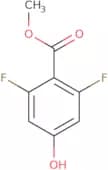
CAS:2,6-Difluoro-4-hydroxybenzoic acid methyl ester is an inhibitor of monoamine oxidase (MAO). It inhibits the oxidation of monoamines such as norepinephrine and serotonin. The inhibition of MAO leads to increase in norepinephrine levels and decrease in serotonin levels. 2,6-Difluoro-4-hydroxybenzoic acid methyl ester has been shown to have antidepressant effects. This drug has also been shown to be effective for treating intraocular hypertension, by inhibiting the formation rate of aqueous humor and lowering intraocular pressure.Formula:C8H6F2O3Purity:Min. 95%Color and Shape:PowderMolecular weight:188.13 g/mol(3,5-dichlorophenyl)(4-(3-nitrophenyl)(2,5-thiazolyl))amine
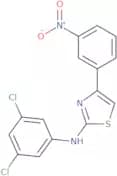
CAS:Please enquire for more information about (3,5-dichlorophenyl)(4-(3-nitrophenyl)(2,5-thiazolyl))amine including the price, delivery time and more detailed product information at the technical inquiry form on this pagePurity:Min. 95%4'-Chloro-2'-fluoroacetophenone
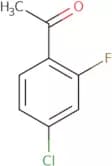
CAS:4'-Chloro-2'-fluoroacetophenone is a high-quality chemical reagent that can be used to prepare complex compounds. It is also a useful intermediate for the preparation of fine chemicals, useful scaffolds, and other research chemicals. This compound is a versatile building block that can be used in the synthesis of speciality chemicals, reaction components, and other compounds.Formula:C8H6ClFOPurity:Min. 95%Molecular weight:172.58 g/molCresyl Violet acetate
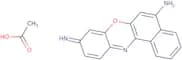
CAS:Controlled ProductCresyl violet acetate is a dye that is used in histology to stain tissue sections. It binds to basic proteins, such as those found in the cytoplasm and nucleus, and has a strong affinity for nucleic acids. Cresyl violet acetate can be used to identify inflammatory lesions and other biological samples. The dye has been shown to induce neuronal death by reducing the redox potentials of neurons through the activation of Toll-like receptors (TLRs). Basic proteins are also involved in oral hypoglycaemic activity.
Formula:C18H15N3O3Purity:Limit? 65.%Color and Shape:PowderMolecular weight:321.33 g/mol(2-methoxyethyl)((2-nitrophenyl)sulfonyl)amine
CAS:Please enquire for more information about (2-methoxyethyl)((2-nitrophenyl)sulfonyl)amine including the price, delivery time and more detailed product information at the technical inquiry form on this pagePurity:Min. 95%(5-Methyl-2-oxo-1,3-dioxol-4-yl)methyl 4-nitrophenyl carbonate
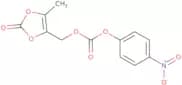
CAS:(5-Methyl-2-oxo-1,3-dioxol-4-yl)methyl 4-nitrophenyl carbonate is a fine chemical that is used as a building block for the synthesis of complex compounds. It is an intermediate in the synthesis of 3,4-Dihydroquinazolinone. This compound has been reported to have useful pharmacological activity and has been used as a research chemical and in the synthesis of pharmaceuticals. (5-Methyl-2-oxo-1,3-dioxol-4-yl)methyl 4 nitrophenyl carbonate also has potential as a reagent and can be used in organic synthesis.Formula:C12H9NO8Purity:Min. 95%Color and Shape:White PowderMolecular weight:295.2 g/mol(R)-Carprofen
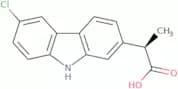
CAS:(R)-Carprofen is a nonsteroidal anti-inflammatory drug that is used to treat pain and inflammation associated with arthritis, as well as other conditions. It is one of the most potent inhibitors of prostaglandin synthesis in human serum, but it has only moderate potency in bile and little or no affinity for fatty acids. The inhibition potential of carprofen has been shown to be stereoselective, with the (S)-enantiomer being up to 10 times more potent than the (R)-enantiomer. Carprofen is metabolized by conjugation with glucuronic acid and excreted in urine. Carprofen also has an inhibitory effect on endogenous substances such as diazepam, which may be due to its ability to inhibit CYP3A4.Formula:C15H12ClNO2Purity:Min. 95%Color and Shape:White to off-white solid.Molecular weight:273.71 g/mol5-Amino-2-hydroxyacetophenone
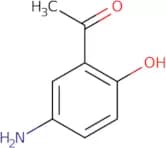
CAS:5-Amino-2-hydroxyacetophenone is a chemical compound that belongs to the class of active substances. It is an intermediate in Friedel-Crafts acylation reactions, which are used to form alkyl esters by reaction with chloroformates. In these reactions, 5-Amino-2-hydroxyacetophenone is converted into a chloroformate in the presence of an acid catalyst. The reactions proceed rapidly, with the acetone or ester as the solvent. The frequency of 5-amino-2-hydroxyacetophenone can be correlated to its deformation energy and various chemical parameters such as electron density and force constants. 5-Amino-2-hydroxyacetophenone is uniquely characterized by intramolecularly hydrogen bonding organic solvents such as acetone and nitrobenzene.Formula:C8H9NO2Purity:Min. 95%Molecular weight:151.16 g/molGrowth hormone releasing protein-2
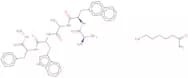
CAS:Please enquire for more information about Growth hormone releasing protein-2 including the price, delivery time and more detailed product information at the technical inquiry form on this pageFormula:C45H55N9O6Purity:Min. 95%Color and Shape:PowderMolecular weight:817.98 g/molN-(2-Indol-3-ylethyl)(2-nitrophenyl)formamide
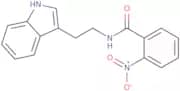
CAS:Please enquire for more information about N-(2-Indol-3-ylethyl)(2-nitrophenyl)formamide including the price, delivery time and more detailed product information at the technical inquiry form on this pageFormula:C17H15N3O3Purity:Min. 95%Color and Shape:PowderMolecular weight:309.32 g/mol2-(2-Thiazolylazo)-p-cresol
CAS:2-(2-Thiazolylazo)-p-cresol structure enables it to form complexes with certain metal ions, changing color in the process. This color change is highly useful in titrimetric analyses (quantitative chemical analysis method) to determine the concentration of metal ions in a solution. The substrates are colored orange-yellow (absorbance maximum= 375 nm). After the enzymatic conversion, the resulting TAC shows an intense, soluble red-violet color (544 nm) in an alkaline medium (pH = 10.3).Formula:C10H9N3OSPurity:Min. 96 Area-%Color and Shape:Yellow To Orange Brown SolidMolecular weight:219.26 g/mol6-Hydroxymelatonin
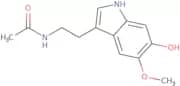
CAS:6-Hydroxymelatonin is a chemoattractant protein that is involved in the regulation of iron homeostasis. It has been shown to have antioxidative properties and can be used for the treatment of cancer. 6-Hydroxymelatonin also has glucuronide conjugate, which can be detected using LC-MS/MS methods. In vivo studies on humans have shown that 6-hydroxymelatonin stimulates human macrophages and skin cells. Melatonin treatment has been shown to decrease the levels of 6-hydroxymelatonin in humans, which may lead to its anti-inflammatory effects.Formula:C13H16N2O3Purity:Min. 95%Color and Shape:White PowderMolecular weight:248.28 g/molDL/meso-Lanthionine
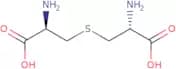
CAS:DL/meso-Lanthionine is a mixture of two amino acids, L-Lysine and L-Methionine. It has been shown to be effective in the treatment of bowel disease caused by Clostridium difficile and other bacteria that produce toxins. This drug also has a protective effect on neuronal cells by inhibiting their death. DL/meso-Lanthionine binds to penicillin-binding proteins in the bacterial cell wall, preventing them from binding with the enzyme cell wall synthesis that is required for cell wall biosynthesis, inhibiting protein synthesis and cell division. DL/meso-Lanthionine also inhibits ATPase activity and the expression of atp-binding cassette transporters. These effects are similar to those observed with penicillin, methicillin, erythromycin, vancomycin, clindamycin, and bacitracin.Formula:C6H12N2O4SPurity:Min. 95%Color and Shape:White PowderMolecular weight:208.24 g/mol5-Bromo-2-methoxycinnamic acid
CAS:5-Bromo-2-methoxycinnamic acid is a fine chemical that is used as a scaffold, versatile building block, and useful intermediate. It has been shown to be a useful reaction component in the preparation of complex compounds. 5-Bromo-2-methoxycinnamic acid can also be used as a speciality chemical or reagent. This compound has high quality and is an important research chemical.Formula:C10H9BrO3Purity:Min. 95%Color and Shape:PowderMolecular weight:257.08 g/mol4-Methoxycinnamylidene acetaldehyde
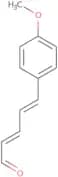
CAS:4-Methoxycinnamylidene acetaldehyde is a versatile building block with a CAS number of 27394-81-6. It is used in the research and production of fine chemicals, pharmaceuticals, and high quality reagents. 4-Methoxycinnamylidene acetaldehyde can be used as a useful scaffold for the synthesis of complex compounds. This building block is also a useful intermediate in organic chemistry reactions.
Formula:C12H12O2Purity:Min. 95%Color and Shape:PowderMolecular weight:188.22 g/molIndole-2-carboxylic acid methyl ester
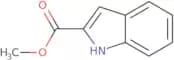
CAS:Indole-2-carboxylic acid methyl ester is a carbazole that can be synthesized from indole and hydrogen chloride. It has been shown to inhibit the production of β-amyloid, an important factor in the pathogenesis of Alzheimer’s disease. Indole-2-carboxylic acid methyl ester has also been shown to have inhibitory effects on ion-exchange, melatonin synthesis, and yields of aziridines. The affinity of indole-2-carboxylic acid methyl ester for aldehydes was found to be very high. It is also able to cross the blood brain barrier into the brain and has been shown to be effective against pancreatic cancer cells in vitro.Formula:C10H9NO2Purity:Min. 95%Color and Shape:Slightly Brown PowderMolecular weight:175.18 g/mol3-Bromo-4-fluorocinnamic acid
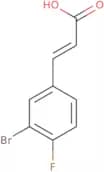
CAS:3-Bromo-4-fluorocinnamic acid is a useful intermediate that reacts with amines to form 3-bromo-4-fluoroaniline, which is used as a building block in the synthesis of pharmaceuticals, agrochemicals, and other organic compounds.Formula:C9H6BrFO2Purity:Min. 95%Color and Shape:PowderMolecular weight:245.05 g/mol5β-Pregnane-3α,11α,20β-triol
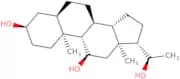
CAS:Controlled Product5-b-Pregnan-3-a,11-a-,20-b-triol is a high quality research chemical with CAS No. 55647-22-8. It is a complex compound that can be used as an intermediate in the synthesis of other compounds. 5-b-Pregnan-3-a,11-a-,20-b-triol is a speciality chemical that has many uses and is also a versatile building block for synthesis. This reagent can be used to create new compounds or to react in different ways with other chemicals to produce useful scaffolds or building blocks for reactions. 5 b pregna 3 a, 11 a, 20 b triol has been shown to have the ability to react with other chemicals in order to form useful reaction components.Formula:C21H36O3Purity:Min. 95%Color and Shape:PowderMolecular weight:336.51 g/mol2-Hydroxy atorvastatin lactone
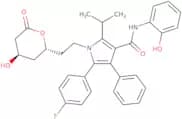
CAS:2-Hydroxyatorvastatin lactone is a prodrug of atorvastatin, which is an HMG-CoA reductase inhibitor. It is used to lower cholesterol and triglycerides in the blood. The drug is administered as a tablet, capsule, or liquid and can be taken with or without food. 2-Hydroxyatorvastatin lactone is metabolized by cytochrome P450 enzymes in the liver to produce active atorvastatin. This metabolism may be inhibited by other drugs that are also metabolized by cytochrome P450 enzymes, such as erythromycin and ketoconazole. 2-Hydroxyatorvastatin lactone has been shown to have an inhibition constant (Ki) of 0.5 μM for human liver microsomes and plasma concentrations of 1 μM or higher are required for therapeutic effect.
Formula:C33H33FN2O5Purity:Min. 95%Color and Shape:Off-White Slightly Yellow PowderMolecular weight:556.62 g/mol