Pharmaceutical Standards
Subcategories of "Pharmaceutical Standards"
- APIs for research and impurities(277,040 products)
- Enzyme Activators and Inhibitors(2,829 products)
- Nitrosamines(2,647 products)
- Pharmaceutical and Veterinary Compounds and Metabolites(2,896 products)
- Toxicology(13,406 products)
Found 8078 products of "Pharmaceutical Standards"
3-Cyano-4,6-dimethylcoumarin
CAS:3-Cyano-4,6-dimethylcoumarin is a phenolic compound with potent inhibitory activity against bacteria. It has been shown to bind to the hydroxyl group of the coumarin ring and inhibit the growth of Gram-negative and Gram-positive bacteria. 3-Cyano-4,6-dimethylcoumarin also inhibits the growth of fungi by binding to the hydroxyl group on a phenolic hydroxyl substituent. 3-Cyano-4,6-dimethylcoumarin can be used as an antimicrobial agent for various types of infections.Formula:C12H9NO2Purity:Min. 95%Color and Shape:PowderMolecular weight:199.21 g/molBiotin-PEG12-NHS
CAS:Biotin-PEG12-NHS is a PEG compound with two different functional groups (also known as heterobifunctional). Unlike homobifunctional PEG compounds (same functional group on both ends), this type of compounds are more versatile as have two different anchor points. Biotin-PEG12-NHS is used as a linker and spacer to add a PEG moiety, via pegylation (a bioconjugation technique) to proteins, peptides, oligonucleotides, small molecules and nanoparticles.
Formula:C41H72N4O18SPurity:Min. 95%Color and Shape:White To Off-White SolidMolecular weight:941.09 g/mol(S)-Fluoxetine hydrochloride
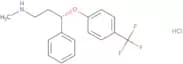
CAS:Controlled ProductSelective serotonin reuptake inhibitor; anti-depressantFormula:C17H19ClF3NOPurity:Min. 98 Area-%Color and Shape:PowderMolecular weight:345.79 g/molβ-Naphthoic acid ethyl ester
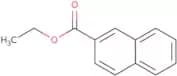
CAS:β-Naphthoic acid ethyl ester (BNAE) is a synthetic compound that has been used as an intermediate in the synthesis of organic compounds. It is also used to prepare hydroxamic acids, which are active methylene compounds. BNAE reacts with nucleophiles and is susceptible to nucleophilic attack. The reaction mechanism for this type of compound involves a cavity with a constant volume, which increases the reactivity of the molecule. This type of reaction can be explained using the functional theory and the use of organic solvents. BNAE is stable when exposed to carbon tetrachloride and hydroxamic acids, but not when exposed to diethyl succinate or chemical agents such as sodium nitrite.Formula:C13H12O2Purity:Min. 95%Color and Shape:PowderMolecular weight:200.23 g/mol2,2'-Dimethylbibenzyl
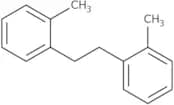
CAS:2,2'-Dimethylbibenzyl is a chemical compound that has been used as a precursor for the synthesis of other chemicals. It can be synthesized by reacting dodecyl chloride with an aryl halide, then reacting the product with anhydrous hydroxyl group in the presence of a radical coupling agent. The reaction products are chlorosulfonic acid and 2,2'-dimethylbibenzyl. This chemical compound is a strong electron acceptor and can help to produce radical coupling reactions. It also reacts with protonated water to form sulfoxide and trifluoroacetic acid.
Formula:C16H18Purity:Min. 95%Color and Shape:PowderMolecular weight:210.31 g/mol3'-Iodo-4'-methoxyacetophenone
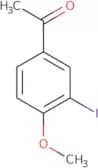
CAS:3'-Iodo-4'-methoxyacetophenone is a chemical compound that is used in the synthesis of other organic compounds. It is a byproduct of the reaction between acetophenone and iodomethane. 3'-Iodo-4'-methoxyacetophenone is soluble in most solvents, such as ethanol, ether, chloroform, and acetone. The compound has a CAS number of 79324-77-9.
Formula:C9H9IO2Purity:Min. 95%Color and Shape:PowderMolecular weight:276.07 g/mol3-(Trifluoromethyl)Phenylurea
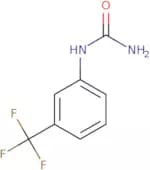
CAS:3-(Trifluoromethyl)phenylurea is a chemotherapeutic agent that is used to treat leukemia and other cancers. It has been shown to be effective in the regression of tumors in mice, when given at a concentration of 1-2 mg/kg. 3-(Trifluoromethyl)phenylurea inhibits cell growth by binding to DNA and inhibiting RNA synthesis. The optimal concentrations for 3-(trifluoromethyl)phenylurea are determined using an equation that includes coefficients obtained from stepwise regression analysis. The coefficient values are also optimized using topological descriptors and genetic algorithms.
Formula:C8H7F3N2OPurity:Min. 95%Molecular weight:204.15 g/molβ-Naphthoylhydrazine
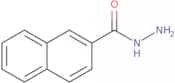
CAS:Beta-Naphthoylhydrazine is a chemical inhibitor that binds to the enzyme diacylglycerol, which is involved in the synthesis of cholesterol. It has been shown to inhibit the uptake of cholesterol by ovary cells and human serum lipase. Beta-Naphthoylhydrazine potently inhibits reactive oxygen species and may be used in the treatment of inflammation and cancer.
Formula:C11H10N2OPurity:Min. 95%Color and Shape:PowderMolecular weight:186.21 g/molMertansine
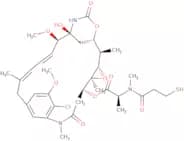
CAS:N2'-Deacetyl-N2'-(3-mercapto-1-oxopropyl)-maytansine is a thiol-containing derivative of maytansine. Maytansine and its derivatives kill cells by interfering with the formation of microtubules, and causing the depolymerisation of already formed microtubules. Antibody conjugates of N2'-Deacetyl-N2'-(3-mercapto-1-oxopropyl)-maytansine and the murine monoclonal antibody TA. 1, using linkers containing either a disulfide bond or a thioether bond, have been synthesised. These antibody conjugates bind to the HER-2/new oncogene protein that is expressed on human breast tumor cells.Formula:C35H48ClN3O10SPurity:Min. 95%Color and Shape:White Off-White Yellow PowderMolecular weight:738.29 g/mol3,5-Diisopropylsalicylic acid
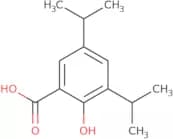
CAS:3,5-Diisopropylsalicylic acid is a reactive chemical substance that has been shown to be an effective anti-inflammatory agent. The compound is active against wild-type viruses and copper complexes. 3,5-Diisopropylsalicylic acid also has been shown to inhibit the growth of human cancer cells in vitro. This drug can be used as an analytical reagent for the detection of water vapor in gas chromatography and other techniques. The acute toxicities associated with 3,5-diisopropylsalicylic acid are not well understood, but it has been shown to have a negative effect on body mass index. It also may affect pluripotent cells and radiation therapy. There are reports of drug interactions when used with certain medications such as acetaminophen or ibuprofen.Formula:C13H18O3Purity:Min. 95%Color and Shape:PowderMolecular weight:222.28 g/mol2-Methylanthracene
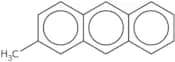
CAS:2-Methylanthracene is a diazonium salt that inhibits the growth of bacteria by binding to DNA, thereby preventing transcription and replication. 2-Methylanthracene has an inhibitory effect at pH 6.0 but no inhibitory effect at pH 8.0 due to its solubility data. The aromatic hydrocarbon is soluble in water and has a solute concentration of 1.5 g/L at pH 6.0 and 5 g/L at pH 8.0. 2-Methylanthracene binds to the DNA of bacteria in cell culture through steric interactions with the hydrophobic aromatic rings, inhibiting bacterial growth and causing cell death by interfering with protein synthesis and DNA replication.Formula:C15H12Purity:Min. 95%Color and Shape:Off-White PowderMolecular weight:192.26 g/molChromotropic acid disodium dihydrate
CAS:Chromotropic acid dihydrate is a chromogenic compound that has an adsorption mechanism and is used as an analytical reagent. Chromotropic acid disodium dihydrate (CDA) is used in the determination of hydrochloric acid, natural gas and other liquids. It also can be used to measure the concentration of tyramine hydrochloride. CDA has been shown to be effective in the measurement of molecular orbitals and kinetic constants. The optical sensor is sensitive to wavelengths ranging from 200-900 nm, with a peak absorption at around 500 nm. This sensor can be used for many types of chemical reactions, such as organic synthesis, hydrogenation, and oxidation.Formula:C10H6O8S2Na2·2H2OPurity:Min. 95%Color and Shape:Off-White PowderMolecular weight:400.29 g/mol1-Hydroxy-2-acetonaphthone
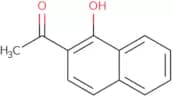
CAS:1-Hydroxy-2-acetonaphthone is a molecule that has been shown to have photophysical properties. In a model system, it was shown that 1-hydroxy-2-acetonaphthone can react with proton transfer due to intramolecular hydrogen bonding. This reaction can be used as a fluorescence probe for proton transfer reactions in the presence of cyclohexane rings. The geometry of the molecule is also important for its ability to produce an observable fluorescence signal, with the cyclohexane ring acting as a coordination geometry. Hydrogen bonds are made between the hydroxyl group and other groups on the molecule, which also contribute to its fluorescence characteristics.Formula:C12H10O2Purity:90%Color and Shape:Off-White PowderMolecular weight:186.21 g/mol2,2'-Dihydroxy-4-methoxybenzophenone
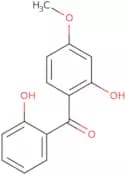
CAS:2,2'-Dihydroxy-4-methoxybenzophenone (DHMB) is a chemical compound used in the manufacturing of sunscreens. It is also used as an antioxidant and antiinflammatory agent in topical preparations. The genotoxic effects of DHMB are well documented, but it is unclear whether these effects are due to UV radiation or other mechanisms. DHMB has been shown to be toxic to cells in vivo and in vitro. There have been reports of skin cancer developing on the ears of rats following chronic exposure to this chemical. DHMB binds to the estrogen receptor, which may be responsible for its genotoxic activity. This chemical has also been shown to inhibit the growth of bacteria such as Pseudomonas aeruginosa and Escherichia coli by binding with fatty acids on the cell membrane surface. DHMB is used for wastewater treatment because it can bind with heavy metals and remove them from water sources.Formula:C14H12O4Purity:Min. 95%Color and Shape:Yellow To Dark Yellow SolidMolecular weight:244.24 g/mol3-Ethoxycinnamic acid
CAS:3-Ethoxycinnamic acid is a polyhydric alcohol that has been shown to inhibit the growth of various microorganisms. 3-Ethoxycinnamic acid inhibits the growth of microorganisms by binding to the alkenyl groups in the cell membrane, thereby preventing them from synthesizing their own fatty acids. The binding of 3-ethoxycinnamic acid to alkali metal ions also prevents their uptake into the cell, which leads to an accumulation of these ions outside the cell and eventually results in cell death. 3-Ethoxycinnamic acid is soluble in water and may be used as a stain or quaternary ammonium compound.Formula:C11H12O3Purity:Min. 95%Color and Shape:SolidMolecular weight:192.21 g/mol1-(3-Acetylphenyl)-2-thiourea
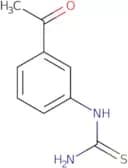
CAS:1-(3-Acetylphenyl)-2-thiourea is an antibacterial agent that has been shown to be effective against escherichia coli and staphylococcus aureus. It inhibits bacterial growth by inhibiting the synthesis of proteins, leading to cell death. The compound does not exhibit activity against subtilis or klebsiella but does inhibit the growth of escherichia coli and staphylococcus aureus at concentrations of 0.05 mg/ml. 1-(3-Acetylphenyl)-2-thiourea exhibits constant activity over a wide range of pH values, with the optimum pH being 5.5 to 6.5. The drug also exhibits constant activity in the presence of methanol or triethylamine as well as in the presence of subtilis or klebsiella, with slightly increased activity observed when triethylamine is used as a solvent.Formula:C9H10N2OSPurity:Min. 95%Color and Shape:PowderMolecular weight:194.25 g/mol2,2'-(Methylimino)diquinolin-8-ol
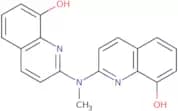
CAS:Please enquire for more information about 2,2'-(Methylimino)diquinolin-8-ol including the price, delivery time and more detailed product information at the technical inquiry form on this pageFormula:C19H15N3O2Purity:Min. 95%Molecular weight:317.34 g/molomega-Benzoyloxy phloracetophenone
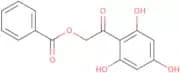
CAS:Omega-Benzoyloxy phloracetophenone is a fine chemical that is used as a building block in organic synthesis. It is also a versatile building block that can be used to synthesize many different types of compounds. This compound has been shown to react with alcohols, amines, and thiols to form esters, amides, and sulfones respectively. Omega-Benzoyloxy phloracetophenone is also a useful intermediate and scaffold in the synthesis of complex compounds.Formula:C15H12O6Purity:Min. 95%Molecular weight:288.25 g/mol4-Methoxycinnamic acid
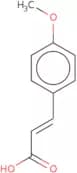
CAS:4-Methoxycinnamic acid is a derivative that is activated by light exposure. It has been shown to have antimicrobial activity against Gram-positive bacteria and yeast, but not Gram-negative bacteria. 4-Methoxycinnamic acid is an analytical reagent that can be used to measure the dry weight of skin cancer cells, as well as to study the genotoxic effects of human liver cells. The chemical has also been shown to be genotoxic in mouse bone marrow cells and human lymphocytes. 4-Methoxycinnamic acid has been found to cause synchronous fluorescence when exposed to UV light, which may be due to its ability to react with molecular oxygen. This reaction produces a linear model with two products: 4-hydroxybenzoic acid and 2,5-dihydroxybenzoic acid.Formula:C10H10O3Purity:Min. 95%Color and Shape:PowderMolecular weight:178.18 g/mol4-Amino-3-nitrophenol
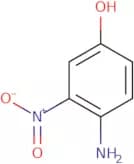
CAS:4-Amino-3-nitrophenol is a reactive aminophenol that can be synthesized from hydrogen sulfate and diethyl ester. It is used in the synthesis of amines and other chemicals, as well as in analytical methods for determining the concentration of nitrates, nitrites, and aminophenols. 4-Amino-3-nitrophenol has been shown to have photocatalytic activity.
Formula:C6H6N2O3Purity:Min. 95%Color and Shape:PowderMolecular weight:154.12 g/mol