Pharmaceutical Standards
Subcategories of "Pharmaceutical Standards"
- APIs for research and impurities(276,499 products)
- Enzyme Activators and Inhibitors(2,829 products)
- Nitrosamines(2,627 products)
- Pharmaceutical and Veterinary Compounds and Metabolites(2,900 products)
- Toxicology(13,513 products)
Found 7977 products of "Pharmaceutical Standards"
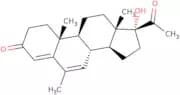
17-Hydroxy-6-methylpregna-4,6-diene-3,20-dione
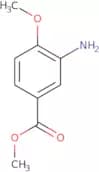
CAS:Controlled Product17-Hydroxy-6-methylpregna-4,6-diene-3,20-dione is a progestin that is used as an antiretroviral agent in the treatment of HIV. It has been shown to be effective for chronic cough and cancer. 17-Hydroxy-6-methylpregna-4,6-diene-3,20-dione can be used for the treatment of infectious diseases such as HIV by inhibiting viral replication and reducing the amount of virus in the blood. This drug can also be used to treat some cancers and solid tumours. It has been shown to have long term efficacy in these conditions due to its ability to block cell division. 17 hydroxy pregnane 4,6 diene 3,20 dione is also used in the treatment of geriatric patients with chronic illnesses or who are immunocompromised due to its ability to stimulate appetite.Formula:C22H30O3Purity:Min. 98 Area-%Color and Shape:White Off-White PowderMolecular weight:342.47 g/mol3-Amino-4-methoxybenzoic acid methyl ester
CAS:3-Amino-4-methoxybenzoic acid methyl ester is a modified quinoline derivative that exhibits potent antioxidant activity. It has been shown to inhibit the activation of p38 kinase, which is a proinflammatory enzyme. This leads to decreased levels of inflammatory cytokines and chemokines. 3-Amino-4-methoxybenzoic acid methyl ester also has anti-cancer effects and can be used as an anti-cancer agent in the treatment of cancer, such as lung cancer. It induces apoptosis by inhibiting the synthesis of DNA and proteins. The synthesized drug has been shown to have a chiral center, making it a potential candidate for use in pharmaceuticals.Formula:C9H11NO3Purity:Min. 95%Color and Shape:PowderMolecular weight:181.19 g/mol6-Bromo-naphthalen-2-ylamine
CAS:6-Bromo-naphthalen-2-ylamine is a chromophore that has been used for the development of novel imaging techniques. This compound has been shown to have synaptic properties and can be used in the study of neurodegenerative diseases. It has also been shown to be an anticancer drug, with staining properties that are useful for the identification of motoneurons. 6-Bromo-naphthalen-2-ylamine is also useful as a fluorescent probe for studies of mechanisms of reaction yield and optical properties.
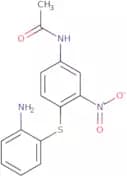
Formula:C10H8BrNPurity:Min. 98%Color and Shape:PowderMolecular weight:222.08 g/mol4-Acetamido-2'-amino-2-nitrophenyl sulphide
CAS:4-Acetamido-2'-amino-2-nitrophenyl sulphide is a versatile building block that is used as a reagent, speciality chemical, and useful scaffold. It is a complex compound with CAS No. 1017060-37-5. This compound has been shown to be useful in the synthesis of fine chemicals and other research chemicals. 4-Acetamido-2'-amino-2-nitrophenyl sulphide can also be used as an intermediate in reactions or as a reaction component, making it an important building block for high quality compounds.Formula:C14H13N3O3SPurity:Min. 95%Color and Shape:PowderMolecular weight:303.34 g/mol6-Bromo-2-naphtholic acid
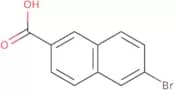
CAS:6-Bromo-2-naphtholic acid is a methanol solvent. It has been shown to have biological properties and can be used in optical imaging. 6-Bromo-2-naphtholic acid is also used to synthesize 1-adamantanol, which is an organic compound that has been shown to have antimicrobial properties. A solution of 6-bromo-2-naphthol in hydrochloric acid was found to react with 4-methoxyphenyl boronic acid to produce a mixture of products that include the desired 1,4,5,8,9,10,11,12 hexahydrobenzo[a]phenanthrene. The vibrational frequencies for this product were determined using IR spectroscopy and the binding constants were calculated using DFT computational methods. The molecular structure of this product was determined using molecular modeling and quantum chemistry. Naphthalene is the parentFormula:C11H7O2BrPurity:Min. 95%Color and Shape:PowderMolecular weight:251.08 g/mol3-Chloro-4-hydroxycinnamic acid
CAS:3-Chloro-4-hydroxycinnamic acid is a coelicolor biosynthetic precursor that is synthesized from 4-hydroxycinnamic acid and chlorinated. It can be used for the synthesis of aminocoumarin moieties and other prenylated molecules. 3-Chloro-4-hydroxycinnamic acid has been shown to be an effective inhibitor of streptomyces coelicolor, which is a type of bacterium that produces antibiotics. The gene responsible for the biosynthesis of 3-chloro-4-hydroxycinnamic acid has also been identified in streptomyces clorobiocin, which is another type of bacterium that produces antibiotics.Formula:C9H7ClO3Purity:Min. 95%Color and Shape:PowderMolecular weight:198.6 g/molL-Threonine
CAS:L-Threonine is an amino acid that is classified as a non-essential amino acid. It is a precursor for the synthesis of proteins and other important compounds in the body, such as neurotransmitters. L-Threonine has been shown to be necessary for the function of enzymes that catalyze reactions in cells. This amino acid also plays a role in protein synthesis and can help regulate transcriptional regulation of genes. L-Threonine has been shown to have antioxidant properties, which may be due to its ability to scavenge anion radicals and inhibit lipid peroxidation.Formula:C4H9NO3Purity:(Titration)Color and Shape:White PowderMolecular weight:119.12 g/mol4'-Hydroxy-2'-methylacetophenone
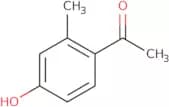
CAS:4'-Hydroxy-2'-methylacetophenone is a synthetic sesquiterpene lactone that is used in cosmetics and as an active ingredient in skin care products. This compound has been shown to have medicinal values, with the ability to inhibit the growth of bacteria, fungi, and viruses. It also has carbon tetrachloride (CCl) solubilizing properties and can be used for fatty acid analysis. 4'-Hydroxy-2'-methylacetophenone is available as a sample preparation reagent for gas chromatography. The chemical composition of this compound includes a hydroxy group, which may be important for its biological activity. A linear regression analysis on the inhibitory concentration values showed that this compound has an IC50 value of 2.6 µg/mL.Formula:C9H10O2Purity:Min. 95%Color and Shape:Off-White Clear LiquidMolecular weight:150.17 g/mol4,8-Dichloro-1,5-dinitronaphthalene
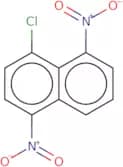
CAS:4,8-Dichloro-1,5-dinitronaphthalene is a versatile building block that can be used in the synthesis of complex compounds. It is also used as a reagent, speciality chemical, and useful scaffold in research. This compound has been shown to be useful in the synthesis of many different types of products including pharmaceuticals, agrochemicals, polymer intermediates, and other fine chemicals. 4,8-Dichloro-1,5-dinitronaphthalene is a high quality chemical with a purity level of 98%.
Formula:C10H4Cl2N2O4Purity:Min. 95%Color and Shape:Yellow PowderMolecular weight:287.06 g/molErgosterol peroxide
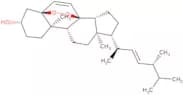
CAS:Ergosterol peroxide is a synthetic compound that binds to DNA and inhibits the growth of human cells. Ergosterol peroxide has been shown to have significant cytotoxicity against HL-60 cells in vitro, with inhibition of DNA synthesis and induction of apoptosis. Ergosterol peroxide also has amoebicidal activity against Acanthamoeba castellanii, which is an opportunistic pathogen of the central nervous system. This compound can be used as a pharmaceutical agent for the treatment of various diseases such as cancer, AIDS, or Alzheimer's disease. It may also be used as a natural compound to kill harmful pathogens in water.Formula:C28H44O3Purity:Min. 95%Color and Shape:PowderMolecular weight:428.65 g/mol4'-Fluoro-1'-acetonaphthone
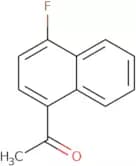
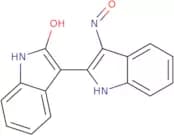
CAS:4'-Fluoro-1'-acetonaphthone is a synthetic fluorinated derivative of 1-phenyl-1,2-propanedione. It has been used as a ligand in the study of interactions between substances and shift parameters. The fluoro substituent on the ring may be difficult to synthesize because it requires high temperatures and pressure. 4'-Fluoro-1'-acetonaphthone has been used in organic synthesis as a component in photocycloadditions with chloroform or benzoyl chloride to form substituted benzoic acids.Formula:C12H9FOPurity:Min. 95%Molecular weight:188.2 g/molIndirubin-3'-monoxime
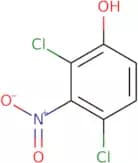
CAS:Inhibitor of YB-1 nuclear translocation; anti-cancerFormula:C16H11N3O2Purity:Min. 95%Color and Shape:PowderMolecular weight:277.28 g/mol2,4-Dichloro-3-nitrophenol
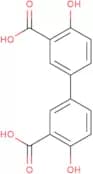
CAS:2,4-Dichloro-3-nitrophenol is a synthetic chemical that is used as an intermediate in the synthesis of chloroamines. It is a derivative of phenol and has a chlorine atom on the 2 position. The alcohol group on the 4 position and the chlorine atom on the 3 position are both substituted with chlorine atoms. 2,4-Dichloro-3-nitrophenol has been shown to be effective for the synthesis of chloroamines resistant to nitro groups. This chemical has been shown to be resistant to amines and thus can be used for immobilization purposes. Furthermore, it can be used as an intermediate for chemists who work with organic chemistry due to its ability to undergo reactions with alcohols and phenols.Formula:C6H3Cl2NO3Purity:Min. 95%Color and Shape:White Clear LiquidMolecular weight:208 g/mol4,4' -Dihydroxy-3,3'-biphenyldicarboxylic acid
CAS:4,4'-Dihydroxy-3,3'-biphenyldicarboxylic acid is a fine chemical that is used as a building block in the synthesis of pharmaceuticals and other organic compounds. It has been shown to be an effective reagent for the synthesis of 4-hydroxypyridine derivatives. 4,4'-Dihydroxy-3,3'-biphenyldicarboxylic acid can also be used as a reaction component for the preparation of complex compounds such as 2-aminopyridines and 2-aminopyrimidines. This compound is also useful as an intermediate in the synthesis of polymers and other versatile scaffolds. The CAS number for this compound is 13987-45-6.Formula:C14H10O6Purity:Min. 96 Area-%Color and Shape:PowderMolecular weight:274.23 g/mol1,3-Bis(4-fluorophenyl)urea
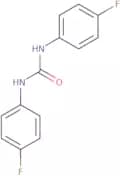
CAS:1,3-Bis(4-fluorophenyl)urea is a crystalline solid that is soluble in organic solvents. It has been used as an intermediate in the synthesis of other compounds. 1,3-Bis(4-fluorophenyl)urea is an electron acceptor and can be used to produce diphenyl ethers. This compound has been synthesized using ethyl acetoacetate and anilines. It can be used to treat infectious diseases such as tuberculosis, where it inhibits protein synthesis and cell growth by disrupting the formation of bacterial DNA.
Formula:C13H10F2N2OPurity:Min. 98 Area-%Color and Shape:White Off-White PowderMolecular weight:248.23 g/molCholesterol oleyl carbonate
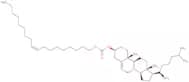
CAS:Controlled ProductCholesterol oleyl carbonate is a triazine compound with an asymmetric carbon atom. It has been shown to be effective in inhibiting the proliferation of human osteosarcoma cells and myeloid leukemia cells, as well as other cell lines. Cholesterol oleyl carbonate also has anti-inflammatory properties, which may be due to its inhibition of prostaglandin synthesis.
Formula:C46H80O3Purity:Min. 95%Color and Shape:PowderMolecular weight:681.13 g/molDisodium 4,4'-diazidostilbene-2,2'-disulfonate tetrahydrate
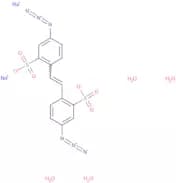
CAS:Please enquire for more information about Disodium 4,4'-diazidostilbene-2,2'-disulfonate tetrahydrate including the price, delivery time and more detailed product information at the technical inquiry form on this pageFormula:C14H8N6Na2O6S2·4H2OPurity:Min. 95%Color and Shape:PowderMolecular weight:538.42 g/mol2,5-Dichlorocinnamic acid
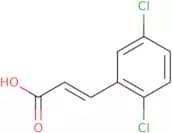
CAS:2,5-Dichlorocinnamic acid is a chemical compound with the formula CHClCOCHCl. It is typically used as a reagent or building block in organic synthesis. 2,5-Dichlorocinnamic acid is an alpha-hydroxycarboxylic acid that exists in two tautomeric forms: the enol form (2,5-dichloro-3-oxopentanoic acid) and the keto form (2,5-dichlorohexanedioic acid). The enol form predominates at pH 7 and above. The keto form predominates at pH 1 and below.Formula:C9H6Cl2O2Purity:Min. 95%Color and Shape:PowderMolecular weight:217.05 g/molAcrivastine
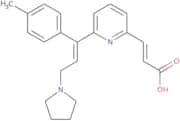
CAS:Acrivastine is a drug that belongs to the group of combination therapy. It is used in the treatment of autoimmune diseases, such as choroidal neovascularization. Acrivastine inhibits the production of prostaglandin E2 (PGE2) and inhibits the release of histamine from mast cells. Acrivastine also has immunosuppressive effects. It binds to H1 receptors and blocks their activation by histamine, which may be responsible for its therapeutic effect on eye disorders and infectious diseases. Acrivastine is chemically stable in acidic or alkaline conditions, but does not dissolve in organic solvents.Formula:C22H24N2O2Purity:Min. 95%Color and Shape:PowderMolecular weight:348.44 g/mol4-Ethoxycinnamic acid
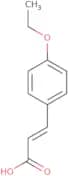
CAS:4-Ethoxycinnamic acid is a phenolic compound that is found in many plants and fruits. It has been shown to have bioactivities such as anti-inflammatory, anti-allergic, and anticancer activities. 4-Ethoxycinnamic acid has been shown to inhibit tyrosinase activity by interacting with the enzyme's active site. This inhibition reduces the production of melanin, which may be due to its ability to inhibit dopamine oxidation or the conversion of dopachrome into dopaquinone. 4-Ethoxycinnamic acid also inhibits prolyl hydroxylase activity, which can lead to increased collagen synthesis and reduced inflammation.Formula:C11H12O3Purity:Min. 95%Color and Shape:PowderMolecular weight:192.21 g/mol