Pharmaceutical Standards
Subcategories of "Pharmaceutical Standards"
- APIs for research and impurities(276,120 products)
- Enzyme Activators and Inhibitors(2,829 products)
- Nitrosamines(2,618 products)
- Pharmaceutical and Veterinary Compounds and Metabolites(2,919 products)
- Toxicology(13,573 products)
Found 7922 products of "Pharmaceutical Standards"
9-Fluoro-11β,17-Dihydroxy-16α-Methyl-3,20-Dioxopregna-1,4-Dien-21-Yl 2-[2-(2-Ethoxyethoxy)Ethoxy]Acetate
CAS:Controlled ProductMethylprednisolone is a corticosteroid that has been used for the treatment of many conditions, including asthma and arthritis. It is used to reduce inflammation and suppress the immune system. Methylprednisolone can be administered orally or as an injection. It is also used in the diagnosis of tumours, especially those that are difficult to diagnose by other means. Methylprednisolone may be given together with another drug called dexamethasone, which has synergistic effects. These drugs have been shown to cause death in animals with certain types of tumours. In humans, they can cause cutaneous lesions, such as follicle cysts and tnf-α expression in skin cells. This drug also causes a microsporum infection (a type of fungus) on the skin to grow more rapidly when it is applied topically, resulting in a larger diameter section than untreated areas.Formula:C30H43FO9Purity:Min. 95%Molecular weight:566.66 g/mol4'-Methylacetophenone
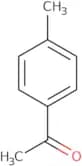
CAS:4'-Methylacetophenone is a solvent that is used in the chemical industry, mainly for the production of trifluoroacetic acid. It has also been shown to be an effective antimicrobial agent, which is due to its ability to dissolve lipids and proteins. The mechanism of action of 4'-methylacetophenone is not fully understood, but it has been suggested that this compound reacts with fatty acids and pyrazole rings in the cell membrane and disrupts lipid bilayers. 4'-Methylacetophenone can be used as a reagent for solid phase microextraction in analytical chemistry. In addition, it reacts with acidic compounds (e.g., sulfuric acid) to produce insoluble salts and can be used as an analytical method for determining the concentration of these compounds.
Formula:C9H10OPurity:Min. 95%Color and Shape:Clear LiquidMolecular weight:134.18 g/molClopidogrel related compound B
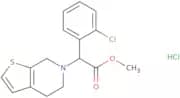
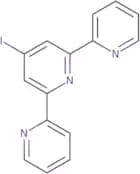
CAS:Clopidogrel related compound B is a sweetener that is used in the pharmaceutical industry. It has shown to have bacteriophage activity and is stable to duplication. This compound also has a genetic code that can be altered by duplications. Clopidogrel related compound B is an orally active molecule and it can be administered as an osmotic or chiral agent. This compound also functions as a surfactant, which contributes to its ability to act as a platelet-aggregating agent. The drug has been shown to be transducible in vitro with high efficiency, making it a good candidate for transduction therapy.Formula:C16H17Cl2NO2SPurity:Min. 95%Color and Shape:PowderMolecular weight:358.28 g/mol4'-Iodo-2,2':6',2''-terpyridine
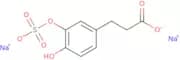
CAS:4'-Iodo-2,2':6',2''-terpyridine is a transoid that has two conformations: one with the pyridine ring in the cisoid position and one with the pyridine ring in the transoid position. It can form intermolecular interactions with other molecules of 4'-iodo-2,2':6',2''-terpyridine. These interactions may be due to stacking or planar interactions.Formula:C15H10IN3Purity:Min. 95%Color and Shape:PowderMolecular weight:359.16 g/molDihydro caffeic acid 3-O-sulfate sodium salt
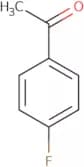
CAS:Dihydro caffeic acid 3-O-sulfate sodium salt is a flavonol that is found in plants. It has been shown to have antioxidant properties and may be effective in the treatment of diseases associated with oxidative stress, such as diabetes mellitus and cancer. Dihydrocaffeic acid 3-O-sulfate sodium salt has also been shown to inhibit the growth of bacteria by modulating the production of nitric oxide. This agent has been quantified in human urine, which provides evidence for its potential use as a biomarker for disease risk due to its association with phenolic metabolites.Formula:C9H8Na2O7SPurity:Min. 95%Color and Shape:White Off-White PowderMolecular weight:306.2 g/mol4'-Fluoroacetophenone
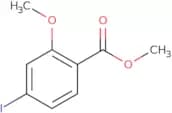
CAS:4'-Fluoroacetophenone is an organic molecule that is used for wastewater treatment. It reacts with amine groups to form a covalent bond. 4'-Fluoroacetophenone can be used to activate AMP-activated protein kinase (AMPK) and increase the rate of cellular respiration, which may help treat cancer. The chemical structure of 4'-fluoroacetophenone includes hydrogen bonds, nucleophilic substitutions, and acylation reactions. The Langmuir adsorption isotherm for this molecule has been determined to be linear.Formula:C8H7FOPurity:Min. 95%Color and Shape:Clear LiquidMolecular weight:138.14 g/mol4-Iodo-2-methoxybenzoic acid methyl ester
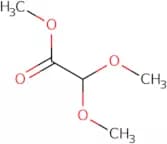
CAS:4-Iodo-2-methoxybenzoic acid methyl ester is a high quality chemical that can be used as a versatile building block in chemical synthesis. It is a complex compound that has been shown to be an effective reagent for research, which can be used in the synthesis of new complex compounds. 4-Iodo-2-methoxybenzoic acid methyl ester is also useful as an intermediate or reaction component in organic syntheses. This chemical is available for purchase at a CAS number of 148490-97-5.Formula:C9H9IO3Purity:Min. 95%Color and Shape:PowderMolecular weight:292.07 g/molGlyoxylic acid methyl ester dimethyl acetal
CAS:Glyoxylic acid methyl ester dimethyl acetal is a synthetic chemical that is used as a control agent in the production of pharmaceutical preparations. It has been shown to inhibit the replication of syncytial viruses, including the human respiratory syncytial virus (RSV). Glyoxylic acid methyl ester dimethyl acetal binds to methoxy groups and coagulation factors, which may be responsible for its anti-coagulation properties. The optical properties of this compound are similar to those of glyoxylate. This chemical has also been shown to have an effect on blood pressure.Formula:C5H10O4Purity:Min. 95%Color and Shape:Clear LiquidMolecular weight:134.13 g/molDipyrazino[2,3-f:2',3'-h]quinoxaline-2,3,6,7,10,11-hexacarbonitrile
CAS:Dipyrazino[2,3-f:2',3'-h]quinoxaline-2,3,6,7,10,11-hexacarbonitrile is a molecular compound that consists of an aromatic hydrocarbon and boron nitride. It has been shown to have optical properties and an ancillary effect on the transport properties of other molecules. Dipyrazino[2,3-f:2',3'-h]quinoxaline-2,3,6,7,10,11-hexacarbonitrile is also a molecule that can participate in intramolecular hydrogen bonding. This compound has been shown to have coordination geometry with nitrogen atoms that are capable of accepting electrons from other molecules. Dipyrazino[2,3-f:2',3'-h]quinoxaline-2,3,6,7,10,11-hexacarbonitrile is used in diodes as an efficientFormula:C18N12Purity:Min. 95%Color and Shape:PowderMolecular weight:384.27 g/mol4,7-Dimethylcoumarin
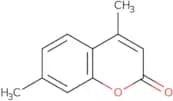
CAS:4,7-Dimethylcoumarin is an alkylating agent that can be used to synthesize coumarin derivatives. It has been shown to have potent antagonistic effects on the serotonin 5-HT1A receptor and the d2 receptor. 4,7-Dimethylcoumarin has been shown to bind to these receptors and block their activation by other ligands. This leads to a decrease in receptor affinity for ethylenamine (5-HT1A) or dopamine (d2). The alkylation process of 4,7-dimethylcoumarin with bovine serum albumin (BSA) can be used as an analytical method to determine the concentration of this compound in biological samples.Formula:C11H10O2Purity:Min. 95%Color and Shape:PowderMolecular weight:174.2 g/mol5-Chlorosalicylic acid
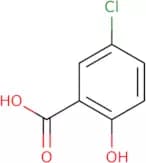
CAS:5-Chlorosalicylic acid is an inhibitor of the enzyme carbonic anhydrase. It is used for the treatment of gout, rheumatoid arthritis, and osteoarthritis. This compound has been shown to be a genotoxic agent, which may result in mutagenic or carcinogenic effects. 5-Chlorosalicylic acid inhibits the growth of probiotic bacteria. It also has anti-inflammatory properties and can be used as a proton donor in organic synthesis reactions. 5-Chlorosalicylic acid is a metabolite of acetylsalicylic acid (ASA) that forms when ASA undergoes oxidative deamination in the liver. 5-Chlorosalicylic acid is also formed during metabolism of nonsteroidal anti-inflammatory drugs (NSAIDs).Formula:C7H5ClO3Purity:Min. 95%Color and Shape:White Off-White PowderMolecular weight:172.57 g/mol(R)-(-)-3,3′-Bis(triphenylsilyl)-1,1′-binaphthyl-2,2′-diyl hydrogenphosphate
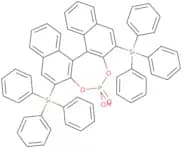
CAS:(R)-(-)-3,3′-Bis(triphenylsilyl)-1,1′-binaphthyl-2,2′-diyl hydrogenphosphate is a fine chemical that is a useful reagent and building block. It can be used as an intermediate in the synthesis of complex compounds. This chemical has a CAS number of 791616-55-2 and is classified as a speciality chemical. (R)-(-)-3,3′-Bis(triphenylsilyl)-1,1′-binaphthyl-2,2′-diyl hydrogenphosphate is also a versatile building block for the synthesis of reaction components with high quality.Formula:C56H41O4PSi2Purity:Min. 94.5 Area-%Color and Shape:PowderMolecular weight:865.07 g/mol2,2'-Biphenol
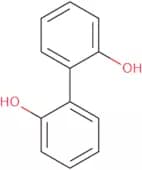
CAS:2,2'-Biphenol is a phenolic compound that is used in the synthesis of polymers. The thermal expansion coefficient of 2,2'-biphenol can be measured by DSC and found to be ˜6.5 × 10⁻⁴/°C. The UV absorption spectrum of 2,2'-biphenol shows three bands at wavelengths of 290 nm, 320 nm, and 370 nm. 2,2'-Biphenol has been shown to adsorb onto biological surfaces through an adsorption mechanism. It has been observed that this adsorption occurs via x-ray crystal structures and kinetic measurements have shown that the adsorption process is rate-limited by intramolecular hydrogen bonding between the protonated phenolic hydroxyl group and the aromatic ring. The activation energies for protonation and desorption have been determined to be ˜30 kJ/mol and ˜30 kJ/mol respectively. Ac
Formula:C12H10O2Purity:Min. 98 Area-%Color and Shape:White PowderMolecular weight:186.21 g/moltrans-Cinnamaldehyde
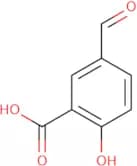
CAS:Cinnamaldehyde is a natural compound that has shown to have antiviral and antimicrobial properties. It has been shown to inhibit the toll-like receptor, which is a protein on the surface of cells that detects bacteria and other microorganisms. Cinnamaldehyde is also able to inhibit c. glabrata growth in vitro at concentrations between 10 and 100 μM, as well as copper-mediated cell death in hl-60 cells. Cinnamaldehyde has been shown to cause neuronal death by interfering with cellular physiology. This compound can be used in the treatment of infectious diseases because it inhibits bacterial dna gyrase, dna topoisomerase, and rna synthesis.Formula:C9H8OPurity:Min. 95%Color and Shape:PowderMolecular weight:132.16 g/mol5-Formylsalicylic acid
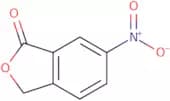
CAS:5-Formylsalicylic acid is a molecule that has the chemical formula HOOC-(CH2)4-COOH. It is an organic acid that is derived from 5-nitrosalicylic acid, which is prepared by reacting sodium carbonate with hydroxybenzoic acid in the presence of ethylene diamine. This compound has been shown to have the ability to form hydrogen bonds with other molecules and itself. 5-Formylsalicylic acid can be synthesized by reacting sodium hydroxide with hydrogen chloride gas in a neutral pH environment. The surface methodology for this compound was determined to be gravimetric analysis, while it exhibits intermolecular hydrogen bonding interactions and matrix effects. Hydrogen bonding interactions are formed through nitrogen atoms and carboxylate groups on the surface of the molecule.Formula:C8H6O4Purity:Min. 95%Color and Shape:PowderMolecular weight:166.13 g/mol6-Nitrophthalide
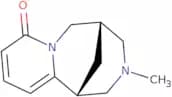
CAS:6-Nitrophthalide is a fluorescent heterocycle that can be used as a probe for specific inhibition. It has been shown to have inhibitory properties against triazole and dipole, which are catalytic asymmetric. 6-Nitrophthalide has also been shown to have the ability to inhibit the oxidation of aldehydes. This compound is synthesized from 2-nitrobenzaldehyde via a two-step process, and then reacted with methyl iodide. 6-Nitrophthalide is homologous to other fluorescent probes such as fluorescein, nitrobenzene, and nitrophenol.Formula:C8H5NO4Purity:Min. 95%Color and Shape:PowderMolecular weight:179.13 g/molN-Methylcytisine
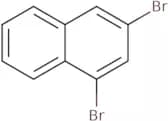
CAS:N-Methylcytisine is a drug that is used to treat bowel disease, locomotor activity, and hypoglycemia. This drug has been shown to have significant cytotoxicity in vitro against squamous carcinoma cells. N-Methylcytisine also inhibits the production of gamma-aminobutyric acid (GABA) and reduces the activity index in anagyroides. This drug has been shown to have a significant effect on colitis and other inflammatory bowel diseases in vivo by reducing inflammation and increasing mucin production.Formula:C12H16N2OPurity:Min. 98 Area-%Color and Shape:White PowderMolecular weight:204.27 g/mol1,3-Dibromonaphthalene
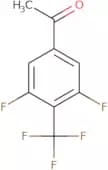
CAS:1,3-Dibromonaphthalene is a brominated derivative of naphthalene. It can be synthesized by reacting methoxy with chloride in the presence of a base (e.g., sodium hydroxide) and brominating the resulting 1,2-dibromoethane with bromine. The compound has been used as an analytical standard for natural gas and has been shown to have good trackability. 1,3-Dibromonaphthalene is used in research, primarily as a precursor to other compounds that are more reactive or less toxic. This molecule has been shown to undergo elimination reactions with alcohols and phenols, which can be useful for synthesis of other molecules. Synopses are available for this molecule at the following links: a) https://pubchem.ncbi.nlm.nih.gov/compound/1,3-Dibromonaphthalene#section=SynonymsFormula:C10H6Br2Purity:Min. 95%Color and Shape:PowderMolecular weight:285.96 g/mol3,5-Difluoro-4-(trifluoromethyl)acetophenone
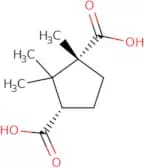
CAS:3,5-Difluoro-4-(trifluoromethyl)acetophenone is a high quality chemical that is used as a reagent in organic synthesis and as a building block for the synthesis of other compounds. It has been shown to be an effective intermediate in the production of fine chemicals and speciality chemicals. This compound can also be used as a building block for the synthesis of useful scaffolds or useful building blocks. 3,5-Difluoro-4-(trifluoromethyl)acetophenone is versatile and can react with various functional groups.Formula:C9H5F5OPurity:Min. 95%Molecular weight:224.13 g/molD-(+)-Camphoric acid
CAS:D-(+)-Camphoric acid is a chiral compound that has been synthesized and studied for its anticancer activity. It was found to be effective against cancer cells in the presence of metal cations, such as copper, nickel, and zinc. D-(+)-Camphoric acid can be used as a test compound to investigate the mechanism of action of drugs that target the lysosomal membrane. It is also useful in determining homochirality by x-ray diffraction studies. This compound has been shown to have an adsorption kinetic behaviour that is dependent on pH and ionic strength, which can be determined by luminescence experiments. D-(+)-Camphoric acid is an enantiopure chemical with a reaction time of 5 minutes at room temperature and is available in crystalline form. The crystal x-ray diffraction data for this compound has been published and it exhibits anticancer activity.Formula:C10H16O4Color and Shape:White PowderMolecular weight:200.23 g/mol
![9-Fluoro-11β,17-Dihydroxy-16α-Methyl-3,20-Dioxopregna-1,4-Dien-21-Yl 2-[2-(2-Ethoxyethoxy)Ethoxy]A…](/_next/image/?url=https%3A%2Fstatic.cymitquimica.com%2Fproducts%2F3D%2Fthumb-webp%2FFF103016.webp&w=3840&q=75)

![Dipyrazino[2,3-f:2',3'-h]quinoxaline-2,3,6,7,10,11-hexacarbonitrile](/_next/image/?url=https%3A%2Fstatic.cymitquimica.com%2Fproducts%2F3D%2Fthumb-webp%2FFD42747.webp&w=3840&q=75)