Pharmaceutical Standards
Pharmaceutical standards are a comprehensive set of reference materials essential for ensuring the safety, efficacy, and quality of pharmaceutical products. This category includes standards for active pharmaceutical ingredients (APIs), which are the core components responsible for therapeutic effects. Additionally, it covers compounds and metabolites relevant to both the pharmaceutical and veterinary industries, providing benchmarks for the accurate measurement and analysis of these substances. Nitrosamine control standards are crucial for detecting and mitigating potentially harmful nitrosamines in drug formulations. Toxicology standards help assess the safety and potential adverse effects of pharmaceutical compounds. Furthermore, enzyme activators and inhibitors standards are vital for research and development, enabling precise studies of biochemical pathways and drug mechanisms. These pharmaceutical standards are indispensable tools for regulatory compliance, quality control, and research, ensuring that pharmaceutical products meet stringent safety and effectiveness criteria.
Subcategories of "Pharmaceutical Standards"
- APIs for research and impurities(274,905 products)
- Enzyme Activators and Inhibitors(2,827 products)
- Nitrosamines(2,605 products)
- Pharmaceutical and Veterinary Compounds and Metabolites(2,871 products)
- Toxicology(13,652 products)
Found 7836 products of "Pharmaceutical Standards"
Sort by
Purity (%)
0
100
|
0
|
50
|
90
|
95
|
100
Betamethasone valerate related compound A
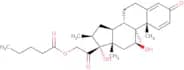
CAS:Controlled ProductBetamethasone valerate related compound A is a corticosteroid compound that is used in the treatment of inflammation. It has anti-inflammatory and immunosuppressive properties, which are thought to be due to its inhibition of farnesyltransferase. Betamethasone valerate related compound A can be given as an intranasal solution or by injection. The drug substance is a mixture of betamethasone 17-valerate and betamethasone 17,21-dipropionate, which have different kinetic properties. The chemical stability of the drug substance is maintained by using a reaction mechanism involving chromatography.Formula:C27H37FO6Purity:Min. 95%Molecular weight:476.58 g/mol2,4,6-Trichloro-5-nitropyrimidine
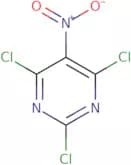
CAS:<p>2,4,6-Trichloro-5-nitropyrimidine is a purine derivative that inhibits the cell proliferation of cancer cells. It has been shown to inhibit the activity of kinases and to induce apoptosis in human cancer cells in vitro. This drug also has antiproliferative potential against erythrocytes and is being investigated as a treatment for renal disease. 2,4,6-Trichloro-5-nitropyrimidine shows inhibitory effects on the phosphorylation of roscovitine by ATP and may be used to treat patients with glomerulonephritis. 2,4,6-Trichloro-5-nitropyrimidine can be synthesized from 2,4,6-trichloropyrimidinethiol and nitric acid according to the following equation: CClNO + HNO → CClNOH + NO 2 Cl + 3 HNO</p>Formula:C4Cl3N3O2Purity:Min. 97 Area-%Molecular weight:228.42 g/molDiphenylsulfone-3,3'-disulfonic Acid Disodium Salt
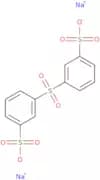
CAS:<p>Please enquire for more information about Diphenylsulfone-3,3'-disulfonic Acid Disodium Salt including the price, delivery time and more detailed product information at the technical inquiry form on this page</p>Purity:Min. 95%(aR)-a-[[[2-(4-Nitrophenyl)ethyl]amino]methyl]benzenemethanol
CAS:<p>(aR)-a-[[[2-(4-Nitrophenyl)ethyl]amino]methyl]benzenemethanol is a chiral, carbonyl compound that has been used in the synthesis of mirabegron. It is synthesized by reacting an amide with a hydrochloric acid salt. The product yield of (aR)-a-[[[2-(4-Nitrophenyl)ethyl]amino]methyl]benzenemethanol is high and it does not react with aluminium or amide impurities. This compound can be used for the industrial synthesis of mirabegron, which is a drug for the treatment of urinary incontinence. The reduction reaction and hydrolysis reactions are both important to this process.</p>Purity:Min. 95%Atorvastatin
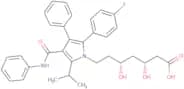
CAS:<p>Atorvastatin is a statin used to reduce low-density lipoprotein (LDL) cholesterol and triglyceride levels in the blood. It is marketed under the trade name Lipitor®. Atorvastatin inhibits the enzyme HMG-CoA reductase, which is responsible for the production of cholesterol. This drug also reduces plaque formation in atherosclerotic lesions by inhibiting inflammation and has been shown to be effective in reducing mortality from coronary heart disease. In addition, atorvastatin has a low incidence of side effects, particularly when compared with other statins such as simvastatin, pravastatin, or lovastatin. The risk of developing adverse reactions to this drug increases with age and prolonged use. The most common side effects are muscle pain or weakness, headache, nausea, high blood sugar levels (elevated glucose), and liver problems.</p>Formula:C33H35FN2O5Purity:Min. 95%Color and Shape:PowderMolecular weight:558.64 g/molγ-Dodecalactone
CAS:Gamma-dodecalactone is a naturally occurring fatty acid that exhibits antifungal and antitumor properties. The molecule is hydroxylated in vivo, forming an acid complex with the addition of water. This reaction produces a hydroxylate group, which increases the solubility of the compound. In vitro studies have shown that when gamma-dodecalactone is metabolized, it forms oxidation products such as nepeta cataria.Purity:Min. 95%Cefdinir related compound B
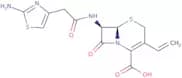
CAS:Please enquire for more information about Cefdinir related compound B including the price, delivery time and more detailed product information at the technical inquiry form on this pageFormula:C14H14N4O4S2Purity:Min. 95%Molecular weight:366.42 g/molSodium cinnamate
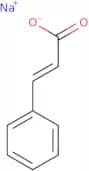
CAS:<p>Sodium cinnamate is an organic compound that is a derivative of 4-hydroxycinnamic acid. It forms sodium salts with water vapor, which are soluble in water. Sodium cinnamate has been shown to have genotoxic activity, and may be used as a potential anticancer drug. Sodium cinnamate also binds to toll-like receptors on the surface of cells, which activate inflammatory signaling pathways. This compound also inhibits enzymes involved in infectious diseases such as influenza A virus and herpes simplex virus type 1 replication. Caffeic acids, chlorogenic acids, and pge2 levels were shown to be increased after treatment with sodium cinnamate.</p>Formula:C9H7NaO2Purity:Min. 95 Area-%Color and Shape:PowderMolecular weight:170.14 g/mol5,5'-Thiodisalicylic Acid
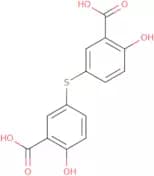
CAS:<p>5,5'-Thiodisalicylic Acid is a reactive functional group with a silver ion. This compound has a hydrochloric acid and hydroxy group that react to form a hydroxyl group with the proton. It also has a nitrogen atom, which can be found in the reactive acidic hydroxyl group of 5,5'-thiodisalicylic acid. The fatty acids are viscosity and carbonyl groups. 5,5'-Thiodisalicylic Acid is an organic compound that reacts with chloride to form patterns.</p>Purity:Min. 95%Fmoc-(S)-3-amino-3-(2-naphthyl)propionic acid
CAS:<p>Please enquire for more information about Fmoc-(S)-3-amino-3-(2-naphthyl)propionic acid including the price, delivery time and more detailed product information at the technical inquiry form on this page</p>Formula:C28H23NO4Purity:Min. 95%Molecular weight:437.49 g/molGabapentin related compound E
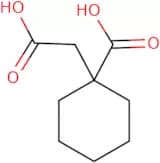
CAS:Gabapentin related compound E (GRC-E) is a gabapentin analog that binds to the amine binding site of the enzyme GABA-transaminase. GRC-E is stable at temperatures up to 100°C and has a constant concentration in wastewater samples. This compound has been shown to be more thermostable than gabapentin, which may make it an appropriate candidate for use as a calibration standard for gabapentin monitoring. In addition, GRC-E has been shown to inhibit the interaction between amines and GABA-transaminase, which stabilizes the enzyme's activity.Formula:C9H14O4Purity:Min. 95%Molecular weight:186.21 g/mol3-O-Acetyl-26-hydroxy cholesterol
CAS:Controlled ProductPlease enquire for more information about 3-O-Acetyl-26-hydroxy cholesterol including the price, delivery time and more detailed product information at the technical inquiry form on this pageFormula:C29H48O3Purity:Min. 95%Molecular weight:444.69 g/mol(3b,5a,17a)-19-Norpregnane-3,17-diol
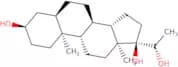
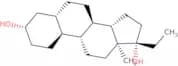
CAS:Controlled ProductPlease enquire for more information about (3b,5a,17a)-19-Norpregnane-3,17-diol including the price, delivery time and more detailed product information at the technical inquiry form on this pageFormula:C20H34O2Purity:Min. 95%Molecular weight:306.48 g/mol4-(2-Chlorophenyl)-9-methyl-6H-thieno[3,2-f][1,2,4]triazolo[4,3-a][1,4]diazepine-2-propanoic acid methyl ester
CAS:Controlled ProductPlease enquire for more information about 4-(2-Chlorophenyl)-9-methyl-6H-thieno[3,2-f][1,2,4]triazolo[4,3-a][1,4]diazepine-2-propanoic acid methyl ester including the price, delivery time and more detailed product information at the technical inquiry form on this pageFormula:C19H17ClN4O2SPurity:Min. 95%Molecular weight:400.88 g/molCefradine impurity F
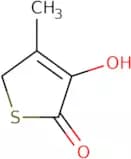
CAS:<p>Cefradine impurity F is a hydrolysis product of cefradine, which is an antibiotic. It is catalysed by β-lactamase enzymes and undergoes nucleophilic attack on the carbon atom adjacent to the carbonyl group. Cefradine impurity F has been shown to be effective against enterobacter, which is a type of bacteria that can cause urinary tract infections. The uptake of cefradine impurity F into bacteria can occur through passive diffusion or active transport mechanisms. This drug was also found to be hydrolyzed by buffers such as phosphate and acetate in vitro, but not by other substances such as EDTA and citrate. Cefradine impurity F has been shown to be hydrolyzed in vivo, with the most likely mechanism being spontaneous hydrolysis.</p>Formula:C5H6O2SPurity:Min. 95%Color and Shape:PowderMolecular weight:130.17 g/molRoxithromycin EP Impurity C
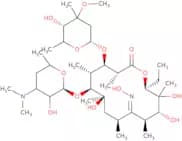
CAS:<p>Roxithromycin EP Impurity C is a byproduct of the synthesis of erythromycin. It has been shown to have anti-inflammatory activity in liver cells, and has been used as a model for studying the mechanism of action of erythromycin. The reaction solution contains inorganic acid and nitrogen atoms. Roxithromycin EP Impurity C reacts with erythromycin to form an intermediate that then undergoes a series of reactions, including hydroxylation, oxidation, and decarboxylation. The purified product is made up of carbonyl groups and transcriptional regulation. This impurity can also be found in cell nuclei.</p>Formula:C37H68N2O13Purity:Min. 95%Molecular weight:748.94 g/mol(S,S)-(-)-2,2'-Isopropylidenebis(4-tert-butyl-2-oxazoline)
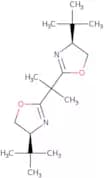
CAS:(S,S)-(-)-2,2'-Isopropylidenebis(4-tert-butyl-2-oxazoline) is a chiral organic reagent. It is prepared by reacting chloroacetic acid with an alcohol. The reaction product is then treated with a base and the resulting salt of (S,S)-(-)-2,2'-isopropylidenebis(4-tert-butyl-2-oxazoline) is crystallized. This reagent can be used to form an amide by reacting it with an amine. Preparative methods are also available for this product. It can be used as a ligand in preparative chemistry or as a solvent in organic chemistry. The reactivity of this product depends on its chirality, which can be determined using analytical techniques such as gas chromatography or nuclear magnetic resonance spectroscopy.Formula:C17H30N2O2Purity:Min. 95%Molecular weight:294.43 g/molPregnantriol
CAS:Controlled ProductPregnantriol is a naturally occurring steroid hormone that is produced in the placenta and the adrenal glands. Pregnantriol has been shown to be a potent inducer of liver cells, which may be due to its ability to bind to enzymes that are involved in lipid metabolism. This compound has also been shown to have diagnostic properties and is used as a diagnostic agent for adrenocortical carcinoma, urinary tract infections, metabolic disorders, and acid formation. Pregnantriol can be detected using fluorescence detection.Formula:C21H36O3Purity:Min. 95%Color and Shape:PowderMolecular weight:336.51 g/mol12-Amino-1-dodecanoic acid methyl ester hydrochloride salt
CAS:<p>12-Amino-1-dodecanoic acid methyl ester hydrochloride salt (12ADM) has been shown to have immunomodulatory properties. It has a nanomolar range of activity, which is the optimal for an immunosuppressant. 12ADM inhibits the transcriptional activity of human immunodeficiency virus type 1 (HIV-1) and HIV-2, as well as other retroviruses, through interactions with specific RNA sequences in the viral genome. The amide group in this compound is essential for its antiviral activity, and it also interacts with betulinic acid to enhance its cytotoxicity.</p>Formula:C13H28ClNO2Purity:Min. 95%Color and Shape:PowderMolecular weight:265.82 g/mol20-Dehydro cholesterol 3-acetate
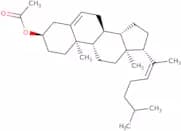
CAS:Controlled ProductPlease enquire for more information about 20-Dehydro cholesterol 3-acetate including the price, delivery time and more detailed product information at the technical inquiry form on this pageFormula:C29H46O2Purity:Min. 95%Molecular weight:426.67 g/mol

![(aR)-a-[[[2-(4-Nitrophenyl)ethyl]amino]methyl]benzenemethanol](/_next/image/?url=https%3A%2Fstatic.cymitquimica.com%2Fproducts%2F3D%2Fthumb-webp%2FFN75044.webp&w=3840&q=75)



![4-(2-Chlorophenyl)-9-methyl-6H-thieno[3,2-f][1,2,4]triazolo[4,3-a][1,4]diazepine-2-propanoic acid …](/_next/image/?url=https%3A%2Fstatic.cymitquimica.com%2Fproducts%2F3D%2Fthumb-webp%2FFC20337.webp&w=3840&q=75)