Pharmaceutical Standards
Pharmaceutical standards are a comprehensive set of reference materials essential for ensuring the safety, efficacy, and quality of pharmaceutical products. This category includes standards for active pharmaceutical ingredients (APIs), which are the core components responsible for therapeutic effects. Additionally, it covers compounds and metabolites relevant to both the pharmaceutical and veterinary industries, providing benchmarks for the accurate measurement and analysis of these substances. Nitrosamine control standards are crucial for detecting and mitigating potentially harmful nitrosamines in drug formulations. Toxicology standards help assess the safety and potential adverse effects of pharmaceutical compounds. Furthermore, enzyme activators and inhibitors standards are vital for research and development, enabling precise studies of biochemical pathways and drug mechanisms. These pharmaceutical standards are indispensable tools for regulatory compliance, quality control, and research, ensuring that pharmaceutical products meet stringent safety and effectiveness criteria.
Subcategories of "Pharmaceutical Standards"
- APIs for research and impurities(274,823 products)
- Enzyme Activators and Inhibitors(2,827 products)
- Nitrosamines(2,605 products)
- Pharmaceutical and Veterinary Compounds and Metabolites(2,867 products)
- Toxicology(13,652 products)
Found 7836 products of "Pharmaceutical Standards"
Sort by
Purity (%)
0
100
|
0
|
50
|
90
|
95
|
100
Somatostatin-14 (3-14) trifluoroacetate salt
CAS:<p>Please enquire for more information about Somatostatin-14 (3-14) trifluoroacetate salt including the price, delivery time and more detailed product information at the technical inquiry form on this page</p>Formula:C71H96N16O17S2Purity:Min. 95%Molecular weight:1,509.75 g/molNeuronostatin-13 (human, canine, porcine) trifluoroacetate salt
CAS:Please enquire for more information about Neuronostatin-13 (human, canine, porcine) trifluoroacetate salt including the price, delivery time and more detailed product information at the technical inquiry form on this pageFormula:C64H110N20O16Purity:Min. 95%Molecular weight:1,415.68 g/molBiotinyl-Asp-Glu-Val-Asp-aldehyde (pseudo acid)
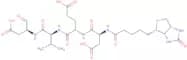
CAS:<p>Biotinyl-Asp-Glu-Val-Asp-aldehyde (pseudo acid) is a biotinylated amino acid, which can be used to study the affinity of caspases and other proteases. Biotin binds to the peptide through an amide bond and the amino group on the biotin molecule reacts with reactive groups on proteins, such as lysine, cysteine, histidine, or arginine. This reaction leads to the formation of a stable link between biotin and the target protein. The biotinylated peptide can then be purified from a sample by using an affinity chromatography column that has been pre-coated with streptavidin.<br>Biotin is not toxic because it does not bind to DNA.</p>Formula:C28H42N6O12SPurity:Min. 95%Molecular weight:686.73 g/molAcenaphthylene
CAS:<p>Acenaphthylene is a hydroxylated aromatic compound with the chemical formula C10H8. Acenaphthylene is a natural compound that can be found in coal tar and petroleum. It is used as a solid catalyst for cationic polymerization and as a photochemical reagent in analytical chemistry. Acenaphthylene also has been shown to have antimicrobial properties against bacterial strains, including Escherichia coli and Staphylococcus aureus, with sublethal doses. This compound has been shown to be effective for wastewater treatment and for sample preparation for polymers, due to its insoluble nature. The mechanism of acenaphthylene's antimicrobial activity is not well understood. It may inhibit bacterial growth by inhibiting DNA synthesis or by forming an adduct with bacterial DNA that inhibits replication.</p>Formula:C12H8Purity:Min. 95%Color and Shape:Yellow SolidMolecular weight:152.19 g/mol3,5-Dibromobenzoic acid methyl ester
CAS:<p>3,5-Dibromobenzoic acid methyl ester is an organic compound that has isomers. It is a synthetic substance with the chemical formula CHBrO. This substance can be obtained by reacting benzoic acid with bromine in the presence of aluminium chloride. The nature of this substance is not known due to its multifold structure. 3,5-Dibromobenzoic acid methyl ester has been shown to absorb light and transfer it to another molecule. This molecule can then emit light of a different wavelength or energy level. The dipole moment of the substance interacts with other molecules in close proximity, leading to the transfer of electrons and photons from one molecule to another.</p>Formula:C8H6Br2O2Purity:Min. 95%Color and Shape:PowderMolecular weight:293.94 g/mol4-[(4-Nitrophenyl)-azo]-phenol
CAS:<p>4-[(4-Nitrophenyl)-azo]-phenol is a molecular compound that has a nitro group, an azo group, and a phenolic hydroxyl group. It's also known as nitrophenyl diazonium salt. 4-[(4-Nitrophenyl)-azo]-phenol is used in the synthesis of other compounds such as dyes and pharmaceuticals. The magnetic resonance spectroscopy and optical microscope techniques were used to study the chemical structure of 4-[(4-Nitrophenyl)-azo]-phenol. The titration method was used to determine the purity of this compound. 4-[(4-Nitrophenyl)-azo]-phenol has been shown to have mesomorphic properties, which are exhibited by its ability to be either solid or liquid at room temperature (25°C). This property may be due to its functional groups that stabilize it in both states.</p>Purity:Min. 95%L-allo-Threoninol
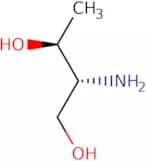
CAS:Please enquire for more information about L-allo-Threoninol including the price, delivery time and more detailed product information at the technical inquiry form on this pageFormula:C4H11NO2Purity:Min. 95%Color and Shape:Colourless To Pale Yellow LiquidMolecular weight:105.14 g/molFmoc-L-aspartic acid β-methylpentyl ester
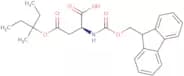
CAS:<p>Fmoc-L-aspartic acid b-methylpentyl ester is a solid phase synthesis of Asp(OtBu)-OH that has been synthesized by reacting aspartic acid with piperidine and methylbenzene. This synthesis has been shown to be effective at temperatures below 25°C, to minimize the formation of water, and to be resistant to treatments with strong acids or bases. The synthesis has also been optimized for the peptidyl bond formation and peptide synthesis, resulting in enhanced yields.</p>Formula:C25H29NO6Purity:Min. 95%Color and Shape:White PowderMolecular weight:439.5 g/molBiotin-PEG8-NHS ester
CAS:<p>Biotin-PEG8-NHS ester is a PEG compound with two different functional groups (also known as heterobifunctional). Unlike homobifunctional PEG compounds (same functional group on both ends), this type of compounds are more versatile as have two different anchor points. Biotin-PEG8-NHS ester is used as a linker and spacer to add a PEG moiety, via pegylation (a bioconjugation technique) to proteins, peptides, oligonucleotides, small molecules and nanoparticles.</p>Formula:C33H56N4O14SPurity:Min. 95%Color and Shape:PowderMolecular weight:764.88 g/mol3-Nitropropanol
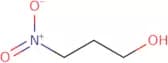
CAS:<p>3-Nitropropanol is an inhibitor of the enzyme nitrite reductase, which is involved in the conversion of nitrite to nitric oxide. 3-Nitropropanol is a dietary supplement that has been shown to have a significant inhibitory effect on the growth of cancer cells and microbial metabolism. Nitrite levels were found to be reduced by 25% in mice treated with this substance. The analytical method for measuring 3-nitropropanol was developed using a type strain and fatty acid standards.</p>Formula:C3H7NO3Purity:Min. 95%Molecular weight:105.09 g/mol[4,4'-Di-t-butyl-2,2'-bipyridine][bis[5-(t-butyl)-2-[4-(t-butyl)-2-pyridinyl-kN]phenyl-kC]iridium(III) hexafluorophosphate
CAS:<p>Please enquire for more information about [4,4'-Di-t-butyl-2,2'-bipyridine][bis[5-(t-butyl)-2-[4-(t-butyl)-2-pyridinyl-kN]phenyl-kC]iridium(III) hexafluorophosphate including the price, delivery time and more detailed product information at the technical inquiry form on this page</p>Formula:C56H72F6IrN4PPurity:Min. 95%Molecular weight:1,138.38 g/molBiotinyl-epsilonAhx-ω-Conotoxin GVIA trifluoroacetate salt
CAS:Controlled ProductPlease enquire for more information about Biotinyl-epsilonAhx-omega-Conotoxin GVIA trifluoroacetate salt including the price, delivery time and more detailed product information at the technical inquiry form on this pageFormula:C136H207N41O46S7Purity:Min. 95%Molecular weight:3,376.81 g/molPmc-S-methylisothiourea
CAS:Pmc-S-methylisothiourea is a synthetic compound that is used as a cross-coupling agent in organic synthesis. It has been shown to be an efficient and selective catalyst for Suzuki reactions. Pmc-S-methylisothiourea can be used to synthesize isoforms of macrolides, which are compounds with a skeleton similar to penicillin. Pmc-S-methylisothiourea can also be modified by adding ligands, such as thyronine, which can bind to hormone receptors and regulate transcription.Formula:C16H24N2O3S2Purity:Min. 95%Color and Shape:PowderMolecular weight:356.51 g/molL-m-Tyrosine
CAS:L-m-Tyrosine is a nonessential amino acid that is synthesized from phenylalanine. It has been shown to have antioxidant properties and protects against oxidative injury by scavenging reactive oxygen species such as hydrogen fluoride. L-m-Tyrosine has also been shown to modulate dopamine levels in the brain and may be used in the treatment of Parkinson's disease. The biological effects of L-m-Tyrosine are mediated through the transcriptional regulation of genes encoding proteins involved in dopamine β-hydroxylase and hydrogen fluoride detoxification. L-m-Tyrosine is also an experimental model for studying drug resistance in bacteria, including methicillin resistant Staphylococcus aureus (MRSA).Formula:C9H11NO3Purity:Min. 98 Area-%Color and Shape:PowderMolecular weight:181.19 g/mol3'-Methylacetophenone
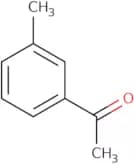
CAS:<p>3'-Methylacetophenone is an organic compound that belongs to the class of phenols. It has a number of reactions with other chemicals, including hydrogen chloride. The reaction between 3'-methylacetophenone and hydrogen chloride is an example of a nucleophilic substitution reaction. The rate of this reaction increases as the temperature rises, but slows down when the concentration of chloride ions increases. Kinetic studies have shown that the activation energy for this process is 12 kcal/mol, which is in agreement with previous results obtained from analytical methods and preparative experiments.</p>Formula:C9H10OPurity:Min. 95%Molecular weight:134.18 g/mol(D-2-Nal 5,Cys6·11,Tyr7,D-Trp8,Val10, 2-Nal 12)-Somatostatin-14 (5-12) amide trifluoroacetate salt
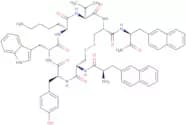
CAS:<p>Please enquire for more information about (D-2-Nal 5,Cys6·11,Tyr7,D-Trp8,Val10, 2-Nal 12)-Somatostatin-14 (5-12) amide trifluoroacetate salt including the price, delivery time and more detailed product information at the technical inquiry form on this page</p>Formula:C63H73N11O9S2Purity:Min. 95%Molecular weight:1,192.45 g/molBiotinyl-MCH (salmon) trifluoroacetate salt
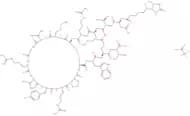
CAS:<p>Please enquire for more information about Biotinyl-MCH (salmon) trifluoroacetate salt including the price, delivery time and more detailed product information at the technical inquiry form on this page</p>Formula:C99H153N29O26S5Purity:Min. 95%Molecular weight:2,325.78 g/molN-Acetyl-[Cys4,10, D-Phe7]-α-Melanocyte Stimulating Hormone Fragment 4-13
CAS:Please enquire for more information about N-Acetyl-[Cys4,10, D-Phe7]-alpha-Melanocyte Stimulating Hormone Fragment 4-13 including the price, delivery time and more detailed product information at the technical inquiry form on this pageFormula:C61H86N18O13S2Purity:Min. 95%Molecular weight:1,343.58 g/molNeuropeptide Y-Lys(biotinyl) (free acid) (human, rat) trifluoroacetate salt
<p>Please enquire for more information about Neuropeptide Y-Lys(biotinyl) (free acid) (human, rat) trifluoroacetate salt including the price, delivery time and more detailed product information at the technical inquiry form on this page</p>Formula:C205H310N58O61S2Purity:Min. 95%Molecular weight:4,627.14 g/mol(D-Phe5,Cys6·11,N-Me-D-Trp8)-Somatostatin-14 (5-12) amide
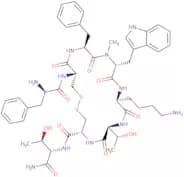
CAS:<p>Please enquire for more information about (D-Phe5,Cys6·11,N-Me-D-Trp8)-Somatostatin-14 (5-12) amide including the price, delivery time and more detailed product information at the technical inquiry form on this page</p>Formula:C50H67N11O10S2Purity:Min. 95%Molecular weight:1,046.27 g/mol



![4-[(4-Nitrophenyl)-azo]-phenol](/_next/image/?url=https%3A%2Fstatic.cymitquimica.com%2Fproducts%2F3D%2Fthumb-webp%2FFN31052.webp&w=3840&q=75)

![[4,4'-Di-t-butyl-2,2'-bipyridine][bis[5-(t-butyl)-2-[4-(t-butyl)-2-pyridinyl-kN]phenyl-kC]iridium(…](/_next/image/?url=https%3A%2Fstatic.cymitquimica.com%2Fproducts%2F3D%2Fthumb-webp%2FFD159336.webp&w=3840&q=75)


![N-Acetyl-[Cys4,10, D-Phe7]-α-Melanocyte Stimulating Hormone Fragment 4-13](/_next/image/?url=https%3A%2Fstatic.cymitquimica.com%2Fproducts%2F3D%2Fthumb-webp%2FFA110402.webp&w=3840&q=75)