Pharmaceutical Standards
Pharmaceutical standards are a comprehensive set of reference materials essential for ensuring the safety, efficacy, and quality of pharmaceutical products. This category includes standards for active pharmaceutical ingredients (APIs), which are the core components responsible for therapeutic effects. Additionally, it covers compounds and metabolites relevant to both the pharmaceutical and veterinary industries, providing benchmarks for the accurate measurement and analysis of these substances. Nitrosamine control standards are crucial for detecting and mitigating potentially harmful nitrosamines in drug formulations. Toxicology standards help assess the safety and potential adverse effects of pharmaceutical compounds. Furthermore, enzyme activators and inhibitors standards are vital for research and development, enabling precise studies of biochemical pathways and drug mechanisms. These pharmaceutical standards are indispensable tools for regulatory compliance, quality control, and research, ensuring that pharmaceutical products meet stringent safety and effectiveness criteria.
Subcategories of "Pharmaceutical Standards"
- APIs for research and impurities(274,823 products)
- Enzyme Activators and Inhibitors(2,827 products)
- Nitrosamines(2,605 products)
- Pharmaceutical and Veterinary Compounds and Metabolites(2,867 products)
- Toxicology(13,652 products)
Found 7836 products of "Pharmaceutical Standards"
Sort by
Purity (%)
0
100
|
0
|
50
|
90
|
95
|
100
Somatostatin
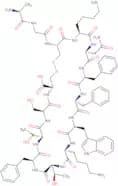
CAS:<p>Somatostatin is a polypeptide hormone that is produced by the body to inhibit the release of other hormones in the body. It has also been used to treat diseases such as carcinoid syndrome, intestinal disorders, and diabetes mellitus type I. Somatostatin binds to somatostatin receptors on cells, which leads to inhibition of cell growth and secretion of hormones. Somatostatin has been shown to block basic protein synthesis and energy metabolism in rat liver cells. Its receptor activity is mediated by binding with signal peptide sequences and response elements.</p>Formula:C76H104N18O19S2Purity:Min. 95%Color and Shape:PowderMolecular weight:1,637.88 g/molNaphthalene-1,8-diol
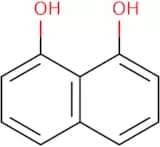
CAS:<p>Naphthalene-1,8-diol is a compound that belongs to the class of polycyclic aromatic hydrocarbons. It has been shown to inhibit polymerase chain reactions (PCR) in a nuclear DNA template. Naphthalene-1,8-diol also inhibits the production of melanin and reduces the number of skin lesions in the wild-type strain of Galleria mellonella. Naphthalene-1,8-diol is an antioxidant compound that has been shown to protect against radiation and dermatitis. This molecule contains a hydroxyl group that can form hydrogen bonds with other molecules. This property may account for its anti-inflammatory effects.</p>Formula:C10H8O2Purity:Min. 95%Color and Shape:Slightly Brown PowderMolecular weight:160.17 g/molD-alpha-Hydroxyisovaleric acid
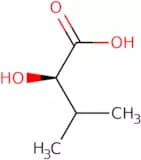
CAS:<p>D-alpha-Hydroxyisovaleric acid is a compound that is used to synthesize stereoisomers. It is also a component of supramolecular chemistry and has been used in the construction of supramolecular polymers. D-alpha-Hydroxyisovaleric acid can be found in some plants, such as valinomycin, isovaleric acid, and metarhizium. This stereoisomer can be synthetized from the hydroxy group and an amino acid or peptide. D-alpha-Hydroxyisovaleric acid has the ability to degrade nonribosomal peptides into smaller molecules through its hydrolytic properties. It also inhibits Verticillium dahliae, which causes wilt disease in plants, by inhibiting the synthesis of hydroxycarboxylates. D-alpha-Hydroxyisovaleric acid is biodegradable and can be used for industrial purposes as well as pharmaceuticals.</p>Formula:C5H10O3Purity:Min. 95%Color and Shape:White PowderMolecular weight:118.13 g/molCatestatin (human) trifluoroacetate
CAS:<p>Please enquire for more information about Catestatin (human) trifluoroacetate including the price, delivery time and more detailed product information at the technical inquiry form on this page</p>Formula:C104H164N32O27SPurity:Min. 95%Molecular weight:2,326.68 g/mol([ring-D5]Phe3)-Octreotide acetate salt
CAS:Controlled Product<p>Please enquire for more information about ([ring-D5]Phe3)-Octreotide acetate salt including the price, delivery time and more detailed product information at the technical inquiry form on this page</p>Formula:C49H61D5N10O10S2Purity:Min. 95%Molecular weight:1,024.27 g/molThymosin alpha1 trifluoroacetate salt
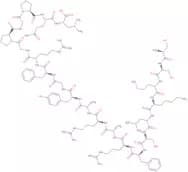
CAS:<p>Please enquire for more information about Thymosin alpha1 trifluoroacetate salt including the price, delivery time and more detailed product information at the technical inquiry form on this page</p>Formula:C129H215N33O55·xC2HF3O2Purity:Min. 95%Molecular weight:3,108.28 g/molBiotinyl-Neuromedin S (human) trifluoroacetate salt
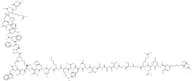
CAS:<p>Please enquire for more information about Biotinyl-Neuromedin S (human) trifluoroacetate salt including the price, delivery time and more detailed product information at the technical inquiry form on this page</p>Formula:C183H279N55O46SPurity:Min. 95%Molecular weight:4,017.58 g/molBiotinyl-alpha-CGRP (mouse, rat)
CAS:<p>Please enquire for more information about Biotinyl-alpha-CGRP (mouse, rat) including the price, delivery time and more detailed product information at the technical inquiry form on this page</p>Formula:C172H276N52O54S3Purity:Min. 95%Molecular weight:4,032.55 g/mol3,5-di-tert-Butyl-4-hydroxyphenylpropionic acid methyl ester
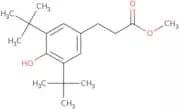
CAS:<p>3,5-di-tert-butyl-4-hydroxyphenylpropionic acid methyl ester is a compound that has been used as an analytical reagent and as a precursor to other chemicals. It is a white solid with a melting point of about 40°C. 3,5-di-tert-butyl-4-hydroxyphenylpropionic acid methyl ester is soluble in hexane, benzene, and diethylether. It also reacts with fatty acids to produce polymers. 3,5-di-tert-butyl-4-hydroxyphenylpropionic acid methyl ester has been shown to be an effective antibacterial agent against Gram negative bacteria such as Escherichia coli and Pseudomonas aeruginosa.</p>Formula:C18H28O3Purity:90%Color and Shape:Off-White PowderMolecular weight:292.41 g/molHymenistatin I Cyclo(-Pro-Pro-Tyr-Val-Pro-Leu-Ile-Ile)
CAS:<p>Hymenistatin I is a cyclic peptide that is synthesized from the natural amino acid L-proline. It has been shown to inhibit tumor growth and is used in the treatment of bladder cancer. The synthesis of Hymenistatin I begins with the protection of proline as an N-tert-butyloxycarbonyl derivative, followed by a sequence of coupling reactions. This synthetic process involves the use of a linker, such as tetrazole or succinimidyl ester, for example. The final product can then be purified by HPLC analysis. Hymenistatin I inhibits calcineurin inhibitor, which are immunosuppressive agents that are used to treat lymphocytic leukemia and other autoimmune diseases.</p>Formula:C47H72N8O9Purity:Min. 95%Molecular weight:893.12 g/molAtorvastatin acetonide tert-butyl ester
CAS:<p>Atorvastatin intermediate</p>Formula:C40H47FN2O5Purity:Min. 95%Molecular weight:654.81 g/mol1,1'-Dioctadecyl-3,3,3',3'-tetramethylindotricarbocyanine iodide
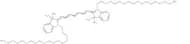
CAS:<p>1,1'-Dioctadecyl-3,3,3',3'-tetramethylindotricarbocyanine iodide (DiI) is a fluorescent dye that exhibits resonance fluorescence. It is used in cell biology to track the movement of lipoprotein and lipid-rich particles in cells. DiI has been shown to activate tumor cells by damaging their DNA and can be used for the treatment of cancer. DiI is also used as an absorber molecule during fluorescence microscopy imaging. The dye's ability to bind to lipoproteins makes it ideal for tracking cholesterol transport through the bloodstream. DiI binds to resolvin D1 and other lipids found in plasma, which can be useful for imaging lipid-rich tumors or atherosclerotic plaques.</p>Formula:C63H101IN2Purity:Min. 95%Color and Shape:Blue PowderMolecular weight:1,013.39 g/molGhrelin-Cys(BMCC-biotinyl) (human) trifluoroacetate salt
<p>Please enquire for more information about Ghrelin-Cys(BMCC-biotinyl) (human) trifluoroacetate salt including the price, delivery time and more detailed product information at the technical inquiry form on this page</p>Formula:C178H293N53O48S2Purity:Min. 95%Molecular weight:4,007.69 g/mol([ring-D5]Phe6)-Somatostatin-14
Please enquire for more information about ([ring-D5]Phe6)-Somatostatin-14 including the price, delivery time and more detailed product information at the technical inquiry form on this pageFormula:C76H99D5N18O19S2Purity:Min. 95%Molecular weight:1,642.91 g/molAtorvastatin lactone diepoxide - Mixture of diastereomers
CAS:<p>Please enquire for more information about Atorvastatin lactone diepoxide - Mixture of diastereomers including the price, delivery time and more detailed product information at the technical inquiry form on this page</p>Formula:C33H33FN2O6Purity:Min. 95%Molecular weight:572.62 g/mol4-Nitrophenethylamine
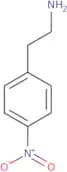
CAS:Controlled Product<p>4-Nitrophenethylamine is a synthetic chemical that is used as an antigen to raise antibodies. It is used in the detection of chemical substances that are associated with the production of histamine and acetylcholine. This chemical has been shown to inhibit the reaction between nitro and acylation, which can lead to the formation of carcinogenic nitrosamines. 4-Nitrophenethylamine also has an inhibitory effect on oxidases and amines, which are enzymes found in cells. This chemical binds to amide groups in proteins and inhibits their activity.</p>Formula:C8H10N2O2Purity:Min. 95%Color and Shape:LiquidMolecular weight:166.18 g/mol5-Acenaphthenecarboxylic acid
CAS:<p>5-Acenaphthenecarboxylic acid is a xylene derivative that has been characterized as an organometallic compound. The cyclopentane ring is the central feature of this molecule and it can be used in the synthesis of other organic compounds. 5-Acenaphthenecarboxylic acid is toxic to humans and animals and has been shown to induce liver tumors in rats. It also has been shown to inhibit the growth of some bacteria, including Mycobacterium tuberculosis, which causes tuberculosis. 5-Acenaphthenecarboxylic acid inhibits protein synthesis by binding to ribosomes and interfering with the biosynthesis of proteins. This binding prevents formation of a complex with the enzyme cell wall synthesis that is required for cell wall biosynthesis, inhibiting protein synthesis and cell division.</p>Formula:C13H10O2Purity:Min. 95%Color and Shape:PowderMolecular weight:198.22 g/mol2,6-Dimethylaniline hydrochloride
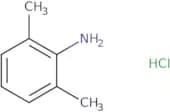
CAS:<p>Ropivacaine Related Compound A is a chemical compound that has not been fully characterized. It is an inhibitor of the enzyme P-hydroxybenzoic acid, which is involved in the synthesis of tyrosine and phenylalanine. Ropivacaine Related Compound A has shown to be potent inducers of the enzyme polymerase chain reaction (PCR) when combined with other chemicals such as potassium peroxydisulfate. The optimum concentration for this chemical compound to inhibit PCR reactions is 50 mM. Ropivacaine Related Compound A may have carcinogenic potential due to its ability to form p-hydroxybenzoic acid and other carcinogenic compounds. This chemical compound has been found to be a good candidate for wastewater treatment due to its low potency and high solubility in water.</p>Formula:C8H12ClNPurity:Min. 95%Color and Shape:PowderMolecular weight:157.64 g/molAc-Ala-alpha-naphthyl ester
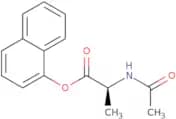
CAS:<p>Ac-Ala-alpha-naphthyl ester is a chemical compound that belongs to the class of aromatic esters. It is used as a research and benchmarking agent in the measurement of skin penetration potential. Ac-Ala-alpha-naphthyl ester has been shown to have good skin penetration properties, with no adverse effects on the skin.</p>Formula:C15H15NO3Purity:Min. 95%Molecular weight:257.28 g/mol2-Bromo-2'-chlorophenyl acetic acid methyl ester
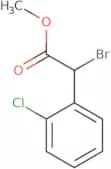
CAS:<p>2-Bromo-2'-chlorophenyl acetic acid methyl ester is a synthetic chemical that can be used as a pharmaceutical intermediate. It is prepared by the reaction of bromine with 2-chloroacetic acid and magnesium, which yields the desired product. The catalytic effect of this chemical is due to its ability to act as a catalyst for many reactions, such as the synthesis of clopidogrel. This chemical also has an industrial application in the production of other medicines, such as aspirin.</p>Formula:C9H8BrClO2Purity:Min. 95%Molecular weight:263.52 g/mol

![([ring-D5]Phe3)-Octreotide acetate salt](/_next/image/?url=https%3A%2Fstatic.cymitquimica.com%2Fproducts%2F3D%2Fthumb-webp%2FFR110015.webp&w=3840&q=75)




![([ring-D5]Phe6)-Somatostatin-14](/_next/image/?url=https%3A%2Fstatic.cymitquimica.com%2Fproducts%2F3D%2Fthumb-webp%2FFR110019.webp&w=3840&q=75)