Pharmaceutical Standards
Subcategories of "Pharmaceutical Standards"
- APIs for research and impurities(276,118 products)
- Enzyme Activators and Inhibitors(2,829 products)
- Nitrosamines(2,617 products)
- Pharmaceutical and Veterinary Compounds and Metabolites(2,919 products)
- Toxicology(13,573 products)
Found 7922 products of "Pharmaceutical Standards"
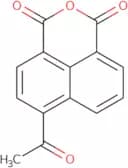
4-Acetyl-1,8-naphthalic anhydride
CAS:4-Acetyl-1,8-naphthalic anhydride is a naphthoquinone that has been shown to have apoptosis-inducing properties. It inhibits mitochondrial electron transport and the generation of ATP, leading to cell death. 4-Acetyl-1,8-naphthalic anhydride also binds to DNA, which prevents transcription and replication. This compound can be used in vivo assays to evaluate the efficacy of anticancer drugs by determining tumor growth inhibition or the induction of apoptosis in cancer cells. The binding affinity of 4-acetyl-1,8-naphthalic anhydride for DNA is approximately two orders of magnitude higher than its affinity for other cellular components such as proteins or lipids.
Formula:C14H8O4Purity:Min. 90%Color and Shape:PowderMolecular weight:240.21 g/molRef: 3D-FA65871
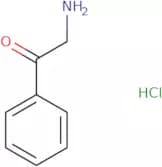
Discontinued product2-Aminoacetophenone hydrochloride
CAS:Controlled Product2-Aminoacetophenone hydrochloride is a chemical compound that is used in analytical chemistry as a reagent for the determination of protein and amino acid concentrations. This reagent can be prepared in various forms, depending on the type of analysis being performed. 2-Aminoacetophenone hydrochloride is used to determine the concentration of free amino acids in a sample by binding to it. It can also be used for determining the concentration of bound amino acids by reacting with them with hydrochloric acid. 2-Aminoacetophenone hydrochloride is an excellent substrate for matrix effect, which may cause errors in measurement due to interference from other substances present in the sample. The use of light exposure reduces this problem by removing interfering substances from the sample.
Formula:C8H9NO·HClPurity:Min. 95%Color and Shape:PowderMolecular weight:171.62 g/molRef: 3D-FA158319
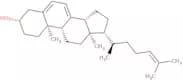
Discontinued product7-Dehydro desmosterol
CAS:Controlled Product7-Dehydro Desmosterol is a hydroxylated sterol found in the liver. It is an intermediate in cholesterol synthesis and participates in the regulation of glucose metabolism. The enzyme responsible for its synthesis (7-dehydrocholesterol reductase) is inhibited by radiation, which leads to its accumulation in the liver. 7-Dehydro desmosterol has been shown to have beneficial effects on experimental models of diabetes and metabolic disorders. In these studies, it was found that 7-dehydro desmosterol can inhibit glucose absorption from the intestine and stimulate insulin secretion from pancreatic beta cells.
Formula:C27H42OPurity:Min. 95%Color and Shape:PowderMolecular weight:382.62 g/molRef: 3D-FD20903
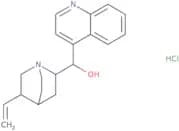
Discontinued productCinchonine Hydrochloride Hydrate
CAS:Cinchonine hydrochloride hydrate is a compound that belongs to the class of amines. It is used as an anti-malarial drug, an anti-arrhythmic agent, and a vasodilator. Cinchonine hydrochloride hydrate has been shown to be heat resistant and can be used in pharmaceutical preparations such as gel permeation chromatography. This compound also has a catalytic effect on reactions with glycerin and piperidone, which are used in the production of various dyes. Cinchonine hydrochloride hydrate can also be used as a solid catalyst for viscosity measurements in wastewater treatment plants.
Formula:C19H22N2O·HCl·xH2OPurity:Min. 95%Molecular weight:330.85 g/molRef: 3D-FC59909
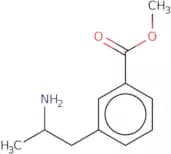
Discontinued product3'-(2-Propylamine)benzoic acid methyl ester
CAS:3'-(2-Propylamine)benzoic acid methyl ester is a high quality, complex compound that can be used as a reagent, speciality chemical, or reaction component. It has a wide range of applications in the synthesis of pharmaceuticals, agrochemicals, and other biologically active compounds. 3'-(2-Propylamine)benzoic acid methyl ester is also a versatile building block and useful intermediate in organic synthesis.
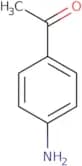
Formula:C11H15NO2Purity:Min. 95%Molecular weight:193.24 g/mol4-Aminoacetophenone
CAS:4-Aminoacetophenone is an inhibitor of the enzyme acetylcholinesterase and it is used as an insecticide. It inhibits the enzyme by forming hydrogen bonding interactions with the active site. The inhibition of this enzyme leads to paralysis and death in insects. 4-Aminoacetophenone has been shown to have anti-cancer effects in vitro, which may be due to its ability to inhibit glycoside hydrolases and amine oxidases that are involved in cancer development. The compound also has a thermal expansion coefficient that is comparable to other polymers used in drug delivery systems.
Formula:C8H9NOColor and Shape:Slightly Yellow PowderMolecular weight:135.16 g/molRef: 3D-FA17680
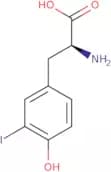
Discontinued product3-Iodo-L-tyrosine
CAS:Please enquire for more information about 3-Iodo-L-tyrosine including the price, delivery time and more detailed product information at the technical inquiry form on this page
Formula:C9H10INO3Purity:Min. 96.0 Area-%Color and Shape:PowderMolecular weight:307.09 g/molRef: 3D-FI12110
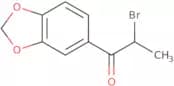
Discontinued product2-Bromo-3',4'-(methylenedioxy)propiophenone
CAS:Controlled ProductPlease enquire for more information about 2-Bromo-3',4'-(methylenedioxy)propiophenone including the price, delivery time and more detailed product information at the technical inquiry form on this page
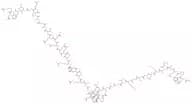
Formula:C10H9BrO3Purity:Min. 95%Color and Shape:PowderMolecular weight:257.08 g/molPancreastatin (dephosphorylated) (porcine) trifluoroacetate salt
CAS:Pancreastatin is a cytosolic protein that inhibits the production of peptide hormones such as glucagon, insulin, and gastrin. It is used to treat bowel disease, including carcinoid syndrome and inflammatory bowel disease. Pancreastatin has been shown to inhibit the activity of cyclase enzymes that are responsible for the production of these hormones. Pancreatic beta-cells produce pancreatic polypeptide (PP), which is converted by pancreastatin into inactive PP2. Pancreatic alpha-cells produce somatostatin (SS), which is converted by pancreastatin into inactive SS2. Pancreatic delta cells produce pancreatic polypeptide (PP), which is not affected by pancreastatin. Pancreatic somatostatinomas secrete SS, which is not affected by pancreastatin.
Formula:C214H330N68O76SPurity:Min. 95%Molecular weight:5,103.39 g/molRef: 3D-FP109742
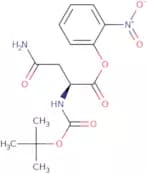
Discontinued productBoc-Asn-o-nitrophenyl ester
CAS:Please enquire for more information about Boc-Asn-o-nitrophenyl ester including the price, delivery time and more detailed product information at the technical inquiry form on this page
Formula:C15H19N3O7Purity:Min. 95%Molecular weight:353.33 g/molRef: 3D-FB111259
Discontinued productOctreotide trifluoroacetate salt (Dimer, Parallel) (
Please enquire for more information about Octreotide trifluoroacetate salt (Dimer, Parallel) ( including the price, delivery time and more detailed product information at the technical inquiry form on this page
Formula:C98H132N20O20S4Purity:Min. 95%Molecular weight:2,038.48 g/molRef: 3D-FO110074
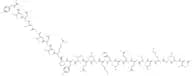
Discontinued productAcetyl-(Asn30,Tyr32)-Calcitonin (8-32) (salmon I) trifluoroacetate salt
CAS:Please enquire for more information about Acetyl-(Asn30,Tyr32)-Calcitonin (8-32) (salmon I) trifluoroacetate salt including the price, delivery time and more detailed product information at the technical inquiry form on this pageFormula:C127H205N37O40Purity:Min. 95%Molecular weight:2,890.21 g/molRef: 3D-FA109403
Discontinued product(Asp371)-Tyrosinase (369-377) (human) trifluoroacetate salt
CAS:Trifluoroacetate saltFormula:C42H66N10O16S2Purity:Min. 95%Molecular weight:1,031.16 g/molRef: 3D-FA110240
Discontinued product(-)-Corey lactone diol
CAS:(-)-Corey lactone diol is a synthetic compound that is soluble in organic solvents. It is used for the synthesis of carbocyclic nucleosides, which are analogs of pyrimidine nucleosides. (-)-Corey lactone diol has been shown to inhibit cholesterol synthesis and the synthesis of alkene. (-)-Corey lactone diol also shows anti-inflammatory properties, which may be due to its inhibition of prostaglandin synthesis.
Formula:C8H12O4Purity:Min. 95%Molecular weight:172.18 g/molOsteostatin (1-5) (human, bovine, dog, horse, mouse, rabbit, rat) trifluoroacetate salt
CAS:Please enquire for more information about Osteostatin (1-5) (human, bovine, dog, horse, mouse, rabbit, rat) trifluoroacetate salt including the price, delivery time and more detailed product information at the technical inquiry form on this page
Formula:C27H41N9O8Purity:Min. 95%Molecular weight:619.67 g/molRef: 3D-FO110332
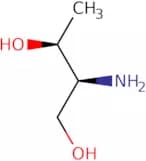
Discontinued productD-Threoninol
CAS:Please enquire for more information about D-Threoninol including the price, delivery time and more detailed product information at the technical inquiry form on this page
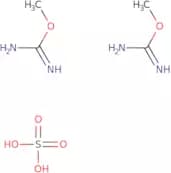
Formula:C4H11NO2Purity:Min. 95%Molecular weight:105.14 g/molO-Methylisourea hemisulfate
CAS:O-Methylisourea hemisulfate is a chemical compound that has been used for wastewater treatment and as an anticancer agent. It is known to have multiple-reaction monitoring (MRM) techniques which are based on the detection of the reaction products with multiple wavelengths. O-Methylisourea hemisulfate has been shown to have anticancer activity in mammalian cells, and it enhances the antibacterial effect of ethyl formate. This chemical is also used as a sample preparation reagent in human serum protein analysis.
Formula:C2H6N2O·H2O4SMolecular weight:246.24 g/mol(+/-)-Perillaldehyde
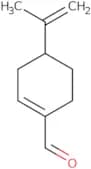
CAS:Perillaldehyde is a natural compound that has been used in food and medicine for centuries. It is an antimicrobial agent with dextran sulfate, which is a sugar polymer that inhibits the growth of fungi and bacteria. Perillaldehyde also has been shown to inhibit the energy metabolism of microorganisms by decreasing ATP production. Perillaldehyde has also been shown to have genotoxic activity, as it can cause DNA strand breaks. This compound also causes oxidative stress in cells by reducing mitochondrial membrane potential and inducing reactive oxygen species (ROS). Perillaldehyde has acute toxicities, as it causes electrochemical impedance spectroscopy changes that indicate cell death.
Formula:C10H14OPurity:Min. 95%Color and Shape:PowderMolecular weight:150.22 g/mol2-(2-Naphthyloxy)propanoic acid
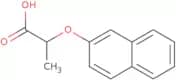
CAS:2-(2-Naphthyloxy)propanoic acid is a naphthalene derivative that is found in the plant species Carthamus tinctorius. It has been shown to have potent antagonist activity against the NMDA receptor, as well as antinociceptive and analgesic properties in vivo. 2-(2-Naphthyloxy)propanoic acid also shows potent anti-inflammatory and cardioprotective effects in vitro and in vivo. 2-(2-Naphthyloxy)propanoic acid can be used for the treatment of bone cancer, congestive heart failure, diabetic neuropathy, or other disorders of the peripheral nervous system.
Formula:C13H12O3Purity:Min. 95%Molecular weight:216.23 g/molRef: 3D-FN112710
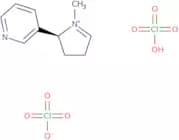
Discontinued productS-(-)-Nicotine-delta1’-(5’)-iminium diperchlorate salt
CAS:Please enquire for more information about S-(-)-Nicotine-delta1’-(5’)-iminium diperchlorate salt including the price, delivery time and more detailed product information at the technical inquiry form on this page
Formula:C10H14Cl2N2O8Purity:Min. 95%Molecular weight:361.13 g/mol4-(2,4-Dinitrophenyl)butanoicacid
CAS:Please enquire for more information about 4-(2,4-Dinitrophenyl)butanoicacid including the price, delivery time and more detailed product information at the technical inquiry form on this page
Formula:C10H10N2O6Purity:Min. 95%Molecular weight:254.2 g/molRef: 3D-FD149753
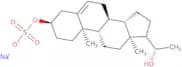
Discontinued product20a-Dihydro pregnenolone 3-sulfate sodium salt
CAS:Please enquire for more information about 20a-Dihydro pregnenolone 3-sulfate sodium salt including the price, delivery time and more detailed product information at the technical inquiry form on this page
Formula:C21H33NaO5SPurity:Min. 95%Molecular weight:420.54 g/molRef: 3D-FD21937
Discontinued product