Pharmaceutical Standards
Subcategories of "Pharmaceutical Standards"
- APIs for research and impurities(277,040 products)
- Enzyme Activators and Inhibitors(2,829 products)
- Nitrosamines(2,647 products)
- Pharmaceutical and Veterinary Compounds and Metabolites(2,896 products)
- Toxicology(13,406 products)
Found 8078 products of "Pharmaceutical Standards"
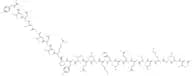
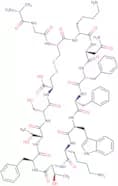
Biotinyl-Obestatin (human) trifluoroacetate salt
CAS:Please enquire for more information about Biotinyl-Obestatin (human) trifluoroacetate salt including the price, delivery time and more detailed product information at the technical inquiry form on this page
Formula:C126H190N34O35SPurity:Min. 95%Molecular weight:2,773.13 g/molRef: 3D-FB109810
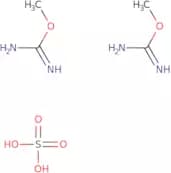
Discontinued productO-Methylisourea hemisulfate
CAS:O-Methylisourea hemisulfate is a chemical compound that has been used for wastewater treatment and as an anticancer agent. It is known to have multiple-reaction monitoring (MRM) techniques which are based on the detection of the reaction products with multiple wavelengths. O-Methylisourea hemisulfate has been shown to have anticancer activity in mammalian cells, and it enhances the antibacterial effect of ethyl formate. This chemical is also used as a sample preparation reagent in human serum protein analysis.
Formula:C2H6N2O·H2O4SMolecular weight:246.24 g/mol(11β,16α)-16,17-[(1RS)-Ethylidenebis(oxo)]-11,21-dihydroxypregna-1,4-diene-3,20-dione
CAS:Please enquire for more information about (11β,16α)-16,17-[(1RS)-Ethylidenebis(oxo)]-11,21-dihydroxypregna-1,4-diene-3,20-dione including the price, delivery time and more detailed product information at the technical inquiry form on this page
Formula:C23H30O6Purity:Min. 95%Color and Shape:PowderMolecular weight:402.48 g/molRef: 3D-FE146156
Discontinued product(Asp371)-Tyrosinase (369-377) (human) trifluoroacetate salt
CAS:Trifluoroacetate saltFormula:C42H66N10O16S2Purity:Min. 95%Molecular weight:1,031.16 g/molRef: 3D-FA110240
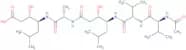
Discontinued productAcetyl-Pepstatin Ac-Val-Val-Sta-Ala-Sta-OH
CAS:Acetyl-Pepstatin is a protein data inhibitor that binds to the active site of enzymes, inhibiting their function. Acetyl-pepstatin has been shown to inhibit cathepsin D, chymotrypsin, and trypsin. It also inhibits the activity of proteases in the stomach and intestinal tract. Acetyl-Pepstatin is used as an anti-inflammatory drug for the treatment of chronic obstructive pulmonary disease (COPD) and congestive heart failure (CHF). The inhibition of these enzymes reduces inflammation by preventing the activation of inflammatory cytokines. It also prevents collagen from being degraded by proteases, which leads to decreased degradation of cartilage by chondrocytes. This drug's mechanism is similar to that of acetylsalicylic acid (aspirin), in that it inhibits prostaglandin synthesis.br>
Formula:C31H57N5O9Purity:Min. 95%Molecular weight:643.81 g/molRef: 3D-FA111026
Discontinued productAMCA-Glu-Glu-Lys-Pro-Ile-Ser-Phe-Phe-Arg-Leu-Gly-Lys(biotinyl)-NH2
CAS:Please enquire for more information about AMCA-Glu-Glu-Lys-Pro-Ile-Ser-Phe-Phe-Arg-Leu-Gly-Lys(biotinyl)-NH2 including the price, delivery time and more detailed product information at the technical inquiry form on this page
Formula:C90H131N21O22SPurity:Min. 95%Molecular weight:1,891.2 g/molRef: 3D-FA110984
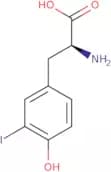
Discontinued product3-Iodo-L-tyrosine
CAS:Please enquire for more information about 3-Iodo-L-tyrosine including the price, delivery time and more detailed product information at the technical inquiry form on this page
Formula:C9H10INO3Purity:Min. 96.0 Area-%Color and Shape:PowderMolecular weight:307.09 g/molRef: 3D-FI12110
Discontinued productBiotinyl-Atrial Natriuretic Factor (1-28) (human) trifluoroacetate salt
CAS:Please enquire for more information about Biotinyl-Atrial Natriuretic Factor (1-28) (human) trifluoroacetate salt including the price, delivery time and more detailed product information at the technical inquiry form on this pageFormula:C137H217N47O41S4Purity:Min. 95%Molecular weight:3,306.75 g/molRef: 3D-FB110153
Discontinued productPalmitoleic acid methyl ester
CAS:Palmitoleic acid methyl ester is a bio-based chemical that can be used in wastewater treatment. It has been shown to inhibit the activity of lipase, an enzyme that catalyzes the hydrolysis of triglycerides, and may be useful for the removal of fatty acids from wastewater. Palmitoleic acid methyl ester has a phase transition temperature of about 120°C and a thermal expansion coefficient similar to polyethylene. This product was found to be a good solid catalyst for the production of nitric oxide from nitrogen atoms. The antioxidant vitamins C and E were found to have synergistic effects with palmitoleic acid methyl ester. This product also has antimicrobial properties against infectious diseases such as tuberculosis, which may be due to its ability to inhibit protein synthesis by disrupting ribosomal function.
Formula:C17H32O2Purity:Min. 95%Molecular weight:268.43 g/molBiotin-PEG8-NHS ester
CAS:Biotin-PEG8-NHS ester is a PEG compound with two different functional groups (also known as heterobifunctional). Unlike homobifunctional PEG compounds (same functional group on both ends), this type of compounds are more versatile as have two different anchor points. Biotin-PEG8-NHS ester is used as a linker and spacer to add a PEG moiety, via pegylation (a bioconjugation technique) to proteins, peptides, oligonucleotides, small molecules and nanoparticles.Formula:C33H56N4O14SPurity:Min. 95%Color and Shape:PowderMolecular weight:764.88 g/molRef: 3D-FB72908
Discontinued productBiotinyl-Amylin (mouse, rat) trifluoroacetate salt
CAS:Please enquire for more information about Biotinyl-Amylin (mouse, rat) trifluoroacetate salt including the price, delivery time and more detailed product information at the technical inquiry form on this pageFormula:C177H286N54O55S3Purity:Min. 95%Molecular weight:4,146.69 g/molRef: 3D-FB110085
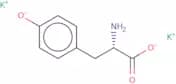
Discontinued productL-Tyrosine dipotassium
CAS:L-Tyrosine dipotassium salt is a high quality, reagent, complex compound, useful intermediate and fine chemical. It is a useful scaffold that can be used in the synthesis of various important natural products. L-Tyrosine dipotassium salt is a versatile building block that has been widely applied in research on the development of new drugs, such as antiviral agents and antibiotics. L-Tyrosine dipotassium salt can act as a reaction component for many organic reactions. It also has applications in many areas such as medicine, food production, and environmental protection.
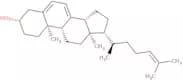
Formula:C9H11NO3•K2Purity:Min. 95%Molecular weight:259.39 g/mol7-Dehydro desmosterol
CAS:Controlled Product7-Dehydro Desmosterol is a hydroxylated sterol found in the liver. It is an intermediate in cholesterol synthesis and participates in the regulation of glucose metabolism. The enzyme responsible for its synthesis (7-dehydrocholesterol reductase) is inhibited by radiation, which leads to its accumulation in the liver. 7-Dehydro desmosterol has been shown to have beneficial effects on experimental models of diabetes and metabolic disorders. In these studies, it was found that 7-dehydro desmosterol can inhibit glucose absorption from the intestine and stimulate insulin secretion from pancreatic beta cells.
Formula:C27H42OPurity:Min. 95%Color and Shape:PowderMolecular weight:382.62 g/molRef: 3D-FD20903
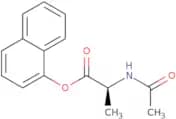
Discontinued productAc-Ala-alpha-naphthyl ester
CAS:Ac-Ala-alpha-naphthyl ester is a chemical compound that belongs to the class of aromatic esters. It is used as a research and benchmarking agent in the measurement of skin penetration potential. Ac-Ala-alpha-naphthyl ester has been shown to have good skin penetration properties, with no adverse effects on the skin.
Formula:C15H15NO3Purity:Min. 95%Molecular weight:257.28 g/molRef: 3D-FA110825
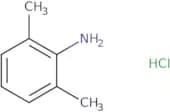
Discontinued product2,6-Dimethylaniline hydrochloride
CAS:Ropivacaine Related Compound A is a chemical compound that has not been fully characterized. It is an inhibitor of the enzyme P-hydroxybenzoic acid, which is involved in the synthesis of tyrosine and phenylalanine. Ropivacaine Related Compound A has shown to be potent inducers of the enzyme polymerase chain reaction (PCR) when combined with other chemicals such as potassium peroxydisulfate. The optimum concentration for this chemical compound to inhibit PCR reactions is 50 mM. Ropivacaine Related Compound A may have carcinogenic potential due to its ability to form p-hydroxybenzoic acid and other carcinogenic compounds. This chemical compound has been found to be a good candidate for wastewater treatment due to its low potency and high solubility in water.
Formula:C8H12ClNPurity:Min. 95%Color and Shape:PowderMolecular weight:157.64 g/molAcetyl-(Asn30,Tyr32)-Calcitonin (8-32) (salmon I) trifluoroacetate salt
CAS:Please enquire for more information about Acetyl-(Asn30,Tyr32)-Calcitonin (8-32) (salmon I) trifluoroacetate salt including the price, delivery time and more detailed product information at the technical inquiry form on this pageFormula:C127H205N37O40Purity:Min. 95%Molecular weight:2,890.21 g/molRef: 3D-FA109403
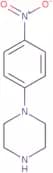
Discontinued product1-(4-Nitrophenyl)piperazine
CAS:1-(4-Nitrophenyl)piperazine is a nitro compound with a molecular weight of 147.2. It is soluble in DMSO and ethanol, but not in water. 1-(4-Nitrophenyl)piperazine has the ability to absorb ultraviolet radiation (UV) and it can be used as a UV-absorbing agent in plastics. 1-(4-Nitrophenyl)piperazine can also be used as an intermediate for the synthesis of triazole antifungal agents. The molecule has been shown to have high values at magnetic resonance spectroscopy (NMR). The crystal structure of 1-(4-nitrophenyl)piperazine was determined by x-ray diffraction data and molecular modeling techniques. This molecule's melting point was determined by titration calorimetry, which showed that its melting point is around 195 degrees Celsius.br> 1-(4-Nitrophenyl)piper
Formula:C10H13N3O2Purity:Min. 95%Molecular weight:207.23 g/molRef: 3D-FN75441
Discontinued productSodium 1-naphthalenesulfonate
CAS:Sodium 1-naphthalenesulfonate is a zirconium oxide that is used to remove particles from water. It has been shown that the adsorption mechanism of this compound is based on its crystalline polymorphs. Sodium 1-naphthalenesulfonate has been used in the treatment of fatty acid and hydrochloric acid in urine samples, with sodium carbonate as a buffer. This compound also has film-forming properties, which are beneficial for wastewater treatment and can be used in the formation of polymer films. Sodium 1-naphthalenesulfonate also shows toxicity at high concentrations, but does not cause any toxic effects at low concentrations.
Formula:C10H7NaO3SPurity:Min. 95%Color and Shape:White Off-White PowderMolecular weight:230.22 g/molBiotinyl-Pancreatic Polypeptide (human) trifluoroacetate salt
CAS:Please enquire for more information about Biotinyl-Pancreatic Polypeptide (human) trifluoroacetate salt including the price, delivery time and more detailed product information at the technical inquiry form on this page
Formula:C195H301N55O56S3Purity:Min. 95%Molecular weight:4,408.01 g/molRef: 3D-FB110183
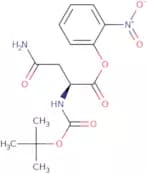
Discontinued productBoc-Asn-o-nitrophenyl ester
CAS:Please enquire for more information about Boc-Asn-o-nitrophenyl ester including the price, delivery time and more detailed product information at the technical inquiry form on this page
Formula:C15H19N3O7Purity:Min. 95%Molecular weight:353.33 g/molRef: 3D-FB111259
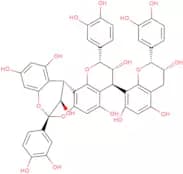
Discontinued productCinnamtannin B-1
CAS:Cinnamtannin B-1 is a cytosolic Ca2+ modulator that binds to and inhibits the activity of ATPases, which are enzymes that hydrolyze ATP. This causes an increase in intracellular Ca2+ levels, which leads to altered cell physiology. Cinnamtannin B-1 also inhibits mitochondrial membrane potential and enzyme activities. Cinnamtannin B-1 is a bioactive phytochemical found in cinnamon extract, which has been shown to have anti-obesity effects due to its ability to reduce the number of fat cells. Cinnamtannin B-1 has been shown to inhibit 3T3-L1 preadipocyte differentiation by targeting proteins such as procyanidins.
Formula:C45H36O18Purity:Min. 95%Color and Shape:PowderMolecular weight:864.76 g/molRef: 3D-FC09482
Discontinued product(D-Trp8)-Somatostatin-14 trifluoroacetate salt
CAS:Please enquire for more information about (D-Trp8)-Somatostatin-14 trifluoroacetate salt including the price, delivery time and more detailed product information at the technical inquiry form on this page
Formula:C76H104N18O19S2Purity:Min. 95%Molecular weight:1,637.88 g/molRef: 3D-FT108921
Discontinued productSodium dibutylnaphthalenesulphonate
CAS:Sodium dibutylnaphthalenesulphonate is a stabilizer that reacts with fatty acids, dialkyl phosphates, and growth regulators to form insoluble particles. It has been found to be particularly effective in the treatment of plant diseases caused by fungi. Sodium dibutylnaphthalenesulphonate has been shown to stabilize active substances and bioactive substances, such as organic acids and oxime derivatives. These compounds are used in a variety of applications, such as pharmaceuticals, pesticides, herbicides, food additives, and cosmetics.
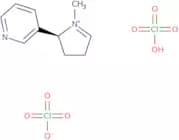
Formula:C18H24O3S•NaPurity:60 To 65%Color and Shape:PowderMolecular weight:343.43 g/molS-(-)-Nicotine-delta1’-(5’)-iminium diperchlorate salt
CAS:Please enquire for more information about S-(-)-Nicotine-delta1’-(5’)-iminium diperchlorate salt including the price, delivery time and more detailed product information at the technical inquiry form on this page
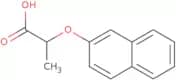
Formula:C10H14Cl2N2O8Purity:Min. 95%Molecular weight:361.13 g/mol2-(2-Naphthyloxy)propanoic acid
CAS:2-(2-Naphthyloxy)propanoic acid is a naphthalene derivative that is found in the plant species Carthamus tinctorius. It has been shown to have potent antagonist activity against the NMDA receptor, as well as antinociceptive and analgesic properties in vivo. 2-(2-Naphthyloxy)propanoic acid also shows potent anti-inflammatory and cardioprotective effects in vitro and in vivo. 2-(2-Naphthyloxy)propanoic acid can be used for the treatment of bone cancer, congestive heart failure, diabetic neuropathy, or other disorders of the peripheral nervous system.
Formula:C13H12O3Purity:Min. 95%Molecular weight:216.23 g/molRef: 3D-FN112710
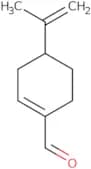
Discontinued product(+/-)-Perillaldehyde
CAS:Perillaldehyde is a natural compound that has been used in food and medicine for centuries. It is an antimicrobial agent with dextran sulfate, which is a sugar polymer that inhibits the growth of fungi and bacteria. Perillaldehyde also has been shown to inhibit the energy metabolism of microorganisms by decreasing ATP production. Perillaldehyde has also been shown to have genotoxic activity, as it can cause DNA strand breaks. This compound also causes oxidative stress in cells by reducing mitochondrial membrane potential and inducing reactive oxygen species (ROS). Perillaldehyde has acute toxicities, as it causes electrochemical impedance spectroscopy changes that indicate cell death.
Formula:C10H14OPurity:Min. 95%Color and Shape:PowderMolecular weight:150.22 g/mol4-(2,4-Dinitrophenyl)butanoicacid
CAS:Please enquire for more information about 4-(2,4-Dinitrophenyl)butanoicacid including the price, delivery time and more detailed product information at the technical inquiry form on this page
Formula:C10H10N2O6Purity:Min. 95%Molecular weight:254.2 g/molRef: 3D-FD149753
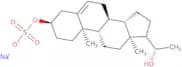
Discontinued product20a-Dihydro pregnenolone 3-sulfate sodium salt
CAS:Please enquire for more information about 20a-Dihydro pregnenolone 3-sulfate sodium salt including the price, delivery time and more detailed product information at the technical inquiry form on this page
Formula:C21H33NaO5SPurity:Min. 95%Molecular weight:420.54 g/molRef: 3D-FD21937
Discontinued product


![(11β,16α)-16,17-[(1RS)-Ethylidenebis(oxo)]-11,21-dihydroxypregna-1,4-diene-3,20-dione](/_next/image/?url=https%3A%2Fstatic.cymitquimica.com%2Fproducts%2F3D%2Fthumb-webp%2FFE146156.webp&w=3840&q=75)