Pharmaceutical Standards
Pharmaceutical standards are a comprehensive set of reference materials essential for ensuring the safety, efficacy, and quality of pharmaceutical products. This category includes standards for active pharmaceutical ingredients (APIs), which are the core components responsible for therapeutic effects. Additionally, it covers compounds and metabolites relevant to both the pharmaceutical and veterinary industries, providing benchmarks for the accurate measurement and analysis of these substances. Nitrosamine control standards are crucial for detecting and mitigating potentially harmful nitrosamines in drug formulations. Toxicology standards help assess the safety and potential adverse effects of pharmaceutical compounds. Furthermore, enzyme activators and inhibitors standards are vital for research and development, enabling precise studies of biochemical pathways and drug mechanisms. These pharmaceutical standards are indispensable tools for regulatory compliance, quality control, and research, ensuring that pharmaceutical products meet stringent safety and effectiveness criteria.
Subcategories of "Pharmaceutical Standards"
- APIs for research and impurities(274,823 products)
- Enzyme Activators and Inhibitors(2,827 products)
- Nitrosamines(2,605 products)
- Pharmaceutical and Veterinary Compounds and Metabolites(2,867 products)
- Toxicology(13,652 products)
Found 7836 products of "Pharmaceutical Standards"
Sort by
Purity (%)
0
100
|
0
|
50
|
90
|
95
|
100
Biotinyl-Amyloid b-Protein (1-42) ammonium salt
CAS:<p>Please enquire for more information about Biotinyl-Amyloid b-Protein (1-42) ammonium salt including the price, delivery time and more detailed product information at the technical inquiry form on this page</p>Formula:C213H325N57O62S2Purity:Min. 95%Molecular weight:4,740.34 g/mol2',6'-Dimethylacetanilide
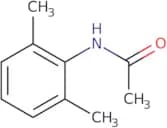
CAS:<p>2',6'-Dimethylacetanilide is an organic solvent that is used in the production of dyes. The methyl groups on this molecule are responsible for its solubility in water and other polar solvents. This compound has been shown to interact with carboxylate ions, forming hydrogen bonds. 2',6'-Dimethylacetanilide has been shown to inhibit the growth of Echinochloa crus-galli by inhibiting the production of amides through interactions with carboxylates and chloride ions. 2',6'-Dimethylacetanilide also interacts with 2,6-dihydroxybenzoic acid, which is a precursor to active methylene compounds that are used to make polymers, pharmaceuticals, and pesticides.</p>Formula:C10H13NOPurity:Min. 95%Color and Shape:PowderMolecular weight:163.22 g/mol3-(3'-Trifluoromethylphenyl)propanol
CAS:<p>3-(3'-Trifluoromethylphenyl)propanol is a trifluoroacetic acid derivative that is used in acylation reactions to form esters. It can be obtained by the reaction of aluminium chloride, isopropyl alcohol, and phosphine with 3-trifluoromethylaniline. Impurities may include chloride and zirconium. The trifluoromethyl group on this molecule can react with the carbonyl group of an organic acid to form a trifluoroacetate ester.</p>Purity:Min. 95%D-alpha-Hydroxyisovaleric acid
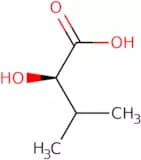
CAS:<p>D-alpha-Hydroxyisovaleric acid is a compound that is used to synthesize stereoisomers. It is also a component of supramolecular chemistry and has been used in the construction of supramolecular polymers. D-alpha-Hydroxyisovaleric acid can be found in some plants, such as valinomycin, isovaleric acid, and metarhizium. This stereoisomer can be synthetized from the hydroxy group and an amino acid or peptide. D-alpha-Hydroxyisovaleric acid has the ability to degrade nonribosomal peptides into smaller molecules through its hydrolytic properties. It also inhibits Verticillium dahliae, which causes wilt disease in plants, by inhibiting the synthesis of hydroxycarboxylates. D-alpha-Hydroxyisovaleric acid is biodegradable and can be used for industrial purposes as well as pharmaceuticals.</p>Formula:C5H10O3Purity:Min. 95%Color and Shape:White PowderMolecular weight:118.13 g/mol4-(2'-N-Boc-hydrazino)benzoic acid
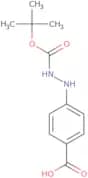
CAS:Please enquire for more information about 4-(2'-N-Boc-hydrazino)benzoic acid including the price, delivery time and more detailed product information at the technical inquiry form on this pageFormula:C12H16N2O4Purity:Min. 95%Molecular weight:252.27 g/mol2'-Bromoacetophenone
CAS:<p>2'-Bromoacetophenone is a chemical compound that is used in the synthesis of unsaturated ketones. It reacts with terminal alkynes to form 2-bromo-2-methylpropene, which can subsequently be converted into unsaturated ketones such as methyl vinyl ketone. The reaction time for this process is less than five minutes and no catalyst is required. This chemical has been shown to have anticancer activity and may act as a biomimetic. 2'-Bromoacetophenone also has been shown to react with hydroxyl groups in the presence of copper salts and hydrochloric acid to form an unsaturated ketone with a terminal alkene.</p>Formula:C8H7BrOPurity:Min. 90%Color and Shape:Clear LiquidMolecular weight:199.04 g/molZolmitriptan Related Compound F
CAS:<p>Please enquire for more information about Zolmitriptan Related Compound F including the price, delivery time and more detailed product information at the technical inquiry form on this page</p>Purity:Min. 95%Sodium N-Lauroylsarcosinate - 30% solution
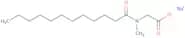
CAS:<p>Sodium N-lauroylsarcosinate is a chemical compound that is used in the production of sodium salts. It has high resistance to biological samples and is soluble in water, organic solvents, and other chemicals. It can be used to measure biochemical properties, such as reaction solution polymerase chain reaction (PCR) or electrochemical impedance spectroscopy (EIS). Sodium N-lauroylsarcosinate can also be used for wastewater treatment and water permeability. It has been used as an analytical method for proteins, peptides, amino acids, and carbohydrates. It has been shown to have biological properties on human serum.</p>Formula:C15H28NNaO3Color and Shape:Clear LiquidMolecular weight:293.38 g/mol2,7-Naphthalenedisulfonic acid disodium salt
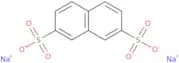
CAS:<p>2,7-Naphthalenedisulfonic acid disodium salt is a heteronuclear molecule that is synthesized by the reaction of 2,7-naphthalenedisulfonyl chloride with sodium sulfite in water. It has been used in the manufacture of dyes and pigments, as a corrosion inhibitor for steel and aluminum, and as an intermediate in the synthesis of pharmaceuticals. The compound has been detected in groundwater samples at concentrations up to 10 mg/L. The compound is also found in geothermal waters at concentrations up to 0.6 mg/L.</p>Formula:C10H6Na2O6S2Purity:Min. 95%Molecular weight:332.26 g/molAtorvastatin sodium
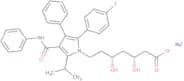
CAS:<p>HMG-CoA reductase antagonist</p>Formula:C33H35FN2O5•NaPurity:Min. 95%Color and Shape:PowderMolecular weight:581.63 g/mol(Leu8,D-Trp22,Tyr25)-Somatostatin-28
CAS:<p>Please enquire for more information about (Leu8,D-Trp22,Tyr25)-Somatostatin-28 including the price, delivery time and more detailed product information at the technical inquiry form on this page</p>Formula:C138H209N41O40S2Purity:Min. 95%Molecular weight:3,146.52 g/molBoc-Asn-o-nitrophenyl ester
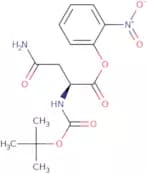
CAS:<p>Please enquire for more information about Boc-Asn-o-nitrophenyl ester including the price, delivery time and more detailed product information at the technical inquiry form on this page</p>Formula:C15H19N3O7Purity:Min. 95%Molecular weight:353.33 g/molNeuronostatin-13 (mouse, rat) trifluoroacetate salt
Please enquire for more information about Neuronostatin-13 (mouse, rat) trifluoroacetate salt including the price, delivery time and more detailed product information at the technical inquiry form on this pageFormula:C65H112N20O17Purity:Min. 95%Molecular weight:1,445.71 g/mol2'-(2-Thienylidene)-4-chloroacetophenone
CAS:2'-(2-Thienylidene)-4-chloroacetophenone is a fine chemical that is useful as a building block for research, as a reagent in the synthesis of other compounds, and as a speciality chemical. It is also an intermediate in the synthesis of pharmaceuticals and agrochemicals. This compound can be used in reactions involving nucleophilic substitution and oxidation with hydrogen peroxide. 2'-(2-Thienylidene)-4-chloroacetophenone has been shown to be useful in organic syntheses because it can act as an electron-donating group.Formula:C12H9ClOSPurity:Min. 95%Molecular weight:236.72 g/molCholesterol butyrate
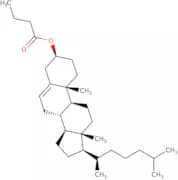
CAS:Controlled ProductCholesterol butyrate is a fatty acid that has been shown to have antimicrobial activity against Lactobacillus acidophilus. It is also used as a treatment for trigeminal neuralgia and bowel disease. Cholesterol butyrate has been shown to inhibit the growth of cancer cells in vitro by inducing apoptosis. This compound may be effective in the treatment of cancer due to its photostability and ability to bind with lipoproteins and other compounds, which leads to an increased concentration of cholesterol butyrate at the site of inflammation. Cholesterol butyrate has also been shown to be effective in preventing inflammatory bowel disease by inhibiting prostaglandin synthesis.Formula:C31H52O2Purity:Min. 95%Color and Shape:PowderMolecular weight:456.74 g/mol2-Methylacetophenone
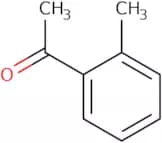
CAS:<p>2-Methylacetophenone is an organic compound that has a molecular weight of 100.12 g/mol, and a chemical formula of C10H14O2. The compound is a colorless liquid at room temperature and pressure, with a sweet odor. It is soluble in nonpolar solvents such as hexane, ether, benzene, and toluene. 2-Methylacetophenone has been used as a solvent for the chemical study of benzyl groups, hydroxyl group activation energies, hydrogen bond, carbonyl group proton and intramolecular hydrogen bonding. It has also been used to study the reaction mechanism of fatty acid with benzyl groups in cryogenic conditions.</p>Formula:C9H10OPurity:Min. 95%Color and Shape:Colorless Clear LiquidMolecular weight:134.18 g/molLumisterol 3
CAS:Controlled Product<p>Lumisterol 3 is a provitamin compound that is produced by the human body through the conversion of vitamin D into lumisterol. It is used as a dietary supplement and can be found in the human serum, cellular, and skin cells. Lumisterol 3 has been shown to increase cholesterol synthesis, which may be due to its ability to activate enzymes involved in this process. Lumisterol 3 has also been shown to have physiological effects on humans. These effects include an increase in energy expenditure and a decrease in blood pressure and heart rate. The molecular modeling of lumisterol 3 shows that it has a similar structure to vitamin D, but with three instead of two side chains.</p>Formula:C27H44OPurity:90%NmrColor and Shape:PowderMolecular weight:384.64 g/mol(S)-β-methyl-γ-butyrolactone
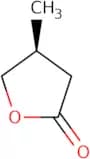
CAS:(S)-Beta-methyl-gamma-butyrolactone is a synthetic vitamin D2 that is used in the synthesis of calciferol. It is also used for the stereospecific synthesis of 25-hydroxyvitamin D3, which is an active metabolite of vitamin D2. The compound has been found to be effective against rickets, hypocalcemia, and osteomalacia. (S)-beta-methyl-gamma-butyrolactone has shown optical activity and can be used as a chiral auxiliary in the syntheses of vitamin A, retinoids, and other drugs that require optically pure starting materials.Formula:C5H8O2Purity:Min. 95%Color and Shape:Clear LiquidMolecular weight:100.12 g/mol5alpha-Pregnan-3beta,17alpha-diol-20-one
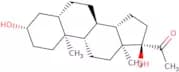
CAS:Controlled Product<p>5alpha-Pregnan-3beta,17alpha-diol-20-one is a versatile building block that can be used in the synthesis of a wide range of chemical compounds. It has CAS number 570-54-7 and is useful as a reagent in organic chemistry. This compound is also an intermediate for the synthesis of other chemicals, such as steroids and hormones. 5alpha-Pregnan-3beta,17alpha-diol-20-one can be used to produce high quality products with diverse biological activities and molecular structures. The compound is also useful in the production of pharmaceuticals, pesticides, and herbicides.</p>Formula:C21H34O3Purity:Min. 95%Color and Shape:PowderMolecular weight:334.49 g/molD,L-Mevalonic acid lactone
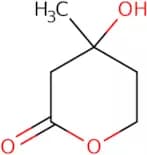
CAS:<p>Mevalonic acid lactone is a natural compound that has been shown to have an effect on mitochondrial membrane potential. It has also been shown to inhibit the drug transporter P-glycoprotein, which is involved in the transport of drugs out of cells. Mevalonic acid lactone has also demonstrated an anti-inflammatory effect, as it inhibits the production of TNF-α and IL-6 in human serum. This compound also possesses antioxidant properties, which may be due to its hydroxyl group and phenoxy groups. Mevalonic acid lactone can be used as a model system for sesquiterpene lactones, and it is able to improve mitochondrial functions by inhibiting pyrazole ring formation.</p>Formula:C6H10O3Purity:Min. 95%Color and Shape:PowderMolecular weight:130.14 g/mol