Pharmaceutical Standards
Pharmaceutical standards are a comprehensive set of reference materials essential for ensuring the safety, efficacy, and quality of pharmaceutical products. This category includes standards for active pharmaceutical ingredients (APIs), which are the core components responsible for therapeutic effects. Additionally, it covers compounds and metabolites relevant to both the pharmaceutical and veterinary industries, providing benchmarks for the accurate measurement and analysis of these substances. Nitrosamine control standards are crucial for detecting and mitigating potentially harmful nitrosamines in drug formulations. Toxicology standards help assess the safety and potential adverse effects of pharmaceutical compounds. Furthermore, enzyme activators and inhibitors standards are vital for research and development, enabling precise studies of biochemical pathways and drug mechanisms. These pharmaceutical standards are indispensable tools for regulatory compliance, quality control, and research, ensuring that pharmaceutical products meet stringent safety and effectiveness criteria.
Subcategories of "Pharmaceutical Standards"
- APIs for research and impurities(274,782 products)
- Enzyme Activators and Inhibitors(2,827 products)
- Nitrosamines(2,606 products)
- Pharmaceutical and Veterinary Compounds and Metabolites(2,849 products)
- Toxicology(13,652 products)
Found 7836 products of "Pharmaceutical Standards"
Sort by
Purity (%)
0
100
|
0
|
50
|
90
|
95
|
100
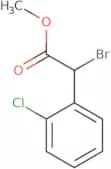
2-Bromo-2'-chlorophenyl acetic acid methyl ester
CAS:<p>2-Bromo-2'-chlorophenyl acetic acid methyl ester is a synthetic chemical that can be used as a pharmaceutical intermediate. It is prepared by the reaction of bromine with 2-chloroacetic acid and magnesium, which yields the desired product. The catalytic effect of this chemical is due to its ability to act as a catalyst for many reactions, such as the synthesis of clopidogrel. This chemical also has an industrial application in the production of other medicines, such as aspirin.</p>Formula:C9H8BrClO2Purity:Min. 95%Molecular weight:263.52 g/mol(Leu8,D-Trp22,Tyr25)-Somatostatin-28
CAS:<p>Please enquire for more information about (Leu8,D-Trp22,Tyr25)-Somatostatin-28 including the price, delivery time and more detailed product information at the technical inquiry form on this page</p>Formula:C138H209N41O40S2Purity:Min. 95%Molecular weight:3,146.52 g/molAllatotropin
CAS:<p>Allatotropin is a diagnostic agent that belongs to the class of antimicrobial peptides. It has been shown to have strong activity against Gram-positive and Gram-negative bacteria. Allatotropin inhibits the growth of bacteria by binding to the external membrane, disrupting its integrity. Allatotropin also has been shown to increase gamma-aminobutyric acid levels in brain tissue and galleria mellonella larvae when injected subcutaneously. This may be due to its ability to activate GABA receptors. Allatotropin can be synthesized in vitro by combining β-amino acids with fatty acids and terminal residues, such as lysine, arginine, and glutamine, under conditions that mimic those found in living cells. This synthetic process yields a mixture of allatotropins with varying chain lengths and amino acid sequences.</p>Formula:C65H103N19O17S2Purity:Min. 95%Molecular weight:1,486.76 g/molBiotinyl-(Des-Bromo)-Neuropeptide B (1-23) (human) trifluoroacetate salt
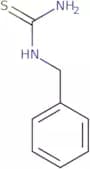
CAS:<p>Please enquire for more information about Biotinyl-(Des-Bromo)-Neuropeptide B (1-23) (human) trifluoroacetate salt including the price, delivery time and more detailed product information at the technical inquiry form on this page</p>Formula:C117H176N32O32SPurity:Min. 95%Molecular weight:2,574.91 g/molBenzylthiourea
CAS:<p>Benzylthiourea is a molecule that binds to integrin receptors, which are protein molecules on the surface of cells. It has shown efficacy in the treatment of bowel disease, autoimmune diseases, and diabetic neuropathy. Benzylthiourea inhibits protease activity and may be used to treat inflammatory bowel disease. It also inhibits cyclase activity, which may be useful for treating cancer. Benzylthiourea has been shown to have anti-inflammatory properties, due to its ability to inhibit hydrochloric acid production in the stomach. This drug also has an effect on energy metabolism by inhibiting hydrogen bonds between hydroxide ions and carbonyl groups in acetaldehyde and methylglyoxal.</p>Formula:C8H10N2SPurity:Min. 95%Color and Shape:PowderMolecular weight:166.24 g/mol(-)-Corey lactone diol
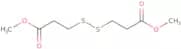
CAS:<p>(-)-Corey lactone diol is a synthetic compound that is soluble in organic solvents. It is used for the synthesis of carbocyclic nucleosides, which are analogs of pyrimidine nucleosides. (-)-Corey lactone diol has been shown to inhibit cholesterol synthesis and the synthesis of alkene. (-)-Corey lactone diol also shows anti-inflammatory properties, which may be due to its inhibition of prostaglandin synthesis.</p>Formula:C8H12O4Purity:Min. 95%Molecular weight:172.18 g/mol3,3'-Dithiodipropionic acid dimethyl ester
CAS:3,3'-Dithiodipropionic acid dimethyl ester is a reactive chemical that can be used as a cross-linking agent. When reacted with an amine group in a protein, the amine is converted to an amide bond and the amino acid becomes covalently attached to the protein. 3,3'-Dithiodipropionic acid dimethyl ester reacts with chloride ions or hydrochloric acid to form a disulfide bond between two proteins. This product is also used as a polymerization initiator for polymers and can be used in the synthesis of hyaluronic acid. 3,3'-Dithiodipropionic acid dimethyl ester has been shown to react with sodium citrate and osmosis to produce sodium hydroxide solution.Formula:C8H14O4S2Purity:Min. 97%Color and Shape:Colorless Clear LiquidMolecular weight:238.33 g/mol1',2'-Dehydro dicyclomine
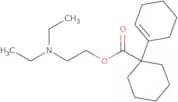
CAS:Controlled Product<p>Please enquire for more information about 1',2'-Dehydro dicyclomine including the price, delivery time and more detailed product information at the technical inquiry form on this page</p>Formula:C19H33NO2Purity:Min. 95%Molecular weight:307.47 g/molVitamin A acetate - min 2800000 IU/g
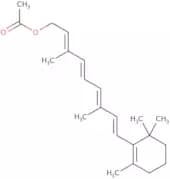
CAS:<p>Vitamin A acetate is a retinoid that can be used to supplement dietary intake of vitamin A. It is a synthetic retinoid and is chemically similar to retinol, the natural form of vitamin A. Vitamin A acetate has been shown to have antioxidant properties in vitro and in vivo, which are likely due to its ability to regenerate endogenous antioxidants. This agent also has pro-apoptotic effects on cells that are exposed to oxidative injury or exhibit redox potentials below -400 mV. In addition, it significantly reduces oxidative injury caused by pharmacological agents such as doxorubicin or bleomycin.</p>Formula:C22H32O2Purity:Min 2800000 Iu/GColor and Shape:PowderMolecular weight:328.49 g/mol6-(7-Nitro-benzo[2,1,3]oxadiazol-4-ylamino)-hexanoyl-Arg-Pro-Lys-Pro-Leu-Ala-Nva-Trp-Lys((7-dimethylaminocoumarin-4-yl)-acetyl)-NH2 trifluoroacetate salt
CAS:<p>Please enquire for more information about 6-(7-Nitro-benzo[2,1,3]oxadiazol-4-ylamino)-hexanoyl-Arg-Pro-Lys-Pro-Leu-Ala-Nva-Trp-Lys((7-dimethylaminocoumarin-4-yl)-acetyl)-NH2 trifluoroacetate salt including the price, delivery time and more detailed product information at the technical inquiry form on this page</p>Formula:C78H111N21O16Purity:Min. 95%Molecular weight:1,598.85 g/mol4-Nitrophenethylamine
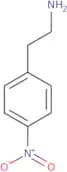
CAS:Controlled Product<p>4-Nitrophenethylamine is a synthetic chemical that is used as an antigen to raise antibodies. It is used in the detection of chemical substances that are associated with the production of histamine and acetylcholine. This chemical has been shown to inhibit the reaction between nitro and acylation, which can lead to the formation of carcinogenic nitrosamines. 4-Nitrophenethylamine also has an inhibitory effect on oxidases and amines, which are enzymes found in cells. This chemical binds to amide groups in proteins and inhibits their activity.</p>Formula:C8H10N2O2Purity:Min. 95%Color and Shape:LiquidMolecular weight:166.18 g/molNeuronostatin-13 (mouse, rat) trifluoroacetate salt
<p>Please enquire for more information about Neuronostatin-13 (mouse, rat) trifluoroacetate salt including the price, delivery time and more detailed product information at the technical inquiry form on this page</p>Formula:C65H112N20O17Purity:Min. 95%Molecular weight:1,445.71 g/molBiotinyl-Amyloid b-Protein (1-40) trifluoroacetate salt
CAS:<p>Please enquire for more information about Biotinyl-Amyloid b-Protein (1-40) trifluoroacetate salt including the price, delivery time and more detailed product information at the technical inquiry form on this page</p>Formula:C204H309N55O60S2Purity:Min. 95%Molecular weight:4,556.1 g/molNeuronostatin-19 (mouse, rat) trifluoroacetate salt
<p>Please enquire for more information about Neuronostatin-19 (mouse, rat) trifluoroacetate salt including the price, delivery time and more detailed product information at the technical inquiry form on this page</p>Formula:C91H153N29O26Purity:Min. 95%Molecular weight:2,069.37 g/molcis-3-Hexenal - stabilised: 50% in triacetin
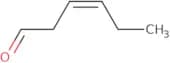
CAS:<p>Cis-3-hexenal is a fatty acid that is found in various foods, including soybean and corn oils. It can be used as a chemical substrate to measure the activity of lipoxygenases, enzymes that catalyze the formation of hydroperoxides from polyunsaturated fatty acids. Cis-3-hexenal is also an insect attractant and has been shown to have antifungal properties against plant pathogens such as Phytophthora infestans. This chemical compound has also been shown to inhibit protein synthesis in cells and to be able to react with DNA. Cis-3-hexenal - stabilised: 50% in triacetin</p>Formula:C6H10OPurity:Min. 95%Color and Shape:PowderMolecular weight:98.14 g/molD-alpha-Hydroxyisovaleric acid
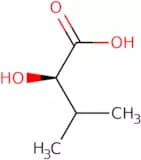
CAS:<p>D-alpha-Hydroxyisovaleric acid is a compound that is used to synthesize stereoisomers. It is also a component of supramolecular chemistry and has been used in the construction of supramolecular polymers. D-alpha-Hydroxyisovaleric acid can be found in some plants, such as valinomycin, isovaleric acid, and metarhizium. This stereoisomer can be synthetized from the hydroxy group and an amino acid or peptide. D-alpha-Hydroxyisovaleric acid has the ability to degrade nonribosomal peptides into smaller molecules through its hydrolytic properties. It also inhibits Verticillium dahliae, which causes wilt disease in plants, by inhibiting the synthesis of hydroxycarboxylates. D-alpha-Hydroxyisovaleric acid is biodegradable and can be used for industrial purposes as well as pharmaceuticals.</p>Formula:C5H10O3Purity:Min. 95%Color and Shape:White PowderMolecular weight:118.13 g/molBiotinyl-Hepcidin-25 (human) trifluoroacetate salt
CAS:<p>Please enquire for more information about Biotinyl-Hepcidin-25 (human) trifluoroacetate salt including the price, delivery time and more detailed product information at the technical inquiry form on this page</p>Formula:C123H184N36O33S10Purity:Min. 95%Molecular weight:3,015.66 g/molBiotinyl-MCH (salmon) trifluoroacetate salt
CAS:<p>Please enquire for more information about Biotinyl-MCH (salmon) trifluoroacetate salt including the price, delivery time and more detailed product information at the technical inquiry form on this page</p>Formula:C99H153N29O26S5Purity:Min. 95%Molecular weight:2,325.78 g/mol3-(3,5-Dimethoxyphenyl)propionic acid methyl ester
CAS:3-(3,5-Dimethoxyphenyl)propionic acid methyl ester is a reagent that is used as a reactant in organic synthesis. It is also useful as a scaffold for the synthesis of heterocycles and other complex compounds. 3-(3,5-Dimethoxyphenyl)propionic acid methyl ester is used in research chemical synthesis and as a versatile building block for the production of fine chemicals. This chemical can be used to create products such as pharmaceuticals, pesticides, and cosmetics.Formula:C12H16O4Purity:Min. 95%Molecular weight:224.25 g/molIsobutylurea
CAS:<p>Isobutylurea is a chemical compound with a hydroxyl group and a phosphodiesterase inhibitor. It is used in the treatment of inflammatory diseases, infectious diseases, and autoimmune diseases. Isobutylurea has been found to denature proteins by reacting with the carbonyl group of amino acids. The reaction intermediates formed are then hydrolyzed by phosphodiesterase activity. Isobutylurea was also shown to have an inhibitory effect on cyclic nucleotide phosphodiesterase activity in the calf-thymus DNA system.</p>Formula:C5H12N2OPurity:Min. 95%Molecular weight:116.16 g/mol



![6-(7-Nitro-benzo[2,1,3]oxadiazol-4-ylamino)-hexanoyl-Arg-Pro-Lys-Pro-Leu-Ala-Nva-Trp-Lys((7-dimeth…](/_next/image/?url=https%3A%2Fstatic.cymitquimica.com%2Fproducts%2F3D%2Fthumb-webp%2FFN110943.webp&w=3840&q=75)