Pharmaceutical Standards
Subcategories of "Pharmaceutical Standards"
- APIs for research and impurities(277,261 products)
- Enzyme Activators and Inhibitors(2,829 products)
- Nitrosamines(2,661 products)
- Pharmaceutical and Veterinary Compounds and Metabolites(2,891 products)
- Toxicology(13,367 products)
Found 8131 products of "Pharmaceutical Standards"
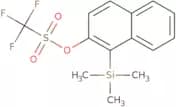
1-(Trimethylsilyl)-2-naphthyl Trifluoromethanesulfonate
CAS:1-(Trimethylsilyl)-2-naphthyl Trifluoromethanesulfonate is a solvent that has been used for the synthesis of oxygen heterocycles. It is also used as a reagent to cleave bonds in organic molecules, such as alkene, solvents, aldehydes and activated esters. This compound is an unsymmetrical nucleophile that reacts with electron-poor alkenes to generate an unsaturated bond between two carbons. Mechanistic studies have shown that the reaction proceeds through a concerted mechanism involving the formation of a covalent phosphine intermediate.
Formula:C14H15F3O3SSiPurity:Min. 95%Color and Shape:PowderMolecular weight:348.41 g/molRef: 3D-FT60048
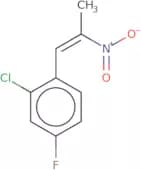
Discontinued product1-(2-Chloro-4-fluorophenyl)-2-nitropropene
CAS:1-(2-Chloro-4-fluorophenyl)-2-nitropropene is a versatile building block that can be used to produce a variety of compounds with various properties. It is a high quality, reagent grade chemical that is useful for research and development purposes. This compound has been shown to be an effective intermediate in the synthesis of complex compounds, such as pharmaceuticals and pesticides.
Formula:C9H7ClFNO2Purity:Min. 95%Molecular weight:215.61 g/molRef: 3D-FC65821
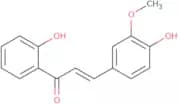
Discontinued product2',4-Dihydroxy-3-methoxychalcone
CAS:2',4-Dihydroxy-3-methoxychalcone is a chalcone that has been shown to have reactive properties. The compound was found to be cytotoxic to cancer cells in the presence of neutrophils, and it has been shown to inhibit the growth of t47d cells in culture. There is also evidence that 2',4-Dihydroxy-3-methoxychalcone may help regulate the microflora in the gut, which may help prevent obesity and diabetes. In epidemiological studies, 2',4-Dihydroxy-3-methoxychalcone was found to be protective against cancer, but more research is required.
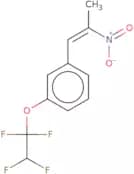
Formula:C16H14O4Purity:Min. 95%Color and Shape:PowderMolecular weight:270.28 g/mol3'-(Tetrafluoroethoxy)-beta-methyl-beta-nitrostyrene
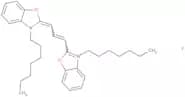
CAS:3'-(Tetrafluoroethoxy)-beta-methyl-beta-nitrostyrene is a versatile building block that can be used as a reaction component for the synthesis of more complex compounds. This compound is also known to have speciality chemical and research chemical properties. 3'-(Tetrafluoroethoxy)-beta-methyl-beta-nitrostyrene has been shown to be an effective reagent for the synthesis of high quality complex compounds.Formula:C11H9F4NO3Purity:Min. 95%Molecular weight:279.19 g/mol3,3'-Diheptyloxacarbocyanine iodide
CAS:3,3'-Diheptyloxacarbocyanineiodide (DHCI) is a fluorescent probe that is used in the treatment of solid tumours. It is taken up by tumor cells and causes them to fluoresce, which can be seen under a microscope. DHCI has been shown to be effective against hypoxic tumours and tumors with low oxygen levels due to its ability to penetrate tumor cells and deliver oxygen. The uptake of DHCI by cancer cells is also dependent on the permeability of the blood vessels present in the tumor. This drug has been shown to have a large therapeutic window for treatment of solid tumours.
Formula:C31H41N2O2•IPurity:Min. 95%Color and Shape:PowderMolecular weight:600.57 g/molRef: 3D-FD148550
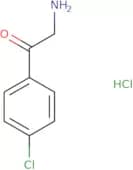
Discontinued product2-Amino-4'-chloroacetophenone hydrochloride
CAS:Controlled Product2-Amino-4'-chloroacetophenone hydrochloride is a cytotoxic compound that inhibits the polymerization of tubulin. It has been shown to have cytotoxic effects and inhibit the growth of cancer cells in vitro at low micromolar concentrations. 2-Amino-4'-chloroacetophenone hydrochloride is a member of the cytotoxic class of compounds and can be used to slow or stop cell division by inhibiting the production of proteins vital for cell division, such as tubulin. This effect is due to its ability to bind to the beta subunit of tubulin, which disrupts its structure and prevents polymerization from occurring.
Formula:C8H8ClNO•HClPurity:Min. 95%Color and Shape:PowderMolecular weight:206.07 g/molRef: 3D-FA55395
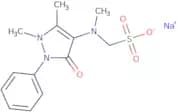
Discontinued productDipyrone
CAS:Dipyrone is an anti-inflammatory and analgesic drug that belongs to the group of non-steroidal anti-inflammatory drugs. It has been shown to inhibit the production of prostaglandins, which are involved in inflammation, by inhibiting cyclooxygenase. The polymerase chain reaction (PCR) method is a biochemical technique used to amplify a segment of DNA, typically for use as a genetic marker or for cloning a particular gene. A PCR assay can be used to detect the presence of bacterial DNA in a sample. Dipyrone has been shown to possess chemiluminescence activity, which is indicative of its ability to bind with DNA. This binding inhibits transcription and replication and may be responsible for the toxic effects on epidermal cells observed in animal studies. Dipyrone also has been shown to have anti-inflammatory activities through its inhibition of cyclooxygenase and its ability to inhibit neutrophil migration and function.
Formula:C13H16N3NaO4SPurity:Min. 95%Color and Shape:White SolidMolecular weight:333.34 g/molRef: 3D-FD22539
Discontinued productSodium N-lauroylsarcosinate
CAS:Sodium N-lauroylsarcosinate is a surfactant that is used in water treatment, wastewater treatment, and as a detergent. It is also used as an analytical tool for the titration calorimetry of sodium salts. Sodium N-lauroylsarcosinate is a sodium salt that belongs to the group of sodium salts. It has been shown to have biological properties such as permeability through human serum and biodegradability. The salt form of this compound has an electrochemical impedance spectrum which can be used to identify it.
Formula:C15H28NNaO3Purity:Min. 94%Color and Shape:White Off-White PowderMolecular weight:293.38 g/molNaphthalene-2-sulphonylacetamide oxime
CAS:Please enquire for more information about Naphthalene-2-sulphonylacetamide oxime including the price, delivery time and more detailed product information at the technical inquiry form on this page
Purity:Min. 95%Ref: 3D-FN169404
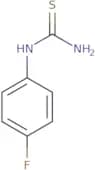
Discontinued productN-(4-Fluorophenyl)thiourea
CAS:N-(4-Fluorophenyl)thiourea (FPTU) is a molecule that belongs to the class of thioureas. It has been shown to have a constant dihedral angle and is membrane transportable, which may be due to its ability to bind receptor proteins. FPTU has also been shown to inhibit chloride ion transport through the intestinal wall. In addition, it has been shown to have anti-inflammatory properties in animal models, which may be due to its ability to inhibit γ-aminobutyric acid (GABA) synthesis.
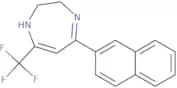
Formula:C7H7FN2SPurity:Min. 95%Molecular weight:170.21 g/mol7-(2-Naphthyl)-5-(trifluoromethyl)-1H,2H,3H-1,4-diazepine
CAS:Please enquire for more information about 7-(2-Naphthyl)-5-(trifluoromethyl)-1H,2H,3H-1,4-diazepine including the price, delivery time and more detailed product information at the technical inquiry form on this pageFormula:C16H13F3N2Purity:Min. 95%Color and Shape:PowderMolecular weight:290.28 g/molRef: 3D-FN168955
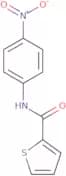
Discontinued productN-(4-Nitrophenyl)-2-thienylformamide
CAS:Please enquire for more information about N-(4-Nitrophenyl)-2-thienylformamide including the price, delivery time and more detailed product information at the technical inquiry form on this page
Formula:C11H8N2O3SPurity:Min. 95%Color and Shape:PowderMolecular weight:248.26 g/molRef: 3D-FN169074
Discontinued product2-amino-7-methyl-4-(2-naphthyl)-5-oxo-4,6,7,8-tetrahydro2H-chromene-3-carbonitrile
CAS:Please enquire for more information about 2-amino-7-methyl-4-(2-naphthyl)-5-oxo-4,6,7,8-tetrahydro2H-chromene-3-carbonitrile including the price, delivery time and more detailed product information at the technical inquiry form on this page
Formula:C21H18N2O2Purity:Min. 95%Color and Shape:PowderMolecular weight:330.38 g/molRef: 3D-FA169077
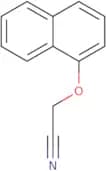
Discontinued product2-Naphthyloxyethanenitrile
CAS:Please enquire for more information about 2-Naphthyloxyethanenitrile including the price, delivery time and more detailed product information at the technical inquiry form on this page
Formula:C12H9NOPurity:Min. 95%Color and Shape:PowderMolecular weight:183.21 g/molRef: 3D-FN169054
Discontinued product(4-(3-Nitrophenyl)(2,5-thiazolyl))(4-(trifluoromethoxy)phenyl)amine
CAS:Please enquire for more information about (4-(3-Nitrophenyl)(2,5-thiazolyl))(4-(trifluoromethoxy)phenyl)amine including the price, delivery time and more detailed product information at the technical inquiry form on this page
Formula:C16H10F3N3O3SPurity:Min. 95%Color and Shape:PowderMolecular weight:381.33 g/molRef: 3D-FN169531
Discontinued product1-(3-Chlorophenyl) thiourea
CAS:1-(3-Chlorophenyl) thiourea is a curcumin analog that has been shown to inhibit the epidermal growth factor (EGF) receptor. It is synthesized from 1,2-dichlorobenzene and urea in a two-step process. The anhydrous potassium carbonate is first converted to the potassium salt with an acid chloride. The second step is the reaction of this salt with urea in the presence of excess anhydrous potassium carbonate. This product has been shown to be effective against cancer cells and may be used as a potential anticancer agent for treatment of skin cancer. 1-(3-Chlorophenyl) thiourea inhibits EGF receptor by binding to it and preventing its activation, which prevents cell proliferation and reduces tumor size.
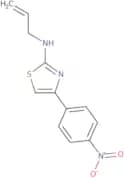
Purity:Min. 95%(4-(4-nitrophenyl)(2,5-thiazolyl))prop-2-enylamine
CAS:Please enquire for more information about (4-(4-nitrophenyl)(2,5-thiazolyl))prop-2-enylamine including the price, delivery time and more detailed product information at the technical inquiry form on this page
Purity:Min. 95%Ref: 3D-FN169097
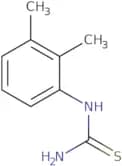
Discontinued product2,3-Dimethylphenylthiourea
CAS:Please enquire for more information about 2,3-Dimethylphenylthiourea including the price, delivery time and more detailed product information at the technical inquiry form on this page
Formula:C9H12N2SPurity:Min. 95%Color and Shape:PowderMolecular weight:180.27 g/molRef: 3D-FD168853
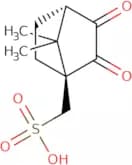
Discontinued productCamphorquinone-10-sulfonic acid hydrate
CAS:Camphorquinone-10-sulfonic acid hydrate is a soybean trypsin inhibitor that is used as a preparative agent in organic synthesis. It reacts with histidine, lysine residues, and other molecules to form a light-chain kinase that inhibits the action of the enzyme trypsin. Camphorquinone-10-sulfonic acid hydrate has been shown to be resistant to proteolysis by gastrointestinal enzymes. This agent also has diabetogenic properties by inhibiting the activity of membrane potential and chloride channels in pancreatic β cells. Camphorquinone-10-sulfonic acid hydrate forms an ion pair with choline, which can inhibit the enzyme acetylcholinesterase, leading to accumulation of acetylcholine at nerve endings.
Formula:C10H16O6SPurity:Min. 95 Area-%Color and Shape:Yellow PowderMolecular weight:264.3 g/molRef: 3D-FC19645
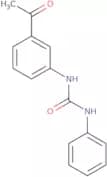
Discontinued product1-(3-Acetylphenyl)-3-phenylurea
CAS:Please enquire for more information about 1-(3-Acetylphenyl)-3-phenylurea including the price, delivery time and more detailed product information at the technical inquiry form on this page
Formula:C15H14N2O2Purity:Min. 95%Color and Shape:PowderMolecular weight:254.28 g/molRef: 3D-FA169735
Discontinued product