Glycoscience
Glycoscience is the study of carbohydrates and their derivatives, as well as the interactions and biological functions they participate in. This field of research is crucial for understanding a wide variety of biological processes, including cell recognition, signaling, immune response, and disease development. Glycoscience has important applications in biotechnology, medicine, and the development of new drugs and therapies. At CymitQuimica, we offer a wide selection of high-quality, high-purity products for glycoscience research. Our catalog includes monosaccharides, oligosaccharides, polysaccharides, glycoconjugates, and specific reagents, designed to support researchers in their studies on the structure, function, and applications of carbohydrates in biological systems. These resources are intended to facilitate scientific discoveries and practical applications in various areas of bioscience and medicine.
Subcategories of "Glycoscience"
- Aminosugars(108 products)
- Glyco-Related Antibodies(282 products)
- Glycolipids(46 products)
- Glycosaminoglycans (GAGs)(55 products)
- Glycosides(419 products)
- Monosaccharides(6,624 products)
- Oligosaccharides(3,682 products)
- Polysaccharides(503 products)
Found 11046 products of "Glycoscience"
Sort by
Purity (%)
0
100
|
0
|
50
|
90
|
95
|
100
1,6-Hexane-1,1,6,6-d4-diamine
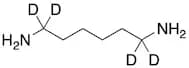
CAS:Controlled Product<p>Applications 1,6-Hexane-1,1,6,6-d4-diamine (CAS# 115797-49-4) is a useful isotopically labeled research compound.<br></p>Formula:C6H12D4N2Color and Shape:NeatMolecular weight:120.23D-Mannitol-d8
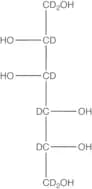
CAS:Controlled Product<p>Applications Labelled D-Mannitol (M165000). D-Mannitol is widespread in plants and plant exudates; obtained from manna and seaweeds. D-Mannitol is used in the food industry as anticaking and free-flow agent, flavoring agent, lubricant and release agent, stabilizer and thickener and nutritive sweetener.<br>References Pigman, W., et al.: The Carbohydrates, 249 (1957), Makkee, M., et al.: Chem. Commun., 930 (1980),<br></p>Formula:C6D8H6O6Color and Shape:NeatMolecular weight:190.22Oxalic Acid Ethyl Ester
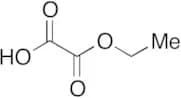
CAS:Controlled Product<p>Applications Oxalic Acid Ethyl Ester is a useful synthetic intermediate. It is used to synthesize 2-substituted 3-aryl-4(3H)-quinazolinones with anticonvulsant activities. It is also used to prepare nonbenzamidine tetrazole derivatives as factor Xa inhibitors.<br>References Wolfe, J., et al.: J. Med. Chem., 33, 161 (1009); Quan, M., et al.: bioorg. Med. Chem. Lett., 13, 369 (2003)<br></p>Formula:C4H6O4Color and Shape:NeatMolecular weight:118.09Methyl 6-chloro-6-deoxy-a-D-altropyranoside
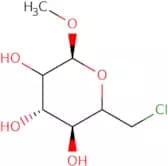
Methyl 6-chloro-6-deoxy-a-D-altropyranoside is a custom synthesis that has been modified to have fluorination and methylation. This product is a monosaccharide that has been synthesized with the click modification and oligosaccharides. It is also polysaccharides and glycosylations, which are complex carbohydrates. These modifications can be found by CAS number.Formula:C7H13ClO5Purity:Min. 95%Molecular weight:212.63 g/molHyaluronate rhodamine - Molecular Weight - 250kDa
Hyaluronate Rhodamine is a synthetic, high-purity, fluorescent dye that can be used in the study of glycosylation and sugar modifications. It is a carbohydrate modified by methylation and fluorination. Hyaluronate Rhodamine has a molecular weight of 250kDa. The sugar component of the molecule is composed of an oligosaccharide with a saccharide repeat unit of 1-3 linked to a polysaccharide chain, which has been modified by methylation and glycosylation.Purity:Min. 95%6-Azido-6-deoxy-D-galactose
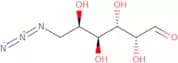
CAS:<p>6-Azido-6-deoxy-D-galactose is a mutagenic compound that is used as a carbon source in the synthesis of other compounds. It has been shown to have mutagenicity in TA100 cells and to be active against Staudinger's naphthol. The compound is synthesised by chemoenzymatic methods, which involve the use of alcohols and an acetyl group. 6-Azido-6-deoxy-D-galactose can be used as a mutagenic agent for the production of mutants with desired properties.</p>Formula:C6H11N3O5Purity:Min. 95%Color and Shape:White PowderMolecular weight:205.17 g/mol1,4-Dideoxy-1,4-imino-L-altritol
<p>The compound 1,4-dideoxy-1,4-imino-L-altritol is a synthetic carbohydrate that is made of a monosaccharide and an oligosaccharide. The monosaccharide is a simple sugar with the chemical formula C5H10O5. The oligosaccharide has the chemical formula C2n+1(C3H3O3)n. The monosaccharide has four carbons and one oxygen molecule. The oligosaccharide also has five carbon atoms, but it also has three oxygen molecules. The two sugars are linked by a glycosidic linkage. <br>The compound was created to be used in the synthesis of complex carbohydrates. It can be modified to have fluorine atoms added to it, methyl groups added to it, or both. It can also be modified to make it into an ester or an amide. It is soluble in water and alcohol</p>Purity:Min. 95%2,3,4-Tri-O-benzyl-L-rhamnopyranose
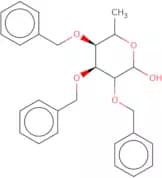
CAS:<p>2,3,4-Tri-O-benzyl-L-rhamnopyranose is a chemical compound that belongs to the family of carbohydrates known as rhamnopyranoses. It is a derivative of L-rhamnose, which is a naturally occurring aldohexose sugar. The compound is often used as a glycosyl donor in the synthesis of oligosaccharides and glycoconjugates. The three benzyl groups in the molecule provide protection for the hydroxyl groups, allowing for selective deprotection and glycosylation. 2,3,4-Tri-O-benzyl-L-rhamnopyranose is also used as a precursor in the synthesis of various natural products.</p>Formula:C27H30O5Purity:Min. 95%Color and Shape:PowderMolecular weight:434.52 g/molL-Daunosamine hydrochloride
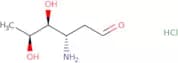
CAS:<p>L-Daunosamine hydrochloride is a fluorinated sugar that is synthesized in the laboratory. It has been used for the modification of polysaccharides and other saccharides. L-Daunosamine hydrochloride is a monosaccharide that can be found in several complex carbohydrates. The CAS number for this chemical is 19196-51-1. This chemical has a high purity level, which makes it valuable for use as a synthetic material.</p>Formula:C6H14NClO3Purity:Min. 95 Area-%Color and Shape:PowderMolecular weight:183.63 g/molEthyl 3,4-di-O-benzyl-2-O-levulinoyl-b-D-thioglucuronide benzyl ester
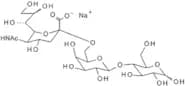
<p>Ethyl 3,4-di-O-benzyl-2-O-levulinoyl-b-D-thioglucuronide benzyl ester is a custom synthesis chemical. It is an oligosaccharide that contains a saccharide and a monosaccharide. The saccharide is a complex carbohydrate made up of sugar molecules. The monosaccharide is a sugar molecule that can be modified with fluorination to create high purity chemicals. Ethyl 3,4-di-O-benzyl-2-O-levulinoyl b -D thioglucuronide benzyl ester has been used in the synthesis of the polysaccharides and saccharides present in the human body. <br>Ethyl 3,4 -di -O -benzyl -2 -O -levulinoyl b D thioglucuronide benzyl ester is not used as a</p>Purity:Min. 95%6'-Sialyllactose sodium salt
CAS:<p>6'-Sialyllactose is found in milk with immunoprotective effects against pathogens in newborns and aids development and maturation of the immune system and gut microbiota. It suppresses adhesion and infectivity of bacteria and viruses, such as influenza viruses, HIV-1 and rotaviruses and inhibits binding of cholera toxin.</p>Formula:C23H38NO19NaPurity:Min. 90 Area-%Color and Shape:White PowderMolecular weight:655.53 g/molMucic acid
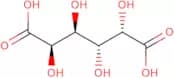
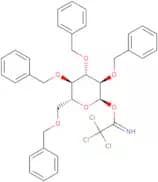
CAS:Mucic acid is a metal chelate that stimulates the metabolism of carbohydrates, fats and proteins. It also plays a role in the production of energy in the body. Mucic acid has been shown to have a protective effect against infectious diseases, as it activates toll-like receptor 2 (TLR2) and TLR4, which are molecules involved in innate immunity. Mucic acid has been shown to protect against influenza virus infection by increasing the expression of interferon-gamma (IFN-γ) and IL-12, which are cytokines that inhibit viral replication. Mucic acid can be used as a fluorescence probe for detection of polymorphonuclear leucocytes in blood samples.Formula:C6H10O8Purity:Min. 95%Color and Shape:White PowderMolecular weight:210.14 g/mol2,3,4,6-Tetra-O-benzyl-a-D-glucopyranosyl trichloroacetimidate
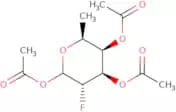
CAS:<p>2,3,4,6-Tetra-O-benzyl-a-D-glucopyranosyl trichloroacetimidate is a supernucleophile that reacts with saccharides to form glycosides. It is a reactive compound that can be used in syntheses to create new disaccharides. 2,3,4,6-Tetra-O-benzyl-a-D-glucopyranosyl trichloroacetimidate was used in the synthesis of a glycoside analogue of glucopyranose. This compound has also been shown to react with imidates.</p>Formula:C36H36Cl3NO6Purity:Min. 95%Color and Shape:White PowderMolecular weight:685.03 g/mol1,3,4-Tri-O-acetyl-2-deoxy-2-fluoro-L-fucose
CAS:Peracetylated 2-fluoro-L-fucose is the acetylated form of 2-deoxy-2-fluoro-L-fucose which is a potent inhibitor of protein fucosylation. It exhibits improved cell permeability and is rapidly deacetylated into its active form, inside the cell. It is metabolised inside the cell into a corresponding donor substrate analogue of GDP-fucose or GDP-2FF, via the salvage pathway. GDP-2FF accumulates in the cell causing a shutdown of de novo pathway which leads to the desired fucosylation inhibition. The addition of 100 uM peracetylated-2-fluoro-L-fucose to plants severely inhibits root growth by 95% compared to an untreated plant, and is more potent compared to 2-fluoro-L-fucose. The material is soluble in DMSO at 10mg/ml.Formula:C12H17FO7Purity:Min. 97 Area-%Color and Shape:White Off-White PowderMolecular weight:292.26 g/molMaltotriose - Ultrapure
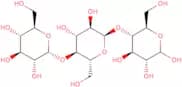
CAS:<p>linear a-(1,4) trisaccharide produced from starch by acid or enzyme hydrolysis</p>Formula:C18H32O16Purity:Min. 95.0 Area-%Color and Shape:PowderMolecular weight:504.44 g/molα1,3-Galactobiosyl β-methyl glycoside
a1,3-Galactobiosyl b-methyl glycoside is a fluorinated saccharide that possesses the same chemical structure as N-acetylgalactosamine. It has been synthesized by click modification with methyl iodide and methyl bromoacetate. The synthesis of this compound was achieved by glycosylation of galactose with 1,3-diiodo-2,2'-bithiopropane followed by methylation of the resulting glycosylation product with methyl bromoacetate to form the desired compound. This carbohydrate can be used in a variety of applications including anti-inflammatory drugs, antibiotics, and cancer treatments.Formula:C13H24O11Purity:Min. 95%Color and Shape:White/Off-White SolidMolecular weight:356.32 g/molmeso-D-glycero-D-gulo-heptitol
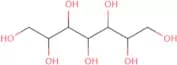
CAS:Meso-D-glycero-D-gulo-heptitol is an enzyme inhibitor that is used in food composition. It has a redox potential of +0.5 V and can be used to inhibit the growth of metal hydroxides through chelation. This compound was found to have skin cell protective effects, as well as an ability to inhibit protein synthesis. Meso-D-glycero-D-gulo-heptitol is also a natural compound with physiological function, such as the prevention of dmannnoheptulose from being converted into D-mannitol. The hydrochloric acid or alcohol residue on this compound does not cause any adverse effects on human cells because it does not affect their redox potentials.Formula:C7H16O7Purity:Min. 95%Molecular weight:212.2 g/mol4-Aminophenyl b-D-glucopyranoside
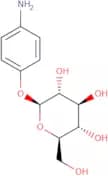
CAS:<p>4-Aminophenyl b-D-glucopyranoside is a membrane transport inhibitor that prevents the uptake of glucose by inhibiting the enzyme hexose transporter. It is used in biological treatment and has been shown to be effective against glutamicum. 4-Aminophenyl b-D-glucopyranoside can also be used in assays to identify bacteria based on their surface antigens. This compound was isolated from corynebacterium glutamicum and its metabolic pathway has been elucidated. 4-Aminophenyl b-D-glucopyranoside has also been shown to inhibit enzymatic activity, which may be due to inhibition of the enzyme dihydroorotate dehydrogenase.</p>Formula:C12H17NO6Purity:Min. 95%Color and Shape:White PowderMolecular weight:271.27 g/molN-Acetylneuraminic acid
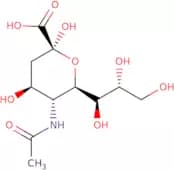
CAS:N-Acetylneuraminic acid (NANA or Neu5Ac), as the most common sialic acid, is a nine-carbon monosaccharide whose amino group is acetylated (Collins, 2006). Sialic acid is found across the animal kingdom and some prokaryotes. Sialic acid occurs as a component of oligosaccharides (N- and O-linked glycoproteins, glycolipids, human milk, blood groups), bacterial polysaccharides and glycoconjugates. Sialic acid is also found in free form in body fluids (Schauer, 1997).Formula:C11H19NO9Purity:Min. 98 Area-%Color and Shape:White PowderMolecular weight:309.27 g/mol1,3,4,6-Tetra-O-acetyl-N-propanoyl-D-mannosamine
CAS:<p>1,3,4,6-Tetra-O-acetyl-N-propanoyl-D-mannosamine is a sugar that is used for the synthesis of novel glycosides. It is prepared by the methylation of D-mannose with acetic anhydride in the presence of sodium methoxide. This reaction can also be carried out on a variety of other sugars and carbohydrates, such as D-galactose, D-xylose, or L-arabinose. 1,3,4,6-Tetra-O-acetyl-N-propanoyl-D-mannosamine has been shown to react with 4-(pyridinium)butanoic acid to produce 4-(pyridinium)butanal (1), which reacts with glycine to produce 1-(pyridinium)butanediamide (2). The carbonyl group in 2 can</p>Formula:C17H25NO10Purity:Min. 95%Molecular weight:403.38 g/mol