Glycoscience
Glycoscience is the study of carbohydrates and their derivatives, as well as the interactions and biological functions they participate in. This field of research is crucial for understanding a wide variety of biological processes, including cell recognition, signaling, immune response, and disease development. Glycoscience has important applications in biotechnology, medicine, and the development of new drugs and therapies. At CymitQuimica, we offer a wide selection of high-quality, high-purity products for glycoscience research. Our catalog includes monosaccharides, oligosaccharides, polysaccharides, glycoconjugates, and specific reagents, designed to support researchers in their studies on the structure, function, and applications of carbohydrates in biological systems. These resources are intended to facilitate scientific discoveries and practical applications in various areas of bioscience and medicine.
Subcategories of "Glycoscience"
- Aminosugars(108 products)
- Glyco-Related Antibodies(282 products)
- Glycolipids(46 products)
- Glycosaminoglycans (GAGs)(55 products)
- Glycosides(419 products)
- Monosaccharides(6,624 products)
- Oligosaccharides(3,682 products)
- Polysaccharides(503 products)
Found 11046 products of "Glycoscience"
Sort by
Purity (%)
0
100
|
0
|
50
|
90
|
95
|
100
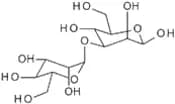
3-O-(a-D-Mannopyranosyl)-D-mannopyranose
CAS:<p>Isolated from the products of the acid reversion of D-mannose</p>Formula:C12H22O11Purity:Min. 95 Area-%Color and Shape:White PowderMolecular weight:342.3 g/mol3,4-Di-O-acetyl-2,6-di-O-(3,4,6-tri-O-acetyl-2-deoxy-2-phthalimido-β-D-glucopyranosyl)-α-D-mannopyranose
<p>3,4-Di-O-acetyl-2,6-di-O-(3,4,6-tri-O-acetyl-2-deoxy-2-phthalimido-b-D-glucopyranosyl)-a-D mannopyranose is a modification of the carbohydrate oligosaccharide. It is a custom synthesis that has high purity and CAS number. The structure of the molecule is an Oligosaccharide with a Carbohydrate. This molecule is an example of a complex carbohydrate. The monosaccharide in this compound is glucose and it has been methylated and glycosylated. This molecule also has a polysaccharide sugar which can be fluorinated or saccharided.</p>Formula:C50H54N2O26Purity:Min. 95%Molecular weight:1,098.96 g/mol2,3:4,5-Di-O-isopropylidene-L-arabitol
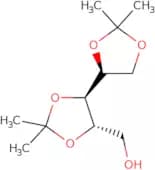
CAS:2,3:4,5-Di-O-isopropylidene-L-arabitol is a modification of an oligosaccharide in which the hydroxyl group at position 4 on the D-ribose moiety has been replaced with an isopropylidene group. The synthesis of 2,3:4,5-Di-O-isopropylidene-L-arabitol can be achieved by methylation and fluorination of L-arabinose. This compound is used in glycosylations and polysaccharide syntheses. 2,3:4,5-Di-O-isopropylidene-L--arabitol is also found as a natural constituent of many plants. 2,3:4,5--Di--O--isopropylidene--L--arabitol is chemically described as α-(1→6)-D--glucopFormula:C11H20O5Purity:Min. 95%Color and Shape:PowderMolecular weight:232.27 g/mol1,2:4,5-Di-O-cyclohexylidene-b-D-fructopyranose
CAS:<p>1,2:4,5-Di-O-cyclohexylidene-b-D-fructopyranose is a modification of the natural carbohydrate 1,2:4,5-di-O-isopropylidene-b-D-fructopyranose. It is an oligosaccharide composed of three units of b-D-fructofuranose linked by α-(1,2) and β-(1,4) glycosidic bonds. The methylation and glycosylation of this saccharide can be customized to produce a wide range of products with different properties. 1,2:4,5 Di O cyclohexylidene b D fructopyranose can be used in applications such as pharmaceuticals and agrochemicals.<br>The molecular formula for this compound is C10H14O8 and its CAS number is 18608-92-9.</p>Formula:C18H28O6Purity:Min. 95%Molecular weight:340.41 g/molFagomine
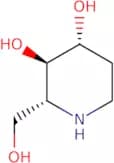
CAS:Fagomine is a hypoglycemic agent with antimicrobial properties. It is an alpha-mannosidase inhibitor, which prevents the release of glucose from glycogen by inhibiting an enzyme in the glycosylation pathway. The molecular docking analysis shows that fagomine binds to the active site of mitochondrial membrane potential complex I and inhibits its catalytic activity. Fagomine also has a risk of causing metabolic disorders, such as hyperglycemia, hyperinsulinemia, and hyperlipidemia. Studies have shown that fagomine can be used to treat hyperglycemia in both type 1 and type 2 diabetes mellitus patients.Formula:C6H13NO3Purity:Min. 98 Area-%Color and Shape:Off-White PowderMolecular weight:147.17 g/mol6-Deoxy-L-allose
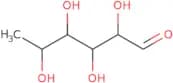
CAS:<p>6-Deoxy-L-allose is a sugar that belongs to the class of carbohydrates. It is synthesized by chemoenzymatic methods and can be used in the synthesis of glycoconjugates. 6-Deoxy-L-allose has been shown to inhibit acid phosphatase, a key enzyme involved in phosphate group metabolism, by competitive inhibition. This synthetic sugar has also been used as an immobilizing agent for enzymes such as glycosidases and phosphatases.</p>Formula:C6H12O5Purity:Min. 95%Color and Shape:SolidMolecular weight:164.16 g/molDextran sulfate sodium salt - MW 500,000
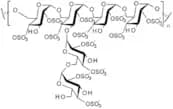
CAS:<p>Dextran sulphate is a dextran derivative whose ulcer (colitis) -causing properties were first reported in hamsters and extrapolated a few years later to mice and rats. The exact mechanisms through which dextran sulphate induces intestinal inflammation are unclear but may be the result of direct damage of the monolayer of epithelial cells in the colon, leading to the crossing of intestinal contents (for e.g. commensal bacteria and their products) into underlying tissue and therefore induction of inflammation. The dextran sulphate sodium induced ulceration model in laboratory animals has some advantages, when compared to other animal models of colitis, due to its simplicity and similarities to human inflammatory bowel disease.</p>Formula:C9H11NO2Purity:Min. 95%Color and Shape:White PowderD-Salicin
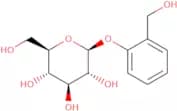
CAS:<p>D-Salicin is a naturally occurring compound, classified as a biologically active glycoside. It is acquired from the bark of willow trees, primarily species within the genus Salix. The primary mode of action of D-Salicin involves its metabolic conversion into salicylic acid within the human body. This conversion occurs in the gastrointestinal tract and bloodstream, ultimately displaying effects similar to non-steroidal anti-inflammatory drugs (NSAIDs).</p>Formula:C13H18O7Purity:Min. 98 Area-%Color and Shape:White Off-White PowderMolecular weight:286.28 g/molEthyl 3-O-benzyl-4,6-O-benzylidene-2-deoxy-2-N-phthalimido-b-D-thioglucopyranoside
CAS:<p>Ethyl 3-O-benzyl-4,6-O-benzylidene-2-deoxy-2-N-phthalimido-b-D-thioglucopyranoside is a synthetically modified sugar. It is a monosaccharide that has been fluorinated and methylated. This modification has been shown to increase the stability of the sugar in the presence of water. The sugar also has an oligosaccharide and polysaccharide moiety attached to it. These saccharides are glycosylated and have a complex carbohydrate structure.</p>Formula:C30H29NO6SPurity:Min. 95%Color and Shape:PowderMolecular weight:531.62 g/mol2-Azido- 2- deoxy- 3, 4:5, 6- bis- O- isopropylidene-D- mannonic acid methyl ester
2-Azido-2-deoxy-3,4:5,6-bis-O-isopropylidene-D-mannonic acid methyl ester is a synthetic carbohydrate molecule that has been synthesized from 2,2'-azido-2,2'-dideoxyribose. The monosaccharide moiety of the molecule has been fluorinated to create a reactive site for modification with other molecules. This modification can be done by glycosylation or polysaccharide attachment. The azido group on the sugar can be modified with any number of different methyl groups and this is done through a process called Click chemistry. The chemical formula for 2ADDMEM is C8H12N4O8F. The CAS Number for 2ADDMEM is 103510-60-1 and it has an average purity of 99%.Purity:Min. 95%6-O-b-D-Galactosylsucrose
CAS:<p>6-O-b-D-Galactosylsucrose is a methylated, saccharide that can be modified with Click chemistry to produce glycosides. It is a polysaccharide that can be modified with the Modification technique to produce oligosaccharides. 6-O-b-D-Galactosylsucrose is a synthetic, fluorinated, complex carbohydrate with CAS No. 41545-69-1. This product has been shown to have high purity and can be custom synthesized in different lengths and configurations.</p>Formula:C18H32O16Purity:Min. 95%Color and Shape:PowderMolecular weight:504.44 g/molb-D-Maltose octaacetate
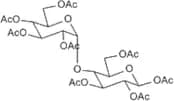
CAS:<p>Useful CO2-philic compounds with potential uses as pharmaceutical excipients, controlled release agents, and surfactants for microemulsion systems in CO2-based processes.</p>Formula:C28H38O19Purity:Min. 98 Area-%Color and Shape:White PowderMolecular weight:678.59 g/mol1,6-Anhydro-b-D-galactopyranose
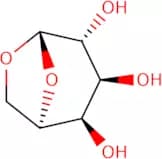
CAS:<p>Used for preparation of biologically active compounds</p>Formula:C6H10O5Purity:Min. 97 Area-%Color and Shape:White Off-White PowderMolecular weight:162.14 g/mol3-Deoxy-3-fluoro-D-xylopyranose
3-Deoxy-3-fluoro-D-xylopyranose is a carbohydrate, modification, saccharide and oligosaccharide. It is an Oligosaccharide sugar that has a CAS number of 104863-98-2. 3DFX can be custom synthesized in high purity with methylation and glycosylation. This product can be used for click modification with the desired molecule.Purity:Min. 95%2,3,4,6-Tetra-O-acetyl-β-D-glucopyranosyl trichloroacetimidate
CAS:Gadolinium is a magnetic, paramagnetic metal that is used to enhance the contrast in magnetic resonance imaging (MRI) and has been shown to be effective in ectopic expression of gene products. Gadolinium-enhanced MRI has been shown to be a more sensitive method for detection of pancreatic cancer cells than CT scans. Gadolinium also binds to monoclonal antibodies and can be detected using immunohistochemical staining. Gadolinium is a prohormone that is converted into its active form by cleavage of the glycosidic bond between carbons 2 and 3 in the 6-phosphate position. The gadolinium ion is chemically neutral, which may account for its lack of toxicity in vivo.Formula:C16H20Cl3NO10Purity:Min. 98 Area-%Color and Shape:PowderMolecular weight:492.69 g/molD-Ribose
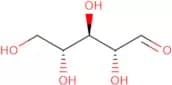
CAS:<p>D-ribose (Rib) is an aldopentose, a component of RNA and a constituent of numerous cofactors, and certain vitamins. (Collins, 2006). Ribose is a component of bacterial polysaccharides found in Salmonella (Lindberg, 1990). Ribosylation leads to the production of significant amounts of advanced glycation end products, both extracellularly and intracellularly, it may be involved in cell dysfunction and subsequent cognitive impairments (Wei, 2012).</p>Formula:C5H10O5Purity:Min. 98 Area-%Color and Shape:White Off-White PowderMolecular weight:150.13 g/molIndole-3-acetyl β-D-glucopyranose
CAS:Indole-3-acetyl b-D-glucopyranose is a synthetic substrate that is used in the enzyme catalysis of indole glucosyl transferase. This enzyme catalyzes the reaction between indole and D-glucose to form an acetylated glucose. The gene product for this enzyme has a low expression in tissues, but high expression in plants. The gene product for this enzyme has been shown to be involved in plant physiology, where it may play a role in population growth.Formula:C16H19NO7Purity:Min. 95%Molecular weight:337.33 g/mol1,2-O-Di-O-acetyl-5-O-benzoyl-3-deoxy-D-ribofuranose
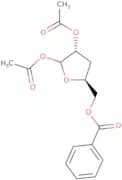
CAS:1,2-O-Di-O-acetyl-5-O-benzoyl-3-deoxy-D-ribofuranose is a carbohydrate that is used as a building block in the synthesis of oligosaccharides and polysaccharides. The compound is also used to modify glycoproteins to increase their stability and to improve their solubility. 1,2-O-Di-O-acetyl-5-O-benzoyl--3 -deoxy--D--ribofuranose has been modified with fluorination, saccharide methylation, glycosylation and polysaccharide synthesis.Formula:C16H18O7Purity:Min. 90%Color and Shape:PowderMolecular weight:322.31 g/mol4-Methylphenyl b-D-thioglucopyranoside
CAS:4-Methylphenyl b-D-thioglucopyranoside is a carbohydrate that has been modified by fluorination, methylation, glycosylation, and click modification. It is an oligosaccharide sugar with CAS No. 1152-39-2 and is custom synthesized for high purity. This compound is synthesized from saccharides or from the combination of monosaccharides using glycosylation and click chemistry. 4-Methylphenyl b-D-thioglucopyranoside can be used as a synthetic intermediate in the synthesis of other compounds.Formula:C13H18O5SPurity:Min. 95%Color and Shape:White PowderMolecular weight:286.35 g/molMethyl 4,6-O-benzylidene-2-deoxy-a-D-glucpyranosid-3-ulose
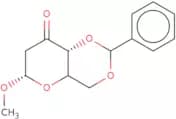
CAS:Methyl 4,6-O-benzylidene-2-deoxy-a-D-glucpyranosid-3-ulose is a custom synthesis of a complex carbohydrate. It is an Oligosaccharide with a Polysaccharide backbone. The modification of the saccharide is Methylation and Glycosylation. Click chemistry was used to introduce fluorine atoms into the sugar ring. The Carbohydrate is a sugar, which is a chemical compound that consists of carbon, hydrogen and oxygen atoms. It has high purity and fluoroination at the C1 position. This synthetic product can be used in various applications such as food additives, pharmaceuticals, or agrochemicals.Formula:C14H16O5Purity:Min. 95%Molecular weight:264.27 g/mol