Glycoscience
Glycoscience is the study of carbohydrates and their derivatives, as well as the interactions and biological functions they participate in. This field of research is crucial for understanding a wide variety of biological processes, including cell recognition, signaling, immune response, and disease development. Glycoscience has important applications in biotechnology, medicine, and the development of new drugs and therapies. At CymitQuimica, we offer a wide selection of high-quality, high-purity products for glycoscience research. Our catalog includes monosaccharides, oligosaccharides, polysaccharides, glycoconjugates, and specific reagents, designed to support researchers in their studies on the structure, function, and applications of carbohydrates in biological systems. These resources are intended to facilitate scientific discoveries and practical applications in various areas of bioscience and medicine.
Subcategories of "Glycoscience"
- Aminosugars(108 products)
- Glyco-Related Antibodies(282 products)
- Glycolipids(46 products)
- Glycosaminoglycans (GAGs)(55 products)
- Glycosides(419 products)
- Monosaccharides(6,624 products)
- Oligosaccharides(3,682 products)
- Polysaccharides(503 products)
Found 11046 products of "Glycoscience"
Sort by
Purity (%)
0
100
|
0
|
50
|
90
|
95
|
100
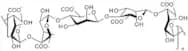
Galacturonan DP10-DP15 sodium salt
<p>Mixed DP 10-15 Na galacturonans (α-1,4 10-15 Na galacturonans) are derived from pectin or pectic acid, by enzymatic or partial acid hydrolysis. They are used in galacturonic acid metabolism research as a substrate to identify, differentiate, and characterize endo- and exopolygalacturonase(s) and gluconase(s). In recent studies, it has been shown that long oligogalacturonides (degree of polymerization (DP) from 10â15) help to induce plant defense signaling resulting in enhanced defenses to necrotrophic pathogens.</p>Color and Shape:Powder(2R,3S,4S,5R,6S)-3,4,5-Trihydroxy-2-hydroxymethyl-7,9-diaza-1-oxa-spiro[4,5]decane-10-one-8-thione
CAS:<p>Glycogen phosphorylase inhibitor</p>Formula:C8H12N2O6SPurity:Min. 95%Color and Shape:White solid.Molecular weight:264.26 g/molHesperetin 3'-O-b-D-glucuronide
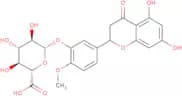
CAS:<p>Hesperetin 3'-O-b-D-glucuronide is a natural product that is synthesized by glycosylation of hesperidin with 3,4,5-trihydroxybenzoic acid. It is a synthetic and complex carbohydrate that can be modified to include fluorination, monosaccharide, oligosaccharide, methylation, and click modification. Hesperetin 3'-O-b-D-glucuronide can also be used in the synthesis of polysaccharides with glycosylations. This product has high purity and can be custom synthesized for customers.</p>Formula:C22H22O12Purity:Min. 95%Color and Shape:Slightly Yellow PowderMolecular weight:478.4 g/mol2-Acetamido-1,3,4,6-tetra-O-acetyl-2-deoxy-a-D-galactopyranose
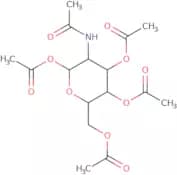
CAS:<p>2-Acetamido-1,3,4,6-tetra-O-acetyl-2-deoxy-a-D-galactopyranose is a chemical that belongs to the class of plant growth regulators. It is a white to off white crystalline powder that has an odorless taste and can be mixed with water or other liquids. The substance is soluble in water and ethanol and has a pH of 7. It is used as an additive for soil mixtures in horticulture and agriculture. 2AATGAP can also be used as a module for research purposes in vitro.</p>Formula:C16H23NO10Purity:Min. 95%Color and Shape:White To Off-White SolidMolecular weight:389.36 g/mola-D-Arabinopyranosyl azide
CAS:<p>a-D-Arabinopyranosyl azide is a new modified sugar that has been synthesized by the Click chemistry method. It is a complex carbohydrate with different substituents at the C2, C4, and C6 positions. This compound can be used for methylation, saccharide, polysaccharide, glycosylation or other custom synthesis. The CAS No. for this product is 138892-04-3, and it has a purity of >99%.</p>Formula:C5H9N3O4Purity:Min. 95%Molecular weight:175.14 g/mol4-Acetamido-4-deoxy-D-glucose
CAS:<p>4-Acetamido-4-deoxy-D-glucose is a custom synthesis of a monosaccharide that is modified with fluorine and methyl groups. It is synthesized by the Click modification, which involves the addition of an azide to an alkyne in a copper catalyzed reaction. 4-Acetamido-4-deoxy-D-glucose can be used as a building block for complex carbohydrate synthesis. 4-Acetamido-4-deoxy-D-glucose has shown effectiveness against fluoroquinolone resistance, as well as activity against methicillin resistant Staphylococcus aureus (MRSA) and Clostridium perfringens.</p>Formula:C8H15NO6Purity:Min. 95%Color and Shape:PowderMolecular weight:221.21 g/molGQ3-Oligosaccharide
<p>GQ3 oligosaccharide is the carbohydrate moiety in the GQ3 ganglioside. Breast cancer cells MCF-7 were found to express a complex pattern of neutral and sialylated glycosphingolipids from the globo- and ganglio-series, including unusual tetrasialylated and pentasialylated lactosylceramide derivatives, and GQ3 (II3Neu5Ac4-Gg2Cer) (Steenackers, 2012).</p>Formula:C56H86N4O43Na4Purity:Min. 95%Molecular weight:1,595.24 g/molInulin - from chicory
CAS:Inulin is a prebiotic dietary fibre with a mildly sweet taste that promotes digestive health by supporting growth of healthy and balanced microbiota. In diagnostics, inulin is used for determining the glomerular filtration rate in functional kidney testing. Chemically, inulin is a chain of fructose molecules terminated at the reducing end with glucose. Thus, inulin is a fructan consisting of linear chains of β-(2,1) linked fructose residues, terminated at the reducing end by an α-D-(1,2)-glucopyranoside moiety. It has a degree of polymerization typically between 2 and 60 (5). The β-(2,1) bond in inulin resists digestion in the gastrointestinal tract and is therefore responsible for its lower caloric value and beneficial effects on colon microbiota. A more functional form of inulin is produced by removing all fractions with chain lengths lower than 10.Purity:(Uv) Min. 95%Color and Shape:White Powder(2R, 3R, 3aS, 9aR) -2, 3, 3a, 9a-Tetrahydro- 3- hydroxy- 2- (hydroxymethyl) - 3a- methyl- 6H- Furo[2', 3':4, 5] oxazolo[3, 2- a] pyr imidin- 6- one,
<p>This compound is a custom synthesis. It is an oligosaccharide that has a CAS number. The molecular weight of this compound is 5,871. This product is a sugar that contains glycosylation and methylation modifications, as well as click chemistry modifications. The purity of this product is high, with a purity level of 99%. This product also contains fluorination on the alpha-carbon atom in the 2 position.</p>Purity:Min. 95%n-Octyl-β-D-glucopyranoside
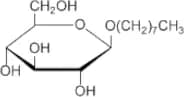
CAS:<p>Octyl-beta-D-glucopyranoside is an alkylglycoside non-ionic detergent and is one of the most commonly used in membrane protein isolation. As it is uncharged, it is unlikely to cause protein denaturation or refolding issues, allowing for the isolation of intact macromolecular complexes without affecting protein-protein interactions. Octyl-beta-D-glucopyranoside, also known as octylglucoside or OG, forms small, uniformed micelles and has an aggregation number of between 27-100. It is readily dialyzable from membrane protein preparations due to its high Critical Micelle Concentration (CMC) of 18-20mM. Octyl-beta-D-glucopyranoside has similar uses and properties to that of another frequently used surfactant, Octyl-beta-D-thioglucopyranoside.</p>Formula:C14H28O6Molecular weight:292.38 g/mol3,5-Di-O-lauryl-D-xylofuranose
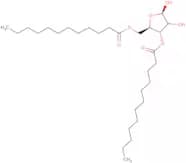
CAS:<p>3,5-Di-O-lauryl-D-xylofuranose is a custom synthesized monosaccharide that is used as a raw material for the synthesis of complex carbohydrates. It has been modified with fluorine and methyl groups to produce 3,5-di-O-lauryl-D-xylofuranose. This compound can be used in the production of polysaccharides or saccharides. The chemical name for this compound is 3,5-di-O-[(9Z)-hexadecenyl]-2-(1E,3E)-dioxaheptalene.</p>Formula:C29H54O7Purity:Min. 95%Molecular weight:514.73 g/molButyl b-D-glucopyranoside
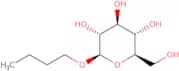
CAS:<p>Butyl b-D-glucopyranoside is a fluorinated monosaccharide that is used in the synthesis of oligosaccharides and polysaccharides. It is also used as a synthetic sugar for glycosylation, methylation, and click modification reactions. Butyl b-D-glucopyranoside has been shown to be stable under both acidic and basic conditions and has a CAS number of 5391-18-4.</p>Formula:C10H20O6Purity:Min. 95%Color and Shape:White PowderMolecular weight:236.26 g/molN-Benzyl-D-glucamine
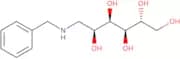
CAS:N-Benzyl-D-glucamine is a metal chelate that binds to lead and other heavy metals. It is used as a transport inhibitor for the elimination of lead from the body. N-Benzyl-D-glucamine has been shown to be effective in lowering blood levels of lead, with an elimination rate of 50% within 4 hours. When administered orally, this drug also has inhibitory effects on the absorption of lead from gastrointestinal tissues, which may be due to its inhibition of urea nitrogen and gastrointestinal toxicities. This drug can also reduce the excretion of cadmium and aromatic hydrocarbons in urine samples.Purity:Min. 95%(2S, 3R, 4R, 5S) -2- (Hydroxymethyl) - 3, 4, 5- piperidinetriol
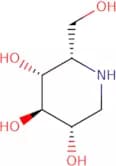
CAS:<p>(2S, 3R, 4R, 5S) -2- (Hydroxymethyl) - 3, 4, 5- piperidinetriol is a naturally occurring metabolite of the amino acid tryptophan. It is a structural analog of glucosylceramide and has been shown to have inhibitory properties against β-glucosidase. Structural studies have shown that this compound has similar stereoselective properties as the natural product glucosylceramide. This compound was also found to be a competitive inhibitor of amines and a non-competitive inhibitor of β-glucosidase.</p>Formula:C6H13NO4Purity:Min. 95%Molecular weight:163.17 g/molL-Allono-1,4-lactone
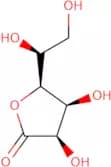
CAS:<p>L-Allono-1,4-lactone is a molecule with a stereocenter. It has been shown to be a target molecule for glycosidase inhibitors. The inhibition of the enzyme by L-allono-1,4-lactone may be due to its ability to form a hydrogen bond with the oxygen atom in the active site of the enzyme and its hydroxyl group that can form an additional hydrogen bond with water molecules. This inhibition prevents the transfer of glucose from one substrate to another, which leads to inefficient glycosidase activity. The synthesis of L-allono-1,4-lactone has been studied using piperidine as a starting material.</p>Formula:C6H10O6Purity:Min. 95%Color and Shape:PowderMolecular weight:178.14 g/molL-Talitol
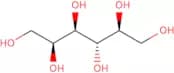
CAS:<p>L-Talitol is a naturally occurring sugar alcohol that is found in the human body and in many vegetables, fruits, and grains. It has been shown to be a potent inhibitor of the bacterium Klebsiella aerogenes. L-talitol has been used as a model system to study the effect of matrix on the growth of cells. It has also been shown to have chronic pulmonary effects and to be effective for treating selenium deficiency. L-talitol can inhibit b-raf by binding to the hydroxyl group on its kinase domain and inhibiting downstream signaling pathways. This inhibition leads to reduced levels of transcriptional regulation in cells, which may be due to decreased protein synthesis or increased degradation of mRNA. L-Talitol also inhibits d-talitol dehydrogenase, which results in an increase in d-talitol concentrations in cells.</p>Formula:C6H14O6Purity:Min. 95%Color and Shape:PowderMolecular weight:182.17 g/molα-D-Galactosamine-1-phosphate
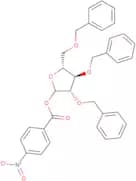
CAS:<p>a-D-Galactosamine-1-phosphate is a synthetic, fluorinated glycosylation inhibitor. It inhibits the synthesis of complex carbohydrates and is used in biochemical research. This compound has been shown to inhibit the methylation of glycoproteins and polysaccharides. It also inhibits the phosphorylation of glycogen, which may be useful in cases of diabetes mellitus.</p>Formula:C6H14NO8PPurity:Min. 95%Color and Shape:PowderMolecular weight:259.15 g/mol2,3,5-Tri-O-benzyl-1-O-(4-nitrobenzoyl)-D-arabinofuranose
CAS:2,3,5-Tri-O-benzyl-1-O-(4-nitrobenzoyl)-D-arabinofuranose is an organic compound that belongs to the group of furan derivatives. The configuration of this molecule was determined to be (2S,3S) by the use of stereoselective synthesis. It can be synthesized from a benzaldehyde and a ribofuranosyl chloride with a yield of about 95%. This compound has been shown to react with azides in a catalytic transfer reaction yielding yields of up to 100%.Formula:C33H31NO8Purity:Min. 95%Color and Shape:PowderMolecular weight:569.6 g/molMethyl-2,3,4-tri-O-benzoyl-6-deoxy-alpha-D-glucopyranoside
CAS:<p>Methyl-2,3,4-tri-O-benzoyl-6-deoxy-alpha-D-glucopyranoside is a modification of the sugar molecule. It is a monosaccharide that has been modified with methylation and fluorination. This product can be used in the synthesis of saccharides, polysaccharides, oligosaccharides and complex carbohydrates. Methyl 2,3,4-tri-O-benzoyl 6 deoxy alpha D -glucopyranoside is one of many compounds that can be used to synthesize glycosylations.</p>Formula:C28H26O8Purity:Min. 95%Molecular weight:490.5 g/molAlginic acid
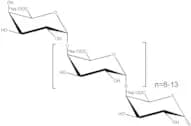
CAS:<p>A linear polyuronide obtained from the brown seaweeds (e.g. Laminaria hyperborea, Fucus vesiculosus, Ascophyllum nodosum). In the free acid form, the chemical structure consists of protonated blocks of (1,4) linked-β-D-polymannuronic acid (poly M), (1,4) linked-α-L-polyguluronic acid (poly G) and alternating blocks of the two uronic acids (poly MG).</p>Color and Shape:Powder

![(2R,3S,4S,5R,6S)-3,4,5-Trihydroxy-2-hydroxymethyl-7,9-diaza-1-oxa-spiro[4,5]decane-10-one-8-thione](/_next/image/?url=https%3A%2Fstatic.cymitquimica.com%2Fproducts%2F3D%2Fthumb-webp%2FMT01649.webp&w=3840&q=75)