Glycoscience
Glycoscience is the study of carbohydrates and their derivatives, as well as the interactions and biological functions they participate in. This field of research is crucial for understanding a wide variety of biological processes, including cell recognition, signaling, immune response, and disease development. Glycoscience has important applications in biotechnology, medicine, and the development of new drugs and therapies. At CymitQuimica, we offer a wide selection of high-quality, high-purity products for glycoscience research. Our catalog includes monosaccharides, oligosaccharides, polysaccharides, glycoconjugates, and specific reagents, designed to support researchers in their studies on the structure, function, and applications of carbohydrates in biological systems. These resources are intended to facilitate scientific discoveries and practical applications in various areas of bioscience and medicine.
Subcategories of "Glycoscience"
- Aminosugars(108 products)
- Glyco-Related Antibodies(282 products)
- Glycolipids(46 products)
- Glycosaminoglycans (GAGs)(55 products)
- Glycosides(419 products)
- Monosaccharides(6,622 products)
- Oligosaccharides(3,682 products)
- Polysaccharides(503 products)
Found 11042 products of "Glycoscience"
Sort by
Purity (%)
0
100
|
0
|
50
|
90
|
95
|
100
Hyaluronate rhodamine - Molecular Weight - 10kDa
<p>Hyaluronate rhodamine is a fluorescent dye that is used in molecular biology to visualize the distribution of intracellular glycoconjugates. It is a water-soluble, cationic dye that binds to negatively charged saccharides and glycosaminoglycans. The dye fluoresces when bound to these molecules, making it useful for detecting the distribution of glycoproteins in cells. Hyaluronate rhodamine can be used as a marker for carbohydrate-rich tissues such as cartilage, synovial fluid, and vitreous humor. This dye can also be used to detect glycoconjugates on the surface of cells and in extracellular spaces.</p>Purity:Min. 95%Methyl 3,5-di-O-(p-chlorobenzoyl)-2-deoxy-b-D-ribofuranoside
<p>Methyl 3,5-di-O-(p-chlorobenzoyl)-2-deoxy-b-D-ribofuranoside is a synthetic oligosaccharide. It has been synthesized by the modification of the glycosylation site on an existing saccharide with a methyl group and fluorination at the 3’ position. This molecule is a monosaccharide with a p-chlorobenzoyl group attached to its 2’ position.</p>Purity:Min. 95%Fucoidan, fucus serratus
CAS:<p>A fucan sulphate found in brown marine algae (Phaeophyta-typically Fucus serratus, Ascophyllum nodosum (illustrated), Laminaria japonica and Macrocystis pyrifyra) and has been shown to have anticoagulant activity. The main constituents are α-1,4 and α-1,2 linked L-fucose sulphates although galactose also occurs and there are many variations of the basic structure found in different species of Phaeophyta.<br>The image was kindly provided by Prof Mike Guiry from Cork who runs ‘The Seaweed Site’.</p>Purity:Min. 95%Color and Shape:White Powdertert-Butyl 2-acetamido-3,4,6-tri-O-acetyl-2-deoxy-b-D-glucopyranoside
CAS:<p>Tert-butyl 2-acetamido-3,4,6-tri-O-acetyl-2-deoxy-b-D-glucopyranoside is a modification of the natural carbohydrate tertiary butyl 2,3,4,6 tetraacetyl beta D glucopyranoside. It is synthesized by the addition of acetamide to the 3 and 4 position on the glucose molecule. This product can be used as a reagent for glycosylation reactions. Tert-butyl 2 acetamido 3,4,6 tri O acetyl 2 deoxy b D glucopyranoside is an oligosaccharide with a molecular weight of 522.5 Da. The monomeric units are alpha glucose and beta glucose linked by glycosidic bonds. This product is also methylated at the 6 position on the glucose molecule and then fluorinated to create a hydrocarbon chain with one hydroxyl</p>Formula:C18H29NO9Purity:Min. 95%Molecular weight:403.42 g/mol5-O-tert-Butyldimethylsilyl-2,3-O-isopropylidene-L-lyxono-1,4-lactone
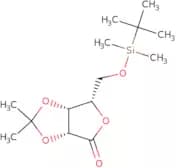
CAS:<p>5-O-tert-Butyldimethylsilyl-2,3-O-isopropylidene-L-lyxono-1,4-lactone is an oligosaccharide that is used as a building block for the synthesis of complex carbohydrates. It can be customized to suit your needs. 5-O-tert-Butyldimethylsilyl-2,3-O-isopropylidene-L-lyxono-1,4--lactone has been modified with fluorine atom and methyl group to form a glycosylation product. It is available in CAS No. 1044813 -00 -4 and can be synthesized in purity of > 95%.</p>Formula:C13H24O5SiPurity:Min. 95%Molecular weight:288.42 g/mol1,3,5-O-Methylidyne-myo-inositol
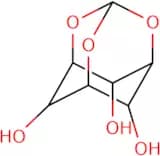
CAS:<p>1,3,5-O-Methylidyne-myo-inositol is a cyclic sugar alcohol, which is naturally derived from various plant sources, including certain fruits and grains. As a stereoisomer of inositol, it represents a specific structural form that contributes to its unique properties and potential biological activities. The compound operates through modulating cellular signaling pathways, particularly those related to phosphoinositide metabolism, influencing intracellular calcium levels, and affecting lipid signaling cascades.This compound is primarily explored for its potential role in neurological health and its capacity to influence insulin signaling pathways. It has been investigated for applications in managing conditions such as polycystic ovary syndrome (PCOS), mood disorders, and neurodegenerative diseases. Due to its intricate involvement in cellular signaling networks, 1,3,5-O-Methylidyne-myo-inositol holds promise in furthering understanding of complex biological processes and for therapeutic development in metabolic and neurological disorders. Research continues to explore its efficacy and mechanisms of action to better establish its role in health and disease.</p>Formula:C7H10O6Purity:Min. 95%Color and Shape:PowderMolecular weight:190.15 g/molO-(2,2',3,3',4',6,6'-Hepta-O-acetyl-b-D-lactosyl)-N-hydroxysuccinimide
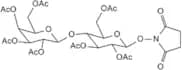
<p>O-(2,2',3,3',4',6,6'-Hepta-O-acetyl-b-D-lactosyl)-N-hydroxysuccinimide is a modified oligosaccharide that is synthesized by the reaction of an acetylated succinimide with a glycosylase. This product is used as a chemical intermediate in the production of saccharides and polysaccharides. It can be used for fluorination reactions to produce fluorinated saccharides.</p>Formula:C30H39NO20Purity:Min. 95%Molecular weight:733.64 g/molD-Talose
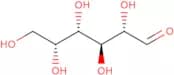
CAS:<p>Unnatural hexose used for the investigation of clostridial Rib-5-P-isomerases</p>Formula:C6H12O6Purity:Min. 99 Area-%Color and Shape:White PowderMolecular weight:180.16 g/molBenzyl 4-O-(2,6-di-O-benzyl-b-D-galactopyranosyl)-2,3,6-tri-O-benzyl-D-glucopyranoside
<p>Benzyl 4-O-(2,6-di-O-benzyl-b-D-galactopyranosyl)-2,3,6-tri-O-benzyl-D-glucopyranoside is a carbohydrate that belongs to the oligosaccharide class of saccharides. It is a synthetic compound with a CAS number (CAS No.: 128364-79-5) and a high purity. The carbohydrate has been synthesized by methylation, glycosylation, and click modification. Its chemical name is benzyl 4-[(2,6-di-[3'-O-(4,4'-dimethoxytrityl)butyldimethylsilyl]benzoyl)-a -D--galactopyranosyl]-2,3,6-[3'-O-(4',4''dimethoxytrityl)butyl]tri[3',5']</p>Formula:C34H88O11Purity:Min. 98 Area-%Color and Shape:PowderMolecular weight:673.06 g/molCalcium-D-arabonate
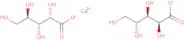
CAS:<p>Calcium-D-arabonate is a fatty acid that is used as a functional ingredient in the food industry. It has been shown to increase the rate of reactions, such as glycosidic bond cleavage and polymerization, by acting as an oxidation catalyst. This product also has a high molecular weight and can be used to modify the structure of polymers. Calcium-D-arabonate is often used in model systems because it reacts with other substances at a pH optimum of 6.0-7.5.</p>Formula:C5H9O6CaPurity:Min. 98%Color and Shape:White PowderMolecular weight:185.16 g/molL-DMDP
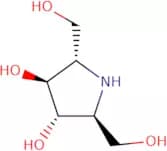
CAS:<p>a-âglucosidase inhibitor</p>Formula:C6H13NO4Purity:Min. 95%Molecular weight:163.17 g/mol3,4,6-Tri-O-acetyl-2-deoxy-2-phthalimido-b-D-glucopyranosyl trichloroacetimidate
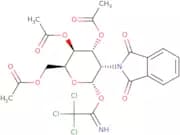
CAS:<p>3,4,6-Tri-O-acetyl-2-deoxy-2-phthalimido-b-D-glucopyranosyl trichloroacetimidate is a custom synthesis that has been modified with fluorine. It is a white powder and is soluble in water. 3,4,6-Tri-O-acetyl-2-deoxy-2-phthalimido-b-D--glucopyranosyl trichloroacetimidate is used for the production of saccharide and carbohydrate derivatives. This product has a CAS number of 871906788 and an ACD/IEC number of P077G10.</p>Formula:C22H21Cl3N2O10Color and Shape:PowderMolecular weight:579.77 g/mol1-O-Acetyl-2-azido-2-deoxy-3,4-di-O-benzyl-6-O-benzoyl-D-glucopyranose
<p>This compound is a custom synthesis of 1-O-acetyl-2-azido-2-deoxy-3,4-di-O-benzyl-6-O-benzoylglucopyranose. It is a synthetic carbohydrate that is used in the modification of saccharides and oligosaccharides. This product has been fluorinated to allow for fluorescence detection and click chemistry applications. It is a white solid with a melting point of 105 degrees Celsius. The CAS number for this compound is 15148344.</p>Formula:C29H29N3O7Purity:Min. 95%Molecular weight:531.56 g/molThiodiglucoside
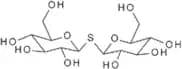
CAS:<p>Thiodiglucoside is a plant glycoside that is used as a preparative agent for the isolation of active substances from lymphocytes. It can be used in chromatographic and inhibition studies to determine the binding sites on lymphocytes. Thiodiglucoside has been shown to bind to lectins and inhibit protein synthesis in activated lymphocytes. This glycoside also inhibits the constriction of smooth muscle cells, which may be due to its inhibition of protein synthesis. The physiological function of thiodiglucoside is not yet fully understood; however, it is known that this compound binds to macropores and affects subunits within the cell membrane.</p>Formula:C12H22O10SPurity:Min. 95%Color and Shape:PowderMolecular weight:358.36 g/molCellobiosyl fluoride
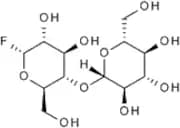
CAS:<p>Cellobiosyl fluoride has importance as a substrate and inhibitor in enzymatic reactions and shows a good combination of stability and reactivity.</p>Formula:C12H21FO10Purity:Min. 95%Color and Shape:PowderMolecular weight:344.29 g/molGhatti gum
CAS:<p>Gum ghatti is an exudate gum from the tree Anogeissus latifolia found in India and Sri Lanka. Applications are similar to Gum arabic in the food and pharmaceutical industries, where it is used as an emulsifier. The polysaccharide is reported to have an extremely complex structure which contains both oligosaccharides and polysaccharide elements. The polysaccharide contains Ara, Gal, Man, GlcA and Rha in a molar ratio of 61:39:6:10:6, a backbone of (1,6)-linked β-D-galactopyranosyl units and side chains of L-arabinofuranose units with some (1,4)-D-glucopyranosyluronic acid units, some joining (1,2)-D-mannopyranosyl units.</p>Color and Shape:Off-White PowderGalacturonan DP7/DP8 sodium
Mixed DP 7/8 Na galacturonans (α-1,4 galacturonoheptoses and octaoses), are derived from pectin or pectic acid, by enzymatic or partial acid hydrolysis. They are used in galacturonic acid metabolism research as a substrate to identify, differentiate, and characterized endo- and exopolygalacturonase(s), and gluconase(s). The addition of very short fragments of homogalacturonan oligosaccharides, restores development in dark-grown, de-etiolated seedling mutants, suggesting that they are unable to generate de-methylesterified pectin fragments. A model of spatiotemporally separated photoreceptive and signal-responsive cell types has been proposed, that contains overlapping subsets of the regulatory network of light-dependent seedling development.Purity:Min. 95%Color and Shape:Powder2-(2,3,6-Tri-O-acetyl-4-O-[(2,3,4,6-tetra-O-acetyl-a-D-glucopyranosyl)]-b-D-glucopyranosyl) thiopseudourea
<p>2-(2,3,6-Tri-O-acetyl-4-O-[(2,3,4,6-tetra-O-acetyl-a-D-glucopyranosyl)]-b-D-glucopyranosyl) thiopseudourea is a glycosylated oligosaccharide that has been modified using methylation and click chemistry. This compound has been used in the synthesis of various complex carbohydrates. The CAS number for this compound is 905835-79-8 and it can be custom synthesized to meet your needs.</p>Formula:C27H38N2O17SPurity:Min. 95%Molecular weight:694.66 g/mol(3S,4S)-2,3-Dihydroxy-2-methylpentanoic acid-1.4-lactone (mix of diastereoisomers)
<p>(3S,4S)-2,3-Dihydroxy-2-methylpentanoic acid-1.4-lactone (mix of diastereoisomers) is a synthetic carbohydrate that has been modified with a fluorine atom at the C2 position. It has a molecular weight of 184.277 g/mol and is soluble in water and methanol. This product can be used as a precursor to other chemicals or as an intermediate in the synthesis of saccharides, polysaccharides, or oligosaccharides.</p>Purity:Min. 95%1,6:2,3-Dianhydro-b-D-mannopyranose
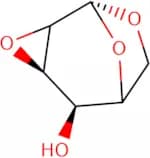
CAS:<p>1,6:2,3-Dianhydro-b-D-mannopyranose is a high purity sugar used in the synthesis of complex carbohydrates. This compound is an oligosaccharide that has been modified by methylation and glycosylation. It can be found in the CAS registry number 3868-03-9.</p>Formula:C6H8O4Purity:Min. 95%Color and Shape:PowderMolecular weight:144.13 g/mol






![2-(2,3,6-Tri-O-acetyl-4-O-[(2,3,4,6-tetra-O-acetyl-a-D-glucopyranosyl)]-b-D-glucopyranosyl) thiops…](/_next/image/?url=https%3A%2Fstatic.cymitquimica.com%2Fproducts%2F3D%2Fthumb-webp%2FOT10963.webp&w=3840&q=75)