Glycoscience
Glycoscience is the study of carbohydrates and their derivatives, as well as the interactions and biological functions they participate in. This field of research is crucial for understanding a wide variety of biological processes, including cell recognition, signaling, immune response, and disease development. Glycoscience has important applications in biotechnology, medicine, and the development of new drugs and therapies. At CymitQuimica, we offer a wide selection of high-quality, high-purity products for glycoscience research. Our catalog includes monosaccharides, oligosaccharides, polysaccharides, glycoconjugates, and specific reagents, designed to support researchers in their studies on the structure, function, and applications of carbohydrates in biological systems. These resources are intended to facilitate scientific discoveries and practical applications in various areas of bioscience and medicine.
Subcategories of "Glycoscience"
- Aminosugars(108 products)
- Glyco-Related Antibodies(283 products)
- Glycolipids(46 products)
- Glycosaminoglycans (GAGs)(55 products)
- Glycosides(419 products)
- Monosaccharides(6,619 products)
- Oligosaccharides(3,712 products)
- Polysaccharides(505 products)
Found 11026 products of "Glycoscience"
Sort by
Purity (%)
0
100
|
0
|
50
|
90
|
95
|
100
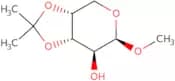
Methyl 3,4-O-isopropylidene-β-D-arabinopyranoside
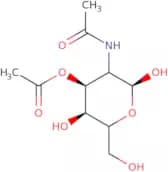
CAS:Methyl 3,4-O-isopropylidene-b-D-arabinopyranoside is a custom synthesis that has been modified with fluorination, methylation and click modification. It can be found in the CAS registry as 4594-60-9. This compound is a monosaccharide. Methyl 3,4-O-isopropylidene-b-D-arabinopyranoside is synthetically produced and can be used for glycosylation reactions. This compound has been shown to have a saccharide structure, which includes sugar or carbohydrates. It also has an oligosaccharide structure, which includes polysaccharides or complex carbohydrates.Formula:C9H16O5Purity:Min. 95%Color and Shape:Clear LiquidMolecular weight:204.22 g/mol2-Acetamido-3-O-acetyl-2-deoxy-a-D-glucopyranose - min 80% alpha
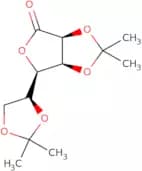
CAS:2-Acetamido-3-O-acetyl-2-deoxy-a-D-glucopyranose is a sugar that belongs to the group of complex carbohydrates. It can be synthesized by the click modification of an acetylated glycosylate, and it has been shown to be useful for the synthesis of oligosaccharides and monosaccharides. 2-Acetamido-3-O-acetyl-2-deoxy-a-D-glucopyranose is also used as a fluorinating agent for the synthesis of saccharides with fluorine substituents. The compound has CAS number 51449–95–7 and molecular weight 361.13 g/mol.Formula:C10H17NO7Purity:Min. 95%Color and Shape:White to off-white solid.Molecular weight:263.24 g/mol2,3:5,6-Di-O-isopropylidene-L-gulono-1,4-lactone
CAS:2,3:5,6-Di-O-isopropylidene-L-gulono-1,4-lactone is a methylated form of L-gulono-1,4-lactone which is a monosaccharide. The methylation of this compound makes it more soluble in water and lipids. This product can be synthesized to any desired purity and can be modified to suit the needs of the customer. The oligosaccharides produced from 2,3:5,6-Di-O-isopropylidene L -gulono 1,4 lactone are polysaccharides composed of repeating units of monosaccharides that are linked together by glycosidic bonds. Polysaccharides are complex carbohydrates that can be either linear or branched and have many different functions in living organisms. Carbohydrates are saccharides that contain carbon atoms and hydrogen atoms asFormula:C12H18O6Purity:Min. 95 Area-%Color and Shape:White crystals.Molecular weight:258.27 g/mol5-Keto-D-gluconic acid hemicalcium salt
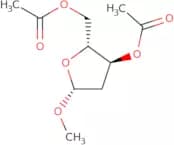
CAS:5-Keto-D-gluconic acid hemicalcium salt (5KDG) is an intermediate in the pentose phosphate pathway. It is a molecule that contains five carbon atoms, one double bond, and two hydroxyl groups. 5KDG has been found to be an effective inhibitor of gluconobacter, a type of bacteria which produces D-gluconic acid. The enzyme 5KDG dehydrogenase catalyzes the conversion of 5KDG into D-gluconate. 5KDG has been shown to have antiepileptic effects and can be used for the treatment of epilepsy.Formula:C6H9O7CaPurity:Min. 95%Color and Shape:PowderMolecular weight:213.17 g/molMethyl 3,5-di-O-acetyl-2-deoxy-b-D-ribofuranoside
CAS:Methyl 3,5-di-O-acetyl-2-deoxy-b-D-ribofuranoside is a synthetic sugar that is used in the synthesis of glycosides. It is a high purity product and can be custom synthesized to meet your needs. This product is available as a solution in water and is also offered as an oil. Methyl 3,5-di-O-acetyl-2-deoxy-b-D-ribofuranoside is soluble in alcohols and ethers, but insoluble in hydrocarbons or chlorinated solvents. The CAS number for this product is 62853–55–8. Methyl 3,5-di-O-[(acetyloxymethyl)oxymethyl]-2 deoxy-[beta]D ribofuranoside can be used for Click modification reactions to introduce acetyl groups on the sugar moiety. Click chemistry has been shown to haveFormula:C10H16O6Purity:Min. 95%Molecular weight:232.23 g/mol3,5-O-Isopropylidene-L-lyxonic acid-1,4-lactone
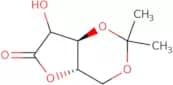
3,5-O-Isopropylidene-L-lyxonic acid-1,4-lactone is a fluorinated monosaccharide that can be synthesized in a custom synthesis. This chemical is an oligosaccharide with a complex carbohydrate structure and can be modified by glycosylation, methylation, or click modification. The chemical has been shown to have high purity and can be used in the production of polysaccharides. 3,5-O-Isopropylidene-L-lyxonic acid-1,4-lactone is a synthetic sugar with CAS number 7063-92-3.Formula:C8H12O5Purity:Min. 95%Molecular weight:188.18 g/molMethyl 5-N,4-O-Carbonyl-3,5-dideoxy-2-S-phenyl-2-thio-D-glycero-b-D-galacto-2-nonulopyranosylonate
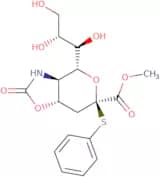
CAS:Methyl 5-N,4-O-Carbonyl-3,5-dideoxy-2-S-phenyl-2-thio-D-glycero-b-D-galacto-2-nonulopyranosylonate is a glycosylation agent. It can be used to synthesize complex carbohydrates with a variety of saccharides including glucose, mannose, and galactose. This product is also known as Methyl 3,5 Dideoxy -5-(N-(4'-O-(carbonyl)benzoyl)-3',4'-dimethoxybenzoyl)-2,3'-diene glycero - 2', 3' - dideoxyribofuranosyl(1 '→ 4')pentaacetate or CAS No. 934591–79–4.Formula:C17H21NO8SPurity:Min. 95%Color and Shape:White PowderMolecular weight:399.42 g/molEthyl 4,6-O-benzylidene-b-D-galactopyranoside
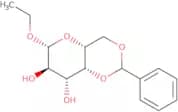
CAS:Ethyl 4,6-O-benzylidene-β-D-galactopyranoside is a carbohydrate that belongs to the monosaccharide class. It is glycosylated with an ethyl group at the hydroxyl group at the 6th position and methylated on the benzene ring at the 4th position. This modification has been shown to increase its solubility in water and its stability in basic solutions. The synthesis of this compound is performed through a click reaction, which allows for high purity and custom synthesis. Ethyl 4,6-O-benzylidene-β-D-galactopyranoside can be used as a sugar substitute or in pharmaceuticals for treatment of diabetes mellitus type 2.Formula:C15H20O6Purity:Min. 95%Color and Shape:PowderMolecular weight:296.32 g/molN-(2,4-Dinitrophenyl-deoxygalactonojirimycin
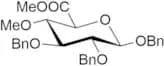
N-(2,4-Dinitrophenyl-deoxygalactonojirimycin is a complex carbohydrate that has been modified with methylation, glycosylation, and click modification. It has an Oligosaccharide chain and a CAS number of 888315-21-2. N-(2,4-Dinitrophenyl-deoxygalactonojirimycin is a high purity product that is available in the form of a white solid.Purity:Min. 95%Methyl (benzyl 2,3-di-O-benzyl-4-O-methyl-β-D-glucopyranoside)uronate
CAS:A useful glucuronide building blockFormula:C29H32O7Purity:Min. 95%Color and Shape:PowderMolecular weight:492.56 g/mol3,5-Di-O-benzoyl-2-C-methyl-D-ribonic acid-1.4-lactone
3,5-Di-O-benzoyl-2-C-methyl-D-ribonic acid-1.4-lactone is a custom synthesis that can be modified to suit your needs. Glycosylation, Oligosaccharide, sugar, Synthetic, Fluorination, Custom synthesis, Methylation, Monosaccharide, Polysaccharide, saccharide Click modification and complex carbohydrate are some of the modifications that can be done. 3DMBRL is a high purity product with CAS No.Purity:Min. 95%(3R, 4S,5R) -3-O-Benzhydryloxybis(trimethylsilyloxy)silyl 1-benzyl-4,5-O-isopropylidene-3, 4, 5- piperidinetriol
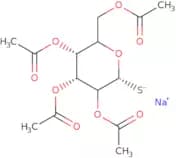
(3R, 4S,5R) -3-O-Benzhydryloxybis(trimethylsilyloxy)silyl 1-benzyl-4,5-O-isopropylidene-3, 4, 5-piperidinetriol is a high purity methylated oligosaccharide. It is synthesized using Click chemistry and fluorination. This product can be modified with different functional groups. It is an excellent candidate for glycoprotein analysis due to its high purity and modification capabilities.Purity:Min. 95%2,3,4,6-Tetra-O-acetyl-a-D-thiomannopyranse sodium salt
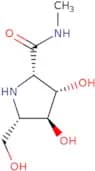
2,3,4,6-Tetra-O-acetyl-a-D-thiomannopyranse sodium salt is a synthetic compound that is used as an intermediate in the production of glycosaminoglycans. It is a complex carbohydrate with four mannose units and two acetyl groups. This compound can be methylated, fluorinated, or modified with click chemistry to produce various derivatives. 2,3,4,6-Tetra-O-acetyl-a-D-thiomannopyranse sodium salt has been shown to have antiviral and anti cancer properties and can be custom synthesized for specific needs.Formula:C14H19O9SNaPurity:Min. 95%Molecular weight:386.35 g/mol(2S, 3S, 4S, 5S) -3, 4- Dihydroxy- 5- (hydroxymethyl) - N- methyl- 2- pyrrolidinecarboxami de
CAS:(2S, 3S, 4S, 5S) -3, 4- Dihydroxy- 5- (hydroxymethyl) - N- methyl- 2- pyrrolidinecarboxami de is a custom synthesis of an oligosaccharide. It is a complex carbohydrate that can be modified to the customer's specifications. The product is available in high purity and with good monosaccharide and methylation yield. The chemical structure of this product contains a fluorinated saccharide.Purity:Min. 95%N-Fmoc-O-a-(2-acetamido-2-deoxy-3,4,6-tri-O-acetyl-b-D-glucopyranosyl-b-1-4-2,3,6-tri-O-acetyl-a-D-mannopyranosyl)-L-threonine
N-Fmoc-O-a-(2-acetamido-2-deoxy-3,4,6-tri-O-acetyl-b-D-glucopyranosyl)-L-threonine is a synthetic sugar. It is an oligosaccharide that is used in the preparation of glycoproteins. It can be modified with fluorine and methyl groups for use in click chemistry reactions. NFAODTGLT has CAS number 539073–78–8 and molecular weight of 676.35. This product is available for custom synthesis with various modifications.Purity:Min. 95%Lactosyl fluoride
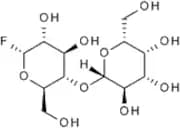
CAS:Lactosyl fluoride is a kinetic inhibitor of glycosidase enzymes. It has been shown to be an effective inhibitor of the enzyme β-galactosidase in both the presence and absence of calcium. Lactosyl fluoride has also been shown to inhibit other glycosidases, including α-galactosidase and α-mannosidase. The lactose derivative is activated by hydrogen fluoride, which allows it to react with the enzyme and block its activity. This product can be used as a chemical biology tool for studying glycoconjugates or as a medicine for treating diseases caused by the accumulation of oligosaccharides, such as Gaucher's disease or Tay-Sachs disease.Formula:C12H21FO10Purity:Min. 95%Color and Shape:White PowderMolecular weight:344.29 g/mol5-Azido-5-deoxy-1-C-butyl-2,3-O-isopropylidene-D-ribofuranose
5-Azido-5-deoxy-1-C-butyl-2,3-O-isopropylidene-D-ribofuranose is a custom synthesis of an oligosaccharide that is modified by methylation and glycosylation. It has a CAS number of 533881-00-6.Purity:Min. 95%1,2,3,5-Tetra-O-benzoyl-a-D-xylofuranose
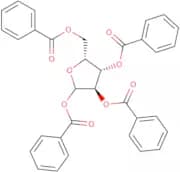
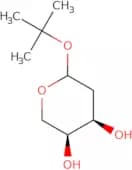
CAS:1,2,3,5-Tetra-O-benzoyl-a-D-xylofuranose is a glycosylated oligosaccharide with a tetra-O-benzoyl group at the nonreducing end. It can be synthesized by reacting benzaldehyde with 1,2,3,5-tetraacetyl xylose in the presence of sodium methoxide and acetic acid. The product can be fluorinated or methylated to produce other derivatives. This product is soluble in water and methanol and has a CAS number of 5432-87-1. It is available as a custom synthesis from catalog number SYN0000011. !-- -->!-- -->!-- -->!-- --> !-- -->!-- -->!-- -->!-- --> !-- -->!-- -->!--Formula:C33H26O9Purity:Min. 95%Color and Shape:White PowderMolecular weight:566.55 g/moltert-Butyl 2-deoxy-L-ribopyranoside
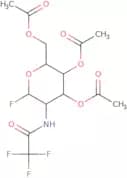
CAS:Tert-butyl 2-deoxy-L-ribopyranoside is a synthetic monosaccharide that can be used in the synthesis of polysaccharides and oligosaccharides. It is also used for fluorination reactions, such as click modification. This compound can be custom synthesized to order, and it is available in high purity. Tert-butyl 2-deoxy-L-ribopyranoside can be modified with a variety of different functional groups, including methylation. It has an CAS number of 1032153-57-3.Formula:C9H18O4Purity:Min. 95%Color and Shape:White to off-white solid.Molecular weight:190.24 g/mol3,4,6-Tri-O-acetyl-2-deoxy-2-trifluoroacetamido-b-D-glucopyranosyl fluoride
CAS:3,4,6-Tri-O-acetyl-2-deoxy-2-trifluoroacetamido-b-D-glucopyranosyl fluoride is a synthetic sugar that can be used to modify glycosylations. This product is offered in high purity and has been modified with click chemistry. Click chemistry is a chemical reaction that creates stable carbon–carbon bonds. This modification allows for the attachment of small molecules to the sugar without affecting its structure.Formula:C14H17F4NO8Purity:Min. 95%Color and Shape:White PowderMolecular weight:403.28 g/mol