Glycoscience
Subcategories of "Glycoscience"
- Aminosugars(108 products)
- Glyco-Related Antibodies(284 products)
- Glycolipids(46 products)
- Glycosaminoglycans (GAGs)(55 products)
- Glycosides(419 products)
- Monosaccharides(6,622 products)
- Oligosaccharides(3,699 products)
- Polysaccharides(506 products)
Found 11035 products of "Glycoscience"
6-Deoxy- 3, 5- O- [(R) - benzylidene] -L- mannonic acid g- lactone
6-Deoxy- 3, 5- O- [(R) - benzylidene] -L- mannonic acid g- lactone is an intermediate in the synthesis of a polysaccharide. It is also used as a click modification agent and can be used to synthesize oligosaccharides with custom modifications. This compound has been shown to be stable under high temperatures and gives high purity products after synthesis. The synthesis of this product can be done using only two steps and can be modified for glycosylation or fluorination.Purity:Min. 95%Hyacinthine crystals
Hyacinthine is a sugar that is synthesized in the laboratory. It is modified with fluorine, methyl, and click chemistry. Hyacinthine has been shown to have antifungal, antiviral, and antitumour properties. It also has been shown to have anti-inflammatory effects. Hyacinthine can be used as a probe for the study of glycosylation reactions or as a model for the synthesis of complex carbohydrates.Purity:Min. 95%Glucosyl-C18-sphingosine
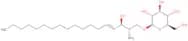
CAS:Glucosyl-C18-sphingosine is a sphingolipid that has been shown to inhibit the activity of Gaucher's enzyme, which is responsible for the synthesis of glucosylceramide. It has been demonstrated in a model system that glucosyl-C18-sphingosine inhibits mitochondrial membrane potential and decreases ATP levels, leading to cell death. The molecular pathogenesis of Gaucher disease is not well understood but it is believed to be related to defective lysosomal function. Glucosyl-C18-sphingosine may be used as a diagnostic agent for Gaucher disease and other metabolic disorders involving glucosylceramide accumulation.Formula:C24H47NO7Purity:Min. 95%Color and Shape:PowderMolecular weight:461.63 g/molUDP-Gal 2Na
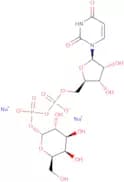
CAS:UDP-a-D-galactose disodium salt (UDP-Gal) is a sugar-nucleotide substrate of galactosyltransferases. It’s used as the donor of galactose in the biosyntheses of glycoproteins and glycolipids. Its low cellular content is also hypothetically linked to the defective galactosylation in galactosemia.
Formula:C15H22N2O17P2·2NaPurity:Min. 95 Area-%Color and Shape:PowderMolecular weight:610.27 g/mol(-)-4-epi-Lyoniresinol-3a-O-b-D-glucopyranoside
(-)-4-epi-Lyoniresinol-3a-O-b-D-glucopyranoside is a modification of the natural product, lyoniresinol, which is an Oligosaccharide. It is a Carbohydrate and its structure is complex due to the presence of a number of monosaccharides, including glucose. (-)-4-epi-Lyoniresinol-3a-O-b-D-glucopyranoside can be synthesized by methylating lyoniresinol with methanethiol in the presence of sodium methoxide to yield methyl lyoniresinolate. The methyl group is then removed by heating in boiling water to yield (-)-4-epi -lyoniresinol 3a -O -b -D -glucopyranoside. This compound has been shown to have antimicrobial activity against gram positive bacteria such as MycobPurity:Min. 95%Trehalose-6-phosphate disodium salt
Trehalose-6-phosphate disodium salt is a complex carbohydrate that can be modified to create a variety of products. Trehalose-6-phosphate disodium salt is made by the methylation of sugar, which creates an alpha-D-glucopyranosyl unit. This product can be used in the synthesis of oligosaccharides and polysaccharides, as well as other carbohydrates. Trehalose-6-phosphate disodium salt is also fluorinated to produce trehalose 6 phosphate fluoride, which has properties similar to those of trehalose 6 phosphate.Formula:C12H21O14PNa2Purity:Min. 95%Color and Shape:White PowderMolecular weight:466.24 g/molLaminaribiose
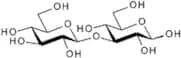
CAS:Disaccharide; substrate for glucanases and laminaribiose phosphorylase
Formula:C12H22O11Purity:Min. 95%Color and Shape:PowderMolecular weight:342.3 g/molD-Turanose
CAS:Turanose is a reducing analog of sucrose that is not metabolized by higher plants, but rather acquired through the action of sucrose transporters for intracellular carbohydrate signaling. In addition to its involvement in signal transduction, D-(+)-turanose can also be used as a carbon source by many organisms including numerous species of bacteria and fungi.Formula:C12H22O11Purity:Min. 98 Area-%Color and Shape:White PowderMolecular weight:342.3 g/molEthyl 2,3-di-O-benzyl-4,6-O-benzylidene-a-D-thiomannopyranoside S-oxide
CAS:Ethyl 2,3-di-O-benzyl-4,6-O-benzylidene-a-D-thiomannopyranoside S-oxide is a glycosylated compound that contains an O-(2,3) Dibenzyl side chain. This product is a white solid and can be used for the synthesis of other compounds. It has been shown to have antibacterial activity against Mycobacterium tuberculosis and may be used as a drug target for tuberculosis treatment. This product is also useful in the synthesis of oligosaccharides and polysaccharides.
Formula:C29H32O6SPurity:Min. 95%Color and Shape:PowderMolecular weight:508.63 g/molNA4 Glycan, 2-AB labelled
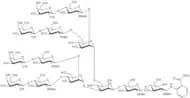
NA4 Glycan, 2-AB labelled is a synthetic glycoconjugate. It is a glycosylation of an oligosaccharide and an amino acid residue with the modification of fluorination. NA4 Glycan, 2-AB labelled can be used for research purposes in methylation and Click chemistry. This product also has CAS No., which means it is custom synthesized to order. The purity of this product is high and it is synthetically produced, making it ideal for research purposes.Purity:Min. 95%Sucrose distearate - 30% monostearate
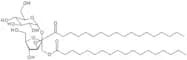
CAS:The ‘tallowate’ esters are probably the best known derivatives of sucrose and many attempts have been made to commercialise them in order to exploit their excellent surfactant functionalities. The most functional products are the mono- and diesters of the tallow acids (stearic, palmitic, oleic) with hydrophile-lipophile balance (HLB) values that lend themselves to surfactant applications in foods and cosmetics. They also have other uses, for example in coating fruits with a semipermeable membrane that acts as a preservative. Manufacturing economics have prevented these products from mass production and they remain in niche applications.Formula:C48H90O13Purity:Min. 95%Color and Shape:PowderMolecular weight:875.24 g/molDi-N-acetyl-D-lactosamine
Di-N-acetyl-D-lactosamine (DNL) is a sugar that is found in the mammalian tissues and can be used as a lectin to specifically bind to glycoproteins. It has been shown to have specificities for enteritis, and can be used to detect or analyze the sequences of oligosaccharides. DNL has been immobilized on silica gel, which was then reacted with lectins, such as concanavalin A, wheat germ agglutinin, and soybean agglutinin. This process allows for the detection of high-mannose-type oligosaccharides.
Formula:C28H48N2O21Purity:Min. 95%Color and Shape:PowderMolecular weight:748.68 g/mol7-O-Galloyl-D-sedoheptulose
7-O-Galloyl-D-sedoheptulose is a synthetic immunosuppressant that is orally administered. It has been shown to be synergistic with pro-inflammatory factors and fructus in mice. 7-O-Galloyl-D-sedoheptulose inhibits the production of pro-inflammatory factors by binding to the receptor α, which prevents the activation of transcription factor NFκB. This drug also inhibits the synthesis of urea nitrogen and pro-apoptotic protein. 7-O-Galloyl-D -sedoheptulose has been shown to be more effective than cyclosporine A in suppressing immune responses in mice and rats with rheumatoid arthritis.Purity:Min. 95%tert-Butyl β-D-glucopyranoside
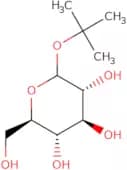
CAS:tert-Butyl b-D-glucopyranoside is a monomer that belongs to the class of acrylic acid ester. It is used in polymer synthesis, as a photoinitiator and as a light stabilizer for polymers. The compound is resistant to heat and has a high degree of light transmittance. Tert-butyl b-D-glucopyranoside is soluble in chloroform and can be found in carbon tetrachloride solution with a transmittance of up to 83%. This compound can be used as an indexing agent for silicon wafers because it produces protrusions when immersed in chloroform.Formula:C10H20O6Purity:Min. 95%Color and Shape:PowderMolecular weight:236.26 g/molMethyl α-L-acosamine
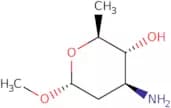
CAS:Methyl a-L-acosamine is a glycosylation agent that can be used to modify complex carbohydrates. It can also be used in the methylation of saccharides, polysaccharides, and sugars. Methyl a-L-acosamine is made by reacting acetic anhydride with L-a-D-galactopyranosyl chloride. The CAS number for this product is 54623-23-3. This product can be custom synthesized to meet your specifications and has high purity.Formula:C7H15NO3Purity:Min. 95%Color and Shape:White To Off-White SolidMolecular weight:161.2 g/mol2,6-Dideoxy-D-arabino-hexose
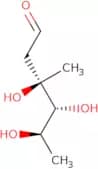
CAS:2,6-Dideoxy-D-arabino-hexose is a hydrogenolysis product of 2,6-dideoxy-D-ribo-hexose. It has been shown to have a solvolytic activity and can be used for the dehalogenation of several halogenated compounds. 2,6-Dideoxy-D-arabino-hexose is also stereoselective and can be used as an estimator in population genetics. This sugar is also regulatory, catalytic, and crystalline. It is found in many carbohydrates, including weighting disaccharides such as sucrose.
Purity:Min. 95%Ethyl 2,3,4,6-tetra-O-benzyl-b-D-thiogalactopyranoside
CAS:Ethyl 2,3,4,6-tetra-O-benzyl-b-D-thiogalactopyranoside is a synthetically produced saccharide typically used as a building block in oligo-saccharide synthesis.Formula:C36H40O5SPurity:Min. 98 Area-%Molecular weight:584.77 g/mol2,3,4,6-Tetra-O-methyl-D-glucose
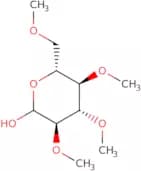
CAS:methyl ether of glucose with the anomeric position free.
Formula:C10H20O6Purity:Min. 95%Color and Shape:PowderMolecular weight:236.26 g/mol5-Thio-D-glucose
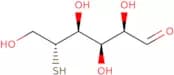
CAS:Thiosugar hexokinase inhibitor; inhibits cellular transport of D-glucose
Formula:C6H12O5SPurity:Min. 97 Area-%Color and Shape:White PowderMolecular weight:196.22 g/molN-Acetyl-2-O-methyl-α-D-neuraminic acid
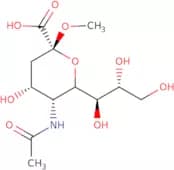
CAS:N-acetylneuraminic acid derivative and a useful tool for the study of sialic acid binding to its ligands. It was previously used for such purpose in studies on the influenza binding to hemagglutinin. This compound was also used for investigation of Clostridium botulinum toxin binding to various sugars.Formula:C12H21NO9Purity:Min. 95%Color and Shape:White PowderMolecular weight:323.3 g/mol
![6-Deoxy- 3, 5- O- [(R) - benzylidene] -L- mannonic acid g- lactone](/_next/image/?url=https%3A%2Fstatic.cymitquimica.com%2Fproducts%2F3D%2Fthumb-webp%2FMD163979.webp&w=3840&q=75)