Glycoscience
Glycoscience is the study of carbohydrates and their derivatives, as well as the interactions and biological functions they participate in. This field of research is crucial for understanding a wide variety of biological processes, including cell recognition, signaling, immune response, and disease development. Glycoscience has important applications in biotechnology, medicine, and the development of new drugs and therapies. At CymitQuimica, we offer a wide selection of high-quality, high-purity products for glycoscience research. Our catalog includes monosaccharides, oligosaccharides, polysaccharides, glycoconjugates, and specific reagents, designed to support researchers in their studies on the structure, function, and applications of carbohydrates in biological systems. These resources are intended to facilitate scientific discoveries and practical applications in various areas of bioscience and medicine.
Subcategories of "Glycoscience"
- Aminosugars(108 products)
- Glyco-Related Antibodies(282 products)
- Glycolipids(46 products)
- Glycosaminoglycans (GAGs)(55 products)
- Glycosides(419 products)
- Monosaccharides(6,622 products)
- Oligosaccharides(3,682 products)
- Polysaccharides(503 products)
Found 11041 products of "Glycoscience"
Sort by
Purity (%)
0
100
|
0
|
50
|
90
|
95
|
100
Verbascotetraose
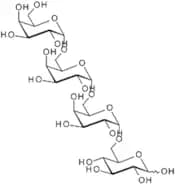
CAS:<p>Verbascotetraose is a disaccharide that is found in plants. Its chemical structure is composed of one glucose molecule and one fructose molecule. Verbascotetraose is produced by the plant tissue through a biosynthetic process, which involves the transfer reactions of phosphorylated hexoses. The resulting product is then converted to stachyose and oligosaccharides by dephosphorylation, glycan synthesis, and chromatographic method.<br>The production of verbascotetraose has been demonstrated in soybean products incubated with cellotriose and glycoside derivatives.</p>Formula:C24H42O21Purity:Min. 95%Molecular weight:666.58 g/mol1,2,3,4-Tetra-O-benzyl-6-O-trityl-b-D-glucopyranose
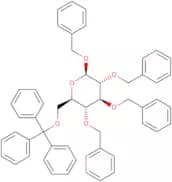
CAS:<p>1,2,3,4-Tetra-O-benzyl-6-O-trityl-b-D-glucopyranose is a fluorinated monosaccharide. It is synthesized by the reaction of 1,2,3,4 tetra-O-benzyl bromoacetone with sodium cyanoborohydride in sodium hydroxide solution. 1,2,3,4 Tetra-O-benzyl 6O trityl glucopyranose has been used as a glycosylation and polysaccharide modification agent for the synthesis of complex carbohydrates. This compound has also been shown to be an effective methylation agent for sugars.</p>Formula:C53H50O6Purity:Min. 95%Molecular weight:782.96 g/molFluphenazine b-D-glucuronide
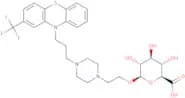
CAS:Controlled Product<p>Fluphenazine is a phenothiazine antipsychotic agent that is metabolized by the liver to form fluphenazine b-D-glucuronide. This compound has been shown to have high yield and an electron affinity. Fluphenazine b-D-glucuronide is a primary alcohol with a phenolic hydroxyl group. It can be synthesized using immobilized enzyme, which is an electron donor, and an aliphatic substrate such as methanol. The reaction product is incubated for six hours before it undergoes glucuronidation.</p>Formula:C28H34F3N3O7SPurity:Min. 95%Molecular weight:613.65 g/mol1,2,5-Tri-O-acetyl-3-deoxy-D-ribofuranose
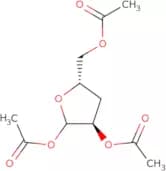
CAS:<p>1,2,5-Tri-O-acetyl-3-deoxy-D-ribofuranose is a modification of the sugar 3-deoxyribofuranose. It is a white to off-white powder that is soluble in water and methanol. 1,2,5-Tri-O-acetyl-3-deoxyribofuranose has been shown to be an inhibitor of bacterial growth in vitro as well as antiulcerogenic and cytotoxic. The compound also inhibits the growth of cancer cells and has been shown to inhibit the production of inflammatory cytokines such as tumor necrosis factor alpha and interleukin 1 beta.</p>Formula:C11H16O7Purity:Min. 95%Molecular weight:260.24 g/molN’-Nitrosonornicotine N-β-D-glucuronide (mixture of diastereomers) hydrate
CAS:<p>Please enquire for more information about N’-Nitrosonornicotine N-β-D-glucuronide (mixture of diastereomers) hydrate including the price, delivery time and more detailed product information at the technical inquiry form on this page</p>Formula:C15H19N3O7•(H2O)xPurity:Min. 95%Ethyl 3-O-benzyl-b-D-thioglucopyranoside
<p>Ethyl 3-O-benzyl-b-D-thioglucopyranoside is a modification of the sugar D-thioglucose. It is synthesized by the methylation of D-thioglucose with ethyl iodide in aqueous sulfuric acid, followed by glycosylation with benzaldehyde and sodium hydroxide. This product has been used for polymerization reactions, as well as for synthesis of oligosaccharides and polysaccharides. The molecular weight of this product is 434.2 g/mol.</p>Purity:Min. 95%2,3,4,6-Tetra-O-benzyl-a-D-glucopyranose
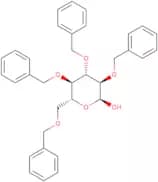
CAS:<p>2,3,4,6-Tetra-O-benzyl-a-D-glucopyranose is a synthetic derivative of galactose that can be used as a sugar donor in the synthesis of various types of glycosides. It is activated with phosphorus oxychloride and aluminium chloride to yield the corresponding anhydride. The hydroxy group on 2,3,4,6-tetra-O-benzyl-a-D-glucopyranose may be converted to an alkene by condensation with naphthalene or another electrophile. The stereoselective introduction of the hydroxy group using this method provides a valuable tool for chemists who are interested in synthesizing chiral molecules.</p>Formula:C34H36O6Purity:Min. 95%Color and Shape:White crystals.Molecular weight:540.65 g/mol2-Acetamido-3,4,6-tri-O-benzyl-2-deoxy-b-D-glucopyranosyl azide
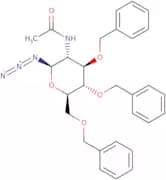
CAS:<p>2-Acetamido-3,4,6-tri-O-benzyl-2-deoxy-b-D-glucopyranosyl azide is a custom synthesis of an oligosaccharide that has been modified with fluorination and methylation. This carbohydrate is a sugar that can be used in the production of glycosylations or click chemistry reactions. It is a complex carbohydrate with high purity and can be used for research purposes or other applications.</p>Formula:C29H32N4O5Purity:Min. 95%Molecular weight:516.59 g/mol6'-Sulpho Lewisa-BSA
<p>6'-Sulpho Lewisa-BSA is a carbohydrate that has been modified with sulphur and fluorine. It is used as a fluorescence probe for the detection of carbohydrates in solutions, such as glycoproteins, glycopeptides, and glycolipids. 6'-Sulpho Lewisa-BSA is a complex carbohydrate that can be synthesized from the reaction of d-glucose and D-alanine. It can also be custom synthesized to suit the needs of the customer. This product is high purity and can be methylated or glycosylated. 6'-Sulpho Lewisa-BSA also has been modified by click chemistry to incorporate fluorescent groups at specific sites on the sugar chain.</p>Purity:Min. 95%Methyl 2,3-di-O-benzoyl-4,6-O-benzylidene-a-D-mannopyranoside
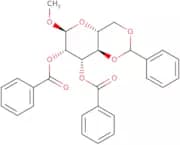
CAS:<p>Methyl 2,3-di-O-benzoyl-4,6-O-benzylidene-a-D-mannopyranoside is a custom synthesized compound that has been modified with fluorination and methylation. It is a monosaccharide sugar that has been synthetically produced. The synthesis of this compound includes the click modification of the benzoyl group to introduce fluoro groups. Methyl 2,3-di-O-benzoyl 4,6 O benzylidene a D mannopyranoside is an oligosaccharide sugar that is glycosylated and polysaccharides. This compound is made up of complex carbohydrates and high purity for research purposes.</p>Formula:C28H26O8Purity:Min. 95%Molecular weight:490.51 g/molTetrasaccharide dp4
<p>Tetrasaccharide dp4 is a custom synthesis that is modified with fluorination, methylation, and click modification of the monosaccharides. It can be used for the synthesis of oligosaccharides and saccharides. Tetrasaccharide dp4 is a glycosylated carbohydrate that belongs to the group of polysaccharides. This product has CAS number 87392-00-6.</p>Formula:C24H62N10O38S6Purity:Min. 95%Molecular weight:1,291.19 g/molBenzyl 2-acetamido-3,6-di-O-benzoyl-2-deoxy-a-D-glucopyranoside
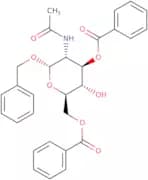
CAS:<p>A 2-acetamido-3,6-di-O-benzoyl-2-deoxy-a-D-glucopyranoside is a custom synthesis of a complex carbohydrate that has been modified with methylation and glycosylation. It is an Oligosaccharide with Polysaccharide and Modification. The CAS number for this compound is 82827-77-8 and has a purity of 99%. This compound has been fluorinated and synthesized.</p>Formula:C29H29NO8Purity:Min. 95%Molecular weight:519.54 g/mol8-Methoxycarbonyl-3-benzyl-3',4',6',6-tetra-O-acetyl-N,N'-diacetyl-b-chitobioside
CAS:<p>8-Methoxycarbonyl-3-benzyl-3',4',6',6-tetra-O-acetyl-N,N'-diacetyl b-chitobioside is a synthetic product that belongs to the class of glycosides. This compound has been modified by the incorporation of methyl and fluorine atoms. It is used as an intermediate in the synthesis of oligosaccharides and saccharides for use in biotechnology research.</p>Formula:C39H58N2O16Purity:Min. 95%Molecular weight:810.88 g/molBlood Group A tetrasaccharide type II
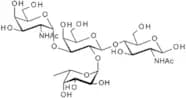
CAS:<p>A antigen tetrasaccharide Type I I, possible use in antiviral development</p>Formula:C28H48N2O20Purity:Min. 95%Color and Shape:PowderMolecular weight:732.68 g/mol3,4,5,6-Tetra-O-acetyl myo-inositol
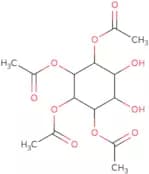
CAS:<p>3,4,5,6-Tetra-O-acetyl myo-inositol is a synthetic compound that functions as a methyl donor for the modification of saccharides and polysaccharides. It is used in click chemistry reactions to modify oligosaccharides with fluorinated alkyne moieties. 3,4,5,6-Tetra-O-acetyl myo-inositol is also used in glycosylation reactions to produce complex carbohydrates. This chemical has CAS number 90366-30-6.</p>Formula:C14H20O10Purity:Min. 95%Molecular weight:348.3 g/mol4'-Hydroxytrazodone b-D-glucuronide
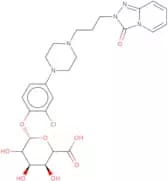
CAS:<p>4'-Hydroxytrazodone b-D-glucuronide is a modification of the drug 4'-hydroxytrazodone, which is used to treat hypertension and depression. The modification prevents the degradation of 4'-hydroxytrazodone by glucuronyl transferase enzymes in the liver, prolonging its half-life. It is synthesized from the glycogen or starch of plants such as corn, wheat, or potatoes. This compound can also be found in natural sources such as honey and fruit juices.</p>Formula:C25H30ClN5O8Purity:Min. 95%Molecular weight:564 g/molMethyl 4-deoxy-2,3-O-isopropylidene-L-threonate
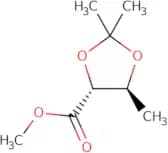
CAS:<p>Methyl 4-deoxy-2,3-O-isopropylidene-L-threonate is a fluorinated sugar that can be synthesized with high purity. It has been used for the synthesis of glycosyls and polysaccharides or for the modification of natural sugars. This compound is an intermediate in the synthesis of complex carbohydrates such as oligosaccharides and polysaccharides. Click chemistry has also been used as a modification to this compound. Methyl 4-deoxy-2,3-O-isopropylidene-L-threonate is a white crystalline solid that is soluble in water and methanol but not in ethanol. It has a melting point of 155°C and a CAS number of 78086-72-3.</p>Formula:C8H14O4Purity:Min. 95%Molecular weight:174.19 g/molHybrid N-Glycan
CAS:<p>Hybrid N-glycans are glycan structures that contain both a high mannose and complex type oligosaccharide. Hybrid N-glycans are expressed on the surface of mammalian cells, and they can be found in human serum. Hybrid N-glycans have been shown to activate caspase 3 and induce apoptosis in some mouse models. They also have biological functions such as growth factor binding or antibody binding. Hybrid N-glycans may be involved in the activation of the immune system or in the development of cancerous tumors.</p>Formula:C62H104N4O46Purity:Min. 95%Color and Shape:PowderMolecular weight:1,641.49 g/molDipalmitin
CAS:<p>Dipalmitin is a chemical substance that belongs to the group of fatty acid esters. It has been shown to inhibit the activity of a number of enzymes, including proteases and lipases. Dipalmitin also inhibits the production of diacylglycerol and glycerides in cells, which are necessary for cellular growth. The exact mechanism by which dipalmitin inhibits these enzymes is unknown, but it has been hypothesized that it may function as a competitive inhibitor or an allosteric inhibitor. Dipalmitin also has been shown to have antiviral properties against HIV infection in model systems. The antiviral activity has been attributed to its ability to inhibit viral protein synthesis and block the assembly of viral particles at the cell membrane.</p>Formula:C35H68O5Purity:Min. 95%Molecular weight:568.91 g/mol