Glycoscience
Glycoscience is the study of carbohydrates and their derivatives, as well as the interactions and biological functions they participate in. This field of research is crucial for understanding a wide variety of biological processes, including cell recognition, signaling, immune response, and disease development. Glycoscience has important applications in biotechnology, medicine, and the development of new drugs and therapies. At CymitQuimica, we offer a wide selection of high-quality, high-purity products for glycoscience research. Our catalog includes monosaccharides, oligosaccharides, polysaccharides, glycoconjugates, and specific reagents, designed to support researchers in their studies on the structure, function, and applications of carbohydrates in biological systems. These resources are intended to facilitate scientific discoveries and practical applications in various areas of bioscience and medicine.
Subcategories of "Glycoscience"
- Aminosugars(108 products)
- Glyco-Related Antibodies(282 products)
- Glycolipids(46 products)
- Glycosaminoglycans (GAGs)(55 products)
- Glycosides(419 products)
- Monosaccharides(6,622 products)
- Oligosaccharides(3,682 products)
- Polysaccharides(503 products)
Found 11041 products of "Glycoscience"
Sort by
Purity (%)
0
100
|
0
|
50
|
90
|
95
|
100
1, 4- Anhydro- 3- deoxy-D- threo- pentitol
CAS:<p>1,4-Anhydro-3-deoxy-D-threo-pentitol is a custom synthesis of a monosaccharide. The structure consists of a hydrogen attached to the oxygen on the anomeric carbon which is then substituted with fluorine. The hydroxyl group on C1 is methylated and then reduced to form a hemiacetal linkage with the C6 hydroxyl group. This product can be used in glycosylation reactions to produce complex carbohydrates.</p>Formula:C5H10O3Purity:Min. 95%Molecular weight:118.13 g/mol2,6-Di-O-Carboxymethyl-D-glucose
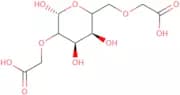
CAS:<p>2,6-di-O-carboxymethyl-D-glucose (2,6-CMG) is a modification of D-glucose. 2,6-CMG is a complex carbohydrate with CAS No. 95350-37-1 and has the molecular formula C8H14O9. It is an oligosaccharide that can be custom synthesized to meet customer specifications. 2,6-CMG has high purity and can be used as a sugar or polysaccharide. It also has been fluorinated to meet customer requirements. The glycosylation of 2,6-CMG is methylated and saccharides are then added to it in order to produce a monosaccharide or polysaccharide. This product can be used in the synthesis of glycoproteins and other biomolecules.</p>Formula:C10H16O10Purity:Min. 95%Color and Shape:Colourless LiquidMolecular weight:296.23 g/molMethyl 5-Acetamido-7,8,9-tri-O-acetyl-5-N,4-O-carbonyl-3,5-dideoxy-2-S-phenyl-2-thio-D-glycero-b-D-galacto-2-nonulopyranosylonate
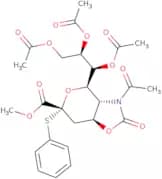
CAS:<p>Methyl 5-Acetamido-7,8,9-tri-O-acetyl-5-N,4-O-carbonyl-3,5-dideoxy-2-S-phenyl-2 -thio--D--glycero--b--D--galacto--2--nonulopyranosylonate is a methylated oligosaccharide that has been modified with the click reaction. This compound is a fluorinated saccharide and it is used for the synthesis of polysaccharides. The product has been custom synthesized and has a purity of >98%. It's an Oligosaccharide that is also a Carbohydrate. Methyl 5 Acetamido 7 8 9 Tri O Acetyl 5 N 4 O Carbonyl 3 5 Dideoxy 2 S Phenyl 2 Thio D Glycero B D Galacto 2 Nonulopyranosylonate can</p>Formula:C25H29NO12SPurity:Min. 95%Molecular weight:567.56 g/molRamiprilat acyl-b-D-glucuronide
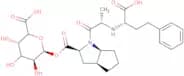
CAS:<p>Ramiprilat acyl-b-D-glucuronide is a modified form of ramipril, an angiotensin converting enzyme inhibitor that belongs to the class of angiotensin II receptor antagonists. It is used in the treatment of hypertension and congestive heart failure. The modifications are performed by methylation, saccharide, polysaccharide, click modification, and modification. This active compound has CAS number 1357570-22-9. The chemical formula for this product is C37H53NO4. Ramiprilat acyl-b-D-glucuronide has high purity and is a complex carbohydrate with glycosylation on the sugar moiety that contains a fluorination at the 3 position on the glucose ring.</p>Formula:C27H36N2O11Purity:Min. 95%Molecular weight:564.59 g/mol1,3-O-Benzylidene-L-erythritol
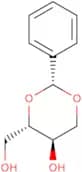
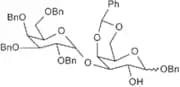
CAS:<p>1,3-O-Benzylidene-L-erythritol is a potent inhibitor of the intestinal maltase. It has two diastereomers, one of which is more potent than the other. The more potent diastereomer inhibits both the maltase and L-arabinose isomerase enzymes in the intestine. This inhibition prevents digestion of complex carbohydrates such as starch and sucrose into simple sugars that can be absorbed by the body. 1,3-O-Benzylidene-L-erythritol also inhibits salacinol synthase and thiosugar synthetases from bacteria and plants, preventing synthesis of these important compounds.</p>Purity:Min. 95%Benzyl 3-O-(2,3,4,6-tetra-O-benzyl-a-D-galactopyranosyl)-4,6-O-benzylidene-D-galactopyranose
CAS:<p>Benzyl 3-O-(2,3,4,6-tetra-O-benzyl-a-D-galactopyranosyl)-4,6-O-benzylidene-D-galactopyranose is an oligosaccharide with a complex carbohydrate structure. It is a synthetic sugar that has been modified by fluorination and monosaccharide modifications. The product has a CAS No. of 155835-96-4 and can be custom synthesized to meet specific requirements. It is available in high purity and can be used in glycosylation reactions or click chemistry modifications.</p>Formula:C54H56O11Purity:Min. 95%Molecular weight:881.04 g/mola-L-Fucose-1-phosphate bis(cyclohexylammonium) salt
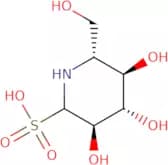
CAS:<p>a-L-Fucose-1-phosphate bis(cyclohexylammonium) salt is a synthetic, high purity, custom synthesis that is used for Click modification. It can be synthesized by fluorination and glycosylation of fucose. This product has a CAS No. 24333-03-7, and can be modified with methylation and oligosaccharide. It is used in the production of complex carbohydrates such as saccharides and monosaccharides.</p>Formula:C6H13O8P·2C6H13NPurity:Min. 95%Color and Shape:SolidMolecular weight:442.48 g/molNojirimycin 1-sulfonic acid
CAS:<p>Nojirimycin 1-sulfonic acid is a synthetic compound that has been shown to be an inhibitor of glycosylation. It is a modification of nojirimycin, which is a natural product that has been used as an anti-inflammatory agent for years. Nojirimycin 1-sulfonic acid (NJA) binds to the active site of the glycosyltransferase enzyme and prevents the transfer of sugar from the donor substrate to the acceptor substrate. This inhibits the synthesis of complex carbohydrates, oligosaccharides, and polysaccharides. The fluorination on NJA's sulfonate group also makes it more soluble in water, which increases its activity.</p>Formula:C6H13NO7SPurity:Min. 95%Color and Shape:White PowderMolecular weight:243.24 g/molD-Galacto-D-mannan - From aspergillus fumigatus
CAS:<p>The Galactomannan from Aspergillus fumigatus consistists of a mannose backbone with galactose side groups, more specifically, a (1-4)-linked b-D-mannopyranose backbone with branchpoints from their 6-positions linked to a-D-galactose, (i.e. 1-6-linked a-D-galactopyranose). This polysaccharide is a component of the cell wall of the mold Aspergillus and is released during growth. Detection of galactomannan in blood is used to diagnose invasive aspergillosis infections in humans. This is performed with monoclonal antibodies in a double-sandwich ELISA; the assay was approved by the FDA in 2003 and is of moderate accuracy.</p>Purity:Min. 95%Color and Shape:Powder4-Aminophenyl 2,3,4,6-tetra-O-acetyl-a-D-mannopyranoside
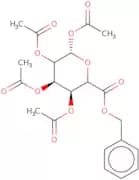
CAS:<p>4-Aminophenyl 2,3,4,6-tetra-O-acetyl-a-D-mannopyranoside is a modified oligosaccharide that has been synthesized by the glycosylation of methylated 4-aminophenol with 1,2,3,5-tetra-O-(acetyl)-D-mannitol. The acetyl group at the sixth position on the mannose residue is introduced by acetic anhydride. The chemical formula for this compound is C10H11NO7 and it has a molecular weight of 285.24 g/mol. This compound was tested for its ability to inhibit bacterial growth in vitro and found to be active against E. coli and S. aureus (ATCC 25923).</p>Purity:Min. 95%1,2,3,4-Tri-O-acetyl-b-D-glucuronide benzyl ester
CAS:<p>1,2,3,4-Tri-O-acetyl-b-D-glucuronide benzyl ester is a synthetic compound that belongs to the group of high purity custom synthesis. It has been shown to be a useful reagent for glycosylation and methylation reactions. This product is also used in the synthesis of oligosaccharides and monosaccharides. 1,2,3,4-Tri-O-acetyl-b-D-glucuronide benzyl ester can also be used as a sugar or complex carbohydrate in biological studies.</p>Formula:C21H24O11Purity:Min. 95%Molecular weight:452.41 g/molPhenyl 4,6-O-benzylidene-a-D-thioglucopyranoside
<p>Phenyl 4,6-O-benzylidene-a-D-thioglucopyranoside is a custom synthesized compound with CAS No. This chemical is an alpha,alpha,alpha-trifluoroacetamido derivative of the natural carbohydrate thioglucose. Phenyl 4,6-O-benzylidene-a-D-thioglucopyranoside is a complex carbohydrate that can be modified by fluorination to produce a simple sugar. Modification of this compound can also produce monosaccharides with various levels of purity.</p>Formula:C19H20O5SPurity:Min. 95%Molecular weight:360.42 g/molHeparin derived dp24 saccharide ammonium salt
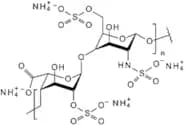
<p>Heparin derived dp24 saccharide ammonium salt is a complex carbohydrate and a saccharide. It is used for the modification of polysaccharides and oligosaccharides. The compound has been shown to reduce blood coagulation by preventing the binding of calcium ions to thrombin, which then blocks the conversion of fibrinogen to fibrin. Heparin derived dp24 saccharide ammonium salt has high purity and can be custom synthesized with high quality. The compound is also methylated, glycosylated, or click-modified.</p>Purity:Min. 95%Color and Shape:White to yellow solid.Molecular weight:Average 6850Mono(6-ethanediamine-6-deoxy)-β-cyclodextrin
CAS:<p>This beta-cyclodextrin (β-CD) derivative is a functionalized cyclic oligosaccharide composed of seven glucose units, characterized by a hydrophilic exterior and a lipophilic cavity (bigger than α-CD and smaller than γ-CDs), which allows it to encapsulate various guest molecules. This structural feature facilitates its use in multiple applications, including pharmaceuticals, food enhancement, and cosmetics. In the pharmaceutical industry, it enhances the solubility and stability of poorly water-soluble drugs, improving their bioavailability and efficacy while also masking unpleasant tastes. The food sector utilizes it as a stabilizer for flavors, colors, and nutrients, extending shelf life by protecting sensitive ingredients from degradation. In cosmetics, it serves as a complexing agent for fragrances and active components, ensuring their stability and controlled release. Its use expands to many other fields, including nanotechnology for drug delivery systems, environmental remediation for extracting organic pollutants, textiles for slow-release fragrances, and analytical chemistry for chiral separation.</p>Formula:C44H76N2O34Purity:Min. 95%Molecular weight:1,177.1 g/molGM1-Ganglioside labelled by biotin
<p>GM1-biotin ganglioside (sodium salt) has a core tetrasaccharide structure (Galβ1,3GalNAcβ1,4Galβ1,4Glc) with sialic acid linked α2,3 to the inner galactose residue, ceramide linked β to position 1 on the reducing terminal glucose residue, and biotin to position 5 on sialic acid (Ledeen, 2009). GM1 ganglioside is abundant in all mammalian brains where it covers 10%-20% of the total ganglioside mixture. It is found in epithelial membranes and is a key element for bacterial toxicity and viral infection as it is the intestinal receptor for the cholera toxin, the B-subunits of heat-labile toxin, rotavirus, and simian virus 40. GM1 ganglioside functions as a neurotrophic and neuroprotective compound, and has been used therapeutically for diabetic and peripheral neuropathies. GM1 ganglioside also has the ability to bind amyloid-β proteins and is involved in Alzheimerâs pathogenesis (Chiricozzi, 2020).</p>Formula:C71H122N6O33SPurity:Min. 95%Molecular weight:1,619.82 g/mol4-Methoxyphenyl 3-O-allyl-4,6-O-benzylidene-2-deoxy-2-phthalimido-b-D-glucopyranoside
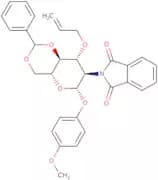
CAS:<p>4-Methoxyphenyl 3-O-allyl-4,6-O-benzylidene-2-deoxy-2-phthalimido-b-D-glucopyranoside (BAP) is a phosphatase inhibitor. It binds to the active site of the enzyme phosphatase and prevents it from hydrolyzing phosphate esters. BAP is used to prevent the release of calcium ions from bone, which can lead to osteitis fibrosa cystica in patients with esophagectomy or those who have undergone abdominal surgery. Thermodynamic studies indicate that BAP binds to phosphatases with a 1:1 stoichiometry and that this binding is irreversible.</p>Formula:C31H29NO8Purity:Min. 95%Molecular weight:543.56 g/mol2-(2,3,4,6-Tetra-O-acetyl-b-D-galactopyranosyl)thiopseudourea hydrobromide
CAS:<p>2-(2,3,4,6-Tetra-O-acetyl-b-D-galactopyranosyl)thiopseudourea hydrobromide is a custom synthesis that can be modified with fluorination, methylation, monosaccharide and/or oligosaccharide. It can be synthesized by Click modification of saccharides with glycosylation or sugar. This product has a CAS No. 51224-13-6 and is a Carbohydrate complex carbohydrate.</p>Formula:C15H22N2O9S·HBrPurity:Min. 95%Molecular weight:487.32 g/molPhenyl 2,4,6-Tri-O-acetyl-3-O-allyl-b-D-thiogalactopyranoside
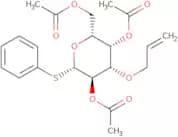
CAS:<p>Phenyl 2,4,6-Tri-O-acetyl-3-O-allyl-b-D-thiogalactopyranoside is a custom synthesis that can be modified to suit your needs. This product is a complex carbohydrate that is used in glycosylation reactions as an Oligosaccharide. It is fluorinated at the hydroxyl group of the sugar and methylated at the C5 position of the sugar. The CAS number for this product is 1820572-28-8.</p>Formula:C21H26O8SPurity:Min. 95%Molecular weight:438.49 g/mol4-Chlorophenyl b-D-glucopyranoside
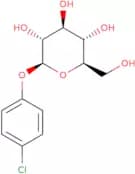
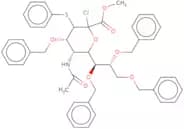
CAS:<p>4-Chlorophenyl b-D-glucopyranoside is a synthetic, high purity, monosaccharide sugar which can be used as a reagent in the synthesis of oligosaccharides and polysaccharides. It is also used as an intermediate for glycosylation and methylation reactions. 4-Chlorophenyl b-D-glucopyranoside has an CAS number of 4756-30-3 and can be fluorinated for use in saccharide chemistry.</p>Formula:C12H15ClO6Purity:Min. 95%Molecular weight:290.7 g/molMethyl 5-acetamido-4,7,8,9-tetra-O-benzyl-2-chloro-2,3,5-trideoxy-3-phenylthio-D-erytho-b-L-gluco-2-nonulopyranosonate
CAS:<p>Methyl 5-acetamido-4,7,8,9-tetra-O-benzyl-2-chloro-2,3,5-trideoxy-3-phenylthio-D-erytho-b-L-gluco -2 nonulopyranosonate is a modification of an oligosaccharide. It is a complex carbohydrate that contains a high degree of polymerization and is soluble in water. The CAS number for this product is 120308 - 52 - 3. Methyl 5 - acetamido - 4 , 7 , 8 , 9 - tetra - O - benzyl - 2 - chloro - 2 , 3 , 5 - trideoxy - 3 phenylthio D erythro b L glycosonate can be used as a custom synthesis or as a synthetic product. This product has high purity and is synthesized from monosaccharides and polysacchar</p>Formula:C46H48ClNO8SPurity:Min. 95%Molecular weight:810.39 g/mol