Glycoscience
Glycoscience is the study of carbohydrates and their derivatives, as well as the interactions and biological functions they participate in. This field of research is crucial for understanding a wide variety of biological processes, including cell recognition, signaling, immune response, and disease development. Glycoscience has important applications in biotechnology, medicine, and the development of new drugs and therapies. At CymitQuimica, we offer a wide selection of high-quality, high-purity products for glycoscience research. Our catalog includes monosaccharides, oligosaccharides, polysaccharides, glycoconjugates, and specific reagents, designed to support researchers in their studies on the structure, function, and applications of carbohydrates in biological systems. These resources are intended to facilitate scientific discoveries and practical applications in various areas of bioscience and medicine.
Subcategories of "Glycoscience"
- Aminosugars(108 products)
- Glyco-Related Antibodies(282 products)
- Glycolipids(46 products)
- Glycosaminoglycans (GAGs)(55 products)
- Glycosides(419 products)
- Monosaccharides(6,622 products)
- Oligosaccharides(3,682 products)
- Polysaccharides(503 products)
Found 11041 products of "Glycoscience"
Sort by
Purity (%)
0
100
|
0
|
50
|
90
|
95
|
100
3,6-Di-O-tert-butyldiphenylsilyl-D-galactal
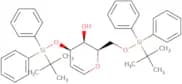
CAS:<p>3,6-Di-O-tert-butyldiphenylsilyl-D-galactal is an oligosaccharide that is a methylated and fluorinated derivative of the natural product D-galactal. The chemical structure of 3,6-di-O-tert-butyldiphenylsilyl-D-galactal is based on a beta-(1->4) linkage of two glucose residues with a terminal alpha-(1->3) linkage to form an alpha-(1->6) linkage. The compound is readily available in high purity, and can be custom synthesized to meet specific customer requirements for glycosylation, modification, or other special requests. 3,6-Di-O-tert-butyldiphenylsilyl--D--galactal has been shown in vitro to inhibit the growth of Mycobacterium tuberculosis and Mycobacterium av</p>Purity:Min. 95%(R)-Naproxen acyl-β-D-glucuronide
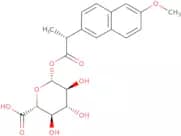
CAS:<p>(R)-Naproxen acyl-β-D-glucuronide is an organic compound that is synthesized from naproxen. It may be used for the treatment of osteoarthritis, rheumatoid arthritis, and other inflammatory conditions. The synthesis of (R)-Naproxen acyl-β-D-glucuronide has been described in a number of publications. This compound is a synthetic, modified naproxen with high purity and custom synthesis options. The synthesis process includes Click modification, fluorination, glycosylation, methylation, and oligosaccharide modification. The final product is a white to off-white solid with high purity and low impurities.</p>Formula:C20H22O9Purity:Min. 95%Color and Shape:PowderMolecular weight:406.38 g/mol(D-Glycero-a-D-manno-heptopyranosyl)-dihydrogenphosphate cyclohexylammonium salt
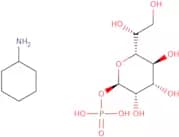
CAS:<p>The D-Glycero-a-D-manno-heptopyranosyl)-dihydrogenphosphate cyclohexylammonium salt, also known as Glyceroheptaose, is a complex carbohydrate. It is a white powder that can be used in the modification of polysaccharides, oligosaccharides, and saccharides. The CAS number for this substance is 359435-45-3.</p>Formula:C7H15O10P·C6H13NPurity:Min. 95%Molecular weight:389.34 g/mol6-Azido-6-deoxy-D-mannose
CAS:<p>6-Azido-6-deoxy-D-mannose is a hexose sugar that has been implicated in the binding of lectins to glycoclusters. Lectins are carbohydrate binding proteins found on the surface of cells and some viruses, which bind to specific carbohydrates via their sugar moieties. This process is called lectinosis and it is sometimes used as a form of immune evasion by pathogens. 6-Azido-6-deoxy-D-mannose can be used as a linker to attach affinity ligands or affinity tags to glycoclusters, which are clusters of glycoconjugates that have an important biological function. 6AoDM also has anti-microbial properties, making it an opportunistic pathogen.</p>Formula:C6H11N3O5Purity:Min. 95%Molecular weight:205.17 g/mol1,2,3,6-Tetra-O-acetyl-4-azido-4-deoxy-b-D-glucose
<p>Tetra-O-acetyl-4-azido-4-deoxy-b-D-glucose is a modified carbohydrate with the chemical formula C8H14N2O6. It is a white crystalline solid that can be synthesized from methylated 1,2,3,6-tetra-O-acetyl b-D-glucopyranoside and sodium azide. Tetra-O-acetyl b-(1→4)-d-[(1→2)-a] D -glucopyranose is used as an intermediate in the synthesis of glycosides and polysaccharides. It is also used as a reagent for preparing oligosaccharides and glycoproteins by modification reactions.</p>Purity:Min. 95%Celecoxib carboxylic acid acyl-b-D-glucuronide
CAS:<p>Celecoxib is a nonsteroidal anti-inflammatory drug (NSAID) that has been used to treat pain and inflammation. Celecoxib carboxylic acid acyl-b-D-glucuronide is an active metabolite of celecoxib that is formed by the conjugation of celecoxib with glucuronic acid. It has been shown to inhibit the synthesis of prostaglandins, which are inflammatory mediators.</p>Formula:C23H20F3N3O10SPurity:Min. 95%Molecular weight:587.48 g/molBlood Group B pentasaccharide type I
CAS:<p>Gala1-3(Fuca1-2)Galb1-3GlcNAcb1-3Gal (B antigen pentasaccharide Type I)</p>Formula:C32H55NO25Purity:Min. 95%Color and Shape:PowderMolecular weight:853.77 g/molD-muco-Inositol
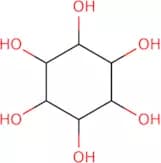
CAS:<p>D-Mucinol is an inositol that is structurally similar to scyllo-inositol. It has been shown to inhibit the growth of cancer cells and also inhibits the release of calcium ions from the mitochondria, which may be due to its ability to inhibit polymerase chain reaction. D-Mucinol is a potential treatment for ovarian cancer and other cancers.<br>D-Mucinol is a dinucleotide phosphate that binds with guanine nucleotides on DNA, inhibiting transcriptional elongation by binding to the RNA polymerase II enzyme. This prevents the production of mRNA, inhibiting protein synthesis and leading to cell death.<br>D-Mucinol has been shown to have cytostatic effects against HL60 cells in vitro, which are thought to be related to its ability to inhibit mononucleotide phosphates, including p-nitrophenyl phosphate (PNPP), at high concentrations. D-Mucin</p>Formula:C6H12O6Purity:Min. 95%Molecular weight:180.16 g/molDexibuprofen-acyl-b-D-glucuronide
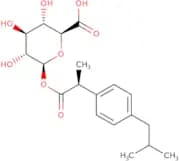
CAS:<p>Dexibuprofen-acyl-b-D-glucuronide is a complex carbohydrate that is synthesized by the acylation of dexibuprofen with b-D-glucuronic acid. The complex is then modified to increase its water solubility and stability. Dexibuprofen-acyl-b-D-glucuronide has been shown to have antiinflammatory activity in mice, which may be due to its ability to inhibit prostaglandin synthesis.</p>Formula:C19H26O8Purity:Min. 95%Molecular weight:382.4 g/molAllyl 2,3,4-tri-O-benzyl a-D-galactopyranoside
CAS:<p>Allyl 2,3,4-tri-O-benzyl a-D-galactopyranoside is an Oligosaccharide with a CAS No. of 56083-16-0. It is a complex carbohydrate that has been modified by methylation and glycosylation. This product is also fluorinated and synthesized. It has high purity and can be custom synthesized.</p>Purity:Min. 95%Hyaluronic acid hexasaccharide
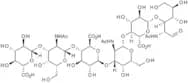
CAS:<p>Hyaluronic acid is a polysaccharide containing repeating disaccharide units of β-1,3-N-acetyl glucosamine and β-1, 4-glucuronicâ¯acid. A series of unsaturated oligosaccharides (oligouronic acids) are released from hyaluronic acid by the action of hyaluronidase on umbilical cord (Weissman, 1954). This hexasaccharide and other enzymatically produced polymer homologs have been of value in the study of hyaluronic acid metabolism in healthy and diseased tissues (Hascall, 2019).</p>Formula:C42H65N3O34Purity:Min. 95%Color and Shape:White Off-White PowderMolecular weight:1,155.97 g/mol2-O-Acetyl-1,3,4,6-tetra-O-benzyl-b-D-galactopyranoside
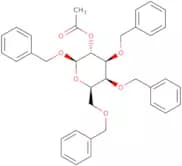
CAS:<p>2-O-Acetyl-1,3,4,6-tetra-O-benzyl-b-D-galactopyranoside is a custom synthesis that belongs to the class of complex carbohydrates. This compound contains a saccharide with a sugar group and is fluorinated at the 2 position. It has been modified by methylation on the C2 position and has an acetyl group on the C3 position.</p>Formula:C36H38O7Purity:Min. 95%Molecular weight:582.68 g/mol3-O-(2-Acetamido-2-deoxy-D-glucopyranosyl)-1,2-di-O-benzyl-4,6-O-benzylidene-D-mannopyranoside
<p>3-O-(2-Acetamido-2-deoxy-D-glucopyranosyl)-1,2-di-O-benzyl-4,6-O-benzylidene-D-mannopyranoside is a synthetic sugar that is used in the synthesis of glycosylations. It has been fluorinated and methylated to increase its stability and reactivity. It is also synthetically derived from a saccharide and modified for use in Click chemistry. 3-O-(2-Acetamido-2-deoxy--D--glucopyranosyl)-1,2--di--O--benzyl--4,6--O--benzylidene--D--mannopyranoside is soluble in water and ethanol. This product has CAS No. 5118876–78–3 and can be custom synthesized by us.</p>Formula:C35H41NO11Purity:Min. 95%Molecular weight:651.72 g/mol3,5-Di-O-p-chlorobenzoyl-2-deoxy-2-fluoro-2-C-methyl-D-ribofurano-1,4-lactone
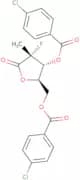
CAS:<p>3,5-Di-O-p-chlorobenzoyl-2-deoxy-2-fluoro-2-C-methyl-D-ribofurano-1,4-lactone is a synthetic sugar molecule that has been modified with fluorination. This sugar is a monosaccharide and its synthesis has been customised to your requirements. 3,5-Di-O-p-chlorobenzoyl--2 deoxy 2 fluoro 2 C methyl D ribofurano 1 4 lactone is available in high purity and can be synthesized with the click modification. It can also be modified with methylation or glycosylation.</p>Formula:C20H17Cl2FO6Purity:Min. 95%Molecular weight:443.25 g/mol1,2,3,6-Tetra-O-benzyl-b-D-galactopyranoside
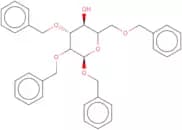
CAS:<p>The chemical structure of 1,2,3,6-Tetra-O-benzyl-b-D-galactopyranoside is the product of a custom synthesis. It is a synthetic oligosaccharide with a high purity and high degree of methylation. The chemical modification includes fluorination and glycosylation. This compound has been shown to have potent anti-tuberculosis activity in vitro and in vivo.</p>Formula:C34H36O6Purity:Min. 95%Molecular weight:540.65 g/molD-Fructose-6-phosphate sodium hydrate
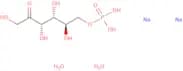
CAS:<p>D-Fructose-6-phosphate sodium hydrate is a polyvalent bioactive compound that can be found in plants, fungi, and bacteria. It has been used as a sealant for wounds and to treat damaged skin. D-Fructose-6-phosphate sodium hydrate is also used to activate the hydrophobic or dextran molecules in some drug delivery systems. This compound can be found in many products such as polyester fabrics, thermoplastic materials, and hydrophilic plastics. D-Fructose-6-phosphate sodium hydrate is an important intermediate in the metabolic pathways of glucose and sucrose.</p>Formula:C6H13O9P·2NaH2O)Purity:Min. 95%Molecular weight:342.1 g/mol5-Aldo-1,2-O-isopropylidene-a-D-xylofuranose
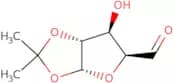
CAS:<p>5-Aldo-1,2-O-isopropylidene-a-D-xylofuranose is a synthetic monosaccharide with the chemical formula C5H6O4. It can be used to synthesize oligosaccharides and polysaccharides. This compound is a fluorinated sugar with a methyl group at the 5 position and an isopropylidene group at the 2 position. 5-Aldo-1,2-O-isopropylidene-a-D-xylofuranose can be modified by click chemistry reactions, which are reactions that use copper catalysts to form carbon–carbon bonds in a single step. This modification can be done on either the sugar or its glycosylation partner. The CAS number for this compound is 531671166.</p>Formula:C8H12O5Purity:Min. 95%Molecular weight:188.18 g/mol1,2:4,5-Biscyclohexylidene D-myo-inositol
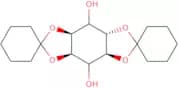
CAS:<p>1,2:4,5-Biscyclohexylidene D-myo-inositol is a synthetic compound that has been found to be more potent than cyclophosphamide in inducing apoptosis in HL-60 cells. It also induces conformation changes in phosphatidylinositol and ferulic acid and inhibits the activity of xanthine oxidase. This compound has shown promising results in terms of its ability to induce conformational changes in phosphatidylinositol and ferulic acid analogues. Further research is needed to determine whether this compound is an effective anticancer agent.</p>Formula:C18H28O6Purity:Min. 95%Molecular weight:340.41 g/molAzido 2-acetamido-2-deoxy-3,4,6-tri-o-acetyl-β-D-galactopyranosyl
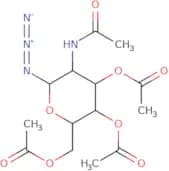
CAS:<p>Azido 2-acetamido-2-deoxy-3,4,6-tri-O-acetyl-β-D-galactopyranosyl is a high purity and custom synthesis sugar. Azido 2-acetamido-2-deoxy-3,4,6-triO acetyl βD galactopyranosyl can be fluorinated, glycosylated, modified with methylation and other methods. It can also be used to synthesize oligosaccharides or monosaccharides. This carbohydrate is used in complex carbohydrates.</p>Formula:C14H20N4O8Purity:Min. 95%Molecular weight:372.33 g/mol6-O-Benzoyl-3-O-tert-butyldiphenylsilyl-D-galactal
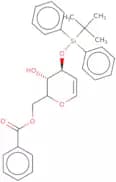
<p>6-O-Benzoyl-3-O-tert-butyldiphenylsilyl-D-galactal is an oligosaccharide with a complex carbohydrate structure. It is prepared by the modification of D-galactal with benzoyl chloride and subsequent reaction with tert-butyl diphosphite. This compound has been shown to have antihypertensive properties and to inhibit the growth of tumor cells in culture. 6-O-Benzoyl-3-O-tert butyldiphenylsilyl D galactal is a fluorinated, high purity, synthetic sugar that is effective for inhibiting tumor growth in culture.</p>Formula:C29H32O5SiPurity:Min. 95%Molecular weight:488.65 g/mol