Glycoscience
Glycoscience is the study of carbohydrates and their derivatives, as well as the interactions and biological functions they participate in. This field of research is crucial for understanding a wide variety of biological processes, including cell recognition, signaling, immune response, and disease development. Glycoscience has important applications in biotechnology, medicine, and the development of new drugs and therapies. At CymitQuimica, we offer a wide selection of high-quality, high-purity products for glycoscience research. Our catalog includes monosaccharides, oligosaccharides, polysaccharides, glycoconjugates, and specific reagents, designed to support researchers in their studies on the structure, function, and applications of carbohydrates in biological systems. These resources are intended to facilitate scientific discoveries and practical applications in various areas of bioscience and medicine.
Subcategories of "Glycoscience"
- Aminosugars(108 products)
- Glyco-Related Antibodies(282 products)
- Glycolipids(46 products)
- Glycosaminoglycans (GAGs)(55 products)
- Glycosides(419 products)
- Monosaccharides(6,622 products)
- Oligosaccharides(3,682 products)
- Polysaccharides(503 products)
Found 11041 products of "Glycoscience"
Sort by
Purity (%)
0
100
|
0
|
50
|
90
|
95
|
100
3-Deoxy-3-fluoro-D-fructose
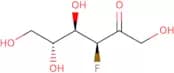
CAS:<p>3-Deoxy-3-fluoro-D-fructose is a monosaccharide that has been used as an inhibitor of glucose uptake and metabolism in the lymphocytic leukemia cell line. This compound has been shown to inhibit the glucose transporter GLUT1, which is responsible for the transport of glucose across the plasma membrane. 3-Deoxy-3-fluoro-D-fructose inhibits cancer cells by inhibiting galactitol production through inhibition of gluconeogenesis. It also inhibits oxidative phosphorylation in lymphocytic leukemia cells, leading to apoptosis. 3-Deoxy-3-fluoro-D-fructose has been shown to inhibit cancer growth by blocking glucose uptake in xenopus oocytes.</p>Purity:Min. 95%(R,R)-(+)-1,4-Dimethoxy-2,3-butanediol
CAS:<p>(R,R)-(+)-1,4-Dimethoxy-2,3-butanediol is a modification of the sugar 1,4-dimethoxy-2,3-butanediol. It is a carbohydrate that can be synthesized and purified to high purity. The synthesis of (R,R)-(+)-1,4-dimethoxy-2,3-butanediol starts with the methylation of glycerol followed by the addition of an alpha hydroxyl group. The final product is produced by glycosylation and polysaccharide synthesis. This modification has been shown to be effective in treating cancer cells and may have potential applications in other areas as well.</p>Formula:C6H14O4Purity:Min. 95%Molecular weight:150.17 g/molHexa-O-acetylmaltal
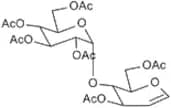
CAS:<p>Hexa-O-acetylmaltal is a non-reducing sugar that belongs to the class of anhydrous, monohydrate configurations. It is a synthetic substrate that is used in the synthesis of pyridine analogues. Hexa-O-acetylmaltal can be crystallized in chloroform and activated with heat or acid. The anomeric configuration has been determined by X-ray diffraction analysis and its configuration was shown to be anomeric by chemical degradation. Hexa-O-acetylmaltal can also form heptaacetate, which is a disaccharide.</p>Formula:C24H32O15Purity:Min. 95%Color and Shape:Off-White PowderMolecular weight:560.5 g/mola-Spinasterol glucoside
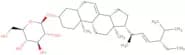
CAS:<p>a-Spinasterol glucoside is a glucopyranoside that belongs to the group of triterpenoid. It has a bitter taste, and its chemical structure was first isolated from the seeds of Trichosanthes bracteata. This compound can be found in other plants such as cucurbitacin and cucumeroides. These two compounds are bitter and are used in Chinese traditional medicine for treating inflammation, pain, or even cancer. The chemical structure of a-spinasterol glucoside is related to vanillic acid, glyceryl palmitate, and vanillic acid.</p>Purity:Min. 95%2-Deoxy-3,4-O-isopropylidene-D-arabino-hexose propylene dithioacetal
CAS:<p>2-Deoxy-3,4-O-isopropylidene-D-arabino-hexose propylene dithioacetal is a synthetic monosaccharide. It is a custom synthesis and can be modified with methylation, fluorination, or click chemistry. 2-Deoxy-3,4-O-isopropylidene-D-arabino-hexose propylene dithioacetal has been used in the synthesis of glycosylated proteins and oligosaccharides. It is also used as a buffer standard in high performance liquid chromatography (HPLC) methods for analysis of saccharides and sugar alcohols.</p>Formula:C12H22O4S2Purity:Min. 95%Molecular weight:294.43 g/mol2,3,4,6-Tetra-O-benzoyl-D-glucopyranose
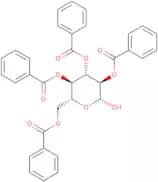
CAS:<p>2,3,4,6-Tetra-O-benzoyl-D-glucopyranose is an aldehyde that has been synthesized by the oxidation of D-glucofuranose with nitric acid. It has been shown to act as a competitive inhibitor of lipase and c-glycosidases. The acetal group in 2,3,4,6-tetra-O-benzoyl-D-glucopyranose is activated with acetyl chloride to form an acetal derivative. This compound can be used as a chemoenzymatic glycosidic bond formation method for the synthesis of various glycosides.</p>Formula:C34H28O10Purity:Min. 95%Molecular weight:596.6 g/mol6-O-Tosyl-D-mannose
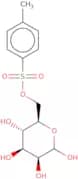
CAS:<p>6-O-Tosyl-D-mannose is a Carbohydrate, Modification, saccharide, Oligosaccharide with CAS No. 105265-64-3. It is fluorinated on the 6th carbon atom and methylated on the 3rd carbon atom. It can be used in custom synthesis and also has high purity and a custom synthesis. It can be synthesized by glycosylation or click modification.</p>Formula:C13H18O8SPurity:Min. 95%Color and Shape:PowderMolecular weight:334.34 g/mol2-Acetamido-2-deoxy-3,4,6-tri-O-acetyl-b-D-galactopyranosyl)-L-threonine
<p>2-Acetamido-2-deoxy-3,4,6-tri-O-acetyl-b-D-galactopyranosyl)-L-threonine is a custom synthesis. It is modified with fluorination and methylation. This product is an oligosaccharide with saccharide, CAS No., and polysaccharide. It has glycosylation and sugar which are carbohydrates. The complex carbohydrate can be found in a variety of sources such as corn syrup, honey, molasses, soybean oil, etc.</p>Purity:Min. 95%Ramiprilat-D5 acyl-b-D-glucuronide
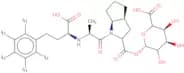
Controlled Product<p>Ramiprilat-D5 acyl-b-D-glucuronide is a synthetic, fluorinated, complex carbohydrate. It is a monosaccharide sugar that has been modified by methylation and Click chemistry to produce an elegant compound with a diverse range of applications. Ramiprilat-D5 acyl-b-D-glucuronide is synthesized in high purity, making it an ideal candidate for use in research. This molecule has been shown to be effective as a fluoroquinolone antibiotic against bacterial strains such as Mycobacterium tuberculosis, Mycobacterium avium complex, and Clostridium perfringens.</p>Formula:C27H31D5N2O11Purity:Min. 95%Molecular weight:569.61 g/molGala1-2Gal-HSA
<p>Gala1-2Gal-HSA is a modified, complex carbohydrate. The carbohydrate is synthesized by methylating, glycosylating and polysaccharide synthesis to produce Gala1-2Gal-HSA. It has CAS No. and can be custom synthesized with high purity. Gala1-2Gal-HSA is a monosaccharide that can be fluorinated or saccharide that can be glycosylated or methylated. Gala1-2Gal-HSA has many applications in the biomedical field such as inhibiting inflammation and preventing cancer metastasis.</p>Purity:Min. 95%3-Deoxy-D-gluconic acid calcium
CAS:<p>3-Deoxy-D-gluconic acid calcium is a modification of the sugar 3-deoxy-D-glucono-1,5-lactone. It is an oligosaccharide that has been synthesized from D-glucose and D-xylose with the use of a click reaction. The monosaccharide (3DG) can be methylated to produce 3,6-dimethyl 3DG or fluorinated to make 3,6,9F 2 -3DG. This modification can be glycosylated to form a complex carbohydrate. The saccharide is also found in nature as the sugar component of glycogen and cellulose.</p>Formula:C6H12O6CaPurity:Min. 97 Area-%Molecular weight:400.39 g/molMethyl 4-O-methyl-D-glucopyranosyluronate
<p>Methyl 4-O-methyl-D-glucopyranosyluronate is a fungal metabolite that is produced by the reaction of armillaria with methyl 4-O-methyl-D-glucopyranoside. Methyl 4-O-methylglucuronyluronate has been shown to have an esterase activity, which can hydrolyze esters and linkages in the cell wall of fungi. This enzyme has been shown to have kinetic parameters that are different for different substrates. The catalytic site of this enzyme has also been found to be glutamic acid, which plays a role in the synthesis and degradation of proteins. Methyl 4-O-methylglucuronyluronate has been found to be insoluble in water and is not active against bacteria.</p>Formula:C8H14O7Purity:Min. 95%Molecular weight:222.2 g/molPhenyl 2,3,4-tri-O-acetyl-a-L-thiorhamnopyranoside
CAS:<p>Phenyl 2,3,4-tri-O-acetyl-a-L-thiorhamnopyranoside is a synthetic compound that is used as a protecting group for the synthesis of oligosaccharides. It is also used to synthesize saccharides in a complex carbohydrate modification. The compound can be fluorinated to form an active fluorinated compound. Phenyl 2,3,4-tri-O-acetyl-a-L-thiorhamnopyranoside has been shown to have high purity and low toxicity in animal studies.</p>Formula:C18H22O7SPurity:Min. 95%Molecular weight:382.43 g/mol1,3,4,6-Tetra-O-acetyl-2-benzoylamino-2-deoxy-D-glucopyranoside
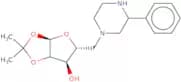
CAS:<p>1,3,4,6-Tetra-O-acetyl-2-benzoylamino-2-deoxy-D-glucopyranoside is a synthetic carbohydrate with a fluorinated sugar that has been custom synthesized for use in click chemistry. The fluorination at the 2 position of the sugar provides an additional site for modification and has been shown to increase stability. This product is available in high purity, and can be used for oligosaccharide synthesis.</p>Formula:C21H25NO10Purity:Min. 95%Molecular weight:451.42 g/mol5-Deoxy-1,2-O-isopropylidene-5-(3-phenylpiperizin-1-yl)-a-D-xylofuranose
CAS:<p>5-Deoxy-1,2-O-isopropylidene-5-(3-phenylpiperizin-1-yl)-a-D-xylofuranose is a methylated and fluorinated sugar that was synthesized by the click reaction. The synthesis of this compound required the use of an oligosaccharide coupled with a polysaccharide for the attachment of the piperazine moiety. This product has been shown to be stable in water and other solvents. 5DIOXFURANOSE is a white to off white crystalline powder that appears as needle crystals. It is soluble in water, methanol, ethanol, acetonitrile, acetone and chloroform.</p>Formula:C18H26N2O5Purity:Min. 95%Molecular weight:334.32 g/mol2,3,4-Tri-O-acetyl-b-D-ribopyranosyl azide
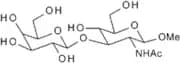
CAS:<p>2,3,4-Tri-O-acetyl-b-D-ribopyranosyl azide is a high purity chemical with custom synthesis. It has been shown to have a fluorination and glycosylation reaction. This chemical also has methylation and modification properties that may be useful for the synthesis of oligosaccharides and monosaccharides. 2,3,4-Tri-O-acetyl-b-D-ribopyranosyl azide may be used as an intermediate for saccharide or complex carbohydrate synthesis.</p>Formula:C11H15N3O7Purity:Min. 95%Molecular weight:301.26 g/molMethyl 2-acetamido-2-deoxy-3-O-(b-D-galactopyranosyl)-b-D-glucopyranoside
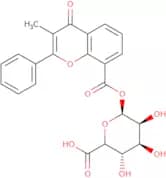
CAS:<p>Methyl 2-acetamido-2-deoxy-3-O-(b-D-galactopyranosyl)-b-D-glucopyranoside is a modification of the carbohydrate, which is a complex carbohydrate. It has been synthesized using Custom synthesis and Oligosaccharide. This product is highly pure, with a purity of 99%. Methyl 2-acetamido-2-deoxy-3-O-(b-D-galactopyranosyl)-b-Dpglucopyranoside is used in the synthesis of Monosaccharide and Methylation. It can also be used in Glycosylation and Polysaccharide as well as for sugar or Fluorination.</p>Formula:C15H27NO11Purity:Min. 95%Color and Shape:White To Off-White SolidMolecular weight:397.38 g/mol3-Methylflavone-8-carboxylic acid acyl-b-D-glucuronide
CAS:<p>3-Methylflavone-8-carboxylic acid acyl-b-D-glucuronide is a fluorinated synthetic compound that has been custom synthesized with a high purity. It is an oligosaccharide, monosaccharide, and complex carbohydrate. This chemical can be used for glycosylation, methylation, or click modification. The product is stable at room temperature and does not require any special storage conditions.</p>Formula:C23H20O10Purity:Min. 95%Molecular weight:456.4 g/molo-Methoxytopolin-9-glucoside
CAS:<p>O-Methoxytopolin-9-glucoside is a sugar that is used in the synthesis of glycoproteins, glycosaminoglycans, and glycoconjugates. It can be used as a fluorinated sugar probe to study glycosylation. This compound has been synthesized with a variety of modifications such as methylation, fluorination, and click chemistry. O-Methoxytopolin-9-glucoside is an oligosaccharide with a monosaccharide at its reducing end. The saccharides are linked through beta 1→4 glycosidic bonds with alpha 1→2 glycosidic bonds at their other ends.<br>O-Methoxytopolin-9-glucoside has been shown to be stable under acidic conditions and can act as both an antioxidant and prooxidant depending on the pH level.</p>Formula:C19H23N5O6Purity:Min. 95%Molecular weight:417.42 g/molPhenylpropyl 2-acetamido-2-deoxy-b-D-glucopyranoside
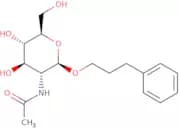
CAS:<p>Phenylpropyl 2-acetamido-2-deoxy-b-D-glucopyranoside is a modified monosaccharide. It has been fluorinated and methylated, and is synthesized by the click reaction. Phenylpropyl 2-acetamido-2-deoxy-b-D-glucopyranoside can be used as a building block for complex carbohydrates.</p>Formula:C17H25NO6Purity:Min. 95%Molecular weight:339.38 g/mol