Glycoscience
Glycoscience is the study of carbohydrates and their derivatives, as well as the interactions and biological functions they participate in. This field of research is crucial for understanding a wide variety of biological processes, including cell recognition, signaling, immune response, and disease development. Glycoscience has important applications in biotechnology, medicine, and the development of new drugs and therapies. At CymitQuimica, we offer a wide selection of high-quality, high-purity products for glycoscience research. Our catalog includes monosaccharides, oligosaccharides, polysaccharides, glycoconjugates, and specific reagents, designed to support researchers in their studies on the structure, function, and applications of carbohydrates in biological systems. These resources are intended to facilitate scientific discoveries and practical applications in various areas of bioscience and medicine.
Subcategories of "Glycoscience"
- Aminosugars(108 products)
- Glyco-Related Antibodies(282 products)
- Glycolipids(46 products)
- Glycosaminoglycans (GAGs)(55 products)
- Glycosides(419 products)
- Monosaccharides(6,622 products)
- Oligosaccharides(3,682 products)
- Polysaccharides(503 products)
Found 11041 products of "Glycoscience"
Sort by
Purity (%)
0
100
|
0
|
50
|
90
|
95
|
100
2-Acetamido-6-O-(a-2-N-acetylneuraminyl)-2-deoxy-a-D-galactopyranosyl serine-biotin
<p>2-Acetamido-6-O-(a-2-N-acetylneuraminyl)-2-deoxy-a-D-galactopyranosyl serine (GalNAc) is a synthetic carbohydrate that contains a biotin moiety. It is synthesized by the glycosylation of 2,3,4,6 tetraacetamido sugar with 2,3,4,6 tetraacetamido sugar and 1,2,3 octaacetamido sugar. The product can be modified with methyl or fluorine groups to make it more reactive in click chemistry. This product has been shown to have high purity and can be used in custom synthesis projects.</p>Purity:Min. 95%1,6:3,4-Dianhydro-b-D-altropyranose
CAS:<p>1,6:3,4-Dianhydro-b-D-altropyranose is a sugar that has been modified by methylation. It is a white powder with a melting point of 197°C. This product can be used as an intermediate in the synthesis of saccharides and polysaccharides. It can also be used as an intermediate for glycosylations and fluorinations. 1,6:3,4-Dianhydro-b-D-altropyranose is available in high purity and custom synthesis options.</p>Formula:C6H8O4Purity:Min. 95%Molecular weight:144.13 g/mol2,3,4-Tri-O-acetyl-b-L-fucopyranosyl dibenzyl phosphate
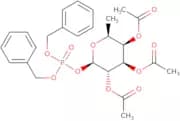
CAS:<p>2,3,4-Tri-O-acetyl-b-L-fucopyranosyl dibenzyl phosphate is a fluorinated carbohydrate that can be custom synthesized to order. The compound is a modification of the pentose sugar, D-ribose and contains an acetyl group at C2' position of the sugar. The compound has been shown to have anti-inflammatory activities in rats.</p>Formula:C26H31O11PPurity:Min. 95%Molecular weight:550.49 g/molPhenyl 2,3,6-tri-O-benzyl-b-D-thioglucopyranoside
CAS:<p>Phenyl 2,3,6-tri-O-benzyl-b-D-thioglucopyranoside is a high purity, custom synthesis sugar that has been modified with Click modification, fluorination and glycosylation. It is a synthetic compound in the form of an oligosaccharide and monosaccharide. Phenyl 2,3,6-tri-O-benzyl-b-D-thioglucopyranoside has CAS No. 97974-20-4 and can be found under Modification.</p>Formula:C33H34O5SPurity:Min. 95%Molecular weight:542.69 g/molHyaluronic acid sodium salt - Average MW 1.0 - 2.0 million Da
CAS:<p>Hyaluronic acid sodium salt is a polymer that is made up of repeating disaccharide units of N-acetylglucosamine and glucuronic acid. It can be used in regenerative medicine to help with the healing process by supporting the growth of new tissue, as well as providing a cushioning effect against mechanical stress. This product can also be used as a food additive or supplement to help with joint health. In addition, hyaluronic acid sodium salt has been shown to improve inflammatory responses in human dermal fibroblasts.</p>Formula:(C14H22NO11Na)n1,6-Di-O-acetyl-2,3,4-tri-O-benzyl-D-glucopyranose
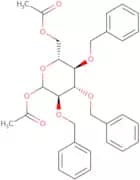
CAS:<p>1,6-Di-O-acetyl-2,3,4-tri-O-benzyl-D-glucopyranose is a synthetic compound that is used in the synthesis of vitamin D. It is used to treat vitamin D deficiency in women and children. The benzyl groups on the sugar molecule are crosslinked with benzyl alcohol and paraformaldehyde to form a polymerization reaction system for vitamin D. This product can be used as a strategy for treating vitamin D deficiency by providing an alternative source of this nutrient.</p>Formula:C31H34O8Purity:Min. 95%Molecular weight:534.6 g/mol2,3-O-Isopropylidene-L-threitol
CAS:2,3-O-Isopropylidene-L-threitol is a chiral sugar alcohol that is a new type of HDAC inhibitor. It has been shown to be an effective inhibitor of histone deacetylase (HDAC) and can be used in the treatment of certain cancers. 2,3-O-Isopropylidene-L-threitol is considered to be enantiomerically pure because it contains only one stereoisomer. It is also synthesized via a dehydrogenative process, which starts with the addition of 2 equivalents of phenol to diphenol followed by the addition of 4 equivalents of biphenyl. This product can also be used to make polycarbonates with functional groups such as epoxy or vinyl groups.Formula:C7H14O4Purity:Min. 95%Color and Shape:Yellow PowderMolecular weight:162.18 g/mol3,6-Dideoxy-L-arabino-hexose
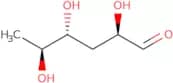
CAS:<p>3,6-Dideoxy-L-arabino-hexose (3,6-D) is a natural compound that has been shown to inhibit the growth of bacteria by binding to their ribosomes. It is an active inhibitor of tyvelose, which is a drug used in the treatment of infectious diseases. 3,6-D binds reversibly to the terminal residues on the bacterial ribosome and blocks the entry of tyvelose into the ribosome. The conformational properties of 3,6-D have been studied using hybridoma cell lines and methyl glycosides. Structural analysis has shown that 3,6-D may be synthesized from glucose in a series of enzymatic reactions involving glycan synthesis.</p>Purity:Min. 95%1,2:4,5-Di-O-isopropylidene-D,L-myo-inositol
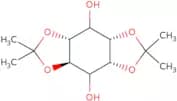
CAS:<p>1,2:4,5-Di-O-isopropylidene-D,L-myo-inositol is a custom synthesized product that has been modified to contain a fluorine atom. It is an oligosaccharide and polysaccharide. This product is used as a synthetic precursor to other products such as saccharides, carbohydrates and monosaccharides.</p>Formula:C12H20O6Purity:Min. 95%Molecular weight:260.28 g/mol3-O-(2-Acetamido-2-deoxy-D-glucopyranosyl)-1,2-di-O-benzyl-4,6-O-benzylidene-D-mannopyranoside
<p>3-O-(2-Acetamido-2-deoxy-D-glucopyranosyl)-1,2-di-O-benzyl-4,6-O-benzylidene-D-mannopyranoside is a synthetic sugar that is used in the synthesis of glycosylations. It has been fluorinated and methylated to increase its stability and reactivity. It is also synthetically derived from a saccharide and modified for use in Click chemistry. 3-O-(2-Acetamido-2-deoxy--D--glucopyranosyl)-1,2--di--O--benzyl--4,6--O--benzylidene--D--mannopyranoside is soluble in water and ethanol. This product has CAS No. 5118876–78–3 and can be custom synthesized by us.</p>Formula:C35H41NO11Purity:Min. 95%Molecular weight:651.72 g/mol2-O-Acetyl-1,3,4,6-tetra-O-benzyl-b-D-galactopyranoside
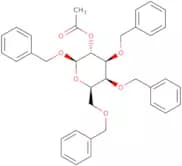
CAS:<p>2-O-Acetyl-1,3,4,6-tetra-O-benzyl-b-D-galactopyranoside is a custom synthesis that belongs to the class of complex carbohydrates. This compound contains a saccharide with a sugar group and is fluorinated at the 2 position. It has been modified by methylation on the C2 position and has an acetyl group on the C3 position.</p>Formula:C36H38O7Purity:Min. 95%Molecular weight:582.68 g/mol4-(Methyl-D3-nitrosamino)-1-(3-pyridyl)-1-butanol-N-b-D-glucuronide
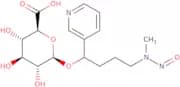
CAS:<p>4-(Methyl-D3-nitrosamino)-1-(3-pyridyl)-1-butanol-N-b-D-glucuronide is a metabolite of the antihypertensive drug methyldopa. It is excreted in urine and its concentration in urine has been found to be higher in women than in men. This difference has been attributed to an increased uptake by the kidneys, which may be due to sex hormones such as estrogen. Studies have shown that 4-(methyl-D3-nitrosamino)-1-(3pyridyl)-1-butanol-NbDglucuronide can be used as a predictive marker for urothelial carcinoma. The compound is also a metabolite of the plant extract nasturtium officinale, which has been found to have anticancer activity against human bladder cancer cells.</p>Formula:C16H21D3N3O8Purity:Min. 95%Molecular weight:389.39 g/mol4-Methylphenyl 2,3,4-tri-O-acetyl-b-D-thioglucuronide methyl ester
CAS:<p>4-Methylphenyl 2,3,4-tri-O-acetyl-b-D-thioglucuronide methyl ester is a synthetic, fluorinated monosaccharide. It is a custom synthesis for use in glycosylation reactions. The product can be used as a carbohydrate building block in the synthesis of oligosaccharides and polysaccharides. This compound is also suitable for click modification and methylation reactions. 4-Methylphenyl 2,3,4-tri-O-acetyl-b-D-thioglucuronide methyl ester has CAS number 61025-09-0 and purity of >99%.</p>Formula:C20H24O9SPurity:Min. 95%Molecular weight:440.47 g/mol3,4,6-Tri-O-benzyl-2-deoxy-D-galactopyranose
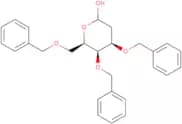
CAS:<p>3,4,6-Tri-O-benzyl-2-deoxy-D-galactopyranose is a synthetic monosaccharide. It is custom synthesized with the desired modifications and can be used in glycosylation, polysaccharide modification, or click chemistry to modify other molecules. 3,4,6-Tri-O-benzyl-2-deoxy-D-galactopyranose is an amber glassy solid that is soluble in water and ethanol. This product has a CAS No. of 94189-64-7 and a molecular weight of 438.23 g/mol.</p>Formula:C27H30O5Purity:Min. 95%Molecular weight:434.52 g/molDexibuprofen-acyl-b-D-glucuronide
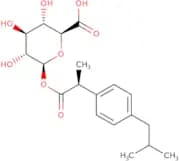
CAS:<p>Dexibuprofen-acyl-b-D-glucuronide is a complex carbohydrate that is synthesized by the acylation of dexibuprofen with b-D-glucuronic acid. The complex is then modified to increase its water solubility and stability. Dexibuprofen-acyl-b-D-glucuronide has been shown to have antiinflammatory activity in mice, which may be due to its ability to inhibit prostaglandin synthesis.</p>Formula:C19H26O8Purity:Min. 95%Molecular weight:382.4 g/molCarboxymethyl-dextran sodium salt 10-20% COOH terminally reduced - Average molecular weight 40000
CAS:<p>Drug carrier for cancer therapy & imaging, biocompatible, soluble, biodegradable</p>Purity:Min. 95%D-muco-Inositol
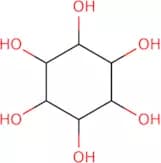
CAS:<p>D-Mucinol is an inositol that is structurally similar to scyllo-inositol. It has been shown to inhibit the growth of cancer cells and also inhibits the release of calcium ions from the mitochondria, which may be due to its ability to inhibit polymerase chain reaction. D-Mucinol is a potential treatment for ovarian cancer and other cancers.<br>D-Mucinol is a dinucleotide phosphate that binds with guanine nucleotides on DNA, inhibiting transcriptional elongation by binding to the RNA polymerase II enzyme. This prevents the production of mRNA, inhibiting protein synthesis and leading to cell death.<br>D-Mucinol has been shown to have cytostatic effects against HL60 cells in vitro, which are thought to be related to its ability to inhibit mononucleotide phosphates, including p-nitrophenyl phosphate (PNPP), at high concentrations. D-Mucin</p>Formula:C6H12O6Purity:Min. 95%Molecular weight:180.16 g/mol1,2,3,5-Tetra-O-acetyl-b-L-xylofuranose
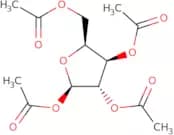
CAS:<p>1,2,3,5-Tetra-O-acetyl-b-L-xylofuranose is a carbohydrate. It is the only tetra-acetoxylated monosaccharide that has been reported to date. The synthesis of 1,2,3,5-tetra-O-acetyl-b-L-xylofuranose was achieved by modifying the glycosylation of bromoacetaldehyde with 1,2,3,5 triacetoxy xylan. This product has high purity and custom synthesis capabilities. It is also available as a methyl ether and can be modified using Click chemistry to incorporate different functional groups at specific positions on the molecule.</p>Formula:C13H18O9Purity:Min. 95%Molecular weight:318.3 g/molBlood Group B pentasaccharide type I
CAS:<p>Gala1-3(Fuca1-2)Galb1-3GlcNAcb1-3Gal (B antigen pentasaccharide Type I)</p>Formula:C32H55NO25Purity:Min. 95%Color and Shape:PowderMolecular weight:853.77 g/molN,N'-Diacetylchitobiosyl allosamizoline
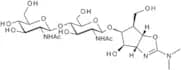
CAS:<p>N,N'-Diacetylchitobiosyl allosamizoline is an analog of the insect-inhibiting allosamidin. It has been shown to have inhibitory activity against chitinases and it is a stereoselective inhibitor of chitin synthase. N,N'-Diacetylchitobiosyl allosamizoline is used as a substrate in coupling reactions to produce disaccharides that contain the chitobiose unit. This type of enzyme inhibition may be useful in combating insects that feed on plants or other organisms with exoskeletons made up of chitin.</p>Formula:C25H42N4O14Purity:Min. 95%Molecular weight:622.62 g/mol