Glycoscience
Glycoscience is the study of carbohydrates and their derivatives, as well as the interactions and biological functions they participate in. This field of research is crucial for understanding a wide variety of biological processes, including cell recognition, signaling, immune response, and disease development. Glycoscience has important applications in biotechnology, medicine, and the development of new drugs and therapies. At CymitQuimica, we offer a wide selection of high-quality, high-purity products for glycoscience research. Our catalog includes monosaccharides, oligosaccharides, polysaccharides, glycoconjugates, and specific reagents, designed to support researchers in their studies on the structure, function, and applications of carbohydrates in biological systems. These resources are intended to facilitate scientific discoveries and practical applications in various areas of bioscience and medicine.
Subcategories of "Glycoscience"
- Aminosugars(108 products)
- Glyco-Related Antibodies(282 products)
- Glycolipids(46 products)
- Glycosaminoglycans (GAGs)(55 products)
- Glycosides(419 products)
- Monosaccharides(6,622 products)
- Oligosaccharides(3,682 products)
- Polysaccharides(503 products)
Found 11041 products of "Glycoscience"
Sort by
Purity (%)
0
100
|
0
|
50
|
90
|
95
|
100
Cotinine b-D-glucuronide
CAS:<p>Cotinine is a major metabolite of nicotine. It is excreted in the urine and has been extensively studied for its role in nicotine addiction and the development of cancer. Cotinine is also used as a biomarker to identify exposure to tobacco smoke, secondhand smoke, and nicotine replacement therapy. The levels of cotinine are proportional to the number of cigarettes smoked per day, with an average half-life of 15 hours. The concentration can be determined by LC-MS/MS with chemical ionization or LC-MS/MS with electron impact ionization. Cotinine can be hydrolyzed by esterases or glucuronidases, oxidized by cytochrome P450 enzymes, reduced by glutathione reductase, or conjugated with glucuronic acid.</p>Formula:C16H20N2O7Purity:Min. 95%Molecular weight:352.34 g/mol2'-Deoxy-2',2'-difluoro-b-D-ribofuranose
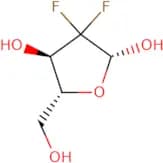
CAS:<p>2'-Deoxy-2',2'-difluoro-b-D-ribofuranose is a synthetic carbohydrate that has been modified with a methyl group at the 2' position of the ribose sugar. The modification increases its stability and prevents degradation by enzymes. This product can be used in the synthesis of oligosaccharides and glycosylations, or as a custom synthesis for other applications. 2'-Deoxy-2',2'-difluoro-b-D-ribofuranose is also available in high purity, making it ideal for use in pharmaceuticals and other sensitive applications.</p>Purity:Min. 95%Gal[2346Ac]b(1-3)GlcNPhth[46Bzd]-b-MP
<p>Gal[2346Ac]b(1-3)GlcNPhth[46Bzd]-b-MP is a custom synthesis of an oligosaccharide. It has been modified to include fluorination and click chemistry. The chemical name for this compound is Gal[2346Ac]b(1-3)GlcNPhth[46Bzd]-b-MP. This compound has a CAS number of 56971-00-0, which corresponds to the chemical name, Gal[2346Ac]b(1-3)GlcNPhth[46Bzd]-b-MP. The molecular weight of this compound is unknown. The purity of this compound is greater than 99%. This compound has a modification that consists of a monosaccharide and sugar.</p>Formula:C42H43NO17Purity:Min. 95%Molecular weight:833.79 g/mol2,3,4,6-Tetra-O-acetyl-D-galactopyranose
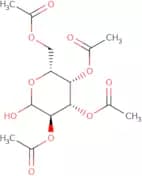
CAS:<p>2,3,4,6-Tetra-O-acetyl-D-galactopyranose is a glycoside that has been used as an antigen in immunological studies and to study the role of fatty acids in cancer. This compound is phosphorylated to form 2,3,4,6-tetra-O-phospho-D-galactopyranose and reacts with primary alcohols to form transglycosylation products. 2,3,4,6-Tetra-O-acetylgalactopyranose also reacts with chloride ions to form disaccharides. As a result of these reactions 2,3,4,6-tetraacetylgalactopyranose has shown anticancer activity.</p>Formula:C14H20O10Purity:Min. 95%Color and Shape:White PowderMolecular weight:348.3 g/mol3-Pyridinylmethylbeta-D-glucopyranoside
CAS:<p>3-Pyridinylmethylbeta-D-glucopyranoside is a sugar that can be custom synthesized. It is a white to off-white crystalline powder with an odorless taste and is soluble in water. 3-Pyridinylmethylbeta-D-glucopyranoside is used in the synthesis of glycosides, saccharides, oligosaccharides, and monosaccharides. This compound can also be modified with fluorination or methylation reactions. The use of this product has been shown to produce high purity compounds for use in pharmaceuticals, agrochemicals, and other chemical industries.</p>Formula:C12H17NO6Purity:Min. 95%Molecular weight:271.27 g/mol5-O-Benzoyl-1,2-O-isopropylidene-3-keto-α-D-xylofuranoside
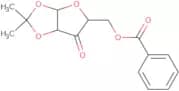
CAS:<p>5-O-Benzoyl-1,2-O-isopropylidene 3-keto a D xylofuranoside is a custom synthesis of an oligosaccharide, polysaccharide, saccharide, or carbohydrate. It is a high purity compound with a modification of fluorination and click chemistry. This synthesis can be used for research purposes.</p>Formula:C15H16O6Purity:Min. 95%Molecular weight:292.28 g/molD-Xylose-BSA
<p>D-Xylose-BSA is an anaesthetic agent that is used to treat depression and postoperative pain. It is a natural compound that has been found in the blood cells of humans and animals. D-Xylose-BSA interacts with endogenous receptors for biotinylated D-xylose on granulocytes, which leads to activation of these cells and consequent release of inflammatory mediators. The ability of D-xylose-BSA to bind to microbial surfaces may be due to its chemical structure, which consists of a glycosilated hydrophilic part and a lipid part. D-Xylose-BSA also binds to polymorphonuclear leukocytes, postoperative erythrocytes, and replanted skin grafts.</p>Purity:Min. 95%CMP-Pseudaminic acid
<p>CMP-Pseudaminic acid is a chemical compound that belongs to the group of thuringiensis. It is biosynthesized by the action of enzymes, which catalyze the conversion of sialic acid to CMP-pseudaminic acid. This process is carried out in two steps. The first step involves a reaction between sialic acid and ATP and the second step entails an enzymatic reaction between CMP-pseudaminic acid and UDP-glucose. X-ray crystal structures have been obtained for both steps of this process, with the second step being more complex than the first. Chemical diversity has been observed in pseudaminics, with some being glycosylated while others are not. Analysis with spectrometry has shown that pseudaminics are highly o-glycosylated at their hydroxy groups and have high levels of carbon atoms as well as hydroxyl groups. Structural analysis has revealed that pseudaminics</p>Formula:C22H32N5O15PPurity:Min. 95%Molecular weight:637.49 g/mol1,5-Dideoxy-D-xylulose
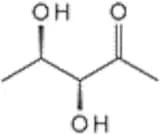
CAS:<p>1,5-Dideoxy-D-xylulose is a synthetic compound that has been modified to make it resistant to methylation and other modifications. It can be used as a raw material for the production of complex carbohydrates and saccharides, such as oligosaccharides and polysaccharides. 1,5-Dideoxy-D-xylulose is widely used in the modification of saccharides and carbohydrates. It is important in the production of high purity monosaccharides, which are used in the synthesis of pharmaceuticals. This product is also often used for fluorination reactions.</p>Formula:C5H10O3Purity:Min. 95%Molecular weight:118.13 g/molEthyl 2,4,6-tri-O-acetyl-3-O-benzyl-b-D-thioglucopyranoside
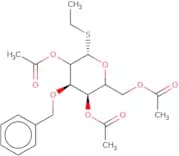
<p>Ethyl 2,4,6-tri-O-acetyl-3-O-benzyl-b-D-thioglucopyranoside is a synthetic carbohydrate with a molecular weight of 592. It has been fluorinated at the C2 position and acetylated at the C3 position. This product is used in the synthesis of oligosaccharides and polysaccharides. It is also used in click chemistry and as an intermediate in carbohydrate modifications and fluorination reactions.</p>Formula:C21H28O8SPurity:Min. 95%Molecular weight:440.51 g/mol1,2,3,5-Tetra-O-acetyl-L-arabinofuranose
CAS:<p>1,2,3,5-Tetra-O-acetyl-L-arabinofuranose is an organic compound that belongs to the group of sugars. It is a component of many polysaccharides and glycoproteins. 1,2,3,5-Tetra-O-acetyl-L-arabinofuranose is a useful intermediate in the synthesis of lysine and theophylline. The most common method for deacetylation involves using triphenylphosphine and chlorine in dichloromethane or chloroform as solvent. This reaction yields 1,2,3,5-tetra-O-(chloroacetoxy)-L-arabinofuranose which can be purified by chromatography. The bioassay for 1,2,3,5-tetra-O-[chloroacetoxy]-L arabinofuranose was found to be similar to that for</p>Formula:C13H18O9Purity:Min. 95%Color and Shape:Colorless PowderMolecular weight:318.28 g/molD-Ribofuranose
CAS:<p>Please enquire for more information about D-Ribofuranose including the price, delivery time and more detailed product information at the technical inquiry form on this page</p>Formula:C5H10O5Purity:Min. 95%Molecular weight:150.13 g/molSialyl-dimeric Lex-nona-APD-HSA
<p>Sialyl-dimeric Lex-nona-APD-HSA is a monosaccharide that belongs to the group of complex carbohydrates. It is a custom synthesis product, which has been synthesized by the methylation and glycosylation of a high purity oligosaccharide. The structural formula for this product is C14H30FNO6S2. This product is highly purified and has been fluorinated at one hydroxyl group. Sialyl-dimeric Lex-nona-APD-HSA has CAS No. 569078-29-4 and molecular weight of 432.5 g/mol.br><br>br><br>This product can be used as a synthetic sugar in various applications such as food, pharmaceuticals, cosmetics, and agrochemicals industries.br><br>br><br>The following are some properties of this compound: <br>1) Nonvolatile solids content: 98%</p>Purity:Min. 95%Methyl b-D-glucopyranoside hemihydrate
CAS:<p>Methyl b-D-glucopyranoside hemihydrate is a white crystalline solid that is soluble in water. It is a synthetic product, which can be custom synthesized and modified to suit the needs of customers. Methyl b-D-glucopyranoside hemihydrate is used for the synthesis of glycosidic substances and as a raw material for saccharide derivatives. This compound has been shown to have high purity, and is often used in the production of oligosaccharides and monosaccharides.</p>Formula:C7H14O6H2OPurity:Min. 95%Color and Shape:White to off-white solid.Molecular weight:203.19 g/molXylaric acid disodium salt
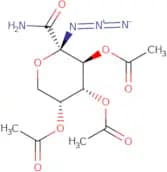
CAS:<p>Xylaric acid disodium salt is a meso oxidised xylose analogue</p>Formula:C5H6Na2O7Purity:Min. 98 Area-%Color and Shape:PowderMolecular weight:224.08 g/molC-(2,3,4-Tri-O-acetyl-1-azido-1-deoxy-b-D-galactopyranosyl)formamide
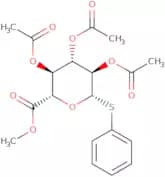
CAS:<p>C-(2,3,4-Tri-O-acetyl-1-azido-1-deoxy-b-D-galactopyranosyl)formamide is a glycosylation reagent that can be used for the synthesis of complex carbohydrates. It is also a monosaccharide and can be used in custom synthesis. The CAS number for this product is 189633-67-8. This product has been modified with fluorination, saccharide modification, and methylation.</p>Formula:C12H16N4O8Purity:Min. 95%Molecular weight:344.3 g/molMethyl (Phenyl 2,3,4-Tri-O-acetyl-1-thio-b-D-glucopyranosid)uronate
CAS:<p>Methyl (Phenyl 2,3,4-Tri-O-acetyl-1-thio-b-D-glucopyranosid)uronate is a modified sugar that can be used as a building block to synthesize complex carbohydrates. It is an important intermediate for the synthesis of saccharides and oligosaccharides. This product is a white powder with a molecular weight of 594.87. Methyl (Phenyl 2,3,4-Tri-O-acetyl-1-thio-b-D-glucopyranosid)uronate has been assigned CAS No. 62812-42-4 and has been approved for use in food production.</p>Formula:C19H22O9SPurity:Min. 95%Molecular weight:426.44 g/mol1-Bromo-2,3,4-tri-O-benzoyl-a-D-glucuronide methyl ester - 1% CaCO3
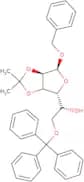
CAS:<p>1-Bromo-2,3,4-tri-O-benzoyl-a-D-glucuronide methyl ester - 1% CaCO3 is a modified oligosaccharide. This product is synthesized by the methylation of glucuronic acid and subsequent glycosylation with maltose. It is a white crystalline powder. The purity of this product is 99% (1% CaCO3). The CAS number for this compound is 103674-69-7.</p>Purity:Min. 95%Benzyl 2,3-O-isopropylidene-6-O-trityl-a-D-mannofuranose
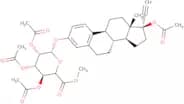
CAS:<p>Benzyl 2,3-O-isopropylidene-6-O-trityl-a-D-mannofuranose is a synthetic carbohydrate that is a modification of mannose. It has been fluorinated at the 6 position and reacted with benzyl alcohol to give the 2,3-O-isopropylidene derivative. This product is intended for use in glycosylation reactions and can be used as a sugar donor in Click chemistry.</p>Formula:C35H36O6Purity:Min. 95%Molecular weight:552.66 g/molEthynyl estradiol 17-acetate-3-(2',3',4'-tri-O-acetyl-b-D-glucuronide) methyl ester
CAS:<p>Ethynyl estradiol 17-acetate-3-(2',3',4'-tri-O-acetyl-b-D-glucuronide) methyl ester is a glycosylated, fluorinated, Oligosaccharide, custom synthesized, high purity product. Ethynyl estradiol is a synthetic hormone used in oral contraceptives and estrogen replacement therapy. It is an estrogen that has been modified to have the chemical structure of a C17β unsaturated A ring. This modification prevents the breakdown of ethynyl estradiol by first pass metabolism and its subsequent transformation into estrone. Ethynyl estradiol 17-acetate 3-(2',3',4'-tri-O-acetyl-b-D-glucuronide) methyl ester is an acetate ester of ethinyl estradiol with a glucuronic acid conjugate at the C3 position.</p>Formula:C35H42O12Purity:Min. 95%Molecular weight:654.7 g/mol


![Gal[2346Ac]b(1-3)GlcNPhth[46Bzd]-b-MP](/_next/image/?url=https%3A%2Fstatic.cymitquimica.com%2Fproducts%2F3D%2Fthumb-webp%2FOG60596.webp&w=3840&q=75)