Glycoscience
Glycoscience is the study of carbohydrates and their derivatives, as well as the interactions and biological functions they participate in. This field of research is crucial for understanding a wide variety of biological processes, including cell recognition, signaling, immune response, and disease development. Glycoscience has important applications in biotechnology, medicine, and the development of new drugs and therapies. At CymitQuimica, we offer a wide selection of high-quality, high-purity products for glycoscience research. Our catalog includes monosaccharides, oligosaccharides, polysaccharides, glycoconjugates, and specific reagents, designed to support researchers in their studies on the structure, function, and applications of carbohydrates in biological systems. These resources are intended to facilitate scientific discoveries and practical applications in various areas of bioscience and medicine.
Subcategories of "Glycoscience"
- Aminosugars(108 products)
- Glyco-Related Antibodies(282 products)
- Glycolipids(46 products)
- Glycosaminoglycans (GAGs)(55 products)
- Glycosides(419 products)
- Monosaccharides(6,621 products)
- Oligosaccharides(3,681 products)
- Polysaccharides(503 products)
Found 11041 products of "Glycoscience"
Sort by
Purity (%)
0
100
|
0
|
50
|
90
|
95
|
100
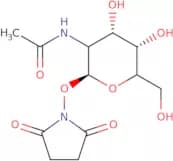
N-(Succinyl)-2-acetamido-2-deoxy-b-D-glucopyranosylhydroxylamine
<p>Succinyl activated n-acetylglucosamine.</p>Formula:C12H18N2O8Purity:Min. 95%Molecular weight:318.28 g/molMethyl 6-O-p-toluenesulfonyl-a-D-glucopyranoside
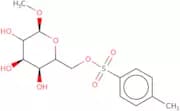
CAS:<p>Methyl 6-O-p-toluenesulfonyl-a-D-glucopyranoside is a custom synthesis. It is an oligosaccharide and polysaccharide that can be modified with methylation and glycosylation. The carbohydrate has a CAS number of 6619-09-6, and the purity is high. This product has been fluorinated for synthetic purposes.</p>Formula:C14H20O8SPurity:Min. 95%Molecular weight:348.37 g/mol2-Deoxy-L-xylose
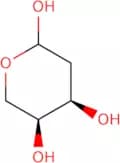
CAS:<p>2-Deoxy-L-xylose is a sugar that is produced by the reduction of 2-deoxy-d-galactose. It has been shown to be an acceptor in enzymatic reactions, such as those catalyzed by alcohol dehydrogenase and sulfoxide reductase. 2-Deoxy-L-xylose has been shown to have antibacterial properties against some strains of bacteria, including typhimurium. This sugar also exhibits antiplasmodial activity against Plasmodium falciparum and can be used for the synthesis of L-xylulose, which is an important intermediate for the biosynthesis of malic acid.</p>Formula:C5H10O4Purity:Min. 95%Molecular weight:134.13 g/molGDP-6-deoxy-a-D-talose
<p>GDP-6-deoxy-a-D-talose is a synthetic oligosaccharide that can be modified to include fluorine, methylation, or other modifications. It has been synthesized for use in the modification of saccharides and complex carbohydrates. GDP-6-deoxy-a-D-talose is soluble in water and has a molecular weight of 519.</p>Purity:Min. 95%2-deoxy-2,2-difluoro-D-ribonic acid-1,4-lactone
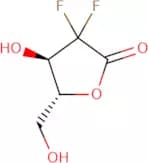
CAS:<p>2-Deoxy-2,2-difluoro-D-erythro-pentonic acid gamma-lactone is a modification of the natural pentose sugar erythrose. It is a white crystalline powder that can be used for the synthesis of oligosaccharides, polysaccharides, and other complex carbohydrates. 2DFPGL can be found in various glycosylation and methylation reactions in the synthesis of saccharides. It has been shown to act as a competitive inhibitor of glucose uptake by cells.</p>Formula:C5H6F2O4Purity:Min. 95%Molecular weight:168.1 g/molXyloglucan heptasaccharide
CAS:<p>Xyloglucan is a heptasaccharide that is an important component of the plant cell wall. Xyloglucan heptasaccharides are found in the cell walls of many plants, including banana and potato. Xyloglucan heptasaccharides are composed of alternating glucose and xylose residues, with a glycosidic linkage between two xylose residues. This linkage can be hydrolyzed by α-amyrinase to yield two xylose monomers. The conformational properties of xyloglucan depend on its stereochemistry, which has been shown to affect its ability to inhibit inflammatory bowel disease (IBD). Xyloglucan heptasaccharides have also been shown to bind to bacterial cells, inhibiting their growth.</p>Formula:C39H66O33Purity:Min. 95%Color and Shape:PowderMolecular weight:1,062.92 g/molDebranched arabinan, from sugar beet
CAS:<p>Please enquire for more information about Debranched arabinan, from sugar beet including the price, delivery time and more detailed product information at the technical inquiry form on this page</p>2-Acetamido-2-deoxy-D-gluconhydroximo-1,5-lactone
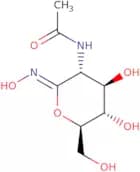
CAS:<p>2-Acetamido-2-deoxy-D-gluconhydroximo-1,5-lactone is a farnesyltransferase inhibitor that belongs to the group of techniques. It is used in the diagnosis of relapsed and resistant multiple myeloma. This drug has been shown to be a potent inductor of apoptosis in vitro and in vivo through inhibition of protein synthesis. 2-Acetamido-2-deoxy-D-gluconhydroximo-1,5-lactone also inhibits the growth of tumor cells and can be used as a potential chemotherapeutic agent for pediatric patients with relapsed or resistant myeloma.</p>Formula:C8H14N2O6Purity:Min. 95%Molecular weight:234.21 g/mol(-)-2,3-O-Isopropylidene-D-threitol
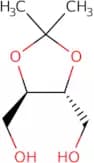
CAS:<p>(-)-2,3-O-Isopropylidene-D-threitol is a chiral compound with two stereoisomers. It is a crystalline solid that melts at 71°C and has a population of 50%. (-)-2,3-O-Isopropylidene-D-threitol is an important intermediate for the synthesis of polyethers with chiral centers. The catalytic asymmetric synthesis of (-)-2,3-O-isopropylidene-D-threitol is achieved by alkylation of (+)-2,3-(dimethoxyphosphinyl)propane with isopropanol. This reaction can be used to produce polyethers with chiral centers in high yields and enantioselectivity.</p>Formula:C7H14O4Purity:Min. 95%Molecular weight:162.18 g/molIsosaccharinic acid
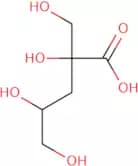
CAS:<p>Isosaccharinic acid is a bacterial strain that produces isosaccharinic acid as its main fatty acid. The thermodynamic data for the reaction mechanism of the conversion of glucose to isosaccharinic acid has been determined. Isosaccharinic acid formation is catalyzed by an enzyme called glycosyl-glycerate dehydrogenase, which converts glycerate to 3-hydroxypropanoic acid and then to 3-oxopropanoate before it undergoes decarboxylation and reduction to form isosaccharinic acid. Radionuclides such as TcO4 are used in chemical ionization mass spectrometry for the detection of this compound in samples. Neutral pH, high activation energies, and low binding constants are all factors that affect the stability of this molecule.</p>Formula:C6H12O6Purity:Min. 95%Molecular weight:180.16 g/mol4,7-Anhydro-1,2,3-trideoxy-D-allo-oct-1-enitol
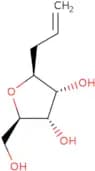
CAS:<p>4,7-Anhydro-1,2,3-trideoxy-D-allo-oct-1-enitol is a modified sugar that has been synthesized for use in glycosylation reactions. It is a high purity product with no detectable impurities. Click modification of this product has been shown to be useful for glycosylation reactions. 4,7-Anhydro-1,2,3-trideoxy-D-allo-oct-1-enitol is also fluorinated and glycosylated. This product can be used in the synthesis of oligosaccharides and monosaccharides.</p>Formula:C8H14O4Purity:Min. 95%Molecular weight:174.19 g/mol5-Thio-N-acetylglucosamine
<p>5-Thio-N-acetylglucosamine is a microtubule inhibitor that binds to o-glcnac, a posttranslational modification of proteins that regulates the morphology and cycling of stem cells. 5-Thio-N-acetylglucosamine has been shown to inhibit the transcriptional activity of o-glcnacase, an enzyme that catalyzes the conversion of o-glcnac to glucosamine. This drug also inhibits the metabolic activity of neural progenitor cells, which may be due to its ability to regulate subpopulations with concomitant expression of markers such as Oct4 and Sox2.</p>Purity:Min. 95%2,3,5-Tri-O-benzyl-1-a-D-arabinofuranosyl chloride
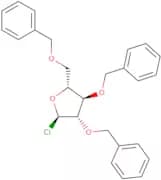
CAS:<p>2,3,5-Tri-O-benzyl-1-a-D-arabinofuranosyl chloride is a patent antibiotic produced by Streptomyces antibioticus. It has potent anticancer activity and is being developed as an antitumor agent. 2,3,5-Tri-O-benzyl-1-a-D-arabinofuranosyl chloride inhibits cell proliferation by inhibiting DNA synthesis and protein synthesis. This compound also induces programmed cell death (apoptosis) in tumor cells. Vidarabine is a nucleoside analog that can be used to treat herpes virus infections of the eye or genital tract. Vidarabine is chemically synthesized from 2,3,5 tri O benzyl d arabinofuranosyl chloride and has been shown to have potential antitumor activity.</p>Formula:C26H27ClO4Purity:Min. 95%Molecular weight:438.94 g/molD-Idonic acid-1,4-lactone
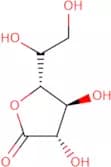
CAS:<p>D-Idonic acid-1,4-lactone is a modification of a carbohydrate which can be custom synthesized. The product is an oligosaccharide that has a high purity and is synthetically produced. This product is composed of monosaccharides, methylation, glycosylation, polysaccharides and sugar. It also contains fluorination and saccharide.</p>Formula:C6H10O6Purity:Min. 95%Color and Shape:Colorless PowderMolecular weight:178.14 g/molUDP-b-L-fucose diammonium salt
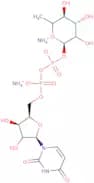
<p>Synthetically produced sugar nucleotide</p>Formula:C15H22N2O16P2·N2H8Purity:Min. 95%Molecular weight:584.37 g/molPorphyran
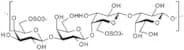
CAS:<p>Porphyran is an agar-like polysaccharide with a linear backbone consisting of 3 linked β-D-galactosyl units alternating with either 4-linked α-L-galactosyl 6-sulphate or 3-6-anhydro-α-L-galactosyl units.The composition includes 6-O-sulphated L-galactose, 6-O-methylated D-galactose, L-galactose, 3,6-anhydro-L-galactose, 6-O-methyl D-galactose and ester sulphate. Some of the ester is present as 1,4-linked L-galactose 6-sulphate. The precise composition of porphyran shows seasonal and environmental variations. Porphyran is not used commercially, but the seaweed, Porphyra umbilicalis, is edible and is consumed in Wales (Laver). It is also made into a delicacy called Laverbread.<br>The image was kindly provided by Prof Mike Guiry from Cork who runs ‘The Seaweed Site’.</p>Purity:(%) Min. 80%Color and Shape:Powder2-Acetamido-2-deoxy-α-D-galactopyranosyl L-threonine hydrochloride
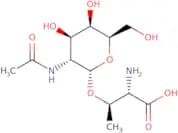
CAS:<p>2-Acetamido-2-deoxy-alpha- D-galactopyranosyl L-threonine is a synthetic sugar. It has a CAS number of 67315-18-8 and a molecular weight of 289.05 g/mol. This sugar is synthesized by the Click modification, fluorination, glycosylation, and methylation methods. The synthesis can be modified to produce 2-acetamido-2,3,4,5,-tetra deoxygalactose or 2 acetamido 4,6 deoxy galactose. This sugar also has saccharide properties as it is classified as an oligosaccharide or monosaccharide.</p>Formula:C12H22N2O8•HClPurity:Min. 95%Color and Shape:PowderMolecular weight:358.77 g/mol2-Acetamido-6-O-(2-acetamido-2-deoxy-b-D-galactopyranosyl)-2-deoxy-3-O-(b-D-galactopyranosyl)-D-glucopyranose
<p>A GalNAc trisaccharide</p>Purity:Min. 95%D-Glycero-D-manno-heptose
CAS:<p>A seven carbon sugar</p>Formula:C7H14O7Purity:Min. 98 Area-%Color and Shape:Colorless Clear LiquidMolecular weight:210.2 g/molLaminariheptaose
CAS:<p>Ex algal/bacterial polysaccharides-value in b1-3 glucanase assays & diagnostics</p>Formula:C42H72O36Purity:Min. 95%Color and Shape:PowderMolecular weight:1,153 g/mol