Glycoscience
Subcategories of "Glycoscience"
- Aminosugars(108 products)
- Glyco-Related Antibodies(283 products)
- Glycolipids(46 products)
- Glycosaminoglycans (GAGs)(55 products)
- Glycosides(419 products)
- Monosaccharides(6,619 products)
- Oligosaccharides(3,711 products)
- Polysaccharides(505 products)
Found 11027 products of "Glycoscience"
N-Acetyl-L-neuraminic acid
CAS:N-Acetyl-L-neuraminic acid is a glycosylation compound that is an important component of the cell wall of Gram negative bacteria. It is used in the synthesis of polysaccharides and in the formation of complex carbohydrates. N-Acetyl-L-neuraminic acid has been studied for its potential use as a drug delivery agent due to its ability to inhibit the activity of enzymes such as α-mannosidase, which can lead to tumor metastasis. This compound can be synthesized using methylation, fluorination, and click chemistry, or custom synthesized by ordering specific monosaccharides. N-Acetyl-L-neuraminic acid can also be modified with acetate groups to create an acetylated form for use in chemical analysis or as a substrate for enzymatic reactions.
Formula:C11H19NO9Purity:Min. 95%Molecular weight:309.27 g/molD-[1-13C]Xylose
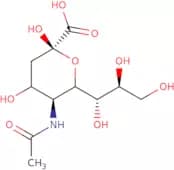
CAS:D-[1-13C]Xylose is a carbon source that is used to study the metabolism of glycolytic carbon in cells. It has been labeled with 13C and can be used as a tracer for the study of the distribution of metabolites, including glucuronic acid, mannose, and xylose. This can be done by nuclear magnetic resonance (NMR) spectroscopy or by using a magnetic resonance spectroscopy technique. The use of D-[1-13C]xylose has been shown to be an effective way to label cryptococcus neoformans cells in order to understand their metabolism.
Formula:C5H10O5Purity:Min. 95%Molecular weight:151.12 g/molRef: 3D-VCA84921
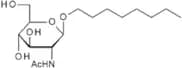
Discontinued productOctyl 2-acetamido-2-deoxy-b-D-glucopyranoside
CAS:Octyl 2-acetamido-2-deoxy-b-D-glucopyranoside is a lyotropic liquid that is flammable. It can be used to prepare potassium hydride, which is an organometallic. Potassium hydride reacts with organic acids and atorvastatin to produce argon gas. This reaction can be done in the presence of chlorine gas instead of air. Preparative methods for octyl 2-acetamido-2-deoxy-b-D-glucopyranoside include heating it in a vacuum or under argon gas and then reacting it with potassium tetrachlorocobaltate in water or ethanol solution.
Formula:C16H31NO6Purity:Min. 95%Molecular weight:333.42 g/molAllyl 4,6-O-benzylidene-b-L-glucopyranoside
Allyl 4,6-O-benzylidene-b-L-glucopyranoside is a carbohydrate that is synthesized from allyl alcohol and glucose. It is a complex carbohydrate made up of two different saccharides. This product can be custom synthesized to meet your needs. Allyl 4,6-O-benzylidene-b-L-glucopyranoside has been modified by fluorination, methylation and glycosylation. It has the CAS number 133394-02-0 and can be synthesized at high purity levels.
Formula:C16H20O6Purity:Min. 95%Molecular weight:308.33 g/molRef: 3D-MA45752
Discontinued productMirabegron N-glucuronide
CAS:Mirabegron is a drug that is used to treat overactive bladder. Mirabegron N-glucuronide is the major metabolite of mirabegron, which has been shown to be excreted in urine. This metabolite can be detected using a validated assay and can be measured using a mass spectrometer. The concentration of mirabegron N-glucuronide in the blood sample was measured at various timepoints after administration of mirabegron. Pharmacokinetic studies were performed in humans and human liver tissue, giving information on how long it takes for the drug to reach its maximum concentration in the body and how long it stays there before being eliminated.
Purity:Min. 95%Ref: 3D-MM59497
Discontinued product3'-Sialyllactose-APD-HSA
3'-Sialyllactose-APD-HSA is a complex carbohydrate with Oligosaccharide and Polysaccharide. It is a modification of saccharides, which are composed of monosaccharides or simple sugars. 3'-Sialyllactose-APD-HSA is a synthetic compound that has been modified by the addition of fluorine atoms to the sugar molecule. This modification prevents the sugar from being broken down by enzymes in the body and ensures that it remains intact until it reaches its target site. 3'-Sialyllactose-APD-HSA is used as a drug delivery system for cancer drugs, such as doxorubicin and paclitaxel.
Purity:Min. 95%Rhamnolipids C12-C12
CAS:rhamose based 'green' surfactant
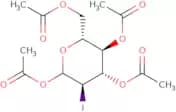
Formula:C30H56O9Purity:Min. 95%Molecular weight:560.77 g/mol1,3,4,6-Tetra-O-acetyl-2-deoxy-2-iodo-a-D-glucopyranose
CAS:1,3,4,6-Tetra-O-acetyl-2-deoxy-2-iodo-a-D-glucopyranose is a sugar molecule that is used to measure the efficiency of glycosidases. It has been shown to be an efficient site-specific inhibitor for glycosidases and analogues. This compound has been shown to inhibit the activity of glycoconjugates and glycan synthesis by interfering with the binding sites on enzymes such as endoglycosidase H. 1,3,4,6-Tetra-O-acetyl-2-deoxy-2-iodo-(1→4)-a-[alpha]-D-[beta]-D-[alpha]-glucopyranoside is an analog of this compound that can be used in place of it for specific purposes.Formula:C14H19IO9Purity:Min. 95%Molecular weight:458.2 g/molRef: 3D-MT10328
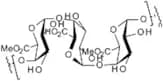
Discontinued productHM Pectin
CAS:Pectins are regarded as linear chains of α-1,4-linked D-galacturonic acid, a homogalacturonan (pectic acid). In the products of commerce, the degree of methylation has a vital influence on the properties of pectin, especially the solubility and gel forming characteristics. Commercial high methoxy (HM) pectin has > 70% of hydroxyl groups methyl esterified. HM pectin forms gels in the presence of sucrose and for this reason it is used in jams often in combination with other fruits.
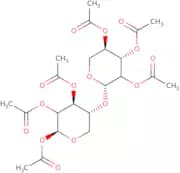
Purity:(%) Min. 85%Color and Shape:Powder1,4-b-Xylobiose hexaacetate
CAS:1,4-b-Xylobiose hexaacetate is a sugar that is used in the glycosylation of complex carbohydrates. It can be synthesized from xylose and acetaldehyde by Methylation and Click modification. 1,4-b-Xylobiose hexaacetate has been fluorinated to give a stable product. This product is soluble in water, ethanol, acetone, DMF, DMSO and other organic solvents. It can also be used for methylation or polysaccharide synthesis. The CAS number for this compound is 58024-20-7.
Formula:C22H30O15Purity:Min. 95%Color and Shape:White PowderMolecular weight:534.46 g/mol1,4-β-D-Glucosyl-D-mannobiose
CAS:1,4-β-D-Glucosyl-D-mannobiose is a specialized carbohydrate substrate, which is derived from complex polysaccharides typically found in plant cell walls. It acts as a substrate for endo-1,4-β-mannanase, an enzyme that cleaves specific glycosidic bonds within mannans. This substrate facilitates the investigation of enzymatic activity by allowing the measurement of endo-1,4-β-mannanase efficiency and specificity under controlled conditions.In biochemical enzyme assays, 1,4-β-D-Glucosyl-D-mannobiose serves as a critical component for quantifying mannanase activity. It enables researchers to study the enzyme's role in various biological processes, including polysaccharide degradation. Additionally, this product is invaluable in in vitro diagnostic analyses where precise enzyme activity assessment is crucial for understanding pathological states or the functionality of industrial enzyme preparations. Its applications extend to biotechnology research, where it aids in the formulation of enzyme-based solutions and optimization of enzymatic reactions in diverse biological and industrial contexts.
Formula:C18H32O16Purity:Min. 95%Molecular weight:504.4 g/molRef: 3D-DBA07282
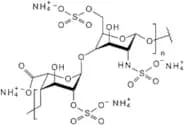
Discontinued productHeparin derived dp16 saccharide ammonium salt
Heparin derived dp16 saccharide ammonium salt is a synthetic oligosaccharide with a molecular weight of approximately 16,000 Da. The compound is an amine-modified heparin sulfate fragment containing 16 saccharides linked in a linear fashion. It has been used for the click modification of proteins, and as a carbohydrate receptor in glycosylation studies. Heparin derived dp16 saccharide ammonium salt can also be custom synthesized to meet specific needs. Click modification and fluorination are two modifications that have been applied to the compound for various purposes.
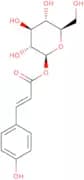
Purity:Min. 95%Color and Shape:Powderp-Coumaroyl-b-D-glucose
CAS:P-Coumaroyl-b-D-glucose is a flavanone that belongs to the class of flavonoids. It is an intermediate in the synthesis of many other flavonoids, such as apigenin, labiatae, and rhamnetin. P-Coumaroyl-b-D-glucose has been shown to downregulate the expression of genes encoding proteins involved in the biosynthesis of proanthocyanidins and anthocyanins. This compound also induces apoptosis by binding to the mitochondria membrane and increasing reactive oxygen species production. P-Coumaroyl-b-D-glucose can be used as a marker for phenylpropanoid metabolism in plants.
Formula:C15H18O8Purity:Min. 95%Color and Shape:White PowderMolecular weight:326.3 g/molRaltegravir b-D-glucuronide
CAS:Raltegravir b-D-glucuronide is a synthetic, fluorinated analog of raltegravir. It is a potent HIV-1 integrase inhibitor that has been shown to be active against the majority of HIV-1 strains. Raltegravir b-D-glucuronide is less potent than the parent compound and exhibits reduced antiviral activity in vitro. Raltegravir b-D-glucuronide is metabolized to raltegravir and eliminated in urine as the glucuronide conjugate.
Formula:C26H29FN6O11Purity:Min. 95%Color and Shape:White PowderMolecular weight:620.54 g/molD-Allose-1,2,3,4,5,6-13C6
CAS:D-Allose is a sugar that is modified with a fluorine atom at position 6. This modification can be used to trace the origin of D-allose in complex carbohydrates such as glycogen and glycosylated proteins. The addition of a 13C6 atom allows for the identification of this sugar through mass spectrometry and nuclear magnetic resonance (NMR) analysis.
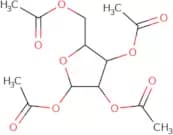
Formula:C6H12O6Purity:Min. 95%Color and Shape:White PowderMolecular weight:186.06 g/mol1,2,3,5-Tetra-o-acetyl-D-xylofuranose
CAS:1,2,3,5-Tetra-o-acetyl-D-xylofuranose is a fatty acid that is found in human red blood cells. It is used as a biochemical marker to diagnose the activity index of fatty acids in the red cell membrane. The activity index can be used to determine whether an individual has metabolic disorders such as hepatic steatosis or lc-ms/ms method. 1,2,3,5-Tetra-o-acetyl-D-xylofuranose also has antimicrobial effects against bacteria and fungi and can be used for the treatment of infectious diseases.
Formula:C13H18O9Purity:Min. 95%Molecular weight:318.28 g/molRef: 3D-SBA92746
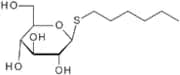
Discontinued productHexyl b-D-thioglucopyranoside
CAS:Hexyl b-D-thioglucopyranoside is an insect pheromone that attracts male mealworms. It can be used for the detection of chiral elements, such as carbon and hydrogen. The profile of hexyl b-D-thioglucopyranoside is dynamically programmable and can be modified to detect different types of insects by changing the carbon skeleton. Hexyl b-D-thioglucopyranoside has been shown to have a strong electromagnetic activity, which may be due to its carbon skeleton.
Formula:C12H24O5SPurity:Min. 95%Color and Shape:White To Off-White SolidMolecular weight:280.38 g/molRef: 3D-DH06374
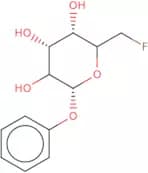
Discontinued productPhenyl 6-deoxy-6-fluoro-a-D-glucopyranoside
Phenyl 6-deoxy-6-fluoro-a-D-glucopyranoside is a modification of the natural sugar, deoxyglucose. It is an oligosaccharide with a complex carbohydrate structure that has been modified by methylation and glycosylation. This product is synthesized from monosaccharides, and it can be fluorinated or saccharided. Phenyl 6-deoxy-6-fluoro-a-D-glucopyranoside is used in the synthesis of polysaccharides.
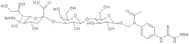
Formula:C12H15FO5Purity:Min. 95%Molecular weight:258.24 g/molAPF Sialoglycopeptide ammonium
CAS:APF Sialoglycopeptide ammonium salt is a custom synthesis of sialoglycopeptides. The molecule is modified with fluorination, methylation and click modification. It contains a monosaccharide and an oligosaccharide. The saccharide is glycosylated to a complex carbohydrate. APF Sialoglycopeptide ammonium salt has CAS No.:
Formula:C63H107N11O29Purity:Min. 95%Color and Shape:PowderMolecular weight:1,482.58 g/molRef: 3D-OA58741
Discontinued productSodium carboxymethyl cellulose, viscosity 50-200 cps
CAS:Please enquire for more information about Sodium carboxymethyl cellulose, viscosity 50-200 cps including the price, delivery time and more detailed product information at the technical inquiry form on this page

![D-[1-13C]Xylose](/_next/image/?url=https%3A%2Fstatic.cymitquimica.com%2Fproducts%2F3D%2Fthumb-webp%2FVCA84921.webp&w=3840&q=75)