Glycoscience
Subcategories of "Glycoscience"
- Aminosugars(108 products)
- Glyco-Related Antibodies(283 products)
- Glycolipids(46 products)
- Glycosaminoglycans (GAGs)(55 products)
- Glycosides(419 products)
- Monosaccharides(6,619 products)
- Oligosaccharides(3,711 products)
- Polysaccharides(505 products)
Found 11027 products of "Glycoscience"
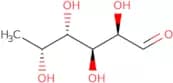
D-Fucose
CAS:D-Fucose is a sugar that can be synthesized in vitro. It is a component of the xanthurenic acid pathway, which is involved in the synthesis of l-arabinose. D-Fucose has been found to have anti-leukemic effects and to inhibit enzyme activities in vitro. It has also been shown to bind to the toll-like receptor, α1-acid glycoprotein, and surface membranes. A hydroxyl group at position 1 on the fucose molecule may be important for this binding. D-Fucose's biological properties are related to its structural analysis and the cell receptors it binds with. D-Fucose has an optimum pH level of 7, so it cannot survive outside of a neutral environment. It does not need any biological cofactors or enzymes for its synthesis, so it is classified as a nonessential nutrient. D-Fucose is also used in blood groups because it contains an antigenFormula:C6H12O5Purity:Min. 97 Area-%Color and Shape:White Off-White PowderMolecular weight:164.16 g/molA2G1 Glycan, 2-AB labelled
A2G1 Glycan, 2-AB labelled is a monosaccharide which is modified with fluorine. A2G1 Glycan, 2-AB labelled is used in the synthesis of complex carbohydrate structures. It has been shown to be useful for click modification, methylation and polysaccharide synthesis. This compound can also be custom synthesized to order. The purity of this product is high and it is available in a range of CAS numbers.Purity:Min. 95%1-Azido-1-deoxy-β-D-lactopyranoside
CAS:Synthetic building block for oligosaccharide synthesisFormula:C12H21N3O10Purity:(%) Min. 95%Color and Shape:PowderMolecular weight:367.31 g/molTopiramate impurity D
CAS:Topiramate impurity D is a custom synthesis with CAS number. It is an oligosaccharide that has been modified by methylation and glycosylation. Topiramate impurity D is a complex carbohydrate with saccharide units, which are modified by fluorination and click chemistry. This product is high purity and has been synthesized using the synthetic method of glycosylation, Oligosaccharide, Methylation, and Carbohydrate.Formula:C12H20O6Purity:Min. 95%Molecular weight:260.28 g/mol3-Deoxy-1,2-O-isopropylidene-5-O-toluoyl-b-L-ribofuranose
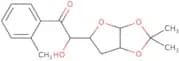
CAS:3-Deoxy-1,2-O-isopropylidene-5-O-toluoyl-b-L-ribofuranose is a sugar that is a methylated form of ribose. It also forms the backbone of polysaccharides and is modified with glycosylation. 3DOTRB can be custom synthesized in high purity and has CAS No. 2072145-19-6.Purity:Min. 95%Monosialyllacto-N-neohexaose
Monosialyllacto-N-neohexaose is a postulated sugar that has been suggested to be a membrane potential stabilizer. It has been shown to have a linear response in analytical methods, such as mitochondrial membrane potential and glycosidic bond. Monosialyllacto-N-neohexaose has also been investigated for use in diabetic patients because it may help to improve the membrane potential of cells. This sugar has also been studied for use in colostrum and infant formula due to its ability to stimulate the production of TNF-α, which is important for immune system development.
Formula:C51H85N3O39Purity:Min. 95%Molecular weight:1,364.22 g/molRepaglinide acyl-D-glucuronide
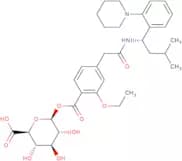
CAS:Repaglinide is a drug that belongs to the class of drugs called meglitinides. It is used in the treatment of type 2 diabetes mellitus and has been shown to lower blood sugar levels. Repaglinide is metabolized to repaglinide acyl-D-glucuronide, its active form, by esterases in the liver. The majority of this metabolite is excreted in urine as an acyl glucuronide. A small amount of this metabolite is excreted into bile and undergoes enterohepatic circulation, resulting in reabsorption and conjugation with glucuronic acid. This process results in a decrease in the amount of repaglinide acyl-D-glucuronide that circulates through the body and prolongs its activity.Formula:C33H44N2O10Purity:(%) Min. 97%Color and Shape:White PowderMolecular weight:628.71 g/molNeoagarohexaose
CAS:Agarose is a polysaccharide found in red algae, typically Gelidium and Gracilaria. It is a strictly alternating polysaccharide of α-1,3 linked D-galactose and β-1,4 linked L-3,6 anhydrogalactose with occasional sulfation at position 6 of the anhydrogalactose residue. Agaro-oligosaccharides result from cleavage at galactose residues and neoagaro-oligosaccharides from cleavage at 3,6-anhydro residues. Neoagarohexaose is reported to have potential for novel cosmeceuticals.Formula:C36H56O28Purity:Min. 98 Area-%Color and Shape:White PowderMolecular weight:936.81 g/mol5-Azido-1-O-acetyl-2,3-di-O-benzyl-5-deoxy-6-hydroxy-b-D-xylopyranoside
CAS:5-Azido-1-O-acetyl-2,3-di-O-benzyl-5-deoxy-6-hydroxyb-Dxylopyranoside is a synthetic sugar that has been modified with fluorine and methyl groups. It is used in the synthesis of complex carbohydrate chains. The product is available in custom synthesis which may include other modifications such as acetylation, monosaccharide, or polysaccharide. 5AOBDX5 can be synthesized from 1,2,3,4,5,6 hexaoxohexane at elevated temperature by reacting with sodium azide and benzaldehyde. This product is available in high purity and can be used for click chemistry modifications.Purity:Min. 95%N-Acetyl-2-O-methyl-a-D-neuraminic acid methyl ester
CAS:N-Acetyl-2-O-methyl-a-D-neuraminic acid methyl ester is a modification of the natural sugar N-acetyl-2,3,4,5,6-penta-, hexa-, and hepta-(1→4)-D-glycero-D-[1→6]-N-acetylneuraminic acid. It can be used as an intermediate in the synthesis of complex carbohydrates. This compound has been shown to be soluble in water and is stable at acidic pH levels.Formula:C13H23NO9Purity:Min. 95%Molecular weight:337.32 g/molN-(2-Hydroxybenzyliden)imino-2,3,4,6-tetra-O-pivaloyl-b-D-glucopyranoside
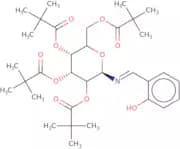
The 2-hydroxybenzylidenimino-2,3,4,6-tetra-O-pivaloyl-b-D-glucopyranoside is a modification of the carbohydrates. It is an oligosaccharide that has been synthesized and it is a complex carbohydrate. This compound has a CAS No. and it is a monosaccharide. It is methylated and glycosylated and it can be used as a sugar or as a polysaccharide. This compound also has fluorination and saccharide modifications.Formula:C33H49NO10Purity:Min. 95%Molecular weight:619.74 g/mol2, 5- Anhydro-3-azido-3-deoxy-D- altronic acid 1-isopropyl ester
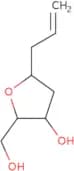
2,5-Anhydro-3-azido-3-deoxy-D-altronic acid 1-isopropyl ester is a synthetic compound that can be custom made to order. It is a sugar that can be modified with fluorination, glycosylation, and methylation. 2,5-Anhydro-3-azido-3-deoxy -D altronic acid 1 isopropyl ester has CAS No. 61118.Purity:Min. 95%(2R,3S,5S)-Tetrahydro-3-hydroxy-5-(2-propen-1-yl)-2-furanmethanol
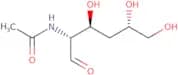
CAS:(2R,3S,5S)-Tetrahydro-3-hydroxy-5-(2-propen-1-yl)-2-furanmethanol is a synthetic compound that has been fluorinated at the 2' position of the sugar. This product is a synthetic glycosylated saccharide. It can be used in pharmaceuticals and other chemical syntheses as an intermediate. The purity of this product is high and custom synthesis is available upon request.Formula:C8H14O3Purity:Min. 95%Molecular weight:158.19 g/mol2- Acetamido- 2, 4- dideoxy-D- xylo- hexose
CAS:2-Acetamido-2,4-dideoxy-D-xylo-hexose is a synthetic monosaccharide that is modified with fluorine, methylation and acetamidodeoxysugar. The product is used as an intermediate in the synthesis of oligosaccharides and polysaccharides. It can also be used to modify saccharides with modifications such as click chemistry, fluorination and saccharide modification. 2-Acetamido-2,4-dideoxy-D-xylo-hexose (2A6DH) has CAS number 40555-55-3.Formula:C8H15NO5Purity:Min. 95%Molecular weight:205.21 g/mol(5R, 6S, 7R) -6, 7- Dihydro- 5- [(1R) - 1- hydroxyethyl] - 5H- pyrrolotetrazole- 6, 7- diol
(5R, 6S, 7R) -6, 7- Dihydro- 5- [(1R) - 1- hydroxyethyl] - 5H- pyrrolotetrazole- 6, 7- diol is a synthetic compound used in the synthesis of various complex carbohydrates. It is a methylated derivative of 2-(2-(4-nitrophenyl) diazenyl)-5H-pyrrolo[2,3-d]pyrimidine and can be synthesized by the click modification of an oligosaccharide or polysaccharide (such as cellulose). This compound has been modified with fluorine and is highly pure. It belongs to the group of monosaccharides and sugars.Purity:Min. 95%Methyl N-Benzyl-3-fluoro-2,3,4-trideoxy-2,4-imino-a-L-ribopyranoside
Methyl N-Benzyl-3-fluoro-2,3,4-trideoxy-2,4-imino-a-L-ribopyranoside is a fluorinated monosaccharide that is synthesized from an oligosaccharide. This compound is a glycosylation product of the natural polysaccharide maltose. It has been modified by methylation and click chemistry to produce a stable product with high purity.
Methyl N-Benzyl 3 Fluoro 2,3,4 Trideoxy 2,4 Imino A L Ribopyranoside has a molecular weight of 539.62 and is soluble in water at 25°C. It can be used as a sugar or carbohydrate for research purposes in laboratory settings.Purity:Min. 95%(1R) -1- [(2S, 3S) - N-Methyl-3- hydroxy- 1- azetidinyl] -1, 2- ethanediol
(1R) -1- [(2S, 3S) - N-Methyl-3- hydroxy- 1- azetidinyl] -1, 2- ethanediol is a synthetic sugar that is used in the manufacture of other chemical compounds. It has a CAS number of 93908-06-6 and can be custom synthesized to fit your needs. This product is highly pure and can be modified with methylation or glycosylation. The synthesis of this product can be done with click chemistry.Purity:Min. 95%2-Azido-2-deoxy-3,4-O-isopropylidene-L-lyxonic acid methyl ester
2-Azido-2-deoxy-3,4-O-isopropylidene-L-lyxonic acid methyl ester is a custom synthesis, modification, fluorination and methylation of a monosaccharide. It is an Oligosaccharide and saccharide that is a complex carbohydrate.Purity:Min. 95%Ethyl 2,3-di-O-benzyl-4,6-O-benzylidene-b-D-thiogalactopyranoside
Ethyl 2,3-di-O-benzyl-4,6-O-benzylidene-b-D-thiogalactopyranoside (BBDTG) is an oligosaccharide that is a sugar with a complex carbohydrate. It has been modified using the Click reaction and a custom synthesis to add fluorine atoms. This product is high purity and can be used in various applications, such as glycosylation or methylation.Purity:Min. 95%N-(4-Nitrobenzyliden)imino-2,3,4,6-tetra-O-pivaloyl-D-glucopyranoside
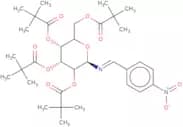
N-(4-Nitrobenzyliden)imino-2,3,4,6-tetra-O-pivaloyl-D-glucopyranoside is a synthetic saccharide that is modified with fluorine atom. This compound is a monosaccharide that has been synthesized from the carbohydrate D-glucopyranose. The molecular weight of this compound is 437.5 g/mol and it has CAS No. 105380-10-1. The purity of this compound is 98%. N-(4-Nitrobenzyliden)imino-2,3,4,6-tetra-O-pivaloyl D glucopyranoside is a high purity carbohydrate that can be custom synthesized in methylated and glycosylated form.Formula:C33H48N2O11Purity:Min. 95%Molecular weight:648.74 g/mol(2R, 3S, 4R, 5S) -3,4-O-Isopropylidene-2- methyl-3, 4, 5- piperidinetriol
(2R, 3S, 4R, 5S) -3,4-O-Isopropylidene-2- methyl-3, 4, 5- piperidinetriol is a fluorinated carbohydrate that is synthesized through a click reaction. It has been shown to have potent anti-inflammatory properties and inhibit tumor cell proliferation. This compound may be used in the treatment of cancer or inflammatory diseases. (2R, 3S, 4R, 5S) -3,4-O-Isopropylidene-2-methyl-3,4,5-piperidinetriol is also a complex carbohydrate containing oxygenated functional groups on C1 and C6. It has been shown to bind to the enzyme 2',3'-cyclic nucleotide 3'-phosphodiesterase (CNP), which affects the production of inflammatory mediators such as prostaglandins and leukotrienes.Purity:Min. 95%Daunorubicinol-D3
Daunorubicinol-D3 is a synthetic drug that is a fluorinated analogue of daunorubicin. It has been designed to be more stable and resistant to degradation in the body, as well as being resistant to the drug's own metabolism. Daunorubicinol-D3 is used in the treatment of leukemia, lymphoma, and other cancers. This drug is a large molecule that contains many sugars or saccharides including an oligosaccharide and polysaccharide. The modification of this molecule includes methylation, click chemistry modifications, and fluorination. Daunorubicinol-D3 has high purity with a low level of impurities such as monosaccharides, sugars, or synthetic compounds.Purity:Min. 95%[1S- (1a, 2a, 8a, 8ab) ] -2, 3, 8, 8a-Tetrahydro- 1, 2, 8- trihydroxy-5(1H) - indolizinone
CAS:Methylation of the C-2' and C-8a positions of a 2,3,8,8a tetrahydroindolizinone derivative affords a methylated saccharide. A fully fluorinated analogue is obtained by performing a click modification on the C-2' position. The methylated saccharide has been used in the synthesis of oligosaccharides and glycosylations. This product is high purity and custom synthesis.Formula:C8H11NO4Purity:Min. 95%Molecular weight:185.18 g/mol5-Azido-5-deoxy-2,3-O-isopropylidene-1-C-phenyl-L-lyxofuranose
5-Azido-5-deoxy-2,3-O-isopropylidene-1-C-phenyl-L-lyxofuranose is a fluorinated monosaccharide that can be synthesized by the reaction of 5 azidoacetone with 5 deoxyribose in the presence of sodium hydroxide. This compound is used for glycosylation, polysaccharide modification, and click chemistry. It is also used as a sugar source in the preparation of oligosaccharides and complex carbohydrates. 5 Azido-5 deoxy -2,3 O isopropylidene -1 C phenyl L L lyxofuranose has CAS number 8068635-52-8.Purity:Min. 95%N- [(3R, 4S, 5R, 6S) - 4, 5- Dihydroxy- 6- (hydroxymethyl) - 3- piperidinyl] -acetamide
CAS:N- [(3R, 4S, 5R, 6S) - 4, 5- Dihydroxy- 6- (hydroxymethyl) - 3- piperidinyl] -acetamide is a fluorinated N-acyl derivative of an aminomethyl oxazolidinone. It is synthesized by the reaction of acetamide with 5-(hydroxymethyl)-3-(piperidin-4-yloxy)oxazolidine and bromofluoride. The product was purified by column chromatography to yield a white solid. The purity of the final product was checked by HPLC and found to be 99%.Purity:Min. 95%N-[(4'-Methoxyphenyl)-1-propenyl]imino-2,3,4,6-tetra-O-pivaloyl-D-glucopyranoside
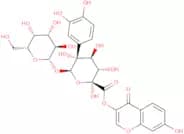
4-Methoxybenzaldehyde (4-MB) is an organic compound that is a simple aromatic aldehyde. It can be used to synthesize a variety of biologically active molecules, including saccharides and other carbohydrates. The synthesis of 4-MB starts with the direct oxidation of benzyl alcohol using hydrogen peroxide in the presence of a persulfate catalyst. The resulting 4-hydroxybenzaldehyde is then converted into 4-methoxybenzaldehyde by reaction with sodium hydroxide in methanol. This process produces high purity 4-methoxybenzaldehyde and avoids the use of toxic chromium reagents, which are required for the classical method for its preparation.Formula:C36H53NO10Purity:Min. 95%Molecular weight:659.81 g/mol2-(3,4-Dihydroxyphenyl)-5,7-dihydroxy-4-oxo-4H-1-benzopyran-3-yl O-b-D-galactopyranosyl-b-D-glucopyranosiduronic acid
CAS:This is a custom synthesis that is a complex carbohydrate. It has been modified, glycosylated, and methylated to create a saccharide with an Oligosaccharide and Polysaccharide. This product is fluorinated, custom synthesized, and has high purity. The CAS number for this product is 77154-70-2.Formula:C27H28O18Purity:Min. 95%Molecular weight:640.5 g/molD-Maltose monohydrate - Low endotoxin
CAS:D-Maltose monohydrate is a glycosylation product of maltose. It is a complex carbohydrate that has been methylated, fluorinated, and modified with Click chemistry. D-Maltose monohydrate has the CAS number of 3647-20-3 and can be custom synthesized to meet your specifications. This product is free from endotoxins and can be made in high purity.Purity:Min. 95%2-Azido- 2- deoxy- 2- C- methyl-3,5-di-O-toluenesulfonyl-D- ribono-1,4- lactone
2-Azido-2-deoxy-2-C-methyl-3,5-di-O-toluenesulfonyl-D-[alpha]-ribono--1,4--lactone is a glycosylation agent that has been modified with a click chemistry reaction. It has been shown to be effective in the synthesis of complex carbohydrates and saccharides. This compound is also capable of modifying sugar chains, oligosaccharides, and polysaccharides. 2AzoDS is available for custom synthesis in high purity and CAS number.Purity:Min. 95%N- (2, 5- Anhydro- 3- azido- 3- deoxy-4,6-O-isopropylidene- D- idonoyl) - 2, 5- anhydro- 3- amino- 3- deoxy-4,6-O-isopropylidene- D- idonic acid propyl ester
N- (2, 5-Anhydro-3-azido-3-deoxy-4,6-O-isopropylidene-D-idonoyl)-2,5-anhydro-3-amino-3-deoxy--4,6--O--isopropylidene--D-- idonic acid propyl ester is a glycoconjugate consisting of a saccharide and an azido group. It is synthesized by the Click chemistry method. This compound has shown to inhibit the growth of bacteria in vitro by binding to bacterial ribosomes. N-(2, 5 -Anhydro - 3 -azido - 3 -deoxy - 4, 6 - O - isopropylidene - D - idonoyl) 2, 5 anhydro 3 amino 3 deoxy 4, 6 O isopropylidene D idonic acid propyl ester consists ofPurity:Min. 95%2-Azido-2-deoxy-3,5-O-isopropylidene-D-lyxono-1,4-lactone
2-Azido-2-deoxy-3,5-O-isopropylidene-D-lyxono-1,4-lactone is a modification of glycosides. It is a high purity oligosaccharide with CAS number. This monosaccharide can be methylated and glycosylated to form polysaccharides. The chemical synthesis of this product is complex and requires custom synthesis.Purity:Min. 95%Phenylmethyl 2,3-O-(1-methylethylidene)- a-D-lyxofuranoside
CAS:Phenylmethyl 2,3-O-(1-methylethylidene)- a-D-lyxofuranoside is a Custom synthesis that has been modified with fluorination and methylation. It is a monosaccharide that is part of an oligosaccharide, which is the saccharide unit in complex carbohydrates. The CAS number for this compound is 20786-73-6.Purity:Min. 95%(2R, 3S, 4S) - 1- Butyl-3-fluoro-4- (hydroxymethyl) - 2- azetidinecarboxylic acid N-methylamide
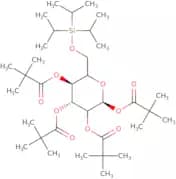
(2R, 3S, 4S) - 1- Butyl-3-fluoro-4- (hydroxymethyl) - 2- azetidinecarboxylic acid N-methylamide is a fluorinated monosaccharide that is synthesized from the reaction of methyl acetoacetate and formaldehyde. The compound is used in glycosylation reactions to produce oligosaccharides or polysaccharides. This product has been modified with a click chemistry reaction to produce a new sugar that can be used in the synthesis of complex carbohydrates. The purity of this product is > 98%.Purity:Min. 95%1,2,3,4-Tetra-O-pivaloyl-6-O-triisopropylsilyl-b-D-galactopyranose
One of the most important properties of this product is that it has a high degree of purity. It is a custom synthesis, complex carbohydrate and an oligosaccharide. This product is a CAS No., Polysaccharide, Modification, saccharide, Methylation, Glycosylation, Click modification, Carbohydrate and sugar. The molecular weight of this product is 1,2,3,4-Tetra-O-pivaloyl-6-O-triisopropylsilyl-b-D-galactopyranose. It also has a fluorination and synthetic modification.
Formula:C35H64O10SiPurity:Min. 95%Molecular weight:672.98 g/mol2-C-Methyl- 2, 3- O- isopropylidene - D- lyxonic acid g- lactone
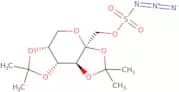
2-C-Methyl- 2,3-O-isopropylidene -D-lyxonic acid g-lactone is a synthetic monosaccharide that is used as a building block in the synthesis of complex carbohydrates. It can be fluorinated and glycosylated to form saccharides. This product has been custom synthesized and is offered at high purity levels.Purity:Min. 95%2,3:4,5-Di-O-isopropylidene-b-D-fructopyranose azide sulphate
CAS:2,3:4,5-Di-O-isopropylidene-b-D-fructopyranose azide sulphate is a custom synthesis. It has been fluorinated and methylated by the click chemistry method. The compound is a complex carbohydrate with a high purity and modification level. 2,3:4,5-Di-O-isopropylidene-b-D-fructopyranose azide sulphate can be used for glycosylation or oligosaccharide synthesis. CAS No. 106881-35-0Formula:C12H19N3O8SPurity:Min. 95%Molecular weight:365.36 g/mol3-O-Benzyl-1,2-O-isopropylidene-b-L-lyxofuranose
CAS:3-O-Benzyl-1,2-O-isopropylidene-b-L-lyxofuranose is an oligosaccharide that is a member of the class of carbohydrates. It has a saccharide sequence that is composed of three monosaccharides: b-D-glucopyranose, L-xylopyranose, and β-(3’,4’)-benzylidene erythritol. The carbohydrate is modified with fluorine atoms at the two hydroxyl positions on the glucose unit and a benzyl group at the C4 position on the xylopyranose unit. 3-O-Benzyl-1,2-O-isopropylidene -b -L -lyxofuranose is useful for click chemistry reactions due to its reactive benzyl group. This product has high purity and can be custom synthesized toFormula:C15H20O5Purity:Min. 95%Molecular weight:280.32 g/molN-Benzyl-3,5-dideoxy-3,5-imino-1,2-O-isopropylidene-b-L-lyxofuranose
N-Benzyl-3,5-dideoxy-3,5-imino-1,2-O-isopropylidene-b-L-lyxofuranose is an oligosaccharide with a 3,5 dideoxy sugar. It is a modification of the natural carbohydrate L -lyxohexaose. This synthetic compound was custom synthesized and has high purity. The CAS No. for this compound is: 233878-37-6. N -Benzyl -3,5 -dideoxy -3,5 -imino -1,2--O--isopropylidene--b--L--lyxofuranose is not a monosaccharide or polysaccharide but rather a sugar that can be methylated or glycosylated. It has fluorination and saccharides that are modified with fluorine.Purity:Min. 95%3b,19a-dihydroxyurs-12-en-28-oic acid 28-b-D-glucopyranosyl ester
3b,19a-dihydroxyurs-12-en-28-oic acid 28-b-D-glucopyranosyl ester is an Methylated saccharide. It is a white to off-white crystalline powder that is soluble in water and methanol. The CAS number for this product is 805829-15-6. This product can be custom synthesized with a modification of the glycosylation site, or glycosylation can be removed by Click chemistry.Purity:Min. 95%2,6-Anhydro-D-glycero-D-gluo-heptonic acid methylamide
2,6-Anhydro-D-glycero-D-gluo-heptonic acid methylamide is a synthetic sugar that is used as a building block for the synthesis of oligosaccharides and monosaccharides. The glycosylation of 2,6-Anhydro-D-glycero-D-gluo-heptonic acid methylamide can be catalyzed by any of the glycosylators that use saccharides as substrates. This modification can also be achieved by methylation to produce methylated 2,6-Anhydro-D-glycero-D-gluo heptonic acid methylamide. It has been shown to exhibit antiviral activity against herpes simplex virus type 1.Purity:Min. 95%(2S, 3S, 4R) -3- [[[(2S, 3S, 4R) - 3- Azido- 4- [[[(1, 1- dimethylethyl) dimethylsilyl] oxy] methyl] - 1- (phenylmethyl) - 2- azetid inyl] carbonyl] amino] - 4- [[[(1, 1- dimethylethyl) dimethylsilyl] oxy] methyl] - 1- (phenylmethyl) -2- azetidinecarb
The synthesis starts with a commercially available, methyl-protected, phenyl-protected 2-azetidinecarboxylic acid. The carbonyl group is then converted to an amide by reaction with ammonia in the presence of a base (such as triethylamine) and an appropriate coupling agent (such as HOBt). The amide is then deprotected by treatment with hydrochloric acid to give the desired product. This compound has not been characterized fully yet but it is expected to be a complex carbohydrate.
Purity:Min. 95%Methyl 2,3-di-O-acetyl-4,6-O-benzylidene-a-D-galactopyranoside
CAS:Methyl 2,3-di-O-acetyl-4,6-O-benzylidene-a-D-galactopyranoside is a custom synthesis of a complex carbohydrate that can be modified with a methyl group on the C2 position. This compound has been fluorinated and glycosylated in the laboratory. This product has high purity and is insoluble in water.Formula:C18H22O8Purity:Min. 95%Molecular weight:366.37 g/mol1,2,3,4-Tetra-O-acetyl-6-O-(2,3,4,6-tetra-O-acetyl-a-D-galactopyranosyl)-b-D-thioglucopyranose
CAS:A tetra-O-acetyl-6-O-(2,3,4,6-tetra-O-acetyl-a-D-galactopyranosyl)-b-D-thioglucopyranose is a 1,2,3,4 tetraol. It is synthesized by the modification of a disaccharide that has been modified with fluorine and methyl groups on the C1 and C4 positions of the sugar. The complex carbohydrate is a glycosylated sugar that is composed of one monosaccharide and one oligosaccharide. This product is CAS No. 1820574-50-2.Formula:C28H38O18SPurity:Min. 95%Molecular weight:694.66 g/mol2,4-Anhydro-3,5:6,7-di-O-isopropylidene-D-glycero-D-gulo-heptonic acid benzylamide
2,4-Anhydro-3,5:6,7-di-O-isopropylidene-D-glycero-D-gulo-heptonic acid benzylamide is a glycosylation agent that is used in the synthesis of complex carbohydrate. It can be methylated and fluorinated to produce saccharides with desired properties. It also has a variety of chemical modifications for use as a synthetic sugar or oligosaccharide. 2,4-Anhydro-3,5:6,7-di-O-isopropylidene-D-glycero-D -gulo heptonic acid benzylamide is typically synthesized in high purity for use in pharmaceuticals or other applications requiring high purity.Purity:Min. 95%2-Azido-2-deoxy-3,5-O-isopropylidene-D-xylono-1,4-lactone
2-Azido-2-deoxy-3,5-O-isopropylidene-D-xylono-1,4-lactone is a methylated saccharide that has been synthesized from D-xylonolactone. It has a CAS Number of 122758-81-6 and is available for custom synthesis. This molecule is a modified form of the natural product xyloglucan. It can be used as a glycosylation or fluorination reagent to create more complex carbohydrates. 2-Azido -2 deoxy -3,5 O -isopropylidene -D -xylono -1,4 lactone is prepared by the reaction of 2 moles of nitrous acid with 1 mole of D -xylonolactone in an organic solvent such as ethanol or acetone at room temperature. The product can then be purified by recrystallization from a mixture ofPurity:Min. 95%2-Chloroethyl-b-D-fructopyranoside
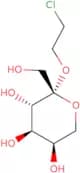
CAS:2-Chloroethyl-b-D-fructopyranoside is a stable reagent that is used to prepare 2,4-dichloroacetophenone (2,4-DAAP), which can be used as a crosslinking agent. This reagent is reactive and should be handled with care. It forms a hemoglobin adduct by reacting with the amino groups of hemoglobin. The reaction can be catalyzed by dialdehydes. Affinities for tissue proteins are created through stepwise reactions involving ring-opening reactions or methemoglobin formation. 2-Chloroethyl-b-D-fructopyranoside can be used to synthesize a polymerized affinity column by using the ring opening reaction in an affinity chromatography process.Formula:C8H15ClO6Purity:Min. 95%Color and Shape:PowderMolecular weight:242.65 g/mol4-O-(a-D-Galactopyranosyl)-D-galactopyranose
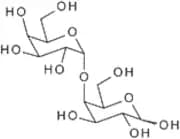
CAS:Used as enzyme substrates, analytical standards and for in vitro diagnosticsFormula:C12H22O11Purity:Min. 97 Area-%Color and Shape:White PowderMolecular weight:342.3 g/molChitosan oligomer (Dp 3-7) hydrochloride - Molecular weight 1640
Chitosan oligomer (Dp 3-7) hydrochloride is a carbohydrate with a molecular weight of 1640. It is used as a sugar and an adjuvant in vaccine development. Chitosan oligomer (Dp 3-7) hydrochloride is synthesized by the reaction of chitosan with phosphoryl chloride and has been shown to have antiviral, antibacterial, and anti-inflammatory effects.Formula:(C6H13NO5•HCl)nPurity:Min. 95 Area-%Color and Shape:Powder4-Methoxyphenyl 2,3,4,6-tetra-O-acetyl-α-D-mannopyranoside
CAS:4-Methoxyphenyl 2,3,4,6-tetra-O-acetyl-a-D-mannopyranoside is an extracellular calcium modulator that can be used to treat viral infections. It binds to the viral envelope and alters the virus's ability to fuse with cells. 4MPTAA also has antiviral activity against herpes simplex virus type 1 (HSV1) and influenza A virus (IAV). The compound also has anticancer activity by blocking the growth of cancer cells. 4MPTAA can be used for the treatment of microprocessor viruses such as tenella and myxoma. This drug also has a structural analysis profile that can be accessed using a variety of methodologies, including thermodynamic profiling and coagulation profiling.Formula:C21H26O11Purity:Min. 95%Molecular weight:454.42 g/mol1,2,3,4,6-Penta-O-acetyl-D-mannopyranose
CAS:1,2,3,4,6-Penta-O-acetyl-D-mannopyranose is an organic chemical compound that belongs to the group of sugars. It is a synthetic compound that can be used as an analytical reagent in hepg2 cells and chloride. 1,2,3,4,6-Penta-O-acetyl-D-mannopyranose has been shown to have a protective effect against adenosine receptors and phosphotungstic acid in brain cells. This sugar also has a strong affinity for lectins and can be used to study the binding of sugars to proteins by titration calorimetry.Formula:C16H22O11Purity:Min. 98 Area-%Color and Shape:White PowderMolecular weight:390.34 g/mol





![(5R, 6S, 7R) -6, 7- Dihydro- 5- [(1R) - 1- hydroxyethyl] - 5H- pyrrolotetrazole- 6, 7- diol](/_next/image/?url=https%3A%2Fstatic.cymitquimica.com%2Fproducts%2F3D%2Fthumb-webp%2FMD163944.webp&w=3840&q=75)

![(1R) -1- [(2S, 3S) - N-Methyl-3- hydroxy- 1- azetidinyl] -1, 2- ethanediol](/_next/image/?url=https%3A%2Fstatic.cymitquimica.com%2Fproducts%2F3D%2Fthumb-webp%2FMM163409.webp&w=3840&q=75)
![[1S- (1a, 2a, 8a, 8ab) ] -2, 3, 8, 8a-Tetrahydro- 1, 2, 8- trihydroxy-5(1H) - indolizinone](/_next/image/?url=https%3A%2Fstatic.cymitquimica.com%2Fproducts%2F3D%2Fthumb-webp%2FMT163925.webp&w=3840&q=75)
![N- [(3R, 4S, 5R, 6S) - 4, 5- Dihydroxy- 6- (hydroxymethyl) - 3- piperidinyl] -acetamide](/_next/image/?url=https%3A%2Fstatic.cymitquimica.com%2Fproducts%2F3D%2Fthumb-webp%2FMD163561.webp&w=3840&q=75)
![N-[(4'-Methoxyphenyl)-1-propenyl]imino-2,3,4,6-tetra-O-pivaloyl-D-glucopyranoside](/_next/image/?url=https%3A%2Fstatic.cymitquimica.com%2Fproducts%2F3D%2Fthumb-webp%2FMM08498.webp&w=3840&q=75)



![(2S, 3S, 4R) -3- [[[(2S, 3S, 4R) - 3- Azido- 4- [[[(1, 1- dimethylethyl) dimethylsilyl] oxy] methy…](/_next/image/?url=https%3A%2Fstatic.cymitquimica.com%2Fproducts%2F3D%2Fthumb-webp%2FMA163462.webp&w=3840&q=75)