Glycoscience
Subcategories of "Glycoscience"
- Aminosugars(108 products)
- Glyco-Related Antibodies(284 products)
- Glycolipids(46 products)
- Glycosaminoglycans (GAGs)(55 products)
- Glycosides(419 products)
- Monosaccharides(6,622 products)
- Oligosaccharides(3,701 products)
- Polysaccharides(505 products)
Found 11034 products of "Glycoscience"
(3R, 4S, 5R, 6R, 7S) -1- Azabicyclo[4.2.0] octane- 3, 4, 5, 7- tetrol
CAS:Fluorination, Monosaccharide, Synthetic, Oligosaccharide, complex carbohydrate, Custom synthesis, Glycosylation, Polysaccharide, Click modification, Methylation Fluorination is a chemical reaction that introduces fluorine into organic compounds. The reactant is typically an alcohol or phenol and the product is a fluoroalcohol or fluoroether. Monosaccharides are simple sugars that cannot be hydrolyzed to smaller carbohydrates. Oligosaccharides are saccharides composed of two to ten monosaccharides. Complex carbohydrates are polymers of saccharides. Click chemistry is a type of chemical reaction used in organic chemistry to create new molecules and modify existing ones with high selectivity and efficiency. Methylation is the process by which methyl groups are introduced into organic compounds such as fats and oils. It can also refer to the addition of a methyl group at one specificPurity:Min. 95%Kojitetraose
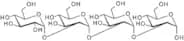
CAS:Kojitetraose is a nutrient that is synthesised in the human body and found in foods such as dairy products, meat, eggs, and vegetables. Kojitetraose is a phosphorylase substrate and can be used to study thermophilic phosphorylases. It has been shown that the stereoselectivity of phosphorylases can be determined by the configuration of the glycosidic bond in the reactant or product. Structural studies have also shown that Kojitetraose binds to teichoic acid and trehalose, which are components of bacterial cell walls. Kojitetraose has been shown to stimulate intestinal contractions in rats and increase salivary secretion.Formula:C24H42O21Purity:Min. 95%Molecular weight:666.58 g/molHyaluronic acid sodium, average MW 2.0 - 2.5 million Da
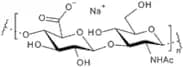
CAS:Gycosaminoglycan in many organs; joint lubricant and shock absorberFormula:(C14H20NO11Na)nPurity:Min. 95%Color and Shape:Powder2-Acetamido-1,3,4-tri-O-butanoyl-2-deoxy-D-mannopyranose
CAS:2-Acetamido-1,3,4-tri-O-butanoyl-2-deoxy-D-mannopyranose is a protected mannosamine carbohydrate.
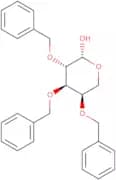
Formula:C23H39NO9Purity:Min. 95%Molecular weight:473.56 g/mol2,3,4-Tri-O-benzyl-b-D-arabinopyranose
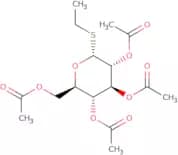
CAS:2,3,4-Tri-O-benzyl-b-D-arabinopyranose (TBA) is a sugar that is found in the skin of primates. It has been shown to promote epidermal growth factor (EGF) production and maturation of the epidermis. TBA has also been shown to have a gestational age effect on epidermal growth. This compound has been used as a synchronizing agent for animal studies in vitro and has been investigated as a treatment for cesarean sections, which may help to reduce the risk of infection and postoperative complications. TBA has also been used to treat skin diseases such as psoriasis and ichthyosis by stimulating keratinocyte proliferation and differentiation.Formula:C26H28O5Purity:Min. 95%Color and Shape:PowderMolecular weight:420.5 g/molEthyl 2,3,4,6-tetra-O-acetyl-a-D-thioglucopyranoside
CAS:Ethyl 2,3,4,6-tetra-O-acetyl-a-D-thioglucopyranoside is an orthorhombic sugar that is composed of a mannopyranoside and a thioglucopyranoside. The crystal structure has been determined to be space group P2(1)/c.Formula:C16H24O9SPurity:Min. 98 Area-%Color and Shape:White PowderMolecular weight:392.42 g/molN-(Phenyl-2-methyl-1-propenyl)imino-2,3,4,6-tetra-O-pivaloyl-D-glucopyranoside
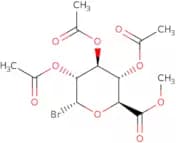
N-(Phenyl-2-methyl-1-propenyl)imino-2,3,4,6-tetra-O-pivaloyl-D-glucopyranoside is an Oligosaccharide that contains a sugar. It has been custom synthesized for the purpose of fluorination and methylation reactions. The purity of this product is high and it has been assigned the CAS number: 3642.Formula:C36H53NO9Purity:Min. 95%Molecular weight:643.81 g/mol1-Bromo-2,3,4-tri-O-acetyl-a-D-glucuronide methyl ester
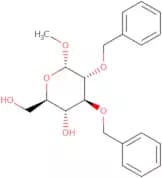
CAS:1-Bromo-2,3,4-tri-O-acetyl-a-D-glucuronide methyl ester is a protected D-glucoronic acid with an alpha bromide at the anomeric position ready to undergo glycosylation reactions with suitable glycoside acceptors. Pharmaceutically active compounds have been used as acceptors to form β-linked D-glucuronide prodrugs which can be used to modify pharmacokinetics, improve solubility and lower the toxicity of the drug.Formula:C13H17BrO9Purity:Min. 80%Molecular weight:397.17 g/molMethyl 2,3-di-O-benzyl-α-D-glucopyranoside
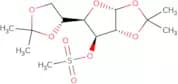
CAS:Methyl 2,3-di-O-benzyl-a-D-glucopyranoside is a chiral sugar that can be synthesized by sulfidation of methyl 1,2,3,4-tetra-O-benzyloxycarbonyl-a-D-glucopyranoside. This sugar was used in the synthesis of oxathianes and sulfones as well as other synthetic methodology.Formula:C21H26O6Purity:Min. 95%Color and Shape:PowderMolecular weight:374.43 g/mol1,2:5,6-Di-O-isopropylidene-3-O-methanesulfonyl-α-D-glucofuranose
CAS:A protected glucofuranose.
Formula:C13H22O8SPurity:Min. 95%Color and Shape:White To Off-White SolidMolecular weight:338.37 g/mol5-Azepan-1-yl-5-deoxy-1,2-isopropylidene-a-D-xylofuranose
CAS:5-Azepan-1-yl-5-deoxy-1,2-isopropylidene-a-(D)-xylofuranose (ADXF) is a synthetic glycoside that was synthesized in order to explore the potential of ADXF as a drug candidate. ADXF has shown promising antiinflammatory and anticancer activities. The synthesis of ADXF starts with the protection of the hydroxyl group at the anomeric center with acetate and then the glycosylation with azepane and 5-deoxy-1,2 isopropylidene erythronolide B. This synthesis also includes fluorination and methylation steps, which are necessary for modifying the sugar structure.
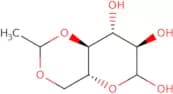
Formula:C14H25NO4Purity:Min. 95%Color and Shape:Brown solid.Molecular weight:271.35 g/mol4,6-O-Ethylidene-D-glucopyranose
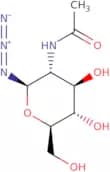
CAS:4, 6-O-Ethylidene-D-glucopyranose is a glucose analogue that inhibits sugar transport. It has been shown to inhibit glucose transport by binding to the hydroxyl group on the red cell membrane. This binding prevents the sugar from entering the cell and as a result, glucose accumulates in the blood. 4, 6-O-Ethylidene-D-glucopyranose also binds to tryptophan fluorescence and inhibits cytochalasin B binding to tryptophans that are located on the plasma membrane of eukaryotic cells.Formula:C8H14O6Purity:Min. 90 Area-%Color and Shape:PowderMolecular weight:206.19 g/mol2-Acetamido-2-deoxy-b-D-glucopyranosyl azide
CAS:2-Acetamido-2-deoxy-b-D-glucopyranosyl azide is a biodegradable, environmentally oriented compound that has been shown to be compatible with polylactic acid. This compound has shown unevenness in the hydroxy group and a functional group sensitive to hydrolysis. The molecular weight of 2-acetamido-2-deoxy-b-D-glucopyranosyl azide is 154.14 g/mol. It is soluble in water and has a natural environment frequency of 0.0005%.
Formula:C8H14N4O5Purity:Min. 95 Area-%Color and Shape:White PowderMolecular weight:246.22 g/mol2-Azido- 2- deoxy- 2, 4- di- C- methyl- 3, 4- O- isopropylidene - L- ribonic acid d- lactone
2-Azido-2-deoxy-2,4-di-C-methyl-3,4-O-isopropylidene -L-ribonic acid d -lactone is a synthetic carbohydrate. It is a monosaccharide that has been modified by the addition of fluorine atoms to the 2 and 4 positions of the ribose ring. The chemical name for this compound is 2-[(4S)-2,2'-azido]-2,4-[1S,3R,4R]dimethyl - 3,4-[1S,3R]oxirane - O-[(1Z)-1-(ethoxycarbonyl)propylidene]- L -ribonic acid d -lactone. This compound can be used in glycosylation reactions with saccharides and other carbohydrates that are not more than two carbons long. It can also be methylated at the 2 position on the ribPurity:Min. 95%2-Fluoro-4-nitrophenyl 2-azido-2-deoxy-b-D-galactopyranoside
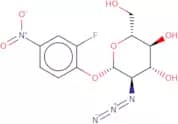
CAS:2-Fluoro-4-nitrophenyl 2-azido-2-deoxy-b-D-galactopyranoside is a synthetic glycosylation agent that has been used in the synthesis of oligosaccharides and polysaccharides. This reagent is also used for click modification, which is a chemical reaction that produces an azide group on the saccharide. Click modification can be used to modify complex carbohydrates with fluorine or methyl groups. 2-Fluoro-4-nitrophenyl 2-azido-2-deoxy-b-D galactopyranoside has a CAS number of 2088233–73–0.Formula:C12H13FN4O7Purity:Min. 95%Color and Shape:Off-White To Yellow SolidMolecular weight:344.25 g/mol2,3-Anhydro-3,4-O-ispropylidene-7-O-triphenylmethyl-D-glycero-D-altro-heptonic acid diethylamide
2,3-Anhydro-3,4-O-ispropylidene-7-O-triphenylmethyl-D-glycero-D-altroheptonic acid diethylamide is a custom synthesis that has been modified by fluorination and methylation. The compound is a monosaccharide with an Oligosaccharide chain. It is a synthetic molecule that can be found in the CAS No. 899072. This compound is a saccharide and a carbohydrate. It is complex carbohydrate that consists of glucose and galactose units.Purity:Min. 95%GD1a-Ganglioside
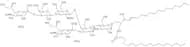
CAS:GD1a ganglioside is one of the major gangliosides in neuronal and glial membranes. It has a core tetrasaccharide structure (Galβ1,3GalNAcβ1,4Galβ1,4Glc) with sialic acids linked α2,3/α2,8 to the inner galactose residue, α2,3 to the outer galactose residue, and ceramide linked β to position 1 on the reducing terminal glucose residue (Ledeen, 2009). GD1a ganglioside interacts with myelin-associated glycoprotein (MAG) and is essential for long-term axon-myelin stability. GD1a ganglioside plays a role in viral infection as it is a receptor for viral glycoproteins in rotavirus and paramyxovirus 1. The hexasaccharide GD1a moiety was also found on a glycoprotein that acts as a receptor for adenovirus type 37. GD1a ganglioside also interacts with botulinum neurotoxin (BoNT) and is crucial for its entry into cells (Kolter, 2012). The functional significance of ammonia in the brain is not fully understood see: (Modi, 1994).Formula:C84H148N4O39Purity:Min. 95%Color and Shape:PowderMolecular weight:1,838.08 g/molIsomaltopentaose
CAS:Produced from high maltose syrup by treatment with transglucosidase
Formula:C30H52O26Purity:Min. 95%Color and Shape:White PowderMolecular weight:828.7 g/mol2,3-Dimethyl-γ-cyclodextrin
This gamma-cyclodextrin (γ-CD) derivative is a modified cyclic oligosaccharide composed of eight glucose units, featuring a larger cavity size than α- and β-cyclodextrins. This structural characteristic allows γ-CDs to form inclusion complexes with a wider range of guest molecules, making it particularly versatile in various industries. In the food sector, it is used as a carrier and stabilizer for flavors, fat-soluble vitamins, and polyunsaturated fatty acids, protecting volatile compounds from evaporation. In pharmaceuticals, it enhances the solubility and bioavailability of poorly water-soluble drugs and, thanks to its larger ring size, allows for the encapsulation of larger molecules or even entire drug molecules. γ-CDs and derivatives are also used for environmental remediation and, in analytical chemistry, for the extraction and concentration of target substances.Formula:C64H112O40Purity:Min. 95%Molecular weight:1,521.55 g/molHyaluronate rhodamine - Molecular Weight - 250kDa
Hyaluronate Rhodamine is a synthetic, high-purity, fluorescent dye that can be used in the study of glycosylation and sugar modifications. It is a carbohydrate modified by methylation and fluorination. Hyaluronate Rhodamine has a molecular weight of 250kDa. The sugar component of the molecule is composed of an oligosaccharide with a saccharide repeat unit of 1-3 linked to a polysaccharide chain, which has been modified by methylation and glycosylation.Purity:Min. 95%Methyl 2,3,4-tri-O-benzyl-6-O-trityl-a-D-mannopyranoside
CAS:Methyl 2,3,4-tri-O-benzyl-6-O-trityl-a-D-mannopyranoside is a complex carbohydrate that contains a glycosylation site. This compound has a CAS number of 40653-13-2, and is available for custom synthesis. Methyl 2,3,4-tri-O-benzyl-6-O-trityl-aD mannopyranoside is water soluble and has high purity. The chemical structure of this compound can be modified to include fluorination or Click modification. This compound is also an oligosaccharide containing sugar residues and monosaccharides with a molecular weight of approximately 1000 Da.Formula:C47H46O6Purity:Min. 95%Molecular weight:706.89 g/mol3,4,6-Tri-O-acetyl-2-O-trifluoromethanesulfonyl-b-D-mannopyranosyl azide
CAS:3,4,6-Tri-O-acetyl-2-O-trifluoromethanesulfonyl-b-D-mannopyranosyl azide is a chemically synthesized compound that can be used for methylation reactions. It is an Oligosaccharide with a molecular weight of 597.5 and contains the following structural features: A saccharide composed of three monosaccharides (D-glucose, D-mannose, and D-galactose), which is bonded by alpha 1,6 linkages. The chemical formula is C12H14F3N3O8. The CAS number is 1159265-99-2.Formula:C13H16F3N3O10SPurity:Min. 95%Color and Shape:PowderMolecular weight:463.34 g/mol2-Acetamido-1,2-dideoxy-galactonojirimycin
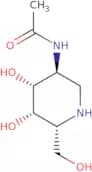
CAS:2-Acetamido-1,2-dideoxy-galactonojirimycin is a microbial infection drug that belongs to the class of chemical species. It has been shown to be a potent inhibitor of sodium carbonate (NaCO) and can be used as a control in analytical studies. This drug also inhibits vasoactive intestinal peptide, which may lead to the development of cancer. 2-Acetamido-1,2-dideoxy-galactonojirimycin is an acyl chain with galacturonic acid and can be used as diagnostic agents for human serum and hepatic steatosis. It has been shown to have anti-inflammatory properties that are useful for the treatment of autoimmune diseases.Formula:C8H16N2O4Purity:Min. 95%Color and Shape:PowderMolecular weight:204.22 g/mol5-Deoxy-L-ribose
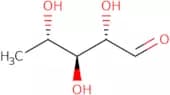
CAS:5-Deoxy-L-ribose is found in a variety of organisms, including humans. It is stereoselective, with the (-) form being more common than the (+) form. 5-Deoxy-L-ribose is synthesized by the glycosidic bond between l-arabinose and D-ribose. This compound is an inexpensive way to produce 5-deoxy analogs of other sugars, such as glucose, fructose, and mannose. The biosynthesis of 5-deoxy-L-ribose relies on a molybdenum cofactor and involves oxidation of L-arabinonate by aldehyde oxidase to give L-xylulose. Lactate dehydrogenase converts this into D-xylulose. Dihydroorotate reductase then reduces this to give D-(+)-5--deoxy--D--erythro--pentitol phosphate, which cyclFormula:C5H10O4Purity:Min. 95%Color and Shape:Slightly Yellow Clear LiquidMolecular weight:134.13 g/mol2, 4- Anhydro-5-O-benzyl- 6- deoxy- L- mannonic acid methyl ester
2, 4-Anhydro-5-O-benzyl-6-deoxy-L-mannonic acid methyl ester is a synthetic oligosaccharide that can be used as a fluorinated carbohydrate. It is modified by the addition of methyl groups to the hydroxyl group of an anhydro sugar moiety. It can be used in various applications such as glycosylation and click chemistry. 2, 4-Anhydro-5-O-benzyl-6-deoxy--L--mannonic acid methyl ester has CAS number 167801–91–9 and molecular weight of 538.4 g/mol. It is soluble in water and ethanol.Purity:Min. 95%N- [(Phenylmethoxy) carbonyl] glycylglycyl- 2- amino- 2- deoxy-a- D- manno- 2- heptulofuranosonic acid methyl ester
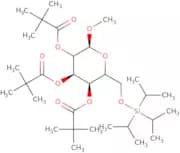
CAS:N- [(Phenylmethoxy) carbonyl] glycylglycyl- 2- amino- 2- deoxy-a- D- manno- 2- heptulofuranosonic acid methyl ester is a custom synthesis of an oligosaccharide, polysaccharide, and a complex carbohydrate. It is modified with methylation, glycosylation, and click modification. The CAS number for this compound is 161086-37-9. This product is highly pure, fluorinated, and synthetic.Purity:Min. 95%Methyl 2,3,4-tri-O-pivaloyl-6-O-triisopropylsilyl-a-D-mannopyranoside
Methyl 2,3,4-tri-O-pivaloyl-6-O-triisopropylsilyl-a-D-mannopyranoside is a custom synthesis of an oligosaccharide with high purity. It is a complex carbohydrate that has been modified to have fluorination. The modification of the saccharide was done by Click chemistry, which is a type of radical reaction. Methyl 2,3,4-tri-O-pivaloyl-6-O-triisopropylsilyl-a-D-mannopyranoside is a monosaccharides and sugar that has been synthesized.Formula:C31H58O9SiPurity:Min. 95%Molecular weight:602.89 g/mol1,2-O-Cyclohexylidene-a-D-glucofuranose
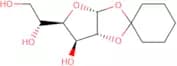
CAS:1,2-O-Cyclohexylidene-a-D-glucofuranose is a fluorinated cyclic monosaccharide. It is a synthetic oligosaccharide that belongs to the class of complex carbohydrates. This product has been modified by glycosylation, methylation, and click chemistry. The chemical name for this compound is 1,2:6,7-di-O-isopropylidene-α-D-glucofuranose. This product has not been evaluated by the U.S. Food and Drug Administration (FDA) so it should be used in laboratory research only.Formula:C12H20O6Purity:Min. 95%Color and Shape:PowderMolecular weight:260.28 g/molMucic acid
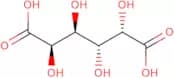
CAS:Mucic acid is a metal chelate that stimulates the metabolism of carbohydrates, fats and proteins. It also plays a role in the production of energy in the body. Mucic acid has been shown to have a protective effect against infectious diseases, as it activates toll-like receptor 2 (TLR2) and TLR4, which are molecules involved in innate immunity. Mucic acid has been shown to protect against influenza virus infection by increasing the expression of interferon-gamma (IFN-γ) and IL-12, which are cytokines that inhibit viral replication. Mucic acid can be used as a fluorescence probe for detection of polymorphonuclear leucocytes in blood samples.Formula:C6H10O8Purity:Min. 95%Color and Shape:White PowderMolecular weight:210.14 g/moln-Octyl β-D-maltoside
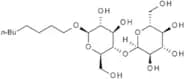
CAS:n-Octyl β-D-maltoside (OBM) is a fatty acid that is used as a sample preparation agent. OBM is chemically stable and has been shown to be non-carcinogenic in mammalian tissue. The structural analysis of OBM revealed that the molecule contains two nitrogen atoms, one on each end. In addition, OBM binds to antimicrobial peptides and inhibits their activity by preventing them from binding to their target site on the bacterial membrane. OBM also has anti-cancer properties due to its ability to prevent the proliferation of cervical cancer cells.Formula:C20H38O11Purity:Min. 98 Area-%Color and Shape:White PowderMolecular weight:454.51 g/molMethyl 2,3,4-tri-O-acetyl-b-D-glucopyranuronosyl azide
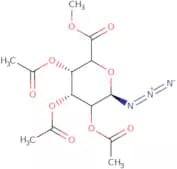
CAS:Methyl 2,3,4-tri-O-acetyl-b-D-glucopyranuronosyl azide is a fluorinated carbohydrate. It is a monosaccharide and an oligosaccharide that is synthesized from a synthetic glycosylation reaction. This product can be used in the production of polysaccharides or as a click modification to modify the sugar moiety of other molecules. Methyl 2,3,4-tri-O-acetyl-b-D-glucopyranuronosyl azide has CAS No. 67776-38-9 and is available in high purity.Formula:C13H17N3O9Purity:(%) Min. 98%Color and Shape:White PowderMolecular weight:359.29 g/molUDP-N-acetyl-D-mannosaminuronic acid
CAS:UDP-N-acetyl-D-mannosaminuronic acid is a monosaccharide that is synthesized from UDP and N-acetyl-D-mannosamine. It is an important precursor for the synthesis of glycoproteins, lipopolysaccharides, and proteoglycans in bacteria. Mutants have been identified in Escherichia coli and Staphylococcus aureus that lack the enzyme UDP-N-acetylglucosamine 2’:3’ phosphotransferase, which is required for the biosynthesis of UDP-N-acetylglucosamine. The enzyme responsible for this reaction is acetamidase/uridine diphosphate mannosyltransferase. This enzyme catalyzes the transfer of mannose from uridine diphosphate (UDP) to N acetylglucosamine to form UDP N acetyl D mannosaminuronic acidFormula:C17H25N3O18P2Purity:Min. 95%Molecular weight:621.3 g/molNA2 N-Glycan
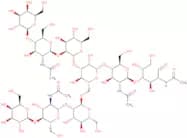
CAS:NA2 is a glycan that is a specific antigen binding molecule. It binds to the CD20 receptor on the surface of human B lymphocytes, which are involved in the development of cancer and inflammatory diseases. NA2 can be used for the treatment of these diseases, as well as cancers that express CD20 receptors. NA2 is generated from endogenous molecules that have been modified by introducing galactose into the carbohydrate backbone. These molecules also form a linker with bendamustine, which is an anticancer drug.Formula:C62H104N4O46Purity:Min. 90%Color and Shape:PowderMolecular weight:1,641.49 g/mol1,2-a-1,2-a-D-Mannotriose 1-O-propylamine acetate salt
1,2-a-1,2-a-D-Mannotriose 1-O-propylamine acetate salt is a synthetic oligosaccharide.
Formula:C23H43O18NPurity:Min. 95%Molecular weight:621.58 g/molDecyl b-D-glucopyranoside
CAS:Decyl b-D-glucopyranoside is a cationic surfactant, which inhibits bacterial growth by disrupting the lipid bilayer of the cell membrane. It has been used as an antimicrobial agent in the treatment of autoimmune diseases and as a preservative in cosmetics. Decyl b-D-glucopyranoside has also been shown to be effective against citric acid and sodium citrate, two common components of biofilm formation. Decyl b-D-glucopyranoside has chemical stability in both acidic and alkaline environments and is not affected by pH levels. It is also a fatty acid with a hydroxyl group and an ethylene diamine side chain.Formula:C16H32O6Purity:Min. 90 Area-%Color and Shape:White PowderMolecular weight:320.42 g/mol6-Deoxy-γ-cyclodextrin
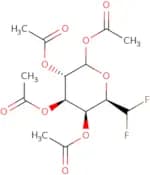
This gamma-cyclodextrin (γ-CD) derivative is a modified cyclic oligosaccharide composed of eight glucose units, featuring a larger cavity size than α- and β-cyclodextrins. This structural characteristic allows γ-CDs to form inclusion complexes with a wider range of guest molecules, making it particularly versatile in various industries. In the food sector, it is used as a carrier and stabilizer for flavors, fat-soluble vitamins, and polyunsaturated fatty acids, protecting volatile compounds from evaporation. In pharmaceuticals, it enhances the solubility and bioavailability of poorly water-soluble drugs and, thanks to its larger ring size, allows for the encapsulation of larger molecules or even entire drug molecules. γ-CDs and derivatives are also used for environmental remediation and, in analytical chemistry, for the extraction and concentration of target substances.Formula:C48H80O32Purity:Min. 95%Molecular weight:1,169.13 g/mol1,2,3,4-Tetra-O-acetyl-6-deoxy-6,6-difluoro-L-galactose
CAS:fucosylation inhibitor
Formula:C14H18F2O9Molecular weight:368.28 g/molThiamet G
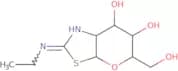
CAS:Inhibits β-N-acetylglucosaminidase, also known as O-GlcNAcase (OGA), which cleaves the O-linked glycans from glycoproteins. Interferes with O-GlcNAc cycling and leads to the accumulation of O-GlcNAcylated proteins. Thiamet G elicits neuroprotective effects by modulating microglia/macrophages and inhibiting hyperphosphorylation of the microtubule-associated protein tau in models of stroke and Alzheimer’s disease. Thiamet G also has implications on diabetes and cardiovascular pathologies.Formula:C9H16N2O4SPurity:Min. 95%Color and Shape:PowderMolecular weight:248.3 g/molTizoxanide O-b-D-glucuronide sodium salt
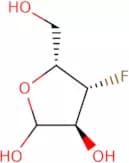
CAS:Tizoxanide O-b-D-glucuronide sodium salt is a synthetic glycosylate of tizoxanide, which is a sulfonamide antibacterial agent. The drug has broad-spectrum activity against Gram-positive and Gram-negative bacteria as well as anaerobic bacteria. Tizoxanide O-b-D-glucuronide sodium salt is also effective against mycoplasma, chlamydia, and rickettsia. This compound can be formulated in the form of a sterile powder for intravenous injection or oral administration. It is used to treat infections caused by bacteria that are resistant to other antibiotic drugs. Tizoxanide O-b-D-glucuronide sodium salt has an excellent safety profile in humans with no significant side effects reported.Formula:C16H14N3NaO10SPurity:Min. 95%Color and Shape:PowderMolecular weight:463.35 g/mol3-Deoxy-3-fluoro-D-xylofuranose, Aqueous solution
CAS:3-Deoxy-3-fluoro-D-xylofuranose - Aqueous solution is a substrate for the enzyme glucose isomerase. This enzyme catalyses the isomerisation of 3-deoxy-3-fluoro-D-xylofuranose to D-ribose in aqueous solution. The immobilised glucose isomerase can be used as an alternative to the free form, which has been shown to have low yields and high levels of product inhibition.Formula:C5H9FO4Purity:Min. 95%Color and Shape:Yellow PowderMolecular weight:152.12 g/mol3-O-Benzyl-1,2:5,6-di-O-isopropylidene-D-allofuranose
3-O-Benzyl-1,2:5,6-di-O-isopropylidene-D-allofuranose is a modification of the carbohydrate that is produced synthetically. It belongs to the group of modified carbohydrates and can be used as a monosaccharide or an oligosaccharide. 3-O-Benzyl-1,2:5,6-di-O-isopropylidene-D allofuranose has been shown to have high purity and can be methylated and glycosylated for custom synthesis. This compound has CAS number 93343-70-2.Purity:Min. 95%Cerebrosides - Mixture of hydroxy and non-hydroxy fatty acid
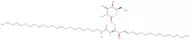
CAS:Cerebrosides are complex carbohydrates that are synthesized by the modification of glycosylations, methylations, or fluorination of sugar molecules. They are used in the synthesis of polysaccharides and as a substitute for natural glycosphingolipids. Cerebrosides are also known to be involved in the synthesis of neuronal lipids, such as myelin and phosphatidylserine.
Formula:C48H93NO9Purity:Min. 95%Color and Shape:PowderMolecular weight:828.25 g/molMethylanthranilate glucoside
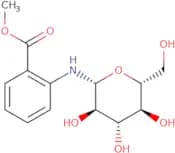
CAS:Methylanthranilate glucoside is a carbohydrate that is custom synthesized to order. It is a synthetic, high purity, methylated, glycosylated, and click-modified oligosaccharide. This product has CAS No. 1875079-80-3 and can be used in medical research for the identification of saccharides or glycans with a specific modification pattern.Formula:C14H19NO7Purity:Min. 95%Color and Shape:PowderMolecular weight:313.3 g/mol2,3,4,6-Tetra-O-benzyl-a-D-glucopyranosyl trichloroacetimidate
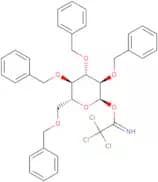
CAS:2,3,4,6-Tetra-O-benzyl-a-D-glucopyranosyl trichloroacetimidate is a supernucleophile that reacts with saccharides to form glycosides. It is a reactive compound that can be used in syntheses to create new disaccharides. 2,3,4,6-Tetra-O-benzyl-a-D-glucopyranosyl trichloroacetimidate was used in the synthesis of a glycoside analogue of glucopyranose. This compound has also been shown to react with imidates.
Formula:C36H36Cl3NO6Purity:Min. 95%Color and Shape:White PowderMolecular weight:685.03 g/mol6-O-Tert.butyldimethylsilyl - 2, 3- O- isopropylidene-L- gulonic acid γ-lactone
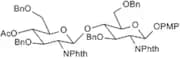
6-O-Tert.butyldimethylsilyl - 2, 3- O- isopropylidene-L- gulonic acid gamma-lactone is a glycosylate of 6-O-tert.butyl dimesitylglycolic acid. It is a monosaccharide with an α--glycosidic linkage that may be used in the synthesis of complex carbohydrates or as a sugar surrogate for saccharide chemistry applications. This product can be custom synthesized to your specifications and has high purity.Purity:Min. 95%4-Methoxyphenyl 4-O-(4-O-acetyl-3,6-di-O-benzyl-2-deoxy-2-phthalimido-b-D-glucopyranosyl)-3,6-di-O-benzyl-2-deoxy-2-phthalimido-b-D- glucopyranoside
CAS:4-Methoxyphenyl 4-O-(4-O-acetyl-3,6-di-O-benzyl-2-deoxy-2-phthalimido-b-D-glucopyranosyl)-3,6-di-O-benzyl -2,4,6-(1',4'-dioxan)-tris(2,3,5',6'-tetraethoxy)phenolFormula:C65H60N2O15Purity:Min. 95%Molecular weight:1,109.17 g/mol2,3,5-Tri-O-benzoyl-2- C- methyl- D- arabinonic acid γ-lactone
2,3,5-Tri-O-benzoyl-2- C- methyl- D- arabinonic acid gamma-lactone is a modification of an oligosaccharide. It is synthesized by the benzoylation of 2,3,5-trihydroxybenzoic acid with methyl iodide and sodium carbonate in acetic acid. The product is purified by recrystallization from methanol and water to yield a white crystalline solid. The chemical formula for 2,3,5-tri-O-benzoyl-2- C- methyl--D--arabinonic acid gamma lactone is C14H16O8. The molecular weight of the compound is 478.26 g/molPurity:Min. 95%Phenyl 3,6,2',3',4',6'-hexa-O-acetyl-2-deoxy-2-trichloroacetamido-b-D-thiolactoside
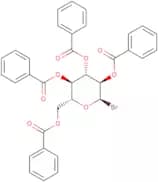
Phenyl 3,6,2',3',4',6'-hexa-O-acetyl-2-deoxy-2-trichloroacetamido-b-D-thiolactoside is a custom synthesis. It is an oligosaccharide and polysaccharide with a high purity and modification. This compound has a CAS No., and is an Oligosaccharide and Polysaccharide. Phenyl 3,6,2',3',4',6'-hexa-O-acetyl-2-deoxy-2-trichloroacetamido-b-D-thiolactoside is a sugar which is synthesized by Monosaccharides.Formula:C32H38Cl3NO16SPurity:Min. 95%Color and Shape:White to off-white solid.Molecular weight:831.07 g/mol2,3,4,6-Tetra-O-benzoyl-α-D-glucopyranosyl bromide
CAS:2,3,4,6-Tetra-O-benzoyl-α-D-glucopyranosyl bromide is a derivative of vitamin A. It has been used as a carbonate for the synthesis of retinol, tetrabenzoate and other related compounds. The compound is soluble in water and has shown growth promoting activity in studies with Salmonella typhimurium. 2,3,4,6-Tetra-O-benzoyl-α-D-glucopyranosyl bromide is metabolized to retinol by hydrolysis or oxidation. It can also be converted into tetrabenzoate by oxidation followed by reduction of the 4′ position hydroxyl group.Formula:C34H27BrO9Purity:Min. 95%Color and Shape:PowderMolecular weight:659.48 g/molα1,3-Galactobiosyl β-methyl glycoside
a1,3-Galactobiosyl b-methyl glycoside is a fluorinated saccharide that possesses the same chemical structure as N-acetylgalactosamine. It has been synthesized by click modification with methyl iodide and methyl bromoacetate. The synthesis of this compound was achieved by glycosylation of galactose with 1,3-diiodo-2,2'-bithiopropane followed by methylation of the resulting glycosylation product with methyl bromoacetate to form the desired compound. This carbohydrate can be used in a variety of applications including anti-inflammatory drugs, antibiotics, and cancer treatments.Formula:C13H24O11Purity:Min. 95%Color and Shape:White/Off-White SolidMolecular weight:356.32 g/mol
![(3R, 4S, 5R, 6R, 7S) -1- Azabicyclo[4.2.0] octane- 3, 4, 5, 7- tetrol](/_next/image/?url=https%3A%2Fstatic.cymitquimica.com%2Fproducts%2F3D%2Fthumb-webp%2FMA163391.webp&w=3840&q=75)






![N- [(Phenylmethoxy) carbonyl] glycylglycyl- 2- amino- 2- deoxy-a- D- manno- 2- heptulofuranosonic …](/_next/image/?url=https%3A%2Fstatic.cymitquimica.com%2Fproducts%2F3D%2Fthumb-webp%2FMP163942.webp&w=3840&q=75)