Glycoscience
Subcategories of "Glycoscience"
- Aminosugars(108 products)
- Glyco-Related Antibodies(283 products)
- Glycolipids(46 products)
- Glycosaminoglycans (GAGs)(55 products)
- Glycosides(419 products)
- Monosaccharides(6,617 products)
- Oligosaccharides(3,715 products)
- Polysaccharides(505 products)
Found 11023 products of "Glycoscience"
2-O-Hydroxyethyl-D-glucose
CAS:2-O-Hydroxyethyl-D-glucose is a synthesised compound that has been glycosidically linked to the glucoside. This compound is an intramolecular glucoside with a bicyclic structure. It can be used in the synthesis of other compounds, such as 3-o-hydroxypropyl-D-glucose, which has been shown to have anti-inflammatory effects.Formula:C8H16O7Purity:Min. 95%Color and Shape:PowderMolecular weight:224.21 g/mol2,5-Anhydro-4,6-di-O-benzoyl-D-glucitol
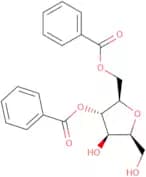
CAS:2,5-Anhydro-4,6-di-O-benzoyl-D-glucitol is a nucleoside analog that has been shown to inhibit the growth of Mycobacterium tuberculosis and other bacterial strains. It inhibits DNA synthesis by binding to the thymine moiety in the helix, which blocks access of thymine to the enzyme DNA polymerase. 2,5-Anhydro-4,6-di-O-benzoyl-D-glucitol also inhibits RNA synthesis by binding to the ribose moiety in nucleotides and blocking access of ribose to enzymes involved in the process. This compound is used as an immunosuppressant for organ transplantation in humans.Formula:C20H20O7Purity:Min. 95%Molecular weight:372.38 g/mol3,4-Di-O-methyl-D-glucose
CAS:3,4-Di-O-methyl-D-glucose is a partially protected glucose .It is found in the exudates of certain plants.Formula:C8H16O6Purity:Min. 95%Color and Shape:PowderMolecular weight:208.21 g/mol3,6-Dideoxy-D-arabino-hexose
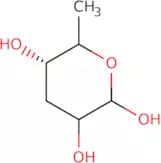
CAS:3,6-Dideoxy-D-arabino-hexose is a sugar that is found in bacterial cell walls. It is made up of three components: 3,6-dideoxy-D-glycero-hexose and two fatty acids. The chemical structure of 3,6-dideoxy-D-arabino-hexose has been determined by chemical synthesis and spectroscopic analysis. This sugar residue is also used in the biosynthesis of the lipid A antigen found on gram negative bacteria.Formula:C6H12O4Purity:Min. 95 Area-%Color and Shape:PowderMolecular weight:148.16 g/molFucoidan - Sargassum
CAS:A fucan sulphate found in brown marine algae (Phaeophyta-typically Fucus vesiculotus, Sargassum (illustrated), Alaria and Cladosiphon) and has been shown to have anticoagulant activity. The main constituents are α-1,4 and α-1,2 linked L-fucose sulphates although galactose and L-fucose are also present, our product contains approximately 20% L-fucose, and there are many variations of the basic structure found in different species of Phaeophyta. The image was kindly provided by Prof Mike Guiry from Cork who runs ‘The Seaweed Site’.Purity:Min. 95%Color and Shape:PowderDermatan sulphate decasaccharide ammonium salt
Dermatan sulphate decasaccharide ammonium salt is a synthetic, high purity, complex carbohydrate. The CAS number for this product is 543-58-2. Dermatan sulfate decasaccharide ammonium salt is a complex carbohydrate that has been modified with a fluorine atom at the C1 position of the glucose monosaccharide and an acetyl group at the C4 position of the glucuronic acid monosaccharide. Click chemistry was used to introduce these modifications on the sugar molecule and it has been found to be stable in both acidic and alkaline conditions. This product can be customized for your specific needs, including fluorination, methylation, or glycosylation at any position.Purity:Min. 95%2-C-Methyl- D- xylonic acid g- lactone
2-C-Methyl- D- xylonic acid g- lactone is a monosaccharide that can be used in the synthesis of oligosaccharides and complex carbohydrates. This compound is a fluorinated carbohydrate, which has been modified to include a methyl group at the C2 position. The chemical name for this compound is 2-C-Methyl-D-xylonic acid g-lactone and it has CAS No. 4983-92-1. This compound can be synthesized as a custom order and its purity exceeds 99%. Its synthesis can involve glycosylation or methylation, depending on the desired product.
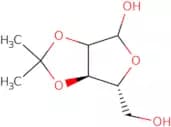
Purity:Min. 95%2,3-O-Isopropylidene-D-lyxofuranose
CAS:2,3-O-Isopropylidene-D-lyxofuranose is a synthetic disaccharide that is used as an antiinflammatory agent. It has been shown to inhibit the production of e-selectin, a protein that mediates inflammation by binding to cells in the vicinity of the site of injury. This compound has also been shown to inhibit diacetate formation from oxocarbenium ions and glycosidic linkage formation. 2,3-O-Isopropylidene-D-lyxofuranose may be synthesized via a Wittig reaction with phytosphingosine or wittig reaction with acetone.Formula:C8H14O5Purity:Min. 98 Area-%Color and Shape:White PowderMolecular weight:190.19 g/molEthyl 2,3,4-tri-O-acetyl-b-L-thiofucopyranoside
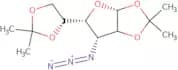
CAS:Ethyl 2,3,4-tri-O-acetyl-b-L-thiofucopyranoside is a modified form of the sugar fucose. It is used as an intermediate in the synthesis of polysaccharides. Ethyl 2,3,4-tri-O-acetyl-b-L-thiofucopyranoside is used in the synthesis of oligosaccharides and polysaccharides by methylation and click modification reactions. This compound has CAS number 127501-41-1 and can be found with a purity of >99%.Formula:C14H22O7SPurity:Min. 98 Area-%Color and Shape:White PowderMolecular weight:334.39 g/mol3-Azido-3-deoxy-1,2:5,6-di-O-isopropylidene-α-D-galactofuranose
CAS:3-Azido-3-deoxy-1,2:5,6-di-O-isopropylidene-a-D-galactofuranose is a synthetic sugar that can be used as a monosaccharide or oligosaccharide. It is a complex carbohydrate that can be modified with methylation, fluorination, and click chemistry. 3-Azido-3-deoxy-1,2:5,6-di-O-isopropylidene-a-D galactofuranose is an important compound in carbohydrate chemistry due to its ability to undergo glycosylation reactions. The chemical properties of 3ADGFP are comparable to those of other monosaccharides and carbohydrates.Formula:C12H19N3O5Purity:Min. 95%Color and Shape:Solidifying oil.Molecular weight:285.3 g/molD-Glucarate monopotassium
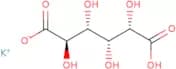
CAS:D-Glucarate monopotassium is a pharmaceutical preparation that is used to inhibit the growth of bacteria. It inhibits the proliferation of cells by inhibiting fatty acid synthesis, which leads to decreased levels of cholesterol, and reduces the uptake of glucose. D-Glucarate monopotassium is also an oxidizing agent that converts uridine into uric acid and has been shown to have inhibitory properties against human cancer cells. D-Glucarate monopotassium can be used as an antioxidant for the prevention or treatment of chronic diseases such as atherosclerosis, diabetes, and cancer. This compound acts as an inhibitor for trypsin treatment on carbohydrates, preventing hydrolysis by this enzyme.
Formula:C6H9O8·KPurity:Min. 95%Color and Shape:PowderMolecular weight:248.23 g/mol2-Deoxy-L-fucose
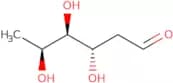
CAS:2-Deoxy-L-fucose is a sugar that is found in the human body. It has been shown to have anti-tumour properties and can be used as a chemotherapeutic agent in the treatment of solid tumours. 2DFL binds to the receptor for fucose, which is expressed in many types of cancer cells. It also inhibits DNA synthesis by stabilizing a complex between the sugar and dna template, inhibiting the binding of monoclonal antibodies to cancer cells, and preventing glycosidic bond formation on cancer cells. 2DFL has also been shown to inhibit microbial biotransformation and cell culture.
Formula:C6H12O4Purity:Min. 95%Color and Shape:PowderMolecular weight:148.16 g/molChitosan oligomer (Dp 12-20)
Chitosan oligomer (Dp 12-20) is a modification of chitin, a polysaccharide. It can be synthesized by treating chitin with sodium hydroxide in an alkaline environment. Chitosan oligomer (Dp 12-20) has a high degree of saccharide modification and exhibits a variety of functions, including complex carbohydrate, custom synthesis, synthetic, high purity, CAS No., and monosaccharide methylation. This compound has been shown to inhibit the growth of bacteria such as Staphylococcus aureus and Clostridium perfringens.Formula:(C6H11NO4)nColor and Shape:Beige PowderBenzyl D-glucuronate
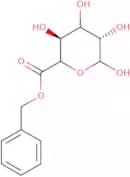
CAS:Used for the synthesis of 1β-O-acyl glucuronidesFormula:C13H16O7Purity:Min. 95%Color and Shape:White PowderMolecular weight:284.26 g/molPerseitol
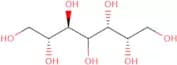
CAS:Perseitol is a nutrient solution that contains fatty acids and is used in tissue culture to supplement the growth of cells. It can be used as a substitute for animal serum, which is usually derived from bovine or porcine sources. Perseitol provides all essential components required for cell growth, including amino acids, vitamins, minerals, and lipids. Perseitol is also used in vitro assay systems to determine the redox potential of substances. This solution has been shown to have anti-inflammatory properties due to its ability to inhibit prostaglandin synthesis.Formula:C7H16O7Purity:Min. 95%Color and Shape:White Off-White PowderMolecular weight:212.2 g/mol4,6-O-(4-Methoxybenzylidene)-1,2,3-tri-O-pivaloyl-b-D-galactopyranose
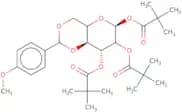
4,6-O-(4-Methoxybenzylidene)-1,2,3-tri-O-pivaloyl-b-D-galactopyranose is a custom synthesis of a complex carbohydrate. It is an oligosaccharide that has been modified with methylation and glycosylation. The CAS number for this compound is 123097-29-2. This compound has a high purity and has been fluorinated with the click reaction. It is a synthetic sugar that is also a polysaccharide.Formula:C29H42O10Purity:Min. 95%Molecular weight:550.65 g/molSucrose octasulfate triethylammonium salt
CAS:This compound is generally known as sucralfate and is a medication for the treatment of active duodenal ulcers. It is also used for the treatment of gastroesophageal reflux disease (GERD) and stress ulcers. Sucralfate is a sucrose sulfate-aluminium complex that binds to the ulcer, creating a physical barrier that protects the gastrointestinal tract from stomach acid and prevents the degradation of mucus. It also promotes bicarbonate production and acts like an acid buffer with cytoprotective properties.Formula:C12H22O35S8•(C6H15N)xPurity:Min. 95%Color and Shape:White Off-White PowderMolecular weight:982.81 g/molmeso-Erythritol
CAS:Natural sweetener; vasodilatorFormula:C4H10O4Purity:Min. 98 Area-%Color and Shape:White PowderMolecular weight:122.12 g/mol1-O-(trans-3-Hydroxycotinine)-b-D-glucuronide ammonium salt
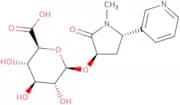
CAS:The glucuronidation of 1-O-(trans-3-hydroxycotinine)-b-D-glucuronide ammonium salt is mediated by the enzyme UDP-glucuronosyltransferase. This reaction is catalyzed by the transfer of a glucuronic acid residue from UDP-glucuronic acid to a hydroxyl group on the side chain of 1-O-(trans-3-hydroxycotinine)-b-D-glucuronide ammonium salt. The kinetic analysis of human urine samples has shown that this reaction is significant. This metabolite can be detected in urine samples using next generation sequencing and its concentration can be used as an indicator for the consumption of tobacco or nicotine containing products. Epidemiological studies have shown that this metabolite has significant effects on cancer risk. Genotyping and genotype studies have shown that this metabolite is responsible for genetic polymorphisms that are associated with increased cancer risk.
Formula:C16H20N2O8•(NH3)xPurity:Min. 97%Color and Shape:White PowderMolecular weight:368.34 g/molL-Glucose
CAS:L-glucose is a monosaccharide that is an important source of energy for the human body. The glucose molecule consists of 6 carbon atoms, 12 hydrogen atoms and 6 oxygen atoms. Glucose enters cells with the help of insulin and ATP-sensitive potassium channels. It has been shown that L-glucose can inhibit viral replication in vitro, such as HIV and herpes simplex virus type 1 (HSV-1). L-Glucose may be used to treat squamous carcinoma by reducing the redox potential in cancer cells. L-Glucose inhibits the growth of c. glabrata by inhibiting transcription activators and enzymes involved in glycolysis. L-Glucose also has hypoglycemic effects on humans by reducing cortisol concentrations in human serum.Formula:C6H12O6Purity:Min. 98 Area-%Color and Shape:White Clear LiquidMolecular weight:180.16 g/molGlycogen - from bovine liver
CAS:Glycogen is a highly branched polysaccharide of glucose that serves as a form of energy storage in animals and fungi. It is the main storage form of glucose in the body. In humans, glycogen is made and stored primarily in liver and muscle cells and functions as the second most important energy storage molecule to fat which is held in adipose tissue. Glycogen is analogous to starch and has a structure similar to amylopectin, but is more extensively branched and compact than starch. It occurs as granules in the cytosol/cytoplasm in many cell types, and plays an important role in the glucose cycle.Formula:(C6H10O5)nPurity:Min. 95%Color and Shape:PowderMolecular weight:162.05282Glycyl-asialo, galactosylated biantennary
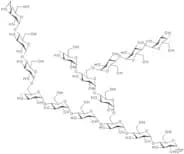
Glycyl-asialo, galactosylated biantennary is a high purity custom synthesis of sugar. Glycyl-asialo, galactosylated biantennary is custom synthesized by the click modification of glycosylation and fluorination with methylation and modification. The CAS number for glycyl-asialo, galactosylated biantennary is **********.Formula:C64H108N6O46Purity:Min. 95%Molecular weight:1,697.56 g/molSalicylic acid 2-O-β-D-glucoside
CAS:Predominant glycosylated metabolite of Salicylic AcidFormula:C13H16O8Purity:Min. 95%Color and Shape:PowderMolecular weight:300.26 g/molUDP-3-O-(R-3-hydroxymyristoyl)-GlcNAc disodium
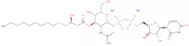
Substrate for UDP-3-O-acyl-N-acetylglucosamine deacetylase (LpxC)
Formula:C31H53N3O19P2•Na2Purity:Min. 95%Color and Shape:White PowderMolecular weight:879.67 g/molD-Glucosamine-2-N, 3-O, 6-O-trisulfate sodium salt
D-Glucosamine-2-N, 3-O, 6-O-trisulfate sodium salt is a high purity oligosaccharide that can be custom synthesized. This product is composed of sugar, Click modification, fluorination, glycosylation, and methylation. It has CAS No. and Oligosaccharide. This product is used in the production of complex carbohydrates due to its saccharide composition.Formula:C6H10NNa3O14S3Purity:Min. 95%Color and Shape:White/Off-White SolidMolecular weight:485.31 g/mol2,3,5-Tri-O-benzyl-D-ribofuranose
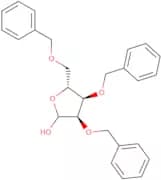
CAS:2,3,5-Tri-O-benzyl-D-ribofuranose is a carbohydrate that can be synthesized through an efficient method. It is a glycoside with an oxotitanium (oxo) group. The synthesis of this compound requires magnesium as the activating agent and o-glycosylation. The glycoconjugates of this compound are found in organisms such as fungi, yeast, and bacteria. In addition to its carbohydrate function, 2,3,5-Tri-O-benzyl-D-ribofuranose has been shown to have antimicrobial properties. This sugar has also been shown to have antiviral properties due to its ability to inhibit the enzyme ribonucleotide reductase (RNR).Formula:C26H28O5Purity:Min. 95%Color and Shape:White PowderMolecular weight:420.5 g/mol6-Bromo-6-deoxy-D-glucose
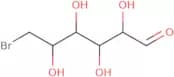
CAS:6-Bromo-6-deoxy-D-glucose is a sugar that is used to study the function of glucose transporters in cellular membranes. This compound has been shown to be a substrate for glucose transporters, where it binds in a nucleophilic manner. 6-Bromo-6-deoxy-D-glucose has been used as an inhibitor of glucose transport and as an x-ray crystal structure model for studying the binding mechanism of glucose transporters. 6-Bromo-6-deoxy-D-glucose has also been used to study the reaction system between glucose and sodium hydrogen carbonate, which is important for understanding how cells regulate blood sugar levels.Formula:C6H11BrO5Purity:Min. 95%Color and Shape:White PowderMolecular weight:243.05 g/mol4-Bromophenyl 2-acetamido-3,4,6-tri-O-acetyl-2-deoxy-β-D-glucopyranoside
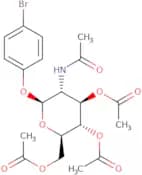
CAS:4-Bromophenyl 2-acetamido-3,4,6-tri-O-acetyl-2-deoxy-b-D-glucopyranoside is a custom synthesis product. It has been modified with fluorination, methylation and click modification. This product is an oligosaccharide which can be used for saccharide or polysaccharide synthesis. The purity of this product is high and it has been synthesized from a monosaccharide.Formula:C20H24BrNO9Purity:Min. 95%Molecular weight:502.31 g/mol2,6-Dimethyl-a-cyclodextrin >70%
CAS:Alpha-cyclodextrin (α-CD) derivative with a hydrophilic exterior and lipophilic cavity (smaller than β-CDs and γ-CDs) to allocate certain guest molecules. This structural characteristic enables applications in molecular encapsulation, solubility enhancement, and stabilization across multiple industries. In pharmaceuticals, it serves as a drug delivery vehicle, enhancing the bioavailability and stability of active ingredients. The food industry utilizes it as a stabilizer for flavors, colors, and nutrients, as well as a functional ingredient for its effects on lipid metabolism. In cosmetics, it acts as a complex agent for fragrances and active components. Its applications extend to analytical chemistry for chiral separation and to materials science for developing smart materials and nanosystems.Formula:C48H84O30Purity:Min. 95%Color and Shape:PowderMolecular weight:1,141.16 g/molD-myo-Inositol-1,3,5-triphosphate sodium salt
D-myo-Inositol-1,3,5-triphosphate sodium salt is a Glycosylation, complex carbohydrate. It can be Methylated, Click modified, Polysaccharide, Fluorinated and Saccharide. D-myo-Inositol-1,3,5-triphosphate sodium salt can be Modified by Modification and Sugar. D-myo-Inositol-1,3,5-triphosphate sodium salt is Synthetic. It has CAS No. and Monosaccharide Custom synthesis. D-myo-Inositol-1,3,5-triphosphate sodium salt is High purity.Formula:C6H12O15P3·xNaPurity:Min. 95%Molecular weight:417.07 g/mol4-O-(2,3,4,6-Tetra-O-acetyl-b-D-glucopyranosyl)-1,2,3,6-tetra-O-acetyl-b-D-thioglucopyranose
CAS:4-O-(2,3,4,6-Tetra-O-acetyl-b-D-glucopyranosyl)-1,2,3,6-tetra-O-acetyl-b-D-thioglucopyranose is a glycosylated saccharide that belongs to the group of complex carbohydrates. The glycosylation of 4-O-(2,3,4,6,-Tetra-O-acetyl b -D -glucopyranosyl)-1,2,3,6,-tetra -O -acetyl b -D -thioglucopyranose is achieved by the enzymatic reaction of an acetate donor and an acceptor molecule in the presence of glucose 1 phosphate (G1P) and UDP sugar pyrophosphorylase. It has been modified by methylation with dimethyl sulphate in the presence ofFormula:C28H38O18SPurity:Min. 95%Molecular weight:694.66 g/molPeptidoglycan - from Staphylococcus aureus
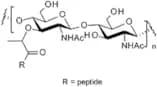
CAS:The sugar component consists of alternating residues of β-(1,4) linked N-acetylglucosamine and N-acetylmuramic acid. A peptide chain of three to five amino acids is attached to the N-acetylmuramic acid. The peptide chain can be cross-linked to the peptide chain of another strand forming the 3D mesh-like layer.Color and Shape:Powder1-O-Methyl-α-D-mannopyranoside
CAS:Methyl alpha-D-mannopyranoside is a methylated sugar used as an inhibitor of lectin-conjugate binding. It is commonly used in protein purification for eluting glycoproteins and other glycoconjugates from affinity chromatography columns of agarose lectin. In addition, Methyl alpha-D-mannopyranoside can be used in the mannosylation of lipid nanoparticles (LNPs) for vaccine or drug delivery which targets Antigen Presenting Cells (APCs) through mannose receptors. Methyl alpha-D-mannopyranoside is also known as Methyl alpha-D-mannoside or alpha-Methyl-D-mannoside.Formula:C7H14O6Purity:Min. 99.0 Area-%Molecular weight:194.18 g/molRef: 3D-M-4150
1kgTo inquire100gTo inquire250gTo inquire500gTo inquire2500gTo inquire-Unit-kgkgTo inquireGD1b-ganglioside sodium
CAS:GD1b (shown as sodium salt) is one of the major gangliosides in neuronal and glial membranes. It has a core tetrasaccharide structure (Galβ1,3GalNAcβ1,4Galβ1,4Glc) with itâs two sialic acids linked α2,3/α2,8 to the inner galactose residue and ceramide linked β to position 1 on the reducing terminal glucose residue (Ledeen, 2009). GD1b acts as a receptor for BK virus as well as for heat-labile LTII-a toxin, produced by enteropathogenicâ¯E. coli. GD1b ganglioside also interacts with tetanus neurotoxin (TeNT) and is crucial for its entry into cells (Kolter, 2012).Purity:Min. 95%Color and Shape:PowderHexa-guluronic acid sodium
CAS:Hexa-guluronic acid sodium salt (1,4-linked α-L-sodium guluronohexaose) is one of a number of oligosaccharides obtained from alginate which is a polysaccharide in brown seaweeds containing: blocks of repeating mannuronic acid sequences (M-M-M-M etc), repeating guluronic acid sequences (G-G-G-G etc), and alternating M-G-M-G sequences. This oligosaccharide can be released by acid hydrolysis (Shimokawa, 1996) and a number of biological activities have been discussed in a recent review (Xing, 2020).
Formula:C36H44O37Na6Purity:Min. 95%Color and Shape:White PowderMolecular weight:1,206.65 g/molOsmaronin
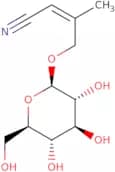
CAS:Leucine-âderived gamma-hydroxynitrile glucoside
Formula:C11H17NO6Purity:Min. 95%Molecular weight:259.26 g/molLactitol monohydrate
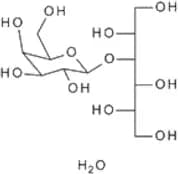
CAS:Lactitol is a sugar alcohol that is used in the food industry as a low-calorie sweetener and preservative. Lactitol has physiological effects such as increasing the glomerular filtration rate and decreasing serum cholesterol levels. It also inhibits inflammatory bowel disease by suppressing the production of proinflammatory cytokines, such as TNF-α, IL-1β, IL-6, and IL-8, which are associated with intestinal inflammation. Lactitol is used as an excipient for tablets or capsules to improve their dissolution properties and to provide bulk. Lactitol does not show any significant toxicity in animal studies and has been shown to be safe for human consumption at up to 15g/day.Formula:C12H24O11·H2OPurity:Min. 95%Color and Shape:White PowderMolecular weight:362.33 g/mol(2S, 3S, 4S) -3-Benzyloxy- 4- (hydroxymethyl) - 1- (phenylmethyl) -2- azetidinecarboxylic acid
2-Amino-3,4-dihydroxybenzoic acid is an organic compound. It is a white solid that is soluble in water and polar organic solvents. 2-Amino-3,4-dihydroxybenzoic acid is used as an anti-inflammatory agent and for the treatment of arthritis.
Purity:Min. 95%Methyl 2,3,4-tri-O-benzyl-b-D-glucopyranoside
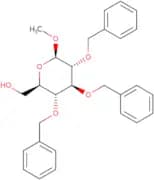
CAS:Methyl 2,3,4-tri-O-benzyl-β-D-glucopyranoside is a modified sugar. It can be used in the synthesis of oligosaccharides and polysaccharides. This product is stable to organic solvents and has high purity. Methyl 2,3,4-tri-O-benzyl-β-D-glucopyranoside can be fluorinated by reacting with hydrogen fluoride gas to produce methyl 2,3,4-[tri(trifluoromethyl)oxy]benzyl β D glucopyranoside. The product is also available in the form of click modification (a type of chemical modification). Methyl 2,3,4-tri-O-benzyl-β D glucopyranoside is a custom synthesis that is CAS No. 435680 3.
Formula:C28H32O6Purity:Min. 95%Molecular weight:464.55 g/mol2-O-(a-D-Galactopyranosyl)-b-D-fucopyranosyl propylamine
CAS:2-O-(a-D-Galactopyranosyl)-b-D-fucopyranosyl propylamine is a glycosylated synthetic compound with a molecular weight of 726.2. It is an excellent substrate for the glycosylation of proteins and nucleic acids, as well as an excellent candidate for Click modification, fluorination, saccharide modification and custom synthesis. 2-O-(a-D-Galactopyranosyl)-b-D-fucopyranosyl propylamine is a high purity product available in bulk quantities.Formula:C15H29NO10Purity:Min. 95%Molecular weight:383.39 g/mol2-Amino-1,6-anhydro-2-deoxy-β-D-glucopyranose
CAS:Please enquire for more information about 2-Amino-1,6-anhydro-2-deoxy-β-D-glucopyranose including the price, delivery time and more detailed product information at the technical inquiry form on this pageFormula:C6H11NO4Purity:Min. 95%Molecular weight:161.16 g/molL-Arabinose
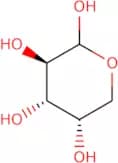
CAS:The aldopentose L-arabinose (Ara) is, after xylose, the second most abundant pentose in nature. It is found in plant cell walls as a component of polysaccharides, including: hemicelluloses, pectin, arabinogalactan-protein complexes and in exudate plant gums, such as: Gum Arabic (Feher, 2018). L-Arabinopyranose is an important component of the mycobacterial cell wall and is involved in the synthesis of arabinogalactan and lipoarabinomannan, which suggests that it can modulate cell wall permeability and drug resistance. Mycobacterium smegmatis is a useful tool for research into Mycobacteria due to it being a "fast grower" and non-pathogenic (Zhou, 2019).Formula:C5H10O5Purity:Min. 99 Area-%Color and Shape:White PowderMolecular weight:150.13 g/mol1,2,3,4-Tetra-O-acetyl-6-O-trityl-a-D-mannopyranose
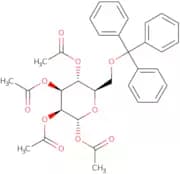
CAS:Tetra-O-acetyl-6-O-trityl-a-D-mannopyranose is a synthetic glycoside that is used as an intermediate in the synthesis of oligosaccharides. It has been modified with a fluorine atom at C1 to form 1,2,3,4-tetra-O-acetyl 6-(trifluoromethyl)-a-D mannopyranoside. This modification can be done through a click reaction. Tetra-O acetyl 6-(trifluoromethyl)-a D mannopyranoside is soluble in water and has a melting point of about 210°C.Formula:C33H34O10Purity:Min. 95%Color and Shape:White PowderMolecular weight:590.62 g/mol3-O-(b-D-Galactopyranosyl)-D-galactopyranose
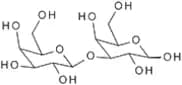
CAS:Used as enzyme substrates, analytical standards and for in vitro diagnosticsFormula:C12H22O11Purity:Min. 95%Color and Shape:White PowderMolecular weight:342.3 g/mol5,6-O-Isopropylidene-L-gulonic acid-1,4-lactone
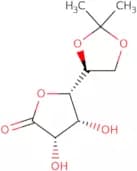
CAS:5,6-O-Isopropylidene-L-gulonic acid-1,4-lactone is a synthetic monosaccharide with the molecular formula C8H14O5. It has a CAS number of 94697-68-4 and is available for custom synthesis. The chemical structure of 5,6-O-Isopropylidene-L-gulonic acid-1,4-lactone consists of a methyl group attached to the hydroxyl at position 1 and a fluoro group attached to the hydroxyl at position 4. 5,6--O--Isopropylidene--L--gulonic acid--1,4--lactone is not naturally occurring and is made by modification of glycosides. This compound can be used in click chemistry or complex carbohydrate reactions.
Formula:C9H14O6Purity:Min. 99 Area-%Color and Shape:White PowderMolecular weight:218.2 g/mol(4S,5R)-4,5-Dihydroxyhexanal
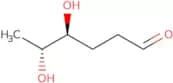
CAS:(4S,5R)-4,5-Dihydroxyhexanal is a conjugate of 4-hydroxy-5-oxononanoic acid and phosphite. It is a hybridized molecule that has been synthesized using an asymmetric synthesis. (4S,5R)-4,5-Dihydroxyhexanal can be used as an analog for digitalis. The compound has the ability to activate cardiac glycoside receptors in the heart and increase the force of contraction of cardiac muscle cells. The effective dose for this drug is not yet known, although it has been shown to have cardiotonic steroid properties.Formula:C6H12O3Purity:Min. 95%Molecular weight:132.16 g/molMethyl 2,3-di-O-acetyl-4,6-O-(4-methoxybenzylidene)-a-D-mannopyranoside
Methyl 2,3-di-O-acetyl-4,6-O-(4-methoxybenzylidene)-a-D-mannopyranoside is a custom synthesis that contains a fluorinated sugar with a methyl group attached to the 4 position. The oligosaccharide is synthesized through click chemistry and has been modified with an acetate at the 6 position. The CAS number is 108739-53-0. The carbohydrate is a complex carbohydrate that can be found in nature or synthesized in the laboratory.
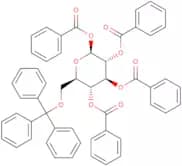
Formula:C19H24O9Purity:Min. 95%Molecular weight:396.4 g/mol1,2,3,4-Tetra-O-benzoyl-6-O-trityl-b-D-glucopyranose
CAS:1,2,3,4-Tetra-O-benzoyl-6-O-trityl-b-D-glucopyranose is a custom synthesis that can be used for methylation and Click modification. This compound is an oligosaccharide consisting of sugar molecules linked by glycosidic bonds. It is a polysaccharide with a saccharide repeating unit composed of monosaccharides. The carbohydrate chain contains 1,2,3,4 tetra O benzoyl groups and 6 O trityl groups. This product has a high purity and can be used in the synthesis of other compounds. 1,2,3,4 Tetra O benzoyl 6 O trityl b D glucopyranose (1) was synthesized from 4-(2'-hydroxyethyl)benzaldehyde (2), 4-(2'-hydroxyethyl)benzoic acid (3),Formula:C53H42O10Purity:Min. 95%Molecular weight:838.89 g/molD-Cellobiose
CAS:Cellobiose is a reducing disaccharide consisting of two β(1-4)-linked glucopyranose units. It is produced by the hydrolysis of cellulose, a homopolysaccharide of glucose with β(1-4)-linkages. Cellobiose constitutes the polar part of cellobiose lipids (CLs) that are secreted by yeasts and mycelia fungi. Their various biological activities have led to a range of applications in the food industry, pharmaceutical industry and in medicine. Cellobiose itself has been used as an indicator carbohydrate for Crohns disease and malabsorption syndrome. In biotechnology, cellobiose is one of the sugars explored for the synthesis of biotensides.Formula:C12H22O11Purity:Min. 98.0 Area-%Molecular weight:342.30 g/molL-Gulono-γ-lactone
CAS:L-Gulono-gamma-lactone is a natural vitamin C metabolite that is synthesized from L-ascorbic acid in the liver. It has been shown to inhibit the oxidase and other enzymes involved in ascorbic acid metabolism, which may be due to its ability to bind to iron. L-Gulono-gamma-lactone also inhibits polymerase chain reactions in rat liver microsomes and inhibits the activities of ascorbic acid and glutathione reductase in rat hepatic tissues. This compound is not active against humans, but it has been shown to have antioxidation properties.
Formula:C6H10O6Molecular weight:178.14 g/molRef: 3D-G-8500
1kgTo inquire100gTo inquire250gTo inquire500gTo inquire2500gTo inquire-Unit-kgkgTo inquire