Glycoscience
Glycoscience is the study of carbohydrates and their derivatives, as well as the interactions and biological functions they participate in. This field of research is crucial for understanding a wide variety of biological processes, including cell recognition, signaling, immune response, and disease development. Glycoscience has important applications in biotechnology, medicine, and the development of new drugs and therapies. At CymitQuimica, we offer a wide selection of high-quality, high-purity products for glycoscience research. Our catalog includes monosaccharides, oligosaccharides, polysaccharides, glycoconjugates, and specific reagents, designed to support researchers in their studies on the structure, function, and applications of carbohydrates in biological systems. These resources are intended to facilitate scientific discoveries and practical applications in various areas of bioscience and medicine.
Subcategories of "Glycoscience"
- Aminosugars(108 products)
- Glyco-Related Antibodies(282 products)
- Glycolipids(46 products)
- Glycosaminoglycans (GAGs)(55 products)
- Glycosides(419 products)
- Monosaccharides(6,624 products)
- Oligosaccharides(3,682 products)
- Polysaccharides(503 products)
Found 11046 products of "Glycoscience"
Sort by
Purity (%)
0
100
|
0
|
50
|
90
|
95
|
100
Phenyl 2,3-di-O-benzyl-4,6-O-benzylidene-a-D-thiomannopyranoside
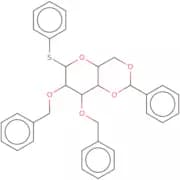
CAS:Phenyl 2,3-di-O-benzyl-4,6-O-benzylidene-a-D-thiomannopyranoside is a complex carbohydrate that is synthesized by methylation and glycosylation of thiomannose. This product has been modified to contain a fluorinated substituent on the phenyl ring. Phenyl 2,3-di-O-benzyl-4,6-O-benzylidenea D thiomannopyranoside is soluble in water and has an HPLC purity of >99%.Formula:C33H32O5SPurity:Min. 95%Molecular weight:540.67 g/molEthyl 4-O-allyl-3,6-di-O-benzyl-2-O-levulinoyl-b-D-thioglucopyranoside
Ethyl 4-O-allyl-3,6-di-O-benzyl-2-O-levulinoyl-b-D-thioglucopyranoside is a carbonylated sugar. It is used as an intermediate in the synthesis of glycosides and saccharides. This chemical can be custom synthesized to meet your requirements. Ethyl 4-O-allyl-3,6-di-O-benzyl 2,5,6 trideoxygalactoside can be methylated, glycosylated, or fluorinated to produce different derivatives.Purity:Min. 95%Ciprofloxacin b-D-glucuronide
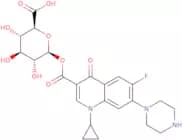
CAS:Ciprofloxacin b-D-glucuronide is a metabolite of ciprofloxacin that is excreted in the bile. Ciprofloxacin b-D-glucuronide has high activity against gram-negative bacteria and broad-spectrum activity. It has been shown to have antibacterial effect on serum concentration, bioassay, and synthetic models. This drug binds to the beta-subunit of bacterial DNA gyrase and topoisomerase IV, inhibiting the synthesis of proteins vital for cell division. Ciprofloxacin b-D-glucuronide is a glycosidic metabolite of ciprofloxacin that is excreted in the bile. Ciprofloxacin b-D-glucuronide has high activity against gram negative bacteria and broad spectrum activity. It has been shown to have antibacterial effect on serumFormula:C23H26FN3O9Purity:Min. 95%Molecular weight:507.47 g/molHexadecyl 2-acetamido-3,4,6-tri-O-acetyl-2-deoxy-b-D-glucopyranoside
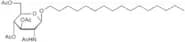
CAS:Hexadecyl 2-acetamido-3,4,6-tri-O-acetyl-2-deoxy-b-D-glucopyranoside (HAT) is an antibiotic that belongs to the class of macrolides. It has been shown to be heritable and its heritability is dependent on the type of animal species. HAT also has a basic structure with substituents that are either acidic or hydroxylated. The heterogeneity in this compound can be seen by the different lactation periods for different animals. Regression analysis was used to find out if there was a correlation between the lactation period and the basicity of HAT. This study found that there was no such correlation and therefore concluded that there is no relationship between HAT's basicity and its heritability.Formula:C30H53NO9Purity:Min. 95%Molecular weight:571.74 g/mol2,3,4,6-Tetra-O-acetyl-b-D-thioglucopyranose sodium salt
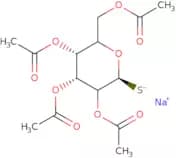
CAS:2,3,4,6-Tetra-O-acetyl-b-D-thioglucopyranose sodium salt is a synthetic monosaccharide that can be used for glycosylation. This product is synthesized by the addition of acetyl groups to the 2-, 3-, 4-, and 6-positions on the glucose moiety. The resulting product has been shown to have a high degree of purity as well as a low content of impurities.Formula:C14H19O9SNaPurity:Min. 95%Molecular weight:386.35 g/mol2,3,4,6-Tetra-O-benzyl-1-O-(4-nitrobenzoyl)-b-D-glucopyranose
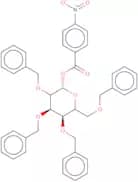
2,3,4,6-Tetra-O-benzyl-1-O-(4-nitrobenzoyl)-b-D-glucopyranose is a synthetic sugar that is the building block for oligosaccharides and polysaccharides. It has been modified with fluorination and methylation to produce a high purity product. The CAS number for this compound is 248940-24-5.Formula:C41H39NO9Purity:Min. 95%Molecular weight:689.77 g/molDextran sulfate sodium salt - MW 150,000
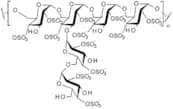
CAS:Induces ulceration; used to model inflammatory bowel diseasePurity:Min. 95%Color and Shape:PowderPhenyl 3,4,6-tris-o-(phenylmethyl)-1-thio-B-D-glucopyranoside
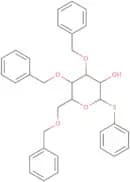
CAS:<p>Please enquire for more information about Phenyl 3,4,6-tris-o-(phenylmethyl)-1-thio-B-D-glucopyranoside including the price, delivery time and more detailed product information at the technical inquiry form on this page</p>Formula:C33H34O5SPurity:Min. 95%Molecular weight:542.7 g/mol3,6-Di-O-tert-butyldimethylsilyl-D-galactal
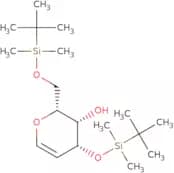
CAS:3,6-Di-O-tert-butyldimethylsilyl-D-galactal is a sugar that has been modified with fluorination. This sugar can be used as an intermediate for the synthesis of complex carbohydrate or glycosylation. 3,6-Di-O-tert-butyldimethylsilyl-D-galactal can also be used in Click chemistry to modify proteins and polysaccharides. This product is offered at high purity and custom synthesis.Purity:Min. 95%R-Phenyleprine-3-D-glucuronide
<p>R-Phenyleprine-3-D-glucuronide is a synthetic compound that is used for the modification of saccharides. It has fluoro groups and has been shown to be active in glycosylation reactions. R-Phenyleprine-3-D-glucuronide can also be used as a methylating agent, or as an intermediate in the synthesis of oligosaccharides and monosaccharides. The molecular weight of this compound is 594.</p>Purity:Min. 95%Hyaluronate fluorescein - Molecular Weight - 2500kDa
<p>Hyaluronate fluorescein is a polymer of hyaluronic acid that has been modified with fluorescein. It is synthesized by the methylation and saccharide coupling of an oligosaccharide, followed by Click modification and the addition of a fluorescent dye. Hyaluronate fluorescein has a molecular weight of 2500kDa. It is highly purified and can be custom-synthesized to suit specific needs.</p>Purity:Min. 95%Color and Shape:PowderMethyl N-trifluoroacetyldaunosaminide
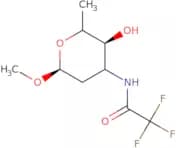
CAS:<p>Methyl N-trifluoroacetyldaunosaminide is a naturally occurring amino sugar that has been shown to have biological relevance. It has been shown to inhibit the activity of bacterial enzymes, such as daunosamine reductase and daunosamine kinase, which are involved in the biosynthesis of anthracyclines in bacteria. The structural analogues of methyl N-trifluoroacetyldaunosaminide have been shown to be effective against a range of Gram-positive and Gram-negative bacteria including Staphylococcus aureus, Mycobacterium tuberculosis, Mycobacterium avium complex and Pseudomonas aeruginosa.</p>Formula:C9H14F3NO4Purity:Min. 95%Molecular weight:257.21 g/molEthyl a-L-thiorhamnopyranoside
<p>Ethyl a-L-thiorhamnopyranoside is a synthetic, fluorinated monosaccharide. It is an oligosaccharide with a complex carbohydrate structure and can be used as a building block for the synthesis of glycosides, polysaccharides, and other sugar derivatives. This product can also be modified by methylation, click reactions, or other chemical reactions to produce desired structures. The purity of this product is >98%.</p>Purity:Min. 95%D-Glucose diethyl mercaptal
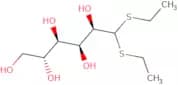
CAS:<p>D-Glucose diethyl mercaptal is a homogeneous catalyst that can be used to acetylate galactitol to produce D-arabinose. It acts as an efficient and selective catalyst for the reaction of nitrous acid with hydrochloric acid, which produces acetyl chloride. Acetyl chloride is a reactive compound that can be used in the synthesis of many other compounds. <br>D-Glucose diethyl mercaptal has been used in chromatographic methods to separate d-arabinose from L-arabinose. The ring-opening polymerization of D-glucopyranose by mercaptals leads to the formation of polyols, which are useful materials for the production of plastics and rubber products. Chloride ions are required for this reaction, while hydrogen chloride is produced as a byproduct.</p>Formula:C10H22O5S2Purity:Min. 95%Molecular weight:286.41 g/molTetrasaccharide dp4
<p>Tetrasaccharide dp4 is a custom synthesis that is modified with fluorination, methylation, and click modification of the monosaccharides. It can be used for the synthesis of oligosaccharides and saccharides. Tetrasaccharide dp4 is a glycosylated carbohydrate that belongs to the group of polysaccharides. This product has CAS number 87392-00-6.</p>Formula:C24H62N10O38S6Purity:Min. 95%Molecular weight:1,291.19 g/molHexyl 2-acetamido-2-deoxy-b-D-glucopyranoside
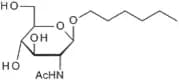
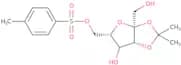
CAS:<p>Hexyl 2-acetamido-2-deoxy-b-D-glucopyranoside is a sugar that is used in the study of immune reactions. It can be used to measure albumin levels and tissue samples, as well as in animal experiments. Hexyl 2-acetamido-2-deoxy-b-D-glucopyranoside has been shown to have toxic effects on cells, which may be due to its ability to inhibit DNA concentrations. This substance also has a directional fluorescence, which means that it will emit light in one direction only when stimulated with light of a certain wavelength.</p>Formula:C14H27NO6Purity:Min. 95%Molecular weight:305.37 g/mol6-O-Tosyl-2,3-O-isopropylidene-a-L-sorbofuranose
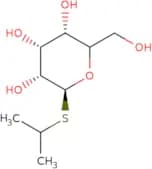
CAS:<p>6-O-Tosyl-2,3-O-isopropylidene-a-L-sorbofuranose is a fluorinated monosaccharide that can be used in the synthesis of oligosaccharides and polysaccharides. It has been shown to react with various nucleophiles to form glycosylation products. 6-O-Tosyl-2,3-O-isopropylidene-a-L-sorbofuranose is commercially available as a white solid.</p>Formula:C16H22O8SPurity:Min. 95%Molecular weight:374.41 g/molIsopropyl-β-D-thioglucopyranoside
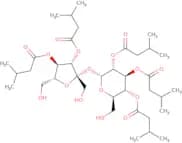
CAS:Isopropyl-beta-D-thioglucopyranoside is a carbohydrate derivative that has the same chemical formula as glucose but with a different spatial arrangement. It is also known as beta-D-thioglucose or thioisopropylglucose, and it is an intermolecular hydrogen bond donor and acceptor. Isopropyl-beta-D-thioglucopyranoside absorbs light at wavelengths of 265 nm, 280 nm, and 320 nm. Carbohydrates are compounds containing carbon, hydrogen and oxygen atoms in a ratio of 1:2:1 by weight, with the general formula CHON. They consist of many isomers that differ from each other in the configurations of their carbonyl group and hydroxyl group. The molecular system for isopropyl-beta-D-thioglucopyranoside consists of one molecule with two hydrogen bonds to two other molecules.Formula:C9H18O5SMolecular weight:238.3 g/mol2,3,4,3',4'-Penta-O-isovaleryl-sucrose
CAS:<p>2,3,4,3',4'-Penta-O-isovaleryl-sucrose is a custom synthesis that has been modified by fluorination and methylation. It is a monosaccharide with a molecular weight of 596.84 g/mol. This compound is synthesized from sucrose through a click modification reaction and then further modified by glycosylation reactions to form an oligosaccharide or polysaccharide. 2,3,4,3',4'-Penta-O-isovaleryl-sucrose can be used in the production of complex carbohydrates such as Sucralose and Stevia.</p>Purity:Min. 95%Color and Shape:Powder2,3-Dideoxy-2-methylene-D-glycero-D-galacto-nononic acid gamma-lactone
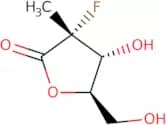
CAS:<p>Methyl 2,3-dideoxy-2-methylene-D-glycero-D-galacto-nononic acid gamma-lactone is a fluorinated derivative of 2,3-dideoxygalactonojirimycin. It is an analog of the natural product 2,3-dideoxygalactonojirimycin and has been shown to inhibit the synthesis of glycolipids in Mycobacterium tuberculosis. Methyl 2,3-dideoxy-2-methylene-D-glycero-D-galacto nononic acid gamma lactone was synthesized by modification of the galactonojirimycin core with methylation at C2 and C3 followed by fluorination at C1.</p>Formula:C10H16O7Purity:Min. 95%Molecular weight:248.23 g/mol(3R,4R,5R)-3-Fluoro-4-hydroxy-5-(hydroxymethyl)-3-methyloxolan-2-one
CAS:(3R,4R,5R)-3-Fluoro-4-hydroxy-5-(hydroxymethyl)-3-methyloxolan-2-one is a nucleoside that has been synthesized and characterized by x-ray crystallographic analysis. It is an analog of the nucleoside fluorouracil which has been fluorinated at the 5 position of the oxo group. The crystal structure of (3R,4R,5R)-3-fluoro-4-hydroxy-5-(hydroxymethyl)-3-methyloxolan-2-one was determined using x ray crystallography to be a lactone with an anhydrous form. This compound is currently being investigated as a potential drug candidate for cancer treatment.Formula:C6H9FO4Purity:Min. 95%Molecular weight:164.13 g/mol1,5-Dideoxy-D-xylulose
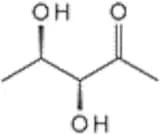
CAS:<p>1,5-Dideoxy-D-xylulose is a synthetic compound that has been modified to make it resistant to methylation and other modifications. It can be used as a raw material for the production of complex carbohydrates and saccharides, such as oligosaccharides and polysaccharides. 1,5-Dideoxy-D-xylulose is widely used in the modification of saccharides and carbohydrates. It is important in the production of high purity monosaccharides, which are used in the synthesis of pharmaceuticals. This product is also often used for fluorination reactions.</p>Formula:C5H10O3Purity:Min. 95%Molecular weight:118.13 g/mol2,3,4,6-Tetra-O-acetyl-D-galactopyranose
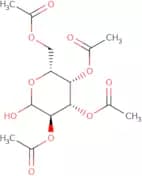
CAS:<p>2,3,4,6-Tetra-O-acetyl-D-galactopyranose is a glycoside that has been used as an antigen in immunological studies and to study the role of fatty acids in cancer. This compound is phosphorylated to form 2,3,4,6-tetra-O-phospho-D-galactopyranose and reacts with primary alcohols to form transglycosylation products. 2,3,4,6-Tetra-O-acetylgalactopyranose also reacts with chloride ions to form disaccharides. As a result of these reactions 2,3,4,6-tetraacetylgalactopyranose has shown anticancer activity.</p>Formula:C14H20O10Purity:Min. 95%Color and Shape:White PowderMolecular weight:348.3 g/mol2,3,4,6-Tetra-O-benzyl-D-galactopyranose - non-animal origin
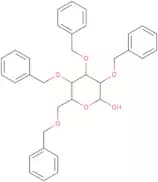
CAS:Intermediate for the anomeric modification of Gal, including galactosylationFormula:C34H36O6Purity:Min. 95%Molecular weight:540.65 g/molGlycyl-lacto-N-neotetraose
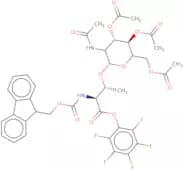
Glycyl-lacto-N-neotetraose is a complex carbohydrate that is custom synthesized and has high purity. It is an Oligosaccharide, Carbohydrate, and Polysaccharide that can be modified with methylation and glycosylation. This product can be used in the synthesis of other monosaccharides or saccharides to form complex carbohydrates. Glycyl-lacto-N-neotetraose is also fluorinated on one of its hydroxyl groups to produce an active water soluble compound for use in research.Formula:C28H49N3O21Purity:Min. 95%Molecular weight:763.7 g/mol2-Acetamido-3,4,6-tri-O-acetyl-2-deoxy-a-D-galactopyranosyl-L-threonine pentafluorophenyl ester
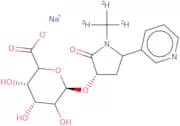
CAS:This product is a modification of a complex carbohydrate that has been synthesized from D-galactose and L-threonine. It is an Oligosaccharide, Carbohydrate, Custom synthesis, Synthetic, High purity, Monosaccharide, Methylation, Glycosylation, Polysaccharide with a CAS No. 182369-94-4. This product is fluorinated at the 2 position of the acetamido group. The saccharide unit has been methylated at the 2 position of the acetamido group. This product is also glycosylated at the 6 position of the acetamido group and it is an alpha-linked sugar.Formula:C39H37F5N2O13Purity:Min. 95%Molecular weight:836.71 g/moltrans-3'-Hydroxycotinine-O-b-D-glucuronide D3 sodium salt
Controlled Product<p>Trans-3'-Hydroxycotinine-O-b-D-glucuronide D3 sodium salt is a modification of the natural product trans-3'-hydroxycotinine. It is an oligosaccharide with a complex carbohydrate structure, which may be synthesized by custom synthesis or by glycosylation. This modification has a high purity and may be monosaccharide or polysaccharide. Trans-3'-hydroxycotinine-O-b-D-glucuronide D3 sodium salt may have CAS number and fluorination. It has been shown to have antihistamine activities, which are due to its ability to inhibit the release of histamine from mast cells in the lungs.</p>Formula:C16H16N2O8D3·NaPurity:Min. 95%Molecular weight:393.34 g/molLacto-N-fucopentaose III-BSA
<p>Lacto-N-fucopentaose III-BSA is a carbohydrate that is modified with fluorine. It is a complex carbohydrate that has been custom synthesized and methylated. Lacto-N-fucopentaose III-BSA is a high purity, synthetic oligosaccharide that has been glycosylated and click modified. The CAS number for this product is 73638-80-9.</p>Purity:Min. 95%Methyl 2-deoxy-2-sulfamino-a-D-glucopyranoside sodium salt
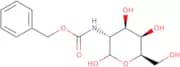
Methyl 2-deoxy-2-sulfamino-a-D-glucopyranoside sodium salt is a modification of an oligosaccharide. It is a carbohydrate that has not been found in nature, but it can be synthesized by the introduction of methyl groups to the sugar. Methyl 2-deoxy-2-sulfamino-a-D-glucopyranoside sodium salt is used as a synthetic precursor for saccharides.Purity:Min. 95%2-(Benzyloxycarbonylamino)-2-deoxy-D-galactose
CAS:2-(Benzyloxycarbonylamino)-2-deoxy-D-galactose is a synthetic, fluorinated carbohydrate. It is a monosaccharide with the chemical formula C6H11NO5 and is soluble in water. The glycosylation of 2-(benzyloxycarbonylamino)-2-deoxy-D-galactose has been shown to be more stable than that of other sugars, such as glucose or maltose. This modification can be accomplished by a click reaction. 2-(Benzyloxycarbonylamino)-2-deoxy-D-galactose can be used to modify proteins, such as antibodies and enzymes, by glycosylating amino acid residues on the protein surface.Formula:C14H19NO7Purity:Min. 95%Molecular weight:313.3 g/molMaltobionic acid dicyclohexylammonium salt
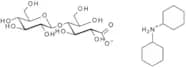
CAS:Controlled ProductAn antioxidant used in food and feeds, produced from starch, using enzymesFormula:C24H45NO12Purity:Min. 95%Molecular weight:539.61 g/mol1-Chloro-1-deoxy-scyllo-inositol
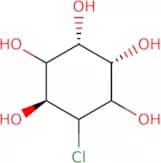
1-Chloro-1-deoxy-scyllo-inositol is a molecule that can be transported by the transporter symporter. It has been shown to interact with hydrophobic interactions, and this interaction is stereospecific. This molecule is also a ligand which interacts with other molecules through hydrophobic interactions. Furthermore, it has been shown in microscopy studies to have a transporters morphology.Formula:C6H11ClO5Purity:Min. 95%Molecular weight:198.6 g/molEzetimibe hydroxy-b-D-glucuronide
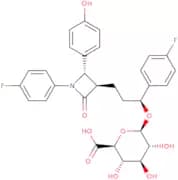
CAS:<p>Ezetimibe hydroxy-b-D-glucuronide is an oligosaccharide that can be synthesized from the modified sugar, L-glucuronic acid. It has a molecular weight of 536 and is soluble in water and methanol. This compound has been used in the synthesis of glycosides, saccharides, and polysaccharides. The chemical name for this compound is 1-(2-hydroxyethyl)-3-(((4'-carboxybenzyl)oxy)carbonyl)-2,6-diazaoctane glucuronide. Ezetimibe hydroxy-b-D-glucuronide has been shown to increase the absorption of cholesterol and decrease low density lipoprotein (LDL) levels in the blood by inhibiting intestinal cholesterol absorption.</p>Formula:C30H29F2NO9Purity:Min. 95%Molecular weight:585.55 g/molD-Fructose-13C6-1,6-diphosphate sodium salt
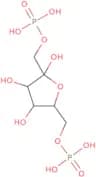
CAS:D-Fructose-13C6-1,6-diphosphate sodium salt is a reactive compound used as a model in studies of metabolic disorders. It has been shown to have an inhibitory effect on the enzymes that catalyze the conversion of D-fructose 1,6 diphosphate to D-fructose 6 phosphate in the cytosol. The compound is also useful for determining the binding of calcium ions to proteins and for measuring the activity of carbon source enzymes.Formula:C6H10Na4O12P2·xH2OPurity:Min. 95%Color and Shape:PowderMolecular weight:434 g/molPentaric acid
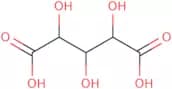
CAS:<p>Pentaric acid is a crystalline, monocarboxylic acid with a hydroxyl group. It is used as an inhibitor of corrosion in metal and as a disinfectant. Pentaric acid can be found in urine samples and has been shown to be an effective inhibitor of the enzymatic reaction that produces azobenzene, which is associated with the development of bladder cancer. This compound also inhibits the growth of bacteria. Pentaric acid is used as an additive in some detergents and soaps because it can inhibit the growth of bacteria on surfaces. <br>Pentaric acid was first synthesized by German chemist Otto Wohlert in 1834. Hydrogen ions are released when pentaric acid dissolves in water, lowering the pH level and causing corrosion to metal surfaces. The corrosion inhibition properties of pentaric acid have been known since its discovery, but its anti-bacterial properties were not discovered until recently when researchers found that pentar</p>Formula:C5H8O7Purity:Min. 95%Molecular weight:180.11 g/molSulpho Lewisa Na
<p>Sulpho Lewisa Na is a complex carbohydrate that has been modified with fluorination and methylation. This product is custom synthesized, high purity, and has a CAS number. It is available for synthesis in various lengths of saccharides with a variety of modifications. Sulpho Lewisa Na can be used in the following applications: glycosylations, click modification, and methylation.</p>Formula:C20H34NNaO18SPurity:Min. 95%Molecular weight:631.54 g/molFructononasaccharide
<p>Fructononasaccharide is a modification of oligosaccharides that is synthesized from sucrose. It is a complex carbohydrate that has been modified with methylation and glycosylation. Fructononasaccharide is used in the synthesis of polysaccharides, as well as for the production of high-purity, custom-synthesized monosaccharides and disaccharides. Fructononasaccharide can be fluorinated or saccharified to produce different compounds.</p>Formula:C54H92O46Purity:Min. 95%Color and Shape:PowderMolecular weight:1,477.28 g/molPenta-O-acetyl-a-L-idopyranose
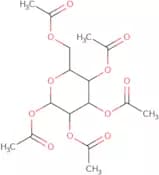
CAS:<p>Penta-O-acetyl-a-L-idopyranose is a monosaccharide that is synthesized from D-glucose and acetic anhydride. It has been modified with methylation, fluorination, and saccharide modification. Penta-O-acetyl-a-L-idopyranose is soluble in water, methanol, ethanol, and acetone. This compound has been shown to be useful for glycosylation reactions as well as click chemistry. CAS No. 16299-15-3.</p>Formula:C16H22O11Purity:Min. 95%Color and Shape:PowderMolecular weight:390.34 g/molD-Glycero-D-gulo-heptonic acid γ-lactone
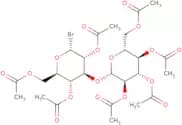
CAS:Please enquire for more information about D-Glycero-D-gulo-heptonic acid γ-lactone including the price, delivery time and more detailed product information at the technical inquiry form on this pageFormula:C7H12O7Molecular weight:208.17 g/mol1-Bromo-2,4,6-tri-O-acetyl-3-O-(2,3,4,6-tetra-O-acetyl-b-D-glucopyranosyl)-a-D-glucopyranoside
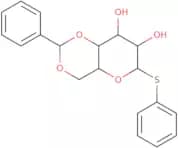
CAS:This is a Glycosylation, Oligosaccharide, sugar, Synthetic, Fluorination, Custom synthesis, Methylation, Monosaccharide, Polysaccharide, saccharide. This product is custom synthesized for your needs. It is a complex carbohydrate with high purity and modification. There are no CAS numbers on this product.Formula:C26H35BrO17Purity:Min. 95%Molecular weight:699.45 g/molPhenyl 4,6-O-benzylidene-b-D-thiogalactopyranoside
CAS:Phenyl 4,6-O-benzylidene-b-D-thiogalactopyranoside is a synthetic monosaccharide that is custom synthesized. It has a CAS number of 138922-03-9 and can be used in the modification of complex carbohydrates, saccharides, oligosaccharides, and polysaccharides. It is also used for methylation and fluorination. Phenyl 4,6-O-benzylidene-b-D-thiogalactopyranoside has a molecular weight of 270.27 g/mol and a melting point of 221 degrees Celsius.Formula:C19H20O5SPurity:Min. 95%Color and Shape:PowderMolecular weight:360.42 g/mol1,3,4,6-Tetra-O-acetyl-2-deoxy-2-fluoro-D-mannopyranose
1,3,4,6-Tetra-O-acetyl-2-deoxy-2-fluoro-D-mannopyranose is a custom synthesis that can be used as a sugar and monosaccharide. It is a modification of an Oligosaccharide and Carbohydrate. Custom synthesis has been shown to have high purity and low cost. 1,3,4,6-Tetra-O-acetyl-2-deoxy-2-fluoro--D--mannopyranose is a complex carbohydrate that has been shown to have glycosylation and polysaccharide properties. This compound also has methylation properties that make it useful for creating custom synthesis with fluorination or saccharide modifications.Purity:Min. 95%1,2,3-Tri-O-benzoyl-4-deoxy-a-L-fucopyranose
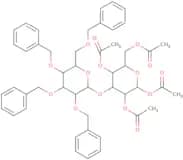
CAS:<p>1,2,3-Tri-O-benzoyl-4-deoxy-a-L-fucopyranose is a carbohydrate that belongs to the group of oligosaccharides. It is a sugar that contains three benzoyl groups and one deoxyhexopyranose. This product can be custom synthesized and has high purity with no detectable impurities. 1,2,3-Tri-O-benzoyl-4-deoxy-a-L-fucopyranose can be used in the synthesis of glycoproteins and other complex carbohydrates by methylation and glycosylation methods. The product also has click modification capability.</p>Formula:C27H24O7Purity:Min. 95%Molecular weight:460.48 g/mol3-O-(2,3,4,6-Tetra-O-benzyl-a-D-glucopyranosyl)-1,2,4,6-tetra-O-acetyl-b-D-glucopyranose
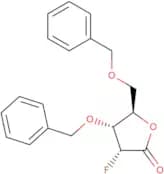
CAS:<p>3-O-(2,3,4,6-Tetra-O-benzyl-a-D-glucopyranosyl)-1,2,4,6-tetra-O-acetyl-b-D-glucopyranose is an oligosaccharide that has been modified with a click modification. This compound is a complex carbohydrate and it is synthesized from a monosaccharide. 3-O-(2,3,4,6-Tetra-O-benzyl-a-D--glucopyranosyl)-1,2,4,6-- tetra--O--acetyl--b--D--glucopyranose is used in methylation reactions.</p>Formula:C48H54O15Purity:Min. 95%Molecular weight:870.93 g/mol3,5-Di-O-benzyl-2-deoxy-2-fluoro-D-ribono-1,4-lactone
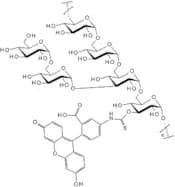
CAS:<p>Synthetic building block</p>Formula:C19H19FO4Purity:Min. 95%Color and Shape:PowderMolecular weight:330.35 g/molFluorescein isothiocyanate-dextran - Average MW 20,000
CAS:Anterograde and retrograde tracer in neurons; biologically inertPurity:Min. 95%Neu5Acα(2-6)GalNAc-α-PNP
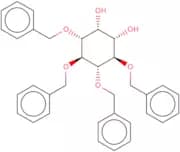
CAS:Neu5Acα(2-6)GalNAc-α-PNP is a modification of the oligosaccharide, carbohydrate, complex carbohydrate. It is synthesized by custom synthesis and has CAS No. 1858224-04-0. Neu5Acα(2-6)GalNAc-α-PNP is a monosaccharide that is methylated and glycosylated with polysaccharides. The product can be fluorinated or saccharided, and it has high purity.Formula:C25H35N3O16Purity:Min. 95%Molecular weight:633.6 g/mol1,4,5,6-Tetra-O-benzyl-myo-inositol
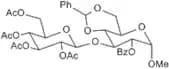
CAS:1,4,5,6-Tetra-O-benzyl-myo-inositol is a benzylated derivative of myo-inositol. It is a pharmacological agent that has been shown to inhibit the growth of human colon adenocarcinoma cells and human glioblastoma cells in vitro. 1,4,5,6-Tetra-O-benzyl-myo-inositol also binds to cell membrane receptors and inhibits the activity of enzymes involved in the synthesis of phosphatidylcholine. The compound has been shown to be selective for axial glioblastoma tumors in animal models. The compound can be conjugated with different molecules and used as an assay for cytotoxicity studies on tumor cells. 1,4,5,6-Tetra-O-benzyl-myo-inositol has hydroxyl groups that are easily oxidizedFormula:C34H36O6Purity:Min. 95%Molecular weight:540.65 g/molMethyl 3-O-(2,3,4,6-tetra-O-acetyl-b-D-glucopyranosyl)-4,6-O-benzylidene-2-O-benzoyl-a-D-glucopyranoside
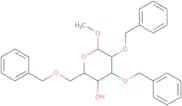
CAS:Methyl 3-O-(2,3,4,6-tetra-O-acetyl-b-D-glucopyranosyl)-4,6-O-benzylidene-2-O-benzoyl-a-D-glucopyranoside is a custom synthesis that has been fluorinated and methylated. This product is a monosaccharide with a CAS No. 7123893 2. It is an oligosaccharide that can be used in the synthesis of saccharides and polysaccharides. Methyl 3 O (2 3 4 6 tetra O acetyl b D glucopyranosyl) 4 6 O benzylidene 2 O benzoyl a D glucopyranoside has been synthesized by glycosylation of sugar. This product can also be used to modify and functionalize complex carbohydrates.Formula:C35H40O16Purity:Min. 95%Molecular weight:716.68 g/molMethyl 2,3,6-tri-O-benzyl-b-D-glucopyranoside
CAS:Methyl 2,3,6-tri-O-benzyl-b-D-glucopyranoside is a glycoconjugate that is a synthetically modified glycosylated sugar. It is used to modify proteins by covalently attaching the sugar to an amino acid residue. Methyl 2,3,6-tri-O-benzyl-b-D-glucopyranoside has been shown to be useful for click chemistry reactions and can be used in the synthesis of polysaccharides and oligosaccharides. This compound can also be used as a substitute for glucose in the synthesis of saccharides or sugars. Methyl 2,3,6-tri-O-benzyl-b-D-glucopyranoside is insoluble in water and has a CAS number of 19488494.Formula:C28H32O6Purity:Min. 95%Molecular weight:464.55 g/mol