Glycoscience
Glycoscience is the study of carbohydrates and their derivatives, as well as the interactions and biological functions they participate in. This field of research is crucial for understanding a wide variety of biological processes, including cell recognition, signaling, immune response, and disease development. Glycoscience has important applications in biotechnology, medicine, and the development of new drugs and therapies. At CymitQuimica, we offer a wide selection of high-quality, high-purity products for glycoscience research. Our catalog includes monosaccharides, oligosaccharides, polysaccharides, glycoconjugates, and specific reagents, designed to support researchers in their studies on the structure, function, and applications of carbohydrates in biological systems. These resources are intended to facilitate scientific discoveries and practical applications in various areas of bioscience and medicine.
Subcategories of "Glycoscience"
- Aminosugars(108 products)
- Glyco-Related Antibodies(282 products)
- Glycolipids(46 products)
- Glycosaminoglycans (GAGs)(55 products)
- Glycosides(419 products)
- Monosaccharides(6,624 products)
- Oligosaccharides(3,682 products)
- Polysaccharides(503 products)
Found 11046 products of "Glycoscience"
Sort by
Purity (%)
0
100
|
0
|
50
|
90
|
95
|
100
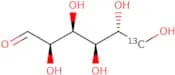
D-Glucose-6-13C
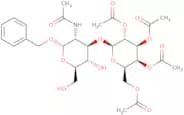
CAS:<p>D-Glucose-6-13C is a carbohydrate that can be used as a metabolic energy source. Unlabelled D-Glucose is the most abundant monosaccharide in nature and can be found as an anhydrous dextrose in many types of food. It can also be used as a reference to measure blood glucose levels, which are important for diagnosing diabetes mellitus.</p>Formula:CC5H12O6Purity:Min. 98 Area-%Color and Shape:PowderMolecular weight:181.15 g/molBenzyl 2-acetamido-2-deoxy-3-O-(2,3,4,6-tetra-O-acetyl-b-D-galactopyranosyl)-a-D-glucopyranoside
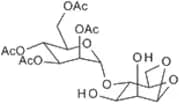
CAS:<p>Benzyl 2-acetamido-2-deoxy-3-O-(2,3,4,6-tetra-O-acetyl-b-D-galactopyranosyl)-a-D-glucopyranoside is a carbohydrate that belongs to the group of saccharides. It is a member of the class of oligosaccharides and has a CAS number of 60831-31-4. This compound is synthesized from benzyl 2,3,4,6 tetra acetyl b D galactopyranoside in which a sugar molecule has been added to the end of the chain. Benzyl 2 acetamido 2 deoxy 3 O (2,3,4,6 tetra O acetyl b D galactopyranosyl) a D glucopyranoside is also known as 2 alpha -D glucopyranose or α -D glucopyranose. This</p>Formula:C29H39NO15Purity:Min. 95%Molecular weight:641.62 g/mol1,6-Anhydro-4-O-(2,3,4,6-tetra-O-acetyl-a-D-mannopyranosyl)-b-D-mannopyranose
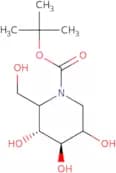
CAS:1,6-Anhydro-4-O-(2,3,4,6-tetra-O-acetyl-a-D-mannopyranosyl)-b-D-mannopyranose is a modified oligosaccharide that is a carbohydrate. This product is custom synthesized and has high purity. It is a monosaccharide with methylation and glycosylation. The CAS number for this product is 6765035505.Formula:C20H28O14Purity:Min. 95%Molecular weight:492.44 g/molN-Boc-1,5-imino-D-glucitol
CAS:<p>N-Boc-1,5-imino-D-glucitol is a complex carbohydrate that is synthesized by the N-Boc protection group. It is an oligosaccharide with a molecular weight of about 190 daltons and it can be modified at the C1 position to produce various saccharides. N-Boc-1,5-imino-D-glucitol has been shown to be effective as a glycosylation agent for protein modification and for its ability to form stable complexes with other complex carbohydrates. This compound has also been used in the synthesis of polysaccharides and as a fluorination reagent.</p>Formula:C11H21NO6Purity:Min. 95%Molecular weight:263.29 g/mol2-Deoxy-3,5-di-O-toluoyl-b-D-ribofuranosyl cyanide
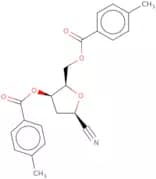
<p>2-Deoxy-3,5-di-O-toluoyl-b-D-ribofuranosyl cyanide is a fluorinated sugar that is synthesized from 2,6-dichloro-1,4,5,8,-tetraoxybenzene and 3,5-di-O-toluoyl bromide. It is a carbohydrate that belongs to the family of oligosaccharides.</p>Formula:C22H21NO5Purity:Min. 95%Molecular weight:379.41 g/molN-Benzyl-2,3,4,6-tetra-O-benzyl-1,5-dideoxy-imino-L-iditol
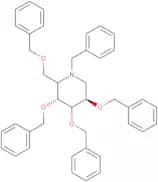
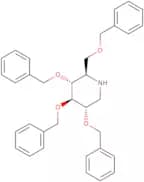
CAS:N-Benzyl-2,3,4,6-tetra-O-benzyl-1,5-dideoxy-imino-L-iditol is a synthetic oligosaccharide with the formula CH(CH)COH. It can be used in the synthesis of glycosides and polysaccharides. This compound has been shown to have antihypertensive activity.Formula:C41H42NO4Purity:Min. 95%Molecular weight:613.8 g/mol3'-Sialyllacto-N-biose
3'-Sialyllacto-N-biose is a regiospecific, biochemically defined carbohydrate. It is a component of the glycan chains that are present on the surface of cell membranes. Lacto-n-biose has been shown to have inhibitory activity against the growth of Mycobacterium tuberculosis and Mycobacterium avium complex bacteria.Purity:Min. 95%Color and Shape:Powder3-O-Acetyl-1,2-O-isopropylidine-6-O-trityl-a-D-galactofuranose
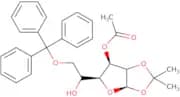
CAS:<p>3-O-Acetyl-1,2-O-isopropylidine-6-O-trityl-a-D-galactofuranose is a synthetic compound with a molecular weight of 514.5. It is an oligosaccharide with a glycosylation modification and fluorination. The compound can be used as a research tool in the study of glycosylation, methylation, click modification, polysaccharide synthesis, fluorination, saccharide modifications and sugar modifications. 3-O-Acetyl-1,2-O-isopropylidine-6-[trityl]-a-[D]galactofuranose can also be used for custom synthesis; this product is available in high purity.</p>Formula:C30H32O7Purity:Min. 95%Molecular weight:504.57 g/mol2,3,4-Tri-O-acetyl-D-xylopyranose
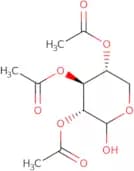
CAS:<p>2,3,4-Tri-O-acetyl-D-xylopyranose is a lactide sugar that is found in the cell walls of many plants. It is synthesized from D-xylose by enzymatic condensation with acetylated L-malic acid and has been shown to be biodegradable. 2,3,4-Tri-O-acetyl-D-xylopyranose has been shown to have physical properties that are similar to those of cellulose, such as crystallization and solubility in water. The compound also has an NMR spectrum that contains peaks at δ = 0.8 (triplet), 1.1 (singlet) and 1.5 ppm (doublet). The hydrophobic group on the molecule is thought to contribute to its hydrophilicity.</p>Formula:C11H16O8Purity:Min. 95%Molecular weight:276.24 g/molHeparin disaccharide II-H disodium salt
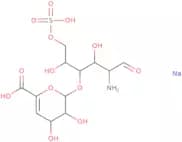
CAS:Heparin disaccharide II-H disodium salt is a complex carbohydrate with the chemical formula C3H6Na2O14. It has a molecular weight of 617.8 and a melting point of 204.5°C. The compound has been modified by methylation, glycosylation, fluorination, and click modification. It is a synthetic oligosaccharide with high purity and custom synthesis.Formula:C12H18NNaO13SPurity:Min. 95%Molecular weight:439.33 g/mol1,3,4,6-Tetra-O-acetyl-2-deoxy-2-trifluoroacetamido-D-glucopyranose
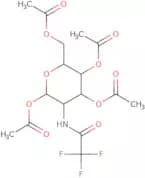
CAS:1,3,4,6-Tetra-O-acetyl-2-deoxy-2-trifluoroacetamido-D-glucopyranose is a carbohydrate that has been modified with fluorine and acetyl groups. It is used as a precursor to other saccharides. The compound is synthesized by the reaction of 1,3,4,6-tetra -O-acetyl glucose with trifluoroacetic anhydride in methylene chloride. It can be custom synthesized for research purposes. This product has high purity and is sold in both liquid and powder form.Formula:C16H20F3NO10Purity:Min. 95%Molecular weight:443.33 g/mol1-O-Acetyl-2-deoxy-3,5-di-O-toluoyl-b-D-erythropentofuranose
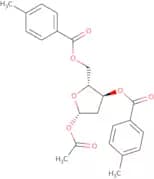
CAS:<p>1-O-Acetyl-2-deoxy-3,5-di-O-toluoyl-b-D-erythropentofuranose is a monosaccharide that belongs to the group of complex carbohydrates. It is synthetically derived and has been modified with fluorination and acetylation. 1OATBDE is used as a selective labeling agent for glycosyls in glycoconjugates.</p>Purity:Min. 95%1-Methylene-5-a-androstan-3-a-ol-17-one glucuronide
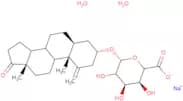
1-Methylene-5-a-androstan-3-a-ol-17-one glucuronide is a synthetic, modified sugar that is used for the synthesis of complex carbohydrates. It is available in high purity and can be custom synthesized according to customer specifications. 1 Methylene 5 a androstan 3 a ol 17 one glucuronide can be fluorinated, glycosylated, or methylated to meet the needs of different customers. This product has CAS No. 9002-00-6 and is available on request.Formula:C26H37O8·Na·2H2OPurity:Min. 95%Molecular weight:536.59 g/mol4-Acetamido-2,6-anhydro-3,4-dideoxy-D-glycero-D-galactonon-2-enonic acid
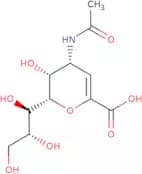
CAS:The product is a custom-made synthetic sugar. It is Fluorinated and Methylated. The product has been synthesized for glycosylation, methylation, and click modification. The product can be used in the synthesis of complex carbohydrates.Formula:C11H17NO8Purity:Min. 95%Molecular weight:291.25 g/molN-(e-Aminocaproyl)-a-D-galactopyranosyl amine
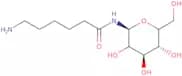
N-(e-Aminocaproyl)-a-D-galactopyranosyl amine is a glycosylated, fluorinated, saccharide that is custom synthesized by our company. It can be used as an intermediate in the synthesis of various oligosaccharides and polysaccharides. This product is very soluble in water and can be used for glycosylation reactions. The purity of this product is greater than 99%.Formula:C12H24N2O6Purity:Min. 95%Color and Shape:White To Off-White SolidMolecular weight:292.33 g/molTrimethylsilyl-meso-inositol
CAS:<p>Trimethylsilyl-meso-inositol is a metabolite of inositol and can be found in biological samples. It has been detected by GC-MS profiling, chromatograms, and profiles. Trimethylsilyl-meso-inositol has been used as an experimental compound to study the effects of electron irradiation on bacterial DNA. This metabolite has also been identified as a volatile substance. There are no known sources or nature of this molecule, but it is reproducible.</p>Formula:C24H60O6Si6Purity:Min. 95%Molecular weight:613.24 g/mol4'-Hydroxypropranolol-4'-O-b-D-glucuronide
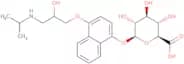
CAS:<p>Propranolol is a drug that belongs to the class of beta blockers, which are used to control high blood pressure in women and neonates. Propranolol is metabolized by glucuronidation and hydroxylation into 4'-hydroxypropranolol-4'-O-b-D-glucuronide. The hydroxy group on propranolol is metabolized by hydroxylation in the liver. This metabolic pathway leads to the formation of 4'-hydroxypropranolol-4'-O-b-D-glucuronide, which is excreted through urine samples and plasma concentrations. The hydroxy group on propranolol is also metabolized by glucuronidation, leading to the formation of low bioavailability of propranolol in humans. Propranolol has been shown to inhibit platelet aggregation at higher doses, but its effects on platelet aggregation are not predictable at lower doses.</p>Formula:C22H29NO9Purity:Min. 95%Molecular weight:451.47 g/mol2,3,4,6-Tetra-O-benzyl-(+)-1-deoxynojirimycin
CAS:2,3,4,6-Tetra-O-benzyl-(+)-1-deoxynojirimycin is a synthetic atypical carbohydrate that has been shown to have anti-hyperglycemic and anti-hyperlipidemic effects. It is a benzylated derivative of the natural product 1-deoxynojirimycin. This compound has been shown to be effective in treating metabolic disorders such as polycystic ovary syndrome and hypercholesterolemia. 2,3,4,6-Tetra-O-benzyl-(+)-1-deoxynojirimycin may act by mimicking the actions of insulin and binding to insulin receptors on cells. This binding prevents the insulin receptor from being phosphorylated by an enzyme called protein kinase A (PKA), thereby inhibiting the action of PKA.Formula:C34H37NO4Purity:Min. 95%Molecular weight:523.66 g/mol1,2,4,6-Tetra-O-acetyl-3-chloro-3-deoxy-D-glucopyranose
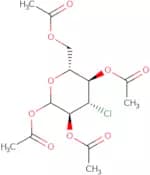
CAS:1,2,4,6-Tetra-O-acetyl-3-chloro-3-deoxy-D-glucopyranose (1) is a synthetic oligosaccharide that has been modified with a fluorine atom at the 6 position of the glucose moiety. This modification has been shown to have increased stability in acidic environments. Glycosylation can be achieved by reacting 1 with an appropriate glycosylant such as bromoacetyl bromide or chloroacetyl chloride. The saccharide unit may also be methylated at the 2 and 4 positions of the glucose moiety to confer protection against enzymatic degradation. Click modification can be used to attach other molecules such as proteins or peptides to 1,2,4,6-tetra-O-acetyl-3-chloro-3-deoxy--D--glucopyranose via a covalent bond betweenFormula:C14H19ClO9Purity:Min. 95%Molecular weight:366.75 g/mol6-Bromo-6-deoxy-b-cyclodextrin
CAS:This beta-cyclodextrin (β-CD) derivative is a functionalized cyclic oligosaccharide composed of seven glucose units, characterized by a hydrophilic exterior and a lipophilic cavity (bigger than α-CD and smaller than γ-CDs), which allows it to encapsulate various guest molecules. This structural feature facilitates its use in multiple applications, including pharmaceuticals, food enhancement, and cosmetics. In the pharmaceutical industry, it enhances the solubility and stability of poorly water-soluble drugs, improving their bioavailability and efficacy while also masking unpleasant tastes. The food sector utilizes it as a stabilizer for flavors, colors, and nutrients, extending shelf life by protecting sensitive ingredients from degradation. In cosmetics, it serves as a complexing agent for fragrances and active components, ensuring their stability and controlled release. Its use expands to many other fields, including nanotechnology for drug delivery systems, environmental remediation for extracting organic pollutants, textiles for slow-release fragrances, and analytical chemistry for chiral separation.Formula:C42H63Br7O28Purity:Min. 95%Color and Shape:White PowderMolecular weight:1,575.26 g/molBenzyl 4-O-(2,3,4,6-tetra-O-benzyl-a-D-galactopyranosyl)-2,3-di-O-benzyl-6-O-benzoyl-b-D-galactopyranoside
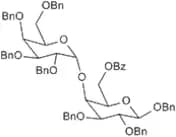
Benzyl 4-O-(2,3,4,6-tetra-O-benzyl-a-D-galactopyranosyl)-2,3-di-0benzyl 6-O-benzoyl-b-D-galactopyranoside is a synthetic carbohydrate that belongs to the class of oligosaccharides. It has been modified by fluorination and methylation. This compound is also glycosylated and click modified.Formula:C68H68O12Purity:Min. 95%Molecular weight:1,077.26 g/molCarboxymethyl-dextran sodium salt 10-20% COOH - Average molecular weight 70000
CAS:<p>Drug carrier for cancer therapy & imaging, biocompatible, soluble, biodegradable</p>Purity:Min. 95%Color and Shape:White PowderN-Acetylglucosamine-BSA (3 atom spacer)
<p>Please enquire for more information about N-Acetylglucosamine-BSA (3 atom spacer) including the price, delivery time and more detailed product information at the technical inquiry form on this page</p>Purity:Min. 95%Dodecyl a-D-glucopyranoside
CAS:<p>Dodecyl a-D-glucopyranoside is a fatty acid that is found in the form of dodecyl glucoside. It has been shown to be effective against infectious diseases, such as pneumococcal infections and influenza. Dodecyl a-D-glucopyranoside inhibits bacterial growth by preventing the synthesis of lipopolysaccharides, which are important for the cell wall structure of Gram-negative bacteria. Dodecyl a-D-glucopyranoside also inhibits monoclonal antibody production, which may be due to its ability to inhibit protein synthesis. In addition, dodecyl a-D-glucopyranoside is used as an adjuvant in vaccines against autoimmune diseases.</p>Formula:C18H36O6Purity:Min. 95%Color and Shape:PowderMolecular weight:348.47 g/molUndecyl b-D-maltopyranoside
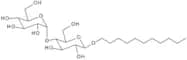
CAS:<p>Undecyl b-D-maltopyranoside is a cell culture reagent that belongs to the group of monomers. It is used in the synthesis of dodecyl maltoside and is also used as a substrate for bacterial enzymes. Undecyl b-D-maltopyranoside has been shown to inhibit the activity of leukotriene A4 hydrolase, an enzyme involved in the metabolism of leukotrienes. This product has been shown to be effective in chromatographic separation of metal ions from other components. Undecyl b-D-maltopyranoside can also be used for solubilizing peptides and proteins, including those that are neutral or have a low pH. This product is also used as a substrate for recombinant monoclonal antibodies and viral coat proteins.</p>Formula:C23H44O11Purity:Min. 95%Color and Shape:PowderMolecular weight:496.59 g/molO-Desmethyl galanthamine b-D-glucuronide
CAS:<p>O-Desmethyl galanthamine b-D-glucuronide is a synthetic carbonyl glycoside. It is an acetylated monosaccharide with a fluorinated sugar. O-Desmethyl galanthamine b-D-glucuronide is prepared by the click modification of N-acetylgalactosamine and D,L-galactose with ethyl diazoacetate in the presence of copper(I) iodide. The methylation of the hydroxyl group on the C2 position of the sugar moiety and glycosylation at the C3 position are also carried out to produce this compound.</p>Formula:C22H27NO9Purity:Min. 95%Molecular weight:449.45 g/molRhein acyl-b-D-glucuronide
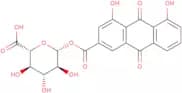
CAS:<p>Rhein acyl-b-D-glucuronide is a fluorinated monosaccharide, which can be synthesized from glucose. This product is a complex carbohydrate that is synthesized from glucose and has been modified with methyl groups to provide high purity. It is also an oligosaccharide and can be custom synthesized for your needs. The chemical formula for Rhein acyl-b-D-glucuronide is C6H14O5F2O4.</p>Formula:C21H16O12Purity:Min. 95%Molecular weight:460.34 g/molRhamnolipids C14-C14
CAS:Rhamnose based 'green' surfactantFormula:C34H64O9Purity:Min. 95%Color and Shape:PowderMolecular weight:616.88 g/molFluoxetine D-glucuronide (mixture of isomers)
CAS:Fluoxetine D-glucuronide is a glycosylated, fluorinated, custom-synthesized compound. It is composed of the methyl ester and glucuronide moiety of fluoxetine. The synthesis of this compound starts with the oxidation of fluoxetine to form an aldehyde intermediate. This intermediate is then condensed with chloroacetic acid to form the desired product. Fluoxetine D-glucuronide has shown efficacy in animal models for its ability to inhibit serotonin reuptake and block 5HT2A receptors. This drug is also used as a tracer in positron emission tomography (PET) imaging studies for serotonin transporters.Purity:Min. 95%Naloxone 3-β-D-glucuronide
CAS:Controlled Product<p>Please enquire for more information about Naloxone 3-β-D-glucuronide including the price, delivery time and more detailed product information at the technical inquiry form on this page</p>Formula:C25H29NO10Purity:Min. 95%Molecular weight:503.51 g/molL-Rhodinose
CAS:L-Rhodinose is a sugar that can be found in plants, bacteria, and fungi. It has been shown to have many biological properties, including activation of the receptor binding site. L-Rhodinose is used as a model system for studying glycosidic bonds. The effective dose of L-rhodinose is not yet known. Studies have shown that L-rhodinose may be useful in treating cancer cells or preventing tumor growth. L-rhodinose has also been shown to have anti-inflammatory effects and can induce apoptosis.Formula:C6H12O3Purity:Min. 95%Molecular weight:132.16 g/molUndecanoyl-N-hydroxyethylglucamide
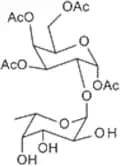
CAS:<p>Undecanoyl-N-hydroxyethylglucamide is a custom synthesis that has been modified with fluorination, methylation, and click modification. It has a carbohydrate chain of monosaccharides and oligosaccharides. The saccharide is glycosylated to form a complex carbohydrate.</p>Formula:C19H39NO7Purity:Min. 95%Molecular weight:393.52 g/mol1,3,4,6-Tetra-O-acetyl-2-(6-deoxy-a-L-galactopyranosyl)-a-D-galactopyranose
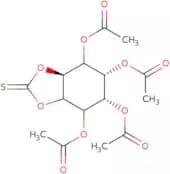
CAS:1,3,4,6-Tetra-O-acetyl-2-(6-deoxy-a-L-galactopyranosyl)-a-D-galactopyranose is a glycoside, which is a type of carbohydrate that contains both an alcohol and a sugar. It is synthesized by the reaction of 1,3,4,6-tetra-O-acetyl mannitol with 6 deoxyglucuronic acid. This product can be used as a custom synthesis for pharmaceuticals or in other fields. The purity of this product is greater than 98%.Formula:C20H30O14Purity:Min. 95%Molecular weight:494.44 g/mol3,4,5,6-Tetra-O-acetyl-myo-inositol-1,2-thiocarbonate
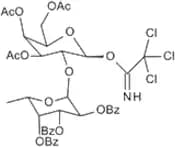
CAS:3,4,5,6-Tetra-O-acetyl-myo-inositol-1,2-thiocarbonate is a carbohydrate that has been modified with fluorination and methylation. This compound can be used in the synthesis of oligosaccharides, monosaccharides, and glycosylations. 3,4,5,6-Tetra-O-acetyl-myo-inositol is synthesized by reacting myo-inositol with carbon disulfide and sodium hydroxide to form the intermediate methyl ester followed by hydrolysis to produce the final product. The purity of 3,4,5,6-Tetra-O-acetyl-myo-inositol is greater than 98%.Formula:C15H18O10SPurity:Min. 95%Molecular weight:390.36 g/mol3,4,6-Tri-O-acetyl-2-O-(2,3,4-tri-O-benzoyl-a-L-fucopyranosyl)-D-galactopyranosyl trichloroacetimidate
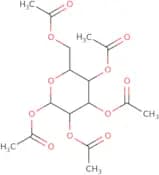
3,4,6-Tri-O-acetyl-2-O-(2,3,4-tri-O-benzoyl-a-L-fucopyranosyl)-D-galactopyranosyl trichloroacetimidate is a sugar. It is a complex carbohydrate that is a polysaccharide made up of three monosaccharides: D-, L-, and erythro-. This molecule has been fluorinated at the C3 position. The CAS number for this compound is 123787−06−1. 3,4,6-Tri-O-acetyl-2-O-(2,3,4-tri-O--benzoyl--a--L--fucopyranosyl)-D--galactopyranosyl trichloroacetimidate is custom synthesized and has high purity.Formula:C41H40Cl3NO16Purity:Min. 95%Molecular weight:909.11 g/mol1,2,3,4,6-Penta-O-acetyl-a-D-talopyranose
CAS:<p>1,2,3,4,6-Penta-O-acetyl-a-D-talopyranose is a fluorinated monosaccharide that belongs to the class of synthetic oligosaccharides. It can be used in glycosylation and polysaccharide synthesis. The chemical structure of this compound has been modified by methylation and click chemistry. 1,2,3,4,6-Penta-O-acetyl-a-D-talopyranose is available in high purity and custom synthesis.</p>Purity:Min. 95%Glucobrassicin potassium
CAS:Glucobrassicin potassium is a glucosinolate-derived compound, which is a naturally occurring metabolite found in cruciferous vegetables such as broccoli, Brussels sprouts, and cabbage. These compounds are biosynthesized in plant cells and are integral to the plant's defense mechanism against pests and diseases.Formula:C16H20N2O9S2•KPurity:Min. 95%Molecular weight:487.57 g/molHexa-O-acetylmaltal
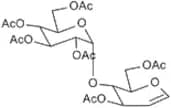
CAS:Hexa-O-acetylmaltal is a non-reducing sugar that belongs to the class of anhydrous, monohydrate configurations. It is a synthetic substrate that is used in the synthesis of pyridine analogues. Hexa-O-acetylmaltal can be crystallized in chloroform and activated with heat or acid. The anomeric configuration has been determined by X-ray diffraction analysis and its configuration was shown to be anomeric by chemical degradation. Hexa-O-acetylmaltal can also form heptaacetate, which is a disaccharide.Formula:C24H32O15Purity:Min. 95%Color and Shape:Off-White PowderMolecular weight:560.5 g/molMethyl 5-acetamido-4,7,8,9-tetra-O-acetyl-3,5-dideoxy-2-thiophenyl-D-glycero-a-D-galacto-2-nonulopyranosylonate
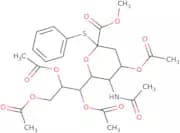
CAS:Methyl 5-acetamido-4,7,8,9-tetra-O-acetyl-3,5-dideoxy-2-thiophenyl-D-glycero-a-D-galacto-2--nonulopyranosylonate is a synthetic monosaccharide with a high purity. It is an oligosaccharide consisting of one methylated acetamido group and four acetyl groups on the nonulopyranosyl ring. Methyl 5 Acetamido 4,7,8,9 Tetra O Acetyl 3 Dideoxy 2 Thiophenyl D Glycero A D Galacto 2 Nonulopyranosylonate is used in glycosylation reactions in the synthesis of complex carbohydrates. The compound has been modified by fluorination to increase its stability in harsh conditions.Formula:C26H33NO12SPurity:Min. 95%Molecular weight:583.61 g/molAllyl 4,6-O-benzylidene-b-L-glucopyranoside
<p>Allyl 4,6-O-benzylidene-b-L-glucopyranoside is a carbohydrate that is synthesized from allyl alcohol and glucose. It is a complex carbohydrate made up of two different saccharides. This product can be custom synthesized to meet your needs. Allyl 4,6-O-benzylidene-b-L-glucopyranoside has been modified by fluorination, methylation and glycosylation. It has the CAS number 133394-02-0 and can be synthesized at high purity levels.</p>Formula:C16H20O6Purity:Min. 95%Molecular weight:308.33 g/mol4-O-(b-D-Galactopyranosyl)-D-glucosamine HCl
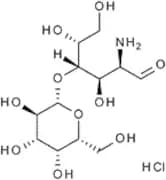
CAS:<p>4-O-(b-D-Galactopyranosyl)-D-glucosamine HCl is a synthetic, water soluble, non-digestible oligosaccharide. It has regulatory effects on the utilisation of glucose and lacto-n-neotetraose by various cells in vitro. This compound also inhibits the development of intestinal pathogens in humans and elucidates their sequence specificity. 4-O-(b-D-Galactopyranosyl)-D-glucosamine HCl is used to study the role of this molecule in infant nutrition.</p>Formula:C12H23NO10·HClPurity:Min. 95%Color and Shape:PowderMolecular weight:377.77 g/molNGA2FB N-Glycan
CAS:<p>NGA2FB N-Glycan is a monosaccharide that is synthetically fluorinated on the 2-position of the sugar. It is an oligosaccharide that contains a complex carbohydrate, which is a glycosylation of a polysaccharide with a click modification at the methyl group on the sugar. This product can be custom synthesized to order and offers high purity.</p>Formula:C64H107N5O45Purity:Min. 95%Molecular weight:1,666.54 g/molD-Mannitol - EP
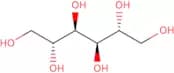
CAS:<p>Mannitol is a sugar alcohol occurring widely in plants and they are exudates, for example, in olive and plane trees (Collins, 2006). It is produced commercially by the catalytic hydrogenation of fructose (Zelin, 2019). Mannitol is used extensively in food and pharmaceutical industries because of its unique functional properties. It is about 50% as sweet as sucrose and has a desirable cooling effect often used to mask bitter tastes. Mannitol is non-cariogenic and has a low caloric content. Mannitol is an osmotic diuretic that is metabolically inert in humans and is used for: the promotion of diuresis before irreversible renal failure becomes established, the promotion of urinary excretion of toxic substances, as an Antiglaucoma agent, and as a renal function diagnostic aid (OâNeil, 2013). Additonally, in 2020, mannitol was approved by the FDA as add-on maintenance therapy for the control of pulmonary symptoms associated with cystic fibrosis in adult patients (McKenna, 2020).</p>Formula:C6H14O6Purity:Min. 97 Area-%Color and Shape:White PowderMolecular weight:182.17 g/mola-Spinasterol glucoside
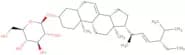
CAS:<p>a-Spinasterol glucoside is a glucopyranoside that belongs to the group of triterpenoid. It has a bitter taste, and its chemical structure was first isolated from the seeds of Trichosanthes bracteata. This compound can be found in other plants such as cucurbitacin and cucumeroides. These two compounds are bitter and are used in Chinese traditional medicine for treating inflammation, pain, or even cancer. The chemical structure of a-spinasterol glucoside is related to vanillic acid, glyceryl palmitate, and vanillic acid.</p>Purity:Min. 95%4-O-Acetyl-3,6-di-O-triisopropylsilyl-D-galactal
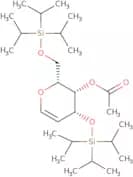
CAS:4-O-Acetyl-3,6-di-O-triisopropylsilyl-D-galactal is a modified sugar that can be used as a chiral building block in the synthesis of complex carbohydrates. This product is available for custom synthesis.Purity:Min. 95%2,3,4,6-Tetra-O-acetyl-b-D-glucopyranosyl ethylxanthate
CAS:<p>2,3,4,6-Tetra-O-acetyl-b-D-glucopyranosyl ethylxanthate is a synthetic carbohydrate that has been modified with acetyl groups. This modification is used to produce a carbohydrate that is more resistant to hydrolysis by enzymes. 2,3,4,6-Tetra-O-acetyl-b-D-glucopyranosyl ethylxanthate is one of many glycosides that have been modified with acetyl groups and fluorinated. This modification can be used for the synthesis of high purity carbohydrates.</p>Formula:C17H24O10S2Purity:Min. 95%Color and Shape:White To Off-White SolidMolecular weight:452.5 g/mol2-Chloro-2-deoxy-1,3,4,6-tetra-acetyl-D-glucopyranose
2-Chloro-2-deoxy-1,3,4,6-tetra-acetyl-D-glucopyranose is a custom synthesis of a monosaccharide that contains a fluorine atom. It is synthesized by modifying the 2 position with chlorination and then methylation. This monosaccharide can be used for glycosylation and saccharide synthesis.Purity:Min. 95%4-Aminophlorizin
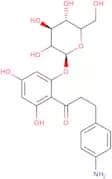
CAS:<p>4-Aminophlorizin is a chemical compound that inhibits the uptake of azide by red blood cells. It has been shown to be effective against intestinal parasites and trophozoites. 4-Aminophlorizin is a potent inhibitor of the membrane system, which may be due to its interaction with the semenza, or membrane protein.</p>Formula:C21H25NO9Purity:Min. 95%Molecular weight:435.42 g/mol2,3,4,6-Tetra-O-benzoyl-D-glucopyranose
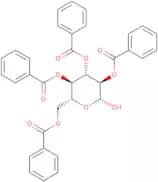
CAS:2,3,4,6-Tetra-O-benzoyl-D-glucopyranose is an aldehyde that has been synthesized by the oxidation of D-glucofuranose with nitric acid. It has been shown to act as a competitive inhibitor of lipase and c-glycosidases. The acetal group in 2,3,4,6-tetra-O-benzoyl-D-glucopyranose is activated with acetyl chloride to form an acetal derivative. This compound can be used as a chemoenzymatic glycosidic bond formation method for the synthesis of various glycosides.Formula:C34H28O10Purity:Min. 95%Molecular weight:596.6 g/molLS-tetrasaccharide c-GEL
<p>LS-tetrasaccharide c-GEL is a modified oligosaccharide carbohydrate that is synthesized to have a high degree of purity. It can be used in the synthesis of other saccharides and sugar derivatives, such as fluorinated saccharides. LS-tetrasaccharide c-GEL is an important raw material for the modification of glycans and glycolipids.</p>Purity:Min. 95%